


Anchoring a Pergola to a Paver Patio: A Stable Approach

The pavers may look solid, but they aren’t automatically a secure foundation for a pergola. If you’re asking how to anchor a pergola to a paver patio without cracking the surface or creating a wobbly structure, first find out what supports the pavers below. A concrete slab, compacted base, and open soil call for different considerations, and wind exposure can make a weak connection a serious concern.
Fastening posts to pavers alone may not provide the structural support a pergola needs. This guide explains how to assess the patio and its underlying substrate, compare considerations for different foundations, and identify when to pause and consult a qualified local professional. The pergola manufacturer’s instructions and the conditions at your property also matter before drilling or digging. For homeowners in Saint Augustine, a contractor experienced with pergolas, paver patios, and concrete can help assess the site and coordinate the work. The goal is a stable installation that protects both the patio and the structure.
Table of Contents
How to Anchor a Pergola to a Paver Patio: Start with the Foundation
Anchoring depends on the structure beneath the pavers, not on how solid the finished patio looks. Before choosing how to anchor a pergola to a paver patio, identify the surface and the material below it. A pergola is an open structure supported by posts, but those posts still need a suitable anchoring substrate. Loose-laid pavers can provide a finished walking surface without serving as structural footings.
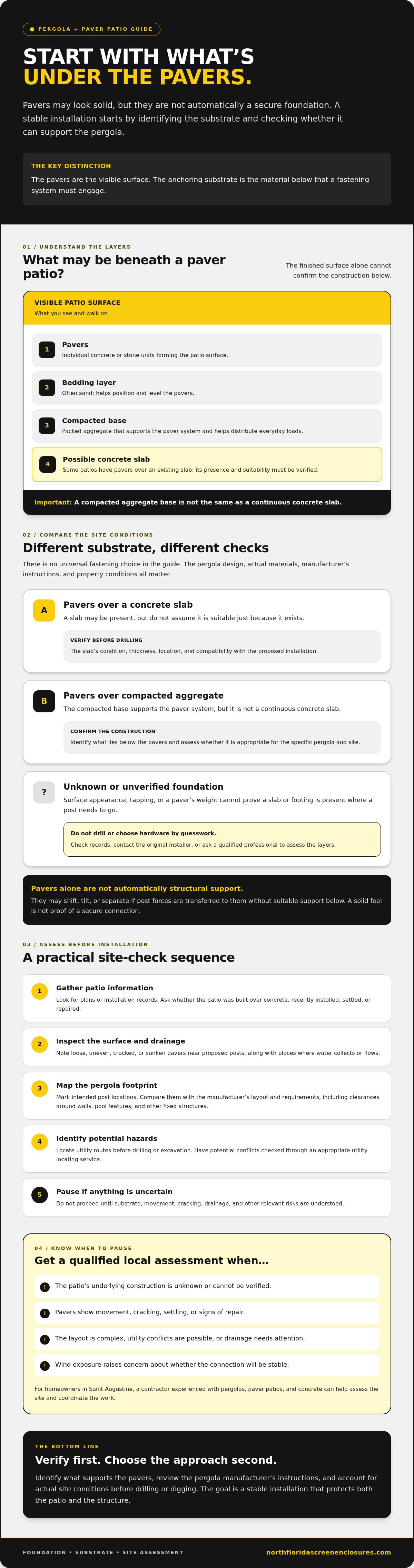
The patio surface is what you see and walk on. The anchoring substrate is the underlying material a fastening system must engage to support the pergola. These layers may include:
Pavers: Individual concrete or stone units forming the visible patio surface.
Bedding layer: A thin layer, often sand, that helps position and level the pavers.
Compacted base: Packed aggregate beneath the bedding layer that supports the patio and helps distribute everyday loads.
Concrete slab: A continuous poured-concrete surface that may sit beneath the pavers, depending on how the patio was built.
Can pavers alone hold a pergola securely?
Not automatically. Pavers may shift, tilt, or separate if post forces are transferred to them without suitable support below. A paver’s weight and tight fit do not prove it can resist the movement a pergola may experience. Whether an installation is suitable depends on the pergola’s design, the substrate, and the manufacturer’s instructions. Don’t choose anchors based on a universal size or depth recommendation. Those details must match the actual materials and project conditions.
What might be underneath a paver patio?
One patio may have pavers over bedding sand and a compacted aggregate base, while another may have pavers installed over an existing concrete slab. The surface alone can’t confirm which construction is present.
A compacted aggregate base consists of packed layers of stone material. It supports the paver system, but it isn’t the same as a continuous concrete slab that may accept a fastening system designed for that concrete. Even if a slab is present, its condition, thickness, location, and compatibility with the proposed installation need to be verified before drilling. Don’t assume a slab beneath the patio is suitable just because it exists.
Check construction records or ask the original installer if you can. If the patio’s construction remains unclear, avoid drilling or choosing hardware by guesswork. A qualified professional can assess the layers and help determine what needs to be confirmed before installation.
How to Assess the Paver Patio Before Installing a Pergola
Before deciding how to anchor a pergola to a paver patio, assess the site and its construction. This preliminary check can help you avoid drilling into an unsuitable surface, damaging the patio, or overlooking a condition that could affect stability. Don’t choose hardware until you know what needs to support the posts.
Gather patio information. Look for installation records, plans, or details from the original contractor. Ask whether the patio was recently installed, has settled, has been repaired, or was built over concrete.
Check the surface condition. Look for loose, uneven, cracked, or sunken pavers near the proposed post locations. Note where water collects or flows across the patio, since drainage patterns may point to conditions that need attention.
Map the pergola footprint. Mark the intended post locations and compare them with the manufacturer’s layout and installation requirements. Check clearances around walls, pool features, and other fixed structures.
Identify potential hazards. Locate utility routes before drilling or excavation. Have potential conflicts checked through an appropriate utility locating service, and don’t proceed until the risks are understood.
Pause if anything is uncertain. Unknown substrate, movement, cracking, or drainage concerns are reasons to seek qualified advice before selecting an anchoring approach.
How can you identify the patio base?
Start with records and people familiar with the work. Plans or information from the installer may indicate whether pavers sit over a compacted aggregate base or an existing concrete slab. The finished surface can’t reliably confirm what lies below, and tapping or inspecting a paver won’t prove that a footing or slab is present where a post needs to go. If you can’t verify the construction, ask a qualified professional to assess it rather than drilling exploratory holes.
What should you inspect around the pergola location?
Inspect the full footprint, not just the pavers directly beneath each planned post. Note changes in level, open joints, cracked units, signs of settling, and places where water pools after rain. Consider nearby walls, pool features, and utility routes that may constrain post placement or installation. Compare your marked locations with the pergola manufacturer’s instructions. A layout that fits the patio may still conflict with those requirements.
Before work begins, confirm which local requirements apply to your project. The International Residential Code (IRC) is a reference for patio-cover provisions, but don’t assume a particular code applies to your pergola or location. Check current requirements with the relevant local jurisdiction. In Saint Augustine, if the patio’s construction or condition remains unclear, a local contractor familiar with pergolas, paver patios, and concrete can help assess the site. North Florida Screen Enclosures offers these outdoor construction services.
Which Pergola Anchoring Approach Fits Your Patio Substrate?
The appropriate approach depends on what the posts can connect to beneath the pavers. Fastening through pavers into a verified structural substrate is different from fastening into the pavers themselves. Use this comparison to identify what needs investigation, not to select hardware by appearance alone.
If the pavers sit over a concrete slab
A slab may provide an anchoring surface, but its presence alone doesn’t establish that it’s suitable. Its condition and thickness, the distance between proposed connections and slab edges, and its ability to support the project all need to be verified. The fastening approach must also be compatible with the pergola manufacturer’s instructions and applicable project specifications. If those details aren’t known, have them reviewed before drilling.
If the patio has a compacted base or unknown construction
A compacted base supports the patio surface, but that doesn’t automatically make it an appropriate structural anchor for pergola posts. Bedding sand and loose-laid pavers are part of the finished surface system, not proof of a secure connection below. Depending on the pergola and site, the next step may be to evaluate separate footings or another engineered solution. Neither is universally suitable. The design, soil, and site conditions matter.
Don’t use a fastening method simply because it fits through a paver. The connection needs to engage a suitable substrate and work with the structure’s requirements. For a project in Florida, consult the relevant local jurisdiction about current requirements. The Florida Building Code is a reference, not confirmation that a particular detail suits your site. When substrate or load suitability is uncertain, pause and seek a qualified review before installation.
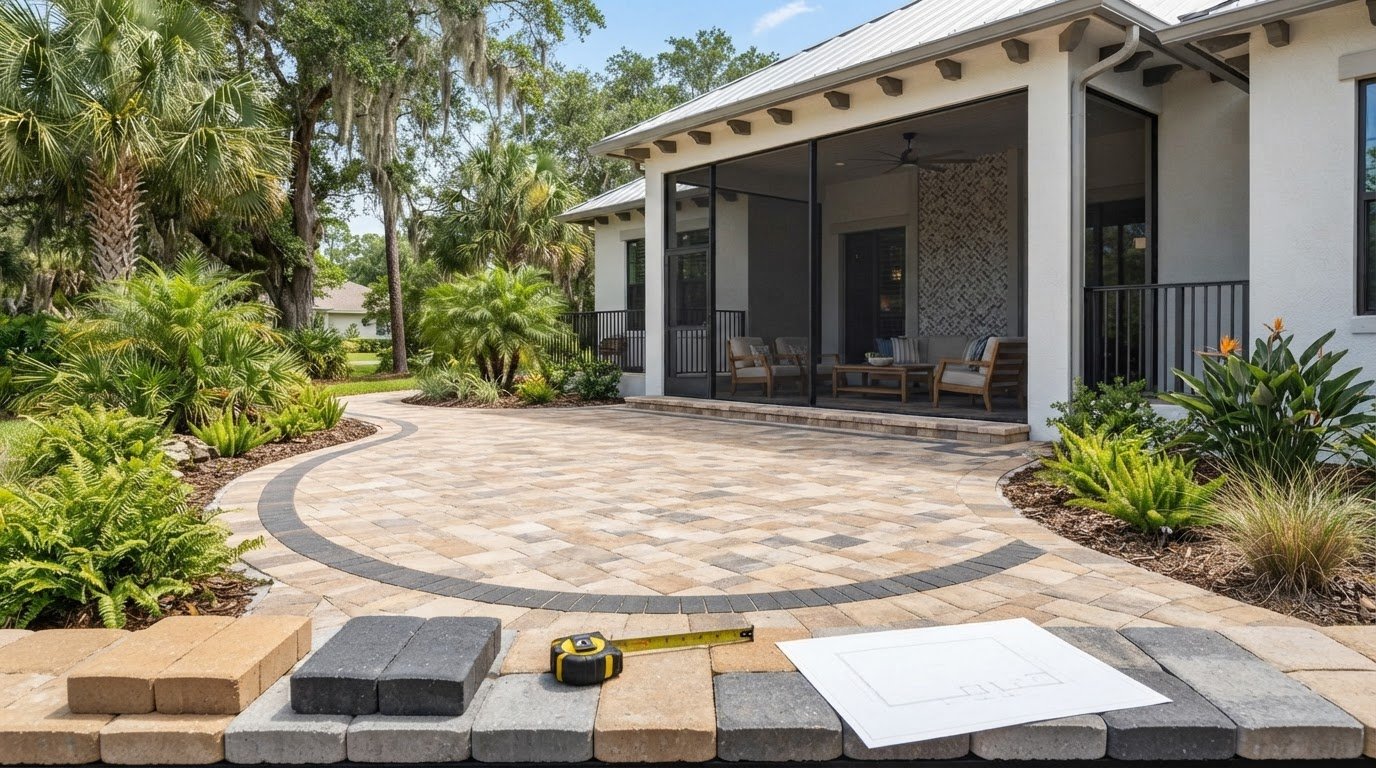
How to Plan a Safe Pergola Installation on Pavers
A sound installation follows a deliberate sequence: confirm project requirements, assess the patio substrate, plan the pergola layout, then arrange the work. This order helps prevent a common setback: choosing a post location or fastening approach before confirming it suits the pergola and the site.
Confirm requirements. Review the pergola manufacturer’s instructions, including its foundation and installation requirements. Check with the relevant local jurisdiction about permits, inspections, and other rules that may apply.
Assess the substrate. Establish what lies beneath the pavers and whether its condition and suitability are understood. If you can’t confirm the construction, get qualified advice before drilling or digging.
Plan the layout. Mark the post locations and check clearances around walls, utilities, pool features, and other obstacles. Make sure the proposed footprint can follow the manufacturer’s instructions without relying on a questionable part of the patio.
Arrange installation. Once the requirements, substrate, and layout have been reviewed, determine whether the project is appropriate for DIY work or calls for a qualified contractor.
What should you confirm before any drilling?
Read the instructions for the specific pergola, not just general online guidance. Verify what foundation or connection the manufacturer specifies, and have any uncertainty about compatibility with your patio reviewed. Locate underground utilities and obtain appropriate clearance before disturbing the surface. Ask the applicable local authority which permits or inspections, if any, apply. Requirements can depend on the project and jurisdiction, so don’t rely on a general rule of thumb.
Wind exposure deserves attention in North Florida, particularly on an open or exposed property. The structure’s design, placement, and connection to its support all matter. A method that seems adequate in a sheltered spot shouldn’t be assumed suitable for a more exposed location.
When should you stop and call a professional?
Pause if pavers move, the substrate is unknown, or the patio shows settlement or damage. Seek qualified help if the pergola will attach to another structure, the site has high wind exposure, or you can’t establish a clear, suitable load path from the pergola to its support. These are site-specific structural questions. Generic online dimensions can’t confirm what’s appropriate for your patio, soil, or pergola.
For pergola and paver patio projects in Saint Augustine, North Florida Screen Enclosures provides outdoor construction services, including pergolas, paver patios, and concrete work.
When to Hire a Pergola Contractor in Saint Augustine
A contractor’s input can be valuable when the patio’s base is uncertain, pavers are damaged or shifting, the pergola layout is complicated, or the property has significant wind exposure. These conditions can make it difficult to judge whether the proposed post locations and support approach suit the actual site. If you’re still researching the patio itself, the Florida paver patio design and installation guide can help you understand broader planning considerations alongside this anchoring advice.
What should a pergola contractor assess on site?
Ask how they’ll identify the patio construction and evaluate the planned post locations. Their recommendation should account for the pergola manufacturer’s instructions and the conditions they can verify at your property, rather than relying on a generic detail. Discuss how the work will protect existing pavers, account for drainage, and address nearby utilities. Also ask who will check which permits or approvals apply with the relevant jurisdiction.
Before agreeing on the project scope, consider asking:
What information or inspection will help establish what lies beneath the pavers?
How will you confirm the proposed support approach is compatible with the pergola instructions and site conditions?
How will the patio and drainage be protected during the work, and how will nearby utility locations be addressed?
Which local requirements or approvals should be verified, and who is responsible for confirming them?
What work is included in the proposed scope, and what conditions would require a separate assessment?
Clear answers help you understand both the recommendation and its limits. If the substrate can’t be confirmed, ask what further assessment is needed before installation proceeds.
How to choose the next step for your project
DIY planning may be reasonable for a straightforward project when the pergola requirements, patio construction, and installation conditions are clearly understood. But don’t treat online dimensions or a visual inspection as confirmation of structural suitability. If the base remains unknown, pavers are moving, damage or settlement is present, the layout is complex, or wind exposure raises concerns, pause and arrange a qualified, site-specific review. Confirm local permit and approval requirements with the applicable authority.
North Florida Screen Enclosures is a locally owned Saint Augustine contractor offering pergolas, paver patios, and concrete work. Its services may be relevant when planning a project that includes both the patio and pergola.
Build Your Pergola Plan on Verified Ground
A lasting outdoor structure starts with a decision made before installation: confirm what the patio can support, then match the plan to the pergola’s requirements and the conditions on site. There isn’t one universal answer to how to anchor a pergola to a paver patio. The right approach depends on the substrate, layout, and exposure, so uncertainty is a reason to verify rather than guess.
Keep the project moving in a considered order: establish the patio’s construction, check the proposed locations and surrounding conditions, and confirm local requirements before work begins. If the base is unclear, the pavers show signs of movement, or wind exposure raises questions, a site-specific professional assessment can help you choose a responsible next step. A clear conversation about scope, approvals, and who verifies each decision can also align expectations before work starts.
North Florida Screen Enclosures is a locally owned and operated specialty contractor based in Saint Augustine, offering pergolas, paver patios, and concrete work. Discuss your pergola and paver patio project with the local team. With the right information and a sound plan, you can move toward an outdoor space designed with stability in mind.
Frequently Asked Questions
Can you anchor a pergola directly to pavers?
Usually, pavers alone shouldn’t be assumed to provide secure structural support for pergola posts. How to anchor a pergola to a paver patio depends on the substrate below and the pergola’s installation requirements. A suitable connection may need to pass through the pavers and engage verified structural support. Don’t choose fasteners based only on how solid the patio feels. Confirm the construction and review the manufacturer’s instructions first.
Do pergola anchors need to reach concrete beneath a paver patio?
Not necessarily. A concrete slab isn’t present beneath every paver patio, and concrete isn’t automatically suitable just because it’s there. The anchoring approach must match the pergola instructions and the verified support available at the site. If a slab is present, its condition, thickness, edge distance, and suitability need to be checked. If there’s no slab, ask a qualified professional whether another support solution is appropriate for the project.
How do I know whether my paver patio has a concrete slab underneath?
Start with patio plans, installation records, or information from the original contractor. These may identify whether pavers were laid over concrete or a compacted aggregate base. The surface’s appearance alone can’t reliably confirm what’s beneath it, and drilling to investigate can damage the patio or create other risks. If records aren’t available, consult a qualified professional about assessing the construction before selecting an anchoring method or disturbing the pavers.
Can I install a pergola on pavers with a compacted gravel base?
Possibly, but the gravel base and pavers shouldn’t be treated as automatically suitable structural support for pergola posts. The right approach depends on the pergola design, site conditions, and manufacturer’s instructions. Have the proposed post locations and support requirements assessed before proceeding. Separate footings or another engineered solution may need consideration, but neither is right for every site. If suitability is unclear, pause rather than relying on a general online fastening recommendation.
What happens if pavers move after a pergola is installed?
Movement may indicate that the patio or post area needs inspection, and it could affect the stability or alignment of the structure. Don’t simply tighten fasteners or reset a paver without first understanding why it shifted and how the pergola is supported. Avoid using the structure if it appears unstable, and arrange a qualified assessment. The patio condition, anchoring connection, drainage, and surrounding ground may all need review before repairs are planned.
Do I need a permit to install a pergola in Saint Augustine?
Check with the local authority that has jurisdiction over your Saint Augustine property before starting work. Permit and inspection requirements can depend on the project and location, so don’t assume a pergola is exempt or that another homeowner’s experience applies to your installation. Ask what requirements apply to your specific design and site, and confirm who is responsible for obtaining approvals. Verify current information directly with the relevant office before scheduling construction.
Should a contractor assess my paver patio before I anchor a pergola?
A professional assessment is prudent if you can’t confirm the patio base, notice loose or settled pavers, or have concerns about layout or wind exposure. Ask how the contractor will identify the substrate, review post locations, and compare the recommendation with the pergola instructions and site conditions. In Saint Augustine, North Florida Screen Enclosures is a locally owned contractor offering pergolas, paver patios, and concrete work. Contact the team to discuss your pergola and paver patio project.
Comments