


Cost to Install Aluminum Railing on Balcony in Florida: 2026 Guide

What if the lowest estimate for your balcony project is actually the most expensive mistake you could make? When calculating the cost to install aluminum railing on balcony Florida homes, you aren't just paying for metal and labor; you're investing in a barrier against relentless salt spray and high-velocity winds. Many homeowners feel overwhelmed by conflicting quotes and the technical language of the 2026 Florida Building Code. You're right to be cautious. Choosing the wrong materials or an inexperienced installer can lead to premature oxidation or failing local inspections.
This guide provides a clear roadmap for your project, detailing how professional-grade finishes and Saint Augustine permitting requirements impact the final investment. We'll explore the critical factors of structural resilience and code compliance, ensuring your new railing enhances your home's curb appeal while providing the peace of mind that comes from expert craftsmanship. By understanding these variables, you can confidently choose a solution that offers long-term value and safety for your coastal property.
Table of Contents
Factors Influencing Aluminum Balcony Railing Costs in Florida
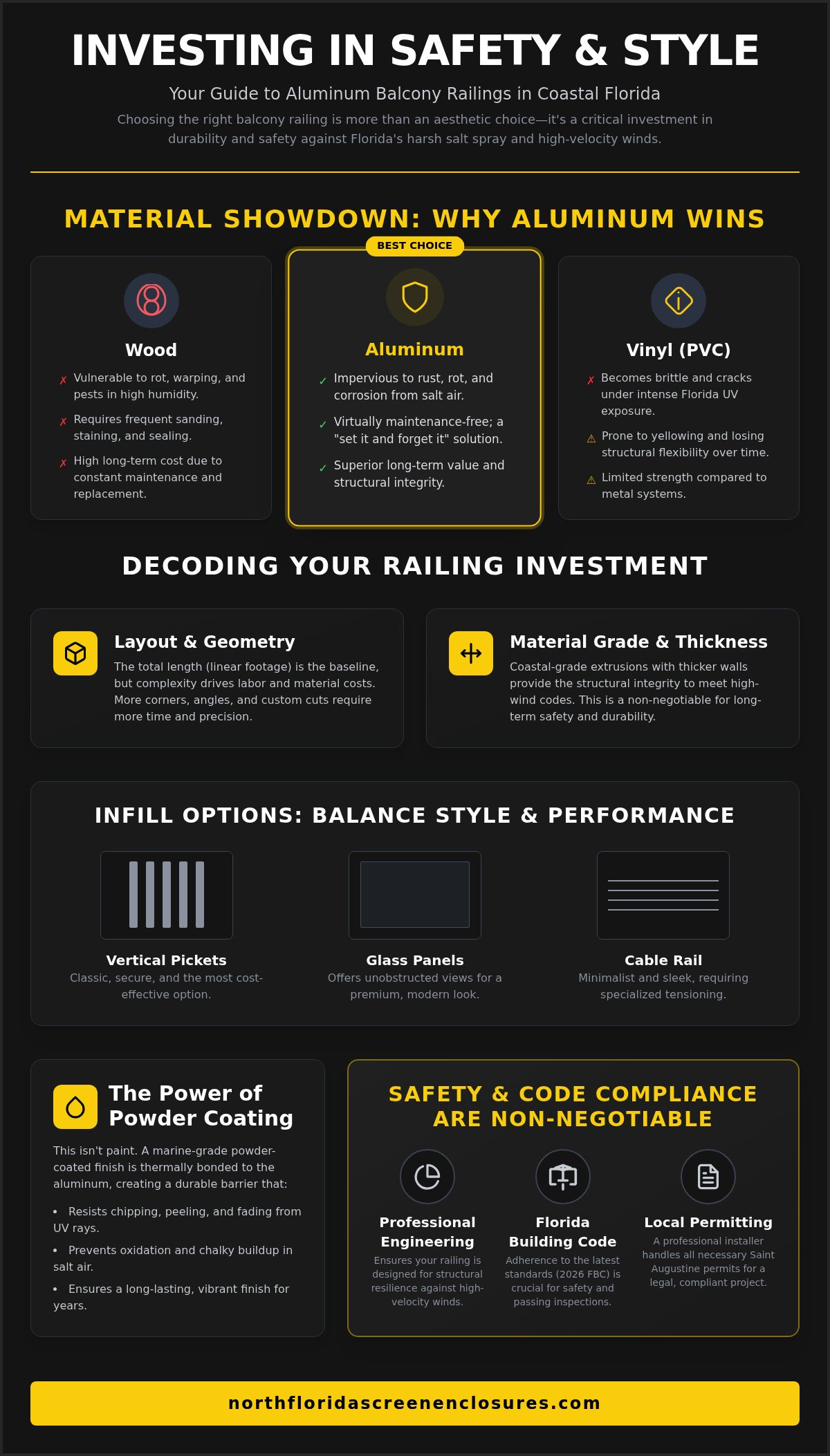
Determining the cost to install aluminum railing on balcony Florida projects involves a detailed assessment of both the property’s physical layout and the specific environmental stressors it faces. Every balcony presents unique challenges, meaning a quote for one home may differ significantly from another even if the square footage seems similar. Reliability in this industry comes from a precise understanding of how site-specific variables interact with material requirements.
Linear Footage and Balcony Geometry
Linear footage is the most basic metric, but geometry often dictates the labor intensity and material waste. A straight, continuous run is the most straightforward to install. However, a balcony with multiple corners, 45-degree angles, or tight transitions requires more custom cuts and additional structural posts. These complexities increase the time spent on-site and the amount of specialized hardware needed to ensure a secure fit. In Saint Augustine, multi-story installations also introduce logistical costs, as contractors must utilize scaffolding or specialized lifting equipment to move heavy aluminum extrusions and work safely at height.
Material Grade and Structural Thickness
The grade of the aluminum used is a primary driver of the project’s long-term value. There’s a distinct difference between standard residential systems and high-performance coastal extrusions. The wall thickness of the aluminum posts and rails determines how the system will perform under the pressure of high-wind events. Thicker walls provide the structural integrity necessary to meet the 2026 Florida Building Code, especially for homes located directly on the water. The hardware used to secure these systems is equally critical. Professional installers use high-quality fasteners to prevent electrolytic corrosion, a chemical reaction that occurs when salt air causes different metals to bond and degrade. Understanding the basics of deck railing and building code requirements helps homeowners see why professional-grade materials are a non-negotiable part of a durable installation.
The choice of infill style and the quality of the finish also impact the overall investment. Vertical pickets remain the most practical and cost-effective option for many Saint Augustine homeowners. More modern alternatives, like glass panels or cable systems, require more engineering and precise tensioning, which adds to the installation timeline. Finally, the finish itself matters. Opting for a premium powder-coated finish is a wise move in Florida’s climate. These specialized coatings are designed to resist UV degradation and prevent the chalky appearance that often plagues lower-quality aluminum products after just a few years of exposure to the intense Florida sun.
Comparing Aluminum to Other Railing Materials for Florida Homes
When evaluating the cost to install aluminum railing on balcony Florida homeowners often weigh the initial price tag against more traditional materials. While wood or vinyl may appear budget-friendly at first, the North Florida climate quickly exposes their weaknesses. Wood railings in Saint Augustine are particularly vulnerable to the high humidity and salt-laden air, often showing signs of rot or warping within just five years. This necessitates a frequent cycle of sanding, staining, and eventually, full replacement that far exceeds the one-time investment of a metal system.
Aluminum vs. Wood and Vinyl in Coastal Climates
Vinyl is another common alternative, but it struggles under the intense UV radiation of the Sunshine State. Over time, standard vinyl tends to yellow and lose its structural flexibility, becoming brittle and prone to cracking under pressure. In contrast, aluminum serves as a "set it and forget it" solution. Its lightweight nature also places less stress on existing balcony structures compared to heavy wrought iron or bulky wood assemblies. This weight advantage is crucial for older homes where structural capacity might be limited, allowing for a modern upgrade without the need for extensive deck reinforcement.
The Long-Term Value of Powder Coating
The durability of aluminum is largely attributed to advanced finishing techniques. High-quality aluminum balcony railings provide superior ROI because they utilize marine-grade powder coating. This process creates a thermal bond that prevents the bubbling, peeling, and oxidation common in painted surfaces. When you calculate the total cost of ownership, including the labor and materials for recurring maintenance on wood systems, the financial advantage of aluminum becomes clear. It maintains its structural integrity and appearance for decades with nothing more than an occasional rinse with fresh water.
Beyond pure durability, the aesthetic longevity of aluminum directly impacts your property’s resale value. A railing that looks brand new after a decade of coastal exposure is a significant selling point. Adhering to the Florida Building Code ensures that your railing isn't just attractive but legally compliant and structurally sound. Professional grade finishes protect your investment for decades, maintaining the property's curb appeal without the need for constant intervention. If you're planning a project, choosing a specialized aluminum contractor helps ensure your installation withstands the local environment.
Breaking Down Infill Options and Aesthetic Upgrades
Selecting the right infill is a pivotal decision that shapes both the visual profile and the overall cost to install aluminum railing on balcony Florida homes. While the structural posts and top rails provide the necessary strength, the infill serves as the primary safety barrier and aesthetic focal point. Each option requires a different level of engineering and material volume, which directly impacts the complexity of the installation process.
Picket Styles and Spacing Requirements
Vertical pickets remain the most practical and cost-effective solution for Saint Augustine properties. To ensure Florida Building Code compliance, these pickets must be spaced so that a 4-inch sphere cannot pass through any opening. Homeowners can choose from square, round, or fluted designs to match their architectural style. A higher density of pickets increases the material requirement but provides a more substantial, traditional look. Choosing a fluted picket adds a subtle texture that catches the light differently than a flat surface, offering a premium feel without the price tag of more complex systems.
Premium Glass and Cable Alternatives
For those seeking unobstructed coastal views, tempered safety glass panels are a popular but more intensive choice. It is vital to consider the local environment when opting for glass; in Florida, glass panels can trap heat on the balcony surface, creating a "greenhouse effect" that might make the space less comfortable during peak summer hours. Additionally, salt spray requires frequent cleaning to maintain clarity. If you prefer a modern, industrial aesthetic, horizontal cable systems using marine-grade stainless steel are an excellent alternative. These systems require highly reinforced end posts to withstand the hundreds of pounds of tension needed to keep the cables taut and safe.
Aesthetic upgrades like decorative scrolls or custom-profiled top rails allow for further personalization. However, the long-term value of these upgrades depends heavily on the quality of the finish. As discussed previously, a high-quality powder coating is essential for preventing oxidation on intricate decorative elements where salt and moisture tend to collect. By selecting the right combination of infill and finish, you ensure your balcony remains a durable and attractive extension of your living space. Professional fabrication ensures that every transition and connection point is sealed against the elements, protecting your investment for years to come.
Labor, Permitting, and Florida Building Code Compliance
Managing the administrative and technical requirements of a project is as vital as the fabrication itself. When calculating the cost to install aluminum railing on balcony Florida properties, homeowners must account for the "invisible" expenses of professional engineering and local compliance. These are not merely suggestions; they are legal mandates designed to ensure the safety of anyone using the elevated space. In Saint Augustine and St. Johns County, the permitting process is rigorous, requiring detailed plans that prove the system can withstand the unique environmental pressures of the Atlantic coast.
One common misconception involves recent changes to state law. As of July 1, 2026, Florida permits are not required for certain home improvements costing less than $7,500. However, this exemption specifically excludes structural work. Because a balcony railing serves as a critical safety barrier, it is classified as structural. Starting work without a permit in Saint Augustine can result in a double permit fee and may lead to complications with your property insurance if a failure occurs. Beyond the paperwork, site preparation often adds to the labor budget. This includes the careful removal and disposal of old, failing railings and the preparation of the mounting surface to ensure a level, secure foundation for the new aluminum posts.
Understanding Wind-Load and Structural Integrity
Structural resilience is the primary goal of the 2026 Florida Building Code. Railings must be engineered to resist both concentrated and uniform loads, measured in pounds per square foot (PSF). This means the system must not only support the weight of people leaning against it but also withstand the immense pressure of hurricane-force winds. The method of attachment is critical here. Whether anchoring into a concrete slab or wood framing, the fasteners must be of a specific grade and depth to prevent pull-out during a storm. Proper anchoring also protects your home insurance standing, as many providers now require proof of code compliance for coastal balcony structures.
The Value of Professional Installation
Attempting a DIY installation for a balcony railing is exceptionally high-risk in Florida. A minor error in post-spacing or fastener depth can lead to a catastrophic failure under load. Working with a licensed contractor provides a layer of liability protection and ensures the work is backed by a professional warranty. For those interested in maintaining the structural integrity of other outdoor areas, our guide on pool enclosure repair St. Augustine offers similar insights into safety and code compliance. If you are ready to ensure your project meets all local safety standards, you can request a professional consultation from our local team to review your specific site requirements.
Choosing a Local Specialist in Saint Augustine
Selecting a professional to handle your installation is about more than comparing bottom-line figures. While a general contractor might be capable of basic framing, aluminum construction requires a specific set of skills and specialized equipment. In a coastal environment like Saint Augustine, the margin for error is slim. A specialist doesn't just assemble parts; they engineer a system that respects the local weather patterns and the intense humidity that can compromise inferior work. Choosing an expert ensures your investment is protected by precise workmanship and a deep understanding of the cost to install aluminum railing on balcony Florida projects.
Specialized Aluminum Expertise
Aluminum fabrication is a distinct trade that differs significantly from traditional wood framing. You can't hide a poor cut with putty or paint; every connection must be exact to maintain structural integrity and aesthetic appeal. Custom fabrication allows for a perfect fit, especially on balconies with unique angles or transitions. This level of precision requires specialized saws and welding equipment that generalists rarely carry. Our commitment to these standards is mirrored in our work on other complex aluminum structures, which you can explore in our definitive guide on custom pool enclosure installation. By focusing on material-specific techniques, we ensure your railing remains rigid and silent even during the heavy gusts common in North Florida.
Getting Your Project Started
Starting your project begins with a clear assessment of your balcony’s needs. To provide a transparent and accurate estimate, we look at the total linear footage, the complexity of the layout, and the specific mounting surfaces involved. A comprehensive quote should always include the cost of professional engineering and the necessary Saint Augustine building permits. Once you've approved the design and material selections, our team moves into the fabrication phase. We prioritize a methodical timeline that respects your property while ensuring every safety standard is met before the final inspection. If you're ready to enhance your home's safety and curb appeal, contact North Florida Screen Enclosures for a professional consultation. We'll help you understand the full scope of the cost to install aluminum railing on balcony Florida homes and provide a durable solution tailored to your coastal space.
Secure Your Coastal Investment Today
Investing in your home's safety and appearance requires a balance of high-quality materials and technical precision. The true cost to install aluminum railing on balcony Florida projects is defined by the lifespan of the system against harsh coastal elements. Choosing professional-grade aluminum ensures you avoid the recurring maintenance costs associated with wood or the UV degradation of vinyl. By prioritizing structural integrity and strict adherence to the 2026 Florida Building Code, you protect your property's value and your family's safety.
North Florida Screen Enclosures is a locally owned and operated specialist based right here in Saint Augustine. We focus on durable, low-maintenance aluminum solutions that are engineered specifically for high-wind environments. Our team understands the nuances of local permitting and structural requirements, providing you with a seamless and reliable installation experience. We take pride in delivering workmanship that withstands the unique demands of our region.
Ready to upgrade your outdoor living space? Request a Professional Quote for Your Saint Augustine Balcony Railing and take the first step toward a beautiful, permanent solution for your home. We look forward to helping you build a balcony that stands the test of time.
Frequently Asked Questions
Do I need a permit to install a balcony railing in Florida?
Yes, you must obtain a permit because balcony railings are considered critical structural safety barriers. While some small home improvements costing under $7,500 are exempt from permitting as of July 2026, this exemption specifically excludes structural work like guardrails. In Saint Augustine, starting an installation without the proper paperwork can lead to doubled permit fees and potential complications with your property insurance coverage if a failure occurs.
How much does aluminum railing cost per linear foot in Florida?
The cost to install aluminum railing on balcony Florida projects is determined by several variables including total linear footage, the number of corners, and the chosen infill style. Factors such as the thickness of the aluminum extrusions and the complexity of the installation site also influence the final investment. To get an accurate understanding of the budget required for your specific property in Saint Augustine, it is best to request a detailed project quote.
Is aluminum railing better than stainless steel for coastal homes?
Aluminum is the superior choice for Saint Augustine coastal homes due to its natural resistance to salt-air corrosion. While stainless steel is durable, lower grades often suffer from "tea staining" or surface rust when exposed to constant salt spray. High-quality aluminum with a marine-grade powder coating provides a maintenance-free barrier that won't oxidize or lose its structural integrity in North Florida's high-humidity environment, offering better long-term value for homeowners.
What is the standard height for a balcony railing in Florida?
According to the 2026 Florida Building Code, the minimum height for a residential balcony guardrail is 36 inches. For commercial properties, this requirement increases to a minimum of 42 inches. Additionally, the spacing between pickets or cables must be narrow enough that a 4-inch sphere cannot pass through any part of the infill. These standards are mandatory for safety and must be strictly followed to pass local building inspections in St. Johns County.
How long does it take to professionally install a balcony railing?
Most professional installations for a standard residential balcony are completed within one to three days once the materials arrive on-site. The timeline varies based on the total linear footage and whether an existing railing requires removal before the new system is mounted. Complex layouts with custom angles or multi-story access requirements may extend the process. A reliable contractor provides a specific schedule following the design approval phase to ensure minimal disruption to your routine.
Does powder-coated aluminum railing rust in salt air?
Aluminum does not rust like iron or steel because it contains no iron. However, it can oxidize if left unprotected in coastal environments. Professional-grade powder coating creates a durable thermal bond that prevents salt air from reaching the metal surface. This finish is specifically engineered to resist bubbling, peeling, and the chalky appearance caused by intense UV exposure. For Saint Augustine residents, this means a railing that maintains its appearance and strength for decades.
Can I install aluminum railing over an existing concrete balcony?
Yes, aluminum railings are commonly installed over existing concrete using specialized base plates and heavy-duty anchors. The process involves drilling into the concrete slab and securing the posts with fasteners that meet specific wind-load ratings. It's essential to verify the structural health of the concrete before installation. A specialist will assess the slab for cracks or spalling to ensure the mounting surface provides a safe and permanent foundation for the new system.
What maintenance is required for aluminum railings in Saint Augustine?
One of the primary benefits of aluminum is its minimal maintenance requirement. In Saint Augustine's coastal climate, we recommend rinsing the railing with fresh water every few months to remove salt deposits and grit. This simple step preserves the integrity of the powder-coated finish and prevents surface buildup. Unlike wood, you won't need to sand, stain, or paint the structure. This durable nature makes it an ideal choice for high-performance outdoor living.
Comments