


Fixing a Leaky Patio Roof: How to Find the Cause and Choose the Right Repair

The drip beneath your patio roof may be far from the point where water is getting in. Fixing a leaky patio roof starts with tracing the water’s path, not simply sealing the spot where it lands. A stain or steady drip is frustrating, especially when you’re unsure whether the cause is a loose seam, a roof connection, or water overflowing from a gutter.
Before attempting a repair, look for clues from the ground and avoid climbing onto a wet or unstable roof. The right fix depends on the roof material and the source of the leak. The wrong sealant or patch can hide the problem without stopping it. This guide explains how to spot likely leak paths safely, what common repair approaches can and can’t resolve, and when recurring or widespread damage calls for a contractor’s assessment.
For homeowners in Saint Augustine and the surrounding North Florida area, an assessment can help clarify whether a targeted repair is appropriate or whether the patio roof needs a broader solution. North Florida Screen Enclosures is locally owned in Saint Augustine and provides patio covers and elite roofing systems. The sections ahead will help you approach the leak methodically and choose an informed next step.
Table of Contents
Fixing a Leaky Patio Roof Starts with Finding the Water Source
How to Inspect a Leaky Patio Roof Without Taking Unnecessary Risks
Which Patio Roof Leak Repair Makes Sense: Sealant, Targeted Repair, or Replacement?
How to Handle a Patio Roof Leak and Prepare for a Proper Repair
When a Leaky Patio Roof Needs Professional Attention in Saint Augustine
Fixing a Leaky Patio Roof Starts with Finding the Water Source
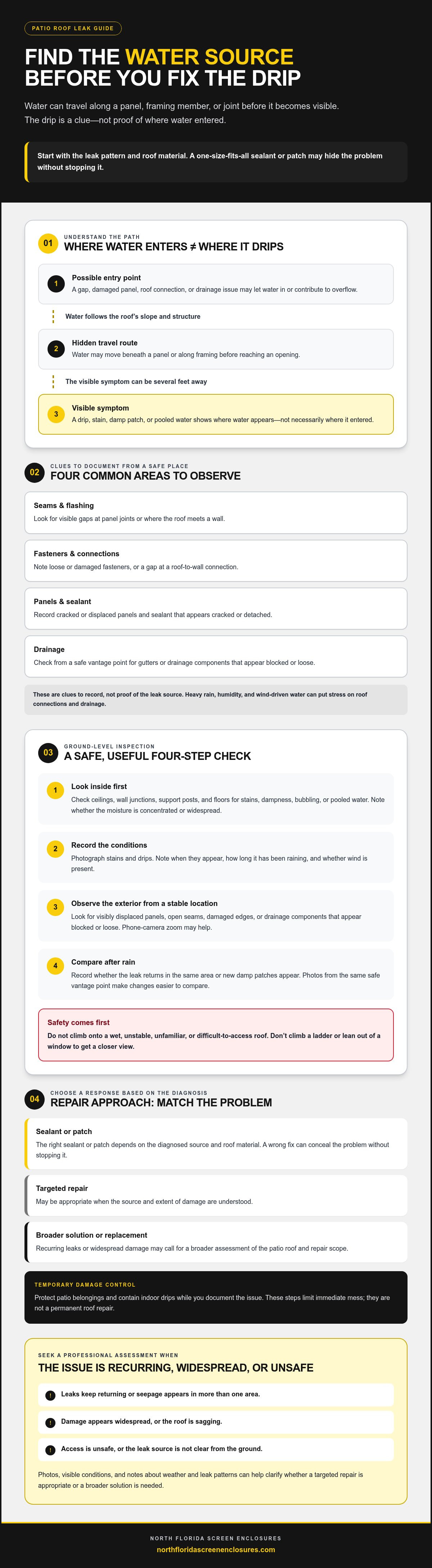
The spot where water drips onto the patio may be several feet from where it entered the roof. Water can move along a panel, framing member, or joint before finding an opening and falling. Treating only the visible drip may leave the actual leak untouched.
A patio-roof leak path is the route water takes from its entry point through or along the roof structure to where it becomes visible. A stain, damp patch, or drip is a symptom. A gap, damaged panel, or drainage issue may be the cause. In North Florida, heavy rain, humidity, and wind-driven water can put stress on roof connections and drainage. Coastal conditions may add exposure, though the effects vary with the roof’s design and condition.
Why water can appear far from the roof leak
Once water gets beneath a panel or past a joint, gravity and the roof’s slope guide it along the structure. It may travel across framing or follow a roof connection before dripping indoors. A single drip can point to a concentrated route, while broad dampness, spreading stains, or repeated seepage may suggest water is reaching more than one area. These patterns are useful clues, not proof of where water entered.
Record where and when the leak appears, including whether it happens only during heavy rain or when rain is accompanied by wind. Photos of the stain and any visible exterior damage can help you compare changes over time. Don’t assume the nearest seam or roof edge is the source.
Common patio roof leak causes to check first
From a safe viewing position, look for visible seam separation, damaged panels, or sealant that appears cracked or detached. These are clues to document, not a reason to climb onto the roof or apply a patch before the cause is understood.
Seams and flashing: Gaps at panel joints or where the roof meets a wall can allow water through. Flashing is material used to help protect joints and transitions from water entry.
Fasteners and connections: Loose or damaged fasteners, or a gap at a roof-to-wall connection, may create an entry point.
Panels and sealant: A cracked or displaced panel, or deteriorated sealant, may expose an opening. The right response depends on the roof material and the extent of damage.
Drainage: Blocked gutters or drainage that can’t carry water away may contribute to overflow or unwanted pooling. Assess their condition rather than assuming they are the source of an indoor drip.
Effective fixing a leaky patio roof begins with connecting visible clues to the leak pattern. If the source isn’t clear from the ground, a qualified assessment can help distinguish a targeted repair from a broader roofing concern.
How to Inspect a Leaky Patio Roof Without Taking Unnecessary Risks
A careful inspection starts indoors and stays on the ground. You can collect useful clues without climbing onto the patio roof or handling components that may be loose, wet, or damaged.
A ground-level checklist for tracing patio roof leaks
Look inside first. Check the ceiling, wall junctions, support posts, and floor for stains, dampness, bubbling, or pooled water. Note whether moisture is concentrated in one spot or appears across a wider area.
Record the conditions. Photograph stains and active drips, and note when they appear, how long it has been raining, and whether wind is present. Don’t assume the spot directly above a stain is the roof entry point.
Observe the exterior from a safe place. From the ground or another stable location, look for visibly displaced panels, open seams, damaged edges, or drainage components that appear blocked or loose. Use your phone camera’s zoom if helpful, but don’t lean out of a window or climb a ladder to get a closer view.
Compare what you see after rain. Record whether the leak returns in the same area or whether new damp patches appear. A consistent pattern may help a professional narrow down the cause.
Photos taken from the same safe vantage point make changes easier to compare. They also provide a useful record to share during an assessment.
When to stop inspecting and call a professional
Safety comes before finding the exact leak: don’t climb onto a wet, unstable, unfamiliar, or difficult-to-access roof. OSHA’s fall-protection standard addresses hazards for workers at height. For homeowners, the practical lesson is to avoid an unnecessary fall risk and leave roof access to qualified professionals.
Stop and seek an assessment if you notice sagging, loose components, recurring leaks, or signs that water may have reached concealed parts of the roof. A ground-level check can’t confirm what’s happening behind a panel or at a structural connection.
Keep clear of wet electrical fixtures and equipment. Don’t touch wiring, switches, or anything electrical that’s wet. If water is near an electrical hazard, stay away and contact a qualified professional.
These observations can help clarify whether fixing a leaky patio roof may involve a visible, localized issue or a concern that needs closer evaluation. If the findings point to a broader patio-roof project, you can review patio covers and elite roofing systems from North Florida Screen Enclosures, a locally owned Saint Augustine contractor.
Which Patio Roof Leak Repair Makes Sense: Sealant, Targeted Repair, or Replacement?
The right repair depends on where water is entering, what part of the roof is affected, and whether the damage is isolated or widespread. Sealant may help with some diagnosed gaps, but it isn’t a universal solution. Applying it over the visible drip can conceal symptoms without addressing the failed connection, damaged panel, or drainage issue allowing water in.
Think of the choices as different levels of response. Temporary measures help manage water indoors, while a lasting roof repair requires identifying and addressing the source.
When a limited repair may be appropriate
A targeted repair may be suitable when an inspection confirms one accessible, localized source and the surrounding roof remains sound. The proposed materials and method should be compatible with the roof’s material and construction. Ask which component will be addressed and how the repair relates to the diagnosed entry point. A patch that only covers a visible mark may not resolve water moving behind the roof surface.
Stopping the drip isn’t proof that the underlying leak is fixed. Water may take another path, or the problem may return with the next period of rain. Keep track of whether seepage recurs and share that information with the person assessing the roof.
When recurring leaks call for a broader assessment
Multiple leak locations, widespread deterioration, or repeated seepage can indicate that more than one component needs attention. A contractor can assess whether the appropriate scope is a targeted repair or a larger roofing project. For homeowners considering a broader patio-roof solution, North Florida Screen Enclosures provides elite roofing systems for Saint Augustine patio covers.
For general maintenance context, BC Housing’s Prepare for a Proper Repair guide describes roof inspection and upkeep. Use it as a reference, not a substitute for diagnosing a specific patio roof. Before work begins, confirm the proposed repair scope and material compatibility.
How to Handle a Patio Roof Leak and Prepare for a Proper Repair
Once you’ve spotted signs of a leak, focus on limiting indoor water damage and gathering useful information. Temporary steps can protect the patio and make an assessment more productive, but they don’t repair the roof itself.
What to do while waiting for the roof to be assessed
Move belongings. If it’s safe, shift furniture, cushions, electronics, and valuables away from active drips. Avoid walking through pooled water or reaching near wet electrical fixtures.
Contain the drip indoors. Place a stable container beneath the leak and keep the surrounding floor and walkways clear to reduce slip hazards. Empty the container as needed.
Record what’s happening. Take photos of active drips, damp areas, and visible roof conditions from safe locations. Note the weather and whether the leak changes as rain continues.
Arrange an assessment. Don’t apply exterior sealant in unsafe weather or climb onto the roof to make a temporary patch. An indoor container can limit mess, but it won’t stop water entering the roof.
These steps help protect belongings while you plan the next move. They aren’t a substitute for diagnosing and addressing the entry point.
What information helps a contractor diagnose the leak
Share your photos and notes, including where water appears, when the leak starts, and whether it worsens with heavier rain or wind. If you know the roof material or approximate age, include that too. Mention any previous repair attempts and whether they stopped the leak temporarily or made no difference. If you’re unsure about a detail, say so rather than guessing.
Before work is proposed, ask what the assessment covers and which suspected water path the recommended work is intended to address. Clarify whether the recommendation concerns one component or a broader section of the roof. This helps you understand the difference between a diagnosis, a defined repair scope, and a larger project. A surface patch alone may not address concealed damage or a leak entering elsewhere.
If you’re weighing a more substantial patio-roof project, review this custom patio cover and roofing guide for information about elite roofing systems for Saint Augustine patio covers.
For homeowners considering a broader patio-cover solution, explore patio cover and roofing options from North Florida Screen Enclosures, a locally owned contractor based in Saint Augustine. Confirm the company’s current assessment scope when discussing a specific leak.
When a Leaky Patio Roof Needs Professional Attention in Saint Augustine
Some leaks call for more than continued observation. Arrange a professional assessment if water keeps returning after rain, dampness spreads across multiple areas, roof components appear loose, or any part of the structure is sagging. An inspection is also the safer choice when the roof is difficult to reach. Don’t climb up to investigate a condition that may affect the roof’s stability.
It helps to separate three steps. Leak diagnosis means investigating likely water-entry points and following the evidence. A confirmed repair scope identifies the specific components and work proposed to address the diagnosed issue. A larger roofing project may be considered if the assessment finds broader deterioration or recurring problems that a limited repair may not resolve. A drip by itself doesn’t determine which option is appropriate.
Repair or upgrade: questions to ask before approving work
Before agreeing to work, ask the contractor to explain the suspected entry point and the observations supporting that conclusion. Request a clear description of the proposed work, materials, and any exclusions. Ask whether repeated leaks point to a need for a broader roof-system assessment. These details help you understand what the recommendation is intended to address and what it does not cover.
Explore patio roofing options with a local contractor
North Florida Screen Enclosures is locally owned and based in Saint Augustine, with confirmed offerings that include patio covers and elite roofing systems. Homeowners weighing a substantial upgrade can review the Saint Augustine patio-cover roofing systems guide to learn about broader patio-roof options.
For a specific leak, confirm directly whether the company’s current scope includes the assessment or repair you need. That keeps the conversation focused on your situation without assuming a particular service is available. If you’re considering a patio-cover project or want to discuss your roof’s needs, contact North Florida Screen Enclosures to ask about the appropriate next step.
Choose a Clear, Safe Path to a Sound Patio Roof
Fixing a leaky patio roof starts with tracing the water back to its likely entry point, not simply covering the spot where it drips. Stains, timing, and visible roof conditions can offer useful clues, but don’t risk climbing onto a wet or unstable structure to investigate.
Match the response to the diagnosis. Temporary steps such as moving belongings and catching drips can limit indoor mess, while a lasting solution depends on the roof material and the condition of the affected components. Recurring seepage, widespread damage, sagging, or unsafe access are reasons to arrange a professional assessment and clarify whether the concern calls for targeted work or a broader roofing project.
North Florida Screen Enclosures is locally owned and operated in Saint Augustine, with offerings that include patio covers and elite roofing systems. To discuss your patio roofing project and ask whether your needs fit the company’s current scope, contact North Florida Screen Enclosures. A careful assessment can help you identify an appropriate next step for your patio roof.
Frequently Asked Questions
Can I fix a leaky patio roof with sealant?
Sealant may help with some diagnosed joints or roof materials, but it isn’t a universal fix. Before using it, identify where water enters and check the roof-material manufacturer’s guidance or consult a qualified professional about compatibility. The visible drip may be distant from the entry point, and an unsuitable or poorly applied product can hide the evidence without stopping water from getting in. A dry spot indoors doesn’t confirm the roof is repaired.
How do I find where my patio roof is leaking?
Start indoors by noting stains, active drips, and damp areas along ceilings or walls, then record when they appear and the weather conditions. From the ground, look for obvious gaps or damage on visible roof areas. Water can travel along panels or framing before dripping, so the apparent leak location may be misleading. Don’t climb onto wet, unfamiliar, or unsafe roofing to investigate. Photos from a safe position can help document the pattern.
Is it safe to repair a patio roof myself?
Ground-level observations and containing indoor drips are generally safer than accessing the roof. Working above ground can involve falls, unstable surfaces, changing weather, and electrical hazards. Don’t walk on an unfamiliar roof, climb onto a wet surface, or handle wet electrical equipment. If you’re unsure about the structure, access, or repair method, stop and seek a qualified contractor’s assessment. Fixing a leaky patio roof safely starts with knowing what not to attempt.
What should I do when my patio roof leaks during heavy rain?
Move belongings away from the water if it’s safe, catch indoor drips with a stable container, and keep people clear of slippery areas. Take photos from a safe position and note the weather and where water appears. Don’t climb onto the roof or attempt exterior work in dangerous conditions. Arrange an assessment if the leak continues, spreads, or occurs alongside visible roof movement. Indoor water control can limit mess, but it won’t repair the roof.
Does a recurring patio roof leak mean I need a new roof?
No, a recurring leak doesn’t automatically mean the patio roof needs replacement. It may stem from a failed connection, a damaged component, an installation issue, or a broader condition affecting the roof. An inspection can help establish the likely cause and how much of the roof is involved. Ask the contractor to explain the evidence behind a proposed repair or replacement, and what the recommended work is intended to address.
When should I call a patio roof contractor in Saint Augustine?
Contact a contractor if leaks recur or spread, the roof appears to move or sag, concealed damage is suspected, access is unsafe, or you’re unsure which repair materials suit the roof. Ask whether the company assesses your type of patio-roof system and clarify the proposed scope. North Florida Screen Enclosures is locally owned in Saint Augustine and offers patio covers and elite roofing systems. Confirm directly whether leak assessment or repair is within its current service scope.

Comments