


Pool Area Hardscaping: Inspiring Design Examples for North Florida Homes

A beautiful backyard pool is often the centerpiece of a Florida home, yet the wrong materials can quickly turn a private paradise into a high-maintenance headache. In the intense heat and humidity of Saint Augustine, standard surfaces often become dangerously slippery or absorb so much solar energy they are impossible to walk on barefoot. Professional pool area hardscaping isn't just about aesthetics; it's a technical solution to the environmental challenges of our region, ensuring your outdoor space remains functional and safe for years to come.
You likely want a space that balances luxury with long-term resilience, and we agree that your investment deserves protection from soil shifts and salt air. In this article, you'll discover how to transform your backyard with durable, heat-resistant hardscaping examples tailored specifically for the North Florida climate. We'll preview inspiring design layouts using high-quality pavers and structural concrete that minimize upkeep while maximizing property value. From non-slip textures to the structural integrity of integrated aluminum pergolas, you'll learn how to create a safe, permanent oasis for your family.
Table of Contents
Understanding Pool Area Hardscaping for Florida Landscapes
Hardscaping refers to the man-made, structural features of your outdoor environment. While landscaping involves living elements like palms and turf, pool area hardscaping encompasses the permanent installations that define your space. In Saint Augustine, these elements serve as the literal foundation for your outdoor living. It's not just about aesthetics; high-quality hardscaping manages critical environmental factors, such as directing water runoff away from the pool and preventing soil erosion during heavy seasonal rains. We focus on the structural integrity of these installations because they must withstand the unique challenges of coastal North Florida, including shifting sandy soils and high humidity. Beyond functionality, a well-executed design significantly increases residential property value by extending the usable square footage of the home into the outdoors.
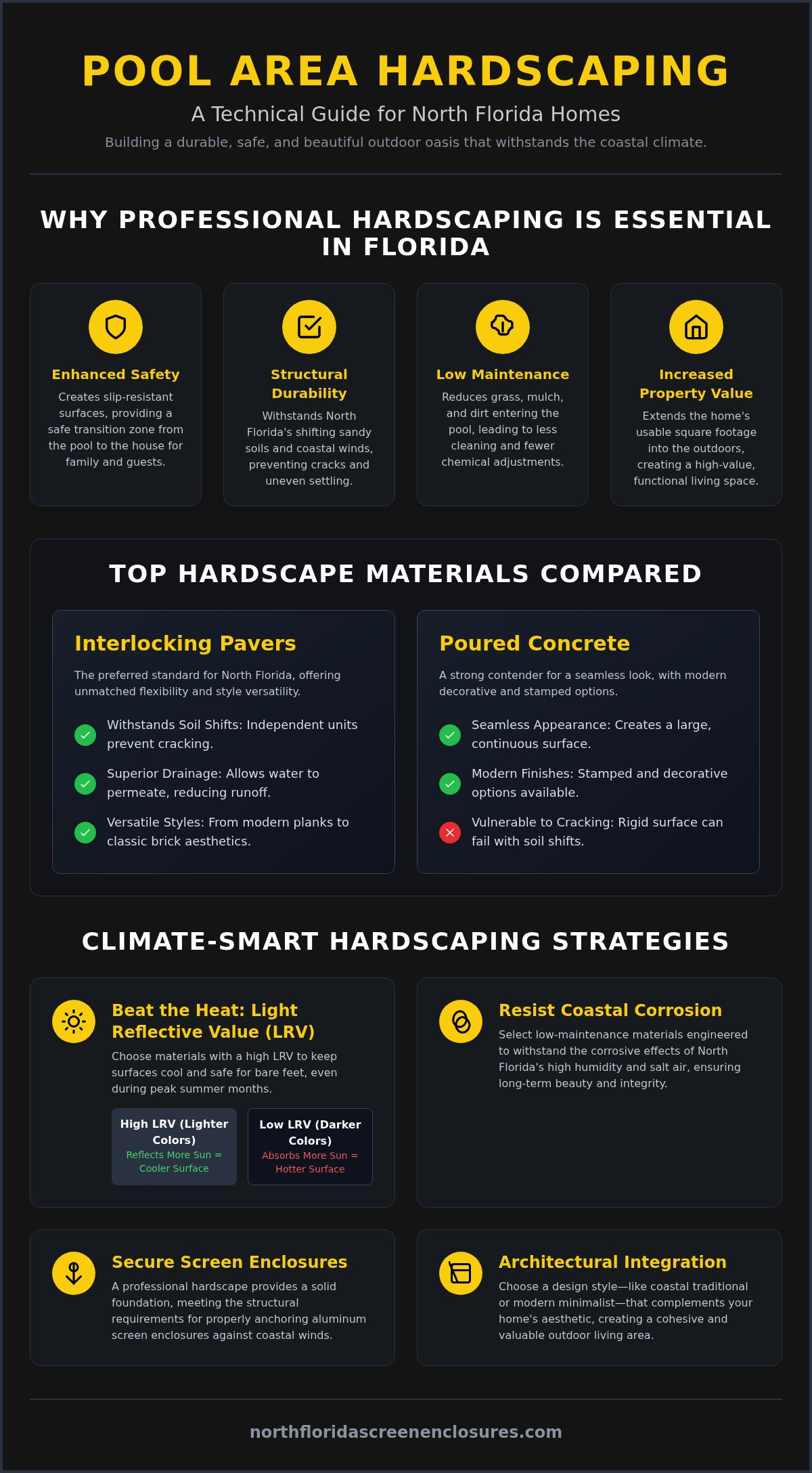
The Functional Benefits of Professional Hardscape Design
A professional design prioritizes the safety and utility of your pool deck. It creates a dedicated, slip-resistant transition zone that protects family members as they move between the water and the house. By establishing perfectly level surfaces, hardscaping provides the necessary stability for heavy outdoor furniture, fire pits, and summer kitchens. These surfaces are specifically engineered to remain stable despite the soil shifts common in our coastal region. Additionally, a clean hardscape perimeter acts as a barrier, significantly reducing the amount of grass, mulch, and dirt that enters your pool's filtration system. This technical approach translates to fewer chemical adjustments and less manual cleaning, protecting your pool equipment over the long term.
Hardscaping vs. Landscaping: Finding the Right Balance
We view hardscaping as the structural skeleton of the backyard, while landscaping provides the softening accents. Effective designs use pavers and concrete to define distinct "rooms," such as a dedicated sunbathing area or a shaded dining space, which brings professional order to the landscape. Integrating native Florida plants into the borders of these hardscape features creates a lush, natural look without compromising the structural integrity of the deck. For many homeowners in North Florida, a hardscape-heavy approach is the ultimate low-maintenance solution. It eliminates the need for constant mowing and irrigation in high-traffic areas, allowing you to spend more time enjoying the water and less time maintaining the grounds. This balance ensures your backyard remains a durable, high-performance environment that looks as good as it functions.
Top Hardscape Material Examples: Pavers, Concrete, and Stone
Material selection is the most significant decision you'll make when planning your deck. It dictates how the surface feels underfoot, how it handles the intense Florida sun, and how well it resists the inevitable movement of our coastal soil. In Saint Augustine, pool area hardscaping has transitioned away from simple gravel or wood toward more permanent, resilient solutions. While gravel can migrate into your filtration system and wood requires constant sealing, pavers and concrete offer a structural permanence that withstands our local humidity. Selecting the right material requires balancing immediate installation costs with the long-term value of a surface that won't crack or settle unevenly.
Paver Patios: The Versatile Choice for Florida Homes
Interlocking pavers have become the primary recommendation for North Florida homeowners due to their flexibility. Our region's sandy soil is prone to minor shifts, which can cause rigid surfaces to fail. Pavers distribute weight across independent units, allowing the ground to breathe and move without causing visible cracks in the deck. You aren't limited in style, either. You can select tumbled stone for a Mediterranean feel, modern planks for a contemporary look, or traditional bricks for a classic coastal aesthetic. For a comprehensive look at these choices, explore our Florida Paver Patio Design: Styles & Installation Guide. This versatility ensures that your patio remains both functional and visually striking for decades.
Decorative and Stamped Concrete Options
Concrete remains a strong contender for homeowners seeking a large, seamless transition between the pool and the home. The technology has advanced beyond standard broom finishes; stamped concrete can now replicate the texture of high-end slate or natural stone at a different price point. It's particularly effective for expansive outdoor living areas where a uniform look is desired. However, maintaining concrete in a humid environment requires diligence. Regular sealing is necessary to prevent moisture penetration and preserve the color against UV fading. If you're evaluating the financial aspect of this material, our Concrete Patio Cost in Florida: 2026 Pricing & Comparison Guide provides a transparent look at regional expectations.
Selecting the right material is the first step toward a worry-free backyard. Whether you prefer the modular strength of pavers or the sleek finish of stamped concrete, our team can help you build a durable paver patio that serves as the perfect foundation for your outdoor lifestyle.
Design Styles: From Modern Minimalist to Coastal Traditional
Selecting the right aesthetic for your pool area hardscaping requires a technical eye for architectural synergy. The goal is to create a seamless transition where the hardscape feels like a natural extension of the home's interior. In Saint Augustine, we categorize most successful designs into two primary directions: the sleek, geometric precision of modern coastal styles or the warm, textured appeal of traditional Florida architecture. Your choice of color palette and material texture doesn't just impact the look; it defines how you navigate the space. For example, using a different paver texture around the pool edge creates a tactile "warning zone" for safety, while smoother surfaces are better suited for dining and lounging areas.
The Modern Coastal Aesthetic
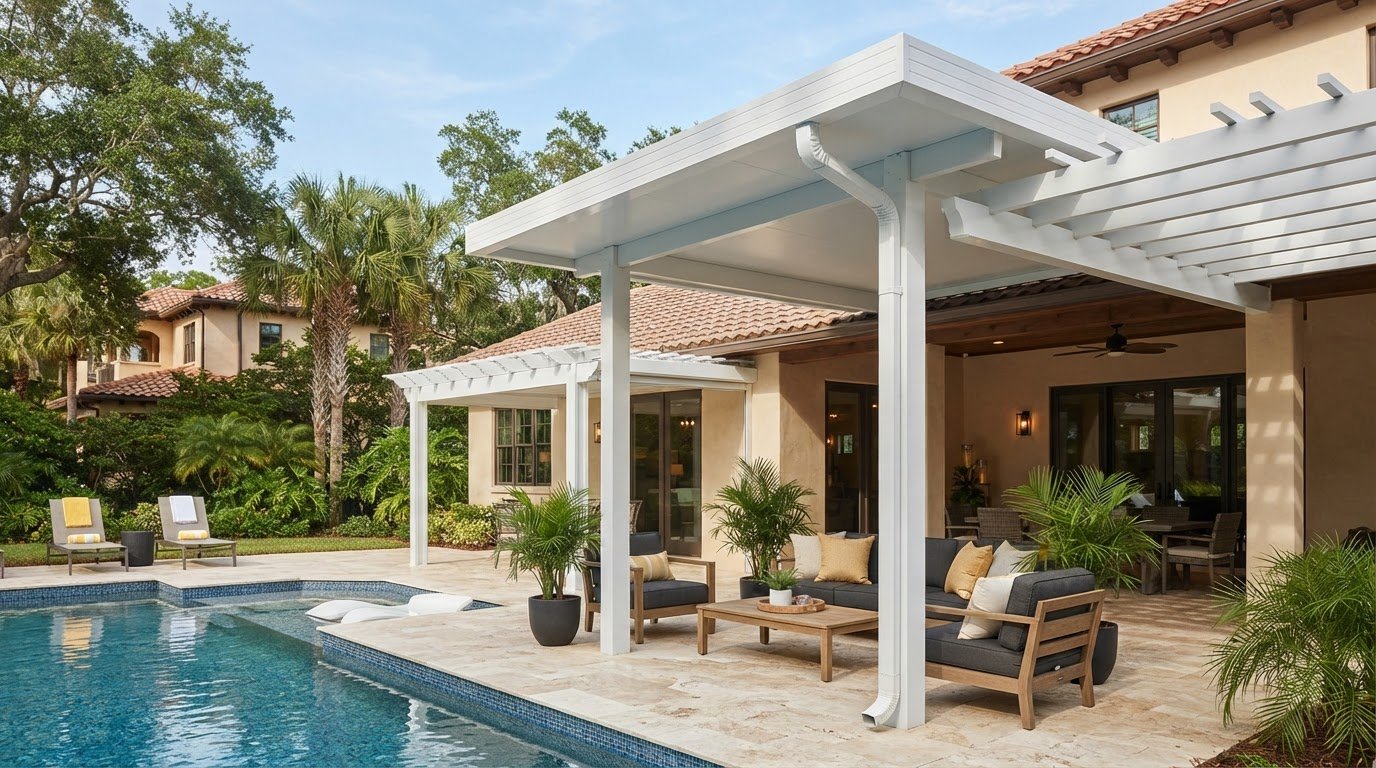
Modern coastal design focuses on clean lines and a neutral color palette to create an expansive, airy feel. We often utilize large-format pavers in light gray or white tones. These larger units minimize the number of joint lines, which results in a sleek, uninterrupted surface that makes smaller backyards appear much larger. This style pairs exceptionally well with our high-performance aluminum pergolas. These structures provide a striking geometric contrast to the pool's water while offering essential shade. Because aluminum resists the corrosive salt air of North Florida, it maintains its crisp finish much longer than traditional wood. This minimalist approach serves to highlight the structural elegance of a high-end pool enclosure, focusing the eye on the quality of the materials and the precision of the installation.
Traditional Saint Augustine Charm
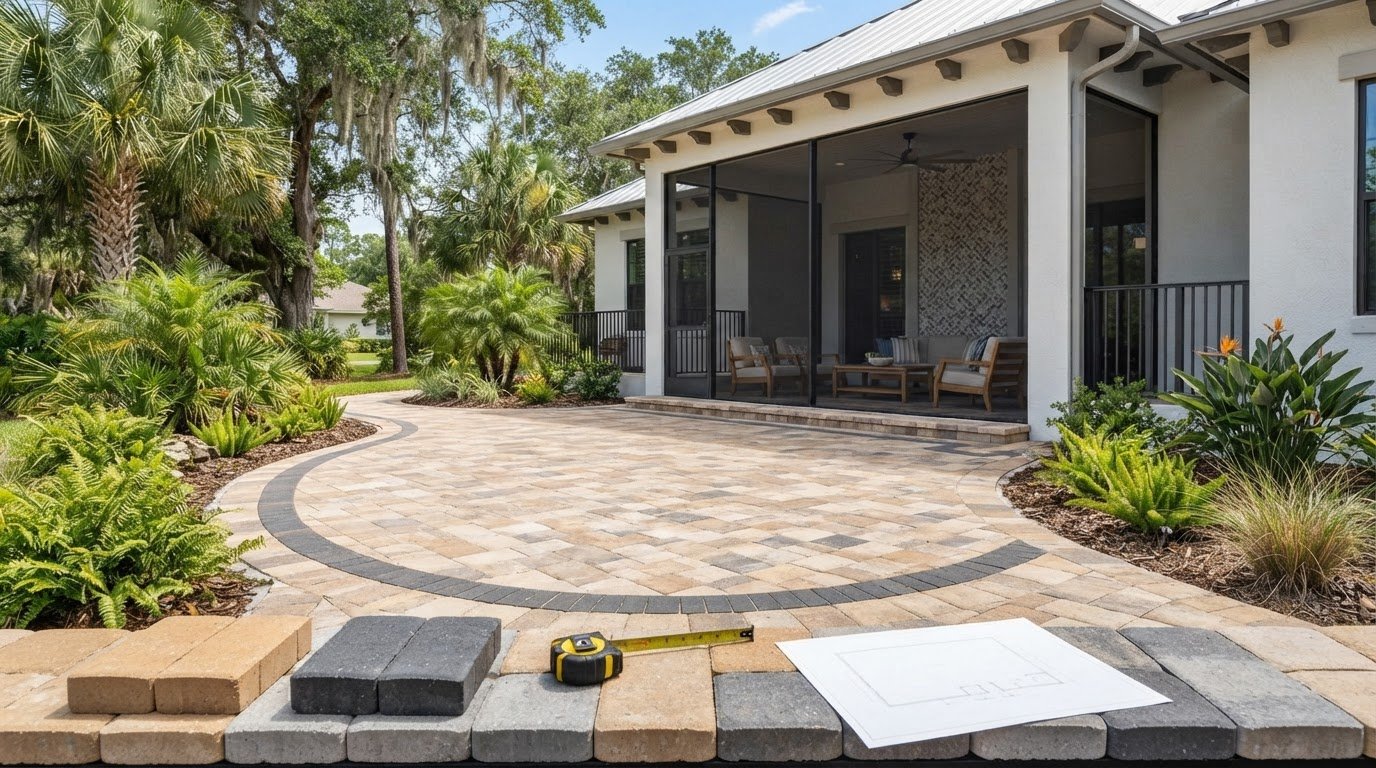
For homes that mirror the historic architecture of our region, a traditional design offers a timeless "Old Florida" atmosphere. This style favors earth-toned pavers, natural stone accents, and curved lines that follow the organic flow of the landscape. You can achieve this look by incorporating the following elements:
Classic Brick Patterns: Using herringbone or basketweave patterns with clay-toned pavers to echo the historic streets of downtown Saint Augustine.
Integrated Planters: Building low-profile masonry walls that serve as permanent planters for lush, native Florida greenery.
Natural Stone Accents: Incorporating textured stone on vertical surfaces like retaining walls to add depth and visual weight.
Vertical hardscaping is a critical component of these traditional designs. We often install built-in seating walls and retaining walls to manage elevation changes in the yard. These features provide permanent functionality and eliminate the need for extra furniture that can clutter the deck. By using heavy-duty masonry for these elements, we ensure they remain stable and beautiful despite the humidity and seasonal storms common in our coastal environment.
Low-Maintenance and Heat-Resistant Hardscaping Strategies
Technical performance is just as critical as aesthetic design when planning a backyard in Saint Augustine. In our region, pool area hardscaping must perform under the constant duress of intense UV radiation and corrosive salt air. It's not enough for a deck to look high-end; it has to remain safe for bare feet when ambient temperatures climb. This requires a technical understanding of Light Reflective Values (LRV). Materials with high LRV reflect a larger percentage of solar energy, which prevents the surface from absorbing and retaining heat. We prioritize these specifications to ensure your outdoor oasis remains a comfortable environment even during the peak of the Florida summer.
Mitigating the Florida Heat
Selecting light-colored travertine or specialized concrete pavers is the most effective way to lower surface temperatures. Natural stone often stays cooler than dark-tinted man-made materials because of its physical density and reflective properties. For example, light gray or tan travertine doesn't just look coastal; its molecular structure allows it to stay significantly cooler than standard dark brick. Beyond material choice, we often integrate structural shade solutions into the design. An aluminum pergola provides a permanent, geometric interest point that serves a functional purpose by casting shade over high-traffic zones. This combination of reflective materials and strategic shade significantly reduces the risk of foot burns for your family.
Durability in a Coastal Environment
Saint Augustine's climate presents challenges beyond the heat. Heavy seasonal rainfall and high humidity can quickly degrade poorly installed surfaces. Professional outdoor living space construction focuses on precision grading to move water away from the pool and the home's foundation. We also utilize high-performance materials that resist the growth of mold and mildew. To minimize maintenance, we implement several technical safeguards:
Polymeric Sand: We use specialized sand that hardens between paver joints to create a durable barrier. This prevents weed growth and ensures the sand stays in place during heavy storms.
Non-Porous Sealing: Applying professional-grade sealants protects concrete and stone from salt air corrosion and moisture penetration.
Aluminum Integration: Utilizing aluminum for vertical structures ensures that your pergolas and railings won't rust or rot in our humid environment.
By focusing on these structural details, we create a space that requires minimal upkeep and retains its integrity for years. If you're looking for a surface that stays cool and stands up to the coastal elements, request a quote for a durable paver patio today.
Integrating Hardscapes with Pool Screen Enclosures
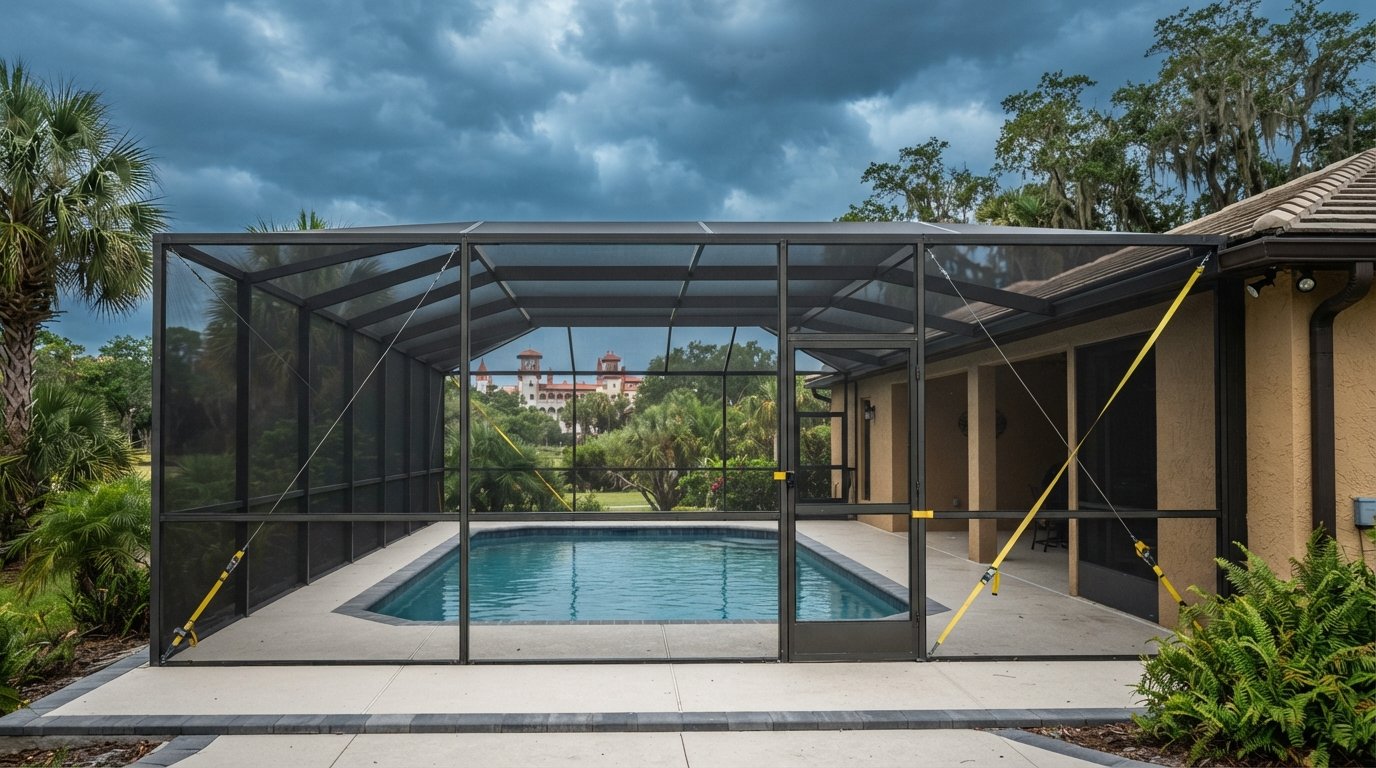
A common mistake in backyard planning is treating the pool deck and the screen enclosure as separate projects. In reality, the success of your pool area hardscaping depends on its ability to support the weight and wind-load requirements of a hurricane-rated enclosure. The hardscape serves as the literal foundation for the aluminum cage, providing the structural points where the entire system is anchored. When these elements are designed together, you ensure that the perimeter of the deck is perfectly aligned with the enclosure's base tracks. This coordination prevents gaps that could allow pests to enter and ensures that gutter drainage systems are properly integrated to prevent water from pooling against the home's foundation.
Structural Synergy: Footings and Anchors
Stability in North Florida's sandy soil requires more than just placing pavers on a sand bed. For homeowners planning a screen enclosure, we install reinforced concrete footings beneath the pavers at every primary post location. These footings provide a solid, deep-set anchor point for the heavy-duty fasteners that secure the aluminum structure. Without this internal reinforcement, the weight and wind pressure on the enclosure could cause pavers to shift or lift over time. Professional contractors prioritize this seamless fit to maintain the structural integrity of both the deck and the cage. This level of technical planning is a core part of specialized pool enclosure installation, ensuring the system remains secure during high-wind events while maintaining a clean, professional finish.
Creating Multi-Zone Outdoor Environments
Strategic hardscaping allows you to define different functional areas within the protected environment of your enclosure. You can use varied paver patterns or slight elevation changes to create a distinct "dry zone" for dining under a patio cover, separate from the splash zone of the pool. Integrating aluminum balcony railings or low-profile pergolas into the hardscape design adds layers of safety and visual interest without obstructing the view. A well-planned layout also facilitates a natural transition from the screened area to open-air features, such as a paver fire pit zone. By using consistent materials throughout these transitions, you maintain a cohesive aesthetic that enhances the view from both inside the enclosure and from your home's interior windows. This integrated approach to pool area hardscaping ensures that every square foot of your backyard serves a specific, functional purpose while contributing to the overall value of your property.
Build Your Permanent Backyard Oasis
Transform your backyard into a functional, resilient space by selecting the right materials and design styles for our unique climate. High-performance pool area hardscaping provides more than just a beautiful surface; it serves as the essential structural foundation for your outdoor lifestyle. By choosing heat-reflective pavers and ensuring your deck is engineered to support a hurricane-rated enclosure, you protect your long-term investment against the harsh Florida environment. These technical choices ensure your family enjoys a safe, non-slip environment that remains comfortable even during the peak of summer.
As Saint Augustine’s trusted local specialists, we take pride in delivering expert installation of durable, hurricane-rated outdoor structures tailored for coastal living. Our team focuses on high-quality pavers and concrete work designed to withstand shifting soils and salt air. You can take the first step toward a safer, more valuable home today. Request a Free Hardscaping Quote from North Florida Screen Enclosures and let us help you create a lasting outdoor retreat for your family. We look forward to helping you build a space you'll enjoy for years to come.
Frequently Asked Questions
What is the best hardscape material for a pool deck in Florida?
Travertine and high-quality concrete pavers are widely considered the best materials for Florida pool decks due to their durability and thermal properties. Travertine stays naturally cool under the intense sun, while interlocking pavers provide the flexibility needed for Saint Augustine's shifting sandy soil. These materials offer superior slip resistance and long-term structural integrity compared to wood or standard concrete. Selecting the right material is a fundamental step in successful pool area hardscaping projects.
How much does pool area hardscaping cost in Saint Augustine?
The total investment for hardscaping in Saint Augustine depends on several technical factors, including the square footage, material selection, and necessary site preparation. Professional installation involves precision grading to ensure proper drainage and the creation of stable sub-bases. While we don't provide fixed pricing without a site assessment, homeowners should consider the long-term value of durable materials that resist the corrosive effects of coastal salt air and high humidity levels.
Are pavers better than concrete for a pool area?
Pavers are often superior to traditional concrete slabs for pool decks because they are modular and flexible. In North Florida, sandy soil often shifts, which causes solid concrete to develop unsightly cracks over time. Interlocking pavers distribute weight and movement across individual units, preventing structural failure. Additionally, pavers allow for easier access to underground plumbing or electrical lines, as individual pieces can be removed and replaced without leaving a visible patch.
How do I keep my pool deck cool in the Florida sun?
Keeping your deck cool requires selecting materials with high Light Reflective Values (LRV), such as light-toned travertine or white concrete pavers. These surfaces reflect solar energy rather than absorbing it, which keeps the temperature safe for bare feet. Integrating structural shade elements, like an aluminum pergola, provides additional relief from direct UV rays. This strategic approach to pool area hardscaping ensures your outdoor space remains a comfortable environment during the peak of the Florida summer.
Can I install a pool enclosure over an existing paver patio?
You can install a pool enclosure over an existing paver patio, but it requires specific structural modifications to ensure safety. Standard pavers alone cannot support the wind-load requirements of a hurricane-rated enclosure. Professional installers must remove specific pavers to pour reinforced concrete footings at each primary post location. This creates a solid anchor point that secures the aluminum structure to the ground, providing the necessary stability to withstand seasonal storms and high coastal winds.
How do I prevent weeds from growing in my pool area pavers?
The most effective way to prevent weed growth between pavers is the application of polymeric sand during the installation process. This specialized material contains binders that harden when activated by water, creating a durable seal within the joints. This barrier makes it nearly impossible for seeds to take root. It also prevents the sand from washing away during heavy North Florida rainstorms, which maintains the structural alignment and stability of your entire deck surface.
What maintenance does a paver pool deck require in North Florida?
A paver pool deck in North Florida requires minimal but consistent maintenance to preserve its appearance and structural integrity. We recommend professional pressure washing once or twice a year to remove organic growth like algae or mildew caused by high humidity. Applying a high-quality sealant every three to five years is also essential. This protective layer guards against UV fading, prevents moisture penetration, and resists the corrosive effects of the coastal salt air.
Does pool area hardscaping require a permit in Saint Augustine?
Most hardscaping projects in the Saint Augustine area do require local building permits, especially when they involve changes to drainage or structural footings. Permitting ensures that your project complies with Florida building codes regarding water runoff and environmental impact. Requirements can vary depending on whether your property is in a historic district or near protected wetlands. We recommend consulting with your local building department or a licensed contractor to verify the specific regulations for your site.
Comments