


Professional Concrete Patio Installation in Saint Augustine: The Complete Homeowner’s Guide

In Saint Augustine, your backyard isn't just dirt; it's a shifting foundation of sandy soil that can easily compromise a poorly planned construction project. You've likely worried that a new slab will crack within a year or become an unbearable heat trap during the brutal July afternoons. These are valid concerns for any local homeowner. A successful concrete patio installation Saint Augustine project requires more than just pouring a mix; it demands a deep understanding of coastal drainage, soil stability, and the specific structural needs of our region.
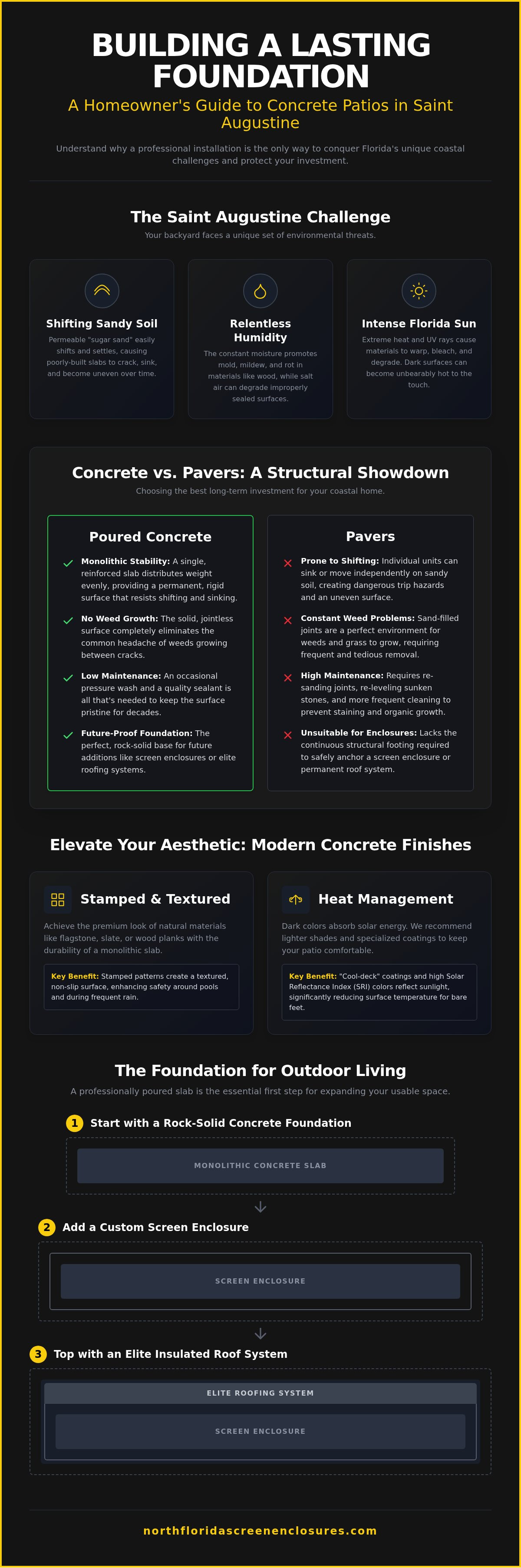
You deserve an outdoor space that offers long term value and peace of mind. This guide simplifies the entire process by explaining exactly what goes into a durable, professional installation. We will cover the current 30 percent reduction in St. Johns County permit fees and the technical steps needed to prevent shifting in our unique environment. You'll also learn how to plan a slab that serves as a rock solid foundation for future additions like a screen enclosure or an elite roofing system. By the end, you'll have a clear roadmap for timelines and the professional standards that ensure your investment stands the test of time.
Table of Contents
Planning Your Foundation: Why Concrete Patios Suit the Saint Augustine Climate
Selecting a material for your backyard in North Florida requires a balance between aesthetics and raw endurance. A professional concrete patio installation Saint Augustine homeowners invest in often serves as the primary outdoor living area because it provides a permanent, rigid surface that other materials simply can't match. Unlike wood decks that eventually rot in our humidity or loose gravel that washes away during a typical summer squall, concrete offers a structural longevity that spans decades. It's the standard for coastal properties where the environment is relentlessly aggressive. The monolithic nature of a poured slab also eliminates the issue of weed growth between joints, which is a common headache with traditional paver systems.
Resisting the Florida Elements
The Saint Augustine climate presents a specific set of challenges, primarily involving "sugar sand" soil and high UV exposure. Because our soil is highly permeable and prone to shifting under load, a monolithic pour is essential for long-term stability. This single, continuous slab distributes weight evenly across the footprint, preventing the individual sinking or tripping hazards often seen with smaller, unlinked units. Concrete is a composite material optimized for coastal load-bearing, combining cement, water, and aggregates into a dense, rigid structure. It remains stable during the intense heat cycles of a Florida summer and resists the erosive forces of heavy tropical rain. This resilience makes it the ideal choice for homeowners who want a "set it and forget it" solution that won't warp or bleach under the punishing sun.
Maintenance and Longevity in St. Johns County
Longevity in our region depends heavily on how the surface is finished and protected. While basic broom-finished slabs are a reliable choice, many homeowners now explore various decorative concrete options to enhance their home's aesthetic while maintaining the material's inherent strength. Because of the high humidity in St. Johns County, porous surfaces can quickly attract mold and mildew. However, concrete is exceptionally easy to maintain; a routine pressure wash and the application of a high-quality sealant will keep the surface pristine and prevent salt air from penetrating the slab. A professional concrete patio installation Saint Augustine project is designed to withstand these variables through precise engineering. A seasoned local contractor ensures the subgrade is properly compacted and reinforced, providing a stable foundation that can support future upgrades like elite roofing systems or screen enclosures.
Decorative Options: Elevating the Aesthetic of Your Concrete Patio
Many homeowners assume a professional concrete patio installation Saint Augustine project results in a plain, industrial gray slab. While standard concrete is functional, modern techniques allow us to transform the surface into a sophisticated design element. We utilize specialized stamps and coloring methods to replicate the high-end appearance of natural materials like flagstone, slate, or even hardwood planks. This versatility ensures your outdoor space complements the specific architectural style of your home while maintaining the structural integrity of a monolithic pour.
Stamped and Textured Finishes
Stamped concrete is particularly effective for achieving a premium look without the maintenance challenges of individual stones or pavers. In Saint Augustine, the ashlar slate pattern in warm earth tones is one of the most requested styles because it provides a timeless, organic feel. Beyond aesthetics, texturing is a critical safety feature. These stamped patterns create a tactile surface that significantly improves traction during Florida's frequent afternoon downpours. By choosing a textured finish, you reduce the risk of slips on wet surfaces, making it a practical choice for families and pool-adjacent areas.
Heat Management and Color Selection
Managing surface temperature is a primary concern in the North Florida sun. Darker colors absorb solar energy, which can make a patio uncomfortable for bare feet in July. We recommend lighter shades and specialized "cool-deck" coatings to help reduce heat islands within your own backyard. The solar reflectance index (SRI) measures a material's ability to reject solar heat; higher SRI values translate to cooler surface temperatures. For the best long-term results, we often suggest integral color, where the pigment is mixed throughout the concrete, rather than surface staining which may fade under intense UV exposure.
When you're planning these aesthetic upgrades, it's helpful to think about how they'll integrate with your home's exterior. Our team specializes in professional concrete work that serves as a beautiful, durable base for any future aluminum additions. By selecting the right combination of texture and color now, you ensure your patio remains a comfortable and visually appealing part of your property for years to come.
Concrete vs. Pavers: Choosing the Best Fit for Your Backyard
Homeowners in Saint Augustine often weigh the benefits of a solid slab against the modular look of pavers. While both options enhance your outdoor living area, the decision usually rests on your long-term maintenance preferences and structural goals. Concrete stands out for its sheer resilience and simplicity. It doesn't allow weeds to sprout through the surface, and it won't shift underfoot like individual stones might in our local sandy soil. When you choose a monolithic pour, you're investing in a permanent fixture that maintains its level profile for decades without the need for recurring adjustments.
Cost and Installation Timelines
A professional concrete patio installation Saint Augustine project typically requires a lower initial investment than a premium paver layout. The labor involved in a monolithic pour is significantly more efficient than the piece-by-piece placement required for pavers. While pavers have high material costs and intensive site preparation requirements, concrete allows for a faster turnaround from the initial dig to the final finish. You save on both the upfront price and the future costs of re-sanding and weed control. For homeowners interested in a more detailed look at the modular alternative, you can explore our Florida Paver Patio Design: Styles & Installation Guide to compare the two side-by-side.
Structural Integrity for Future Upgrades
Structural stability is where concrete truly excels, especially for those planning a multi-phase backyard renovation. If you intend to add a heavy aluminum structure later, a solid slab provides a superior anchor for pool enclosure installation. Pavers are prone to shifting over time under the constant tension and weight of a screen frame, which can lead to structural misalignment or gaps. We often hear concerns about cracking, but this is a manageable characteristic of the material when handled by experts. We use strategically placed control joints to dictate where the concrete expands and contracts during temperature shifts. This prevents random, unsightly fractures and preserves the slab's integrity. By choosing concrete, you're building a foundation that can safely support the vertical posts of a screen enclosure or an elite roofing system without the risk of individual stones sinking under the load.
The Installation Process: What Homeowners Should Expect
A professional concrete patio installation Saint Augustine project follows a methodical sequence to ensure the finished product meets both local building codes and your high standards for quality. Because our coastal environment is unforgiving, we don't cut corners during the preparation phases. The process begins with a clear plan that accounts for your home's existing footprint and your future goals for the space. Timing is especially critical in Florida; we coordinate the pour to avoid the unpredictable afternoon thunderstorms that can ruin a fresh finish. From the initial layout to the final seal, every step is executed with a focus on structural integrity and long term resilience.
Permitting and Local Regulations
Navigating the bureaucracy of St. Johns County is the first major milestone. Currently, the Board of County Commissioners has extended a 30 percent reduction in all general building permit fees, which provides significant relief for homeowners investing in their property. We handle the complexities of impervious surface ratios, ensuring your new patio doesn't exceed the allowable non-porous coverage for your specific zoning district. For any project exceeding $5,000, a recorded Notice of Commencement is required before the first inspection can take place. Working with a licensed contractor is essential because the county requires professional verification of setbacks and drainage plans before the concrete is ever poured.
Drainage and Site Preparation
Proper site preparation is the foundation of a crack-free patio. We begin by removing all vegetation and organic matter that could decompose and cause voids under the slab. Because Saint Augustine sits on "sugar sand" soil, we prioritize subgrade compaction to create a stable, non-shifting base. We also engineer a slight pitch into the slab to manage water runoff, directing heavy rain away from your home's foundation and toward established drainage areas. Residential concrete slabs in North Florida are typically engineered with a compressive strength of 3,000 to 4,000 psi to ensure long term durability under structural loads. This high psi rating, combined with rebar or wire mesh reinforcement, prevents the sinking and "spider web" cracking common in DIY attempts.
Once the concrete is poured and finished, the curing process begins. We apply high quality sealants that protect the surface from salt air corrosion and UV damage, preserving the color and texture you've selected. If you're ready to begin your backyard transformation, contact our team for professional concrete work that adheres to all St. Johns County standards and provides a reliable foundation for your home.
The Foundation for Outdoor Living: Integrating Enclosures
A concrete slab is far more than just a surface to place furniture. In North Florida, it functions as a structural footing designed to support the significant weight of future aluminum additions. A successful concrete patio installation Saint Augustine homeowners can rely on must account for the downward pressure and uplift forces associated with elite roofing systems or high-performance screen enclosures. By engineering the slab with specific thickness and reinforcement at the perimeter, we create a stable platform that prevents the aluminum frame from twisting or sagging over time. This holistic approach ensures that your hardscaping and aluminum construction work in perfect harmony.
Anchoring Your Screen Enclosure
The long-term safety of a screen enclosure depends on the quality of its connection to the concrete. We utilize high-grade Tapcon fasteners to secure the aluminum tracks directly into the cured slab. For hurricane-rated structures, the slab's edge must be thick enough to handle the tension created by high winds. If a slab is too thin or the concrete is poor quality, these anchors can pull out or cause the concrete to spall during a storm. Understanding the relationship between the slab and the fasteners is vital, as seen in our guide on Expert Pool Enclosure Repair in St. Augustine, which details how we restore structural integrity when these connections fail.
Creating a Seamless Transition
Designing the patio footprint requires precision to accommodate vertical posts for pergolas or patio covers. We ensure the surface is perfectly level where aluminum balcony railings will be installed, as even a minor slope can cause unsightly gaps or alignment issues in the railing system. A professional layout also includes a strategic pitch to prevent water from pooling against the enclosure tracks. Standing water is a primary cause of fastener corrosion and mold growth, so we engineer the drainage to move moisture away from the aluminum components. This level of detail is why we manage the entire project from the ground up. If you're ready to build your backyard oasis with a team that understands the intersection of hardscaping and aluminum, contact North Florida Screen Enclosures for a custom quote today.
Building Your Durable Saint Augustine Outdoor Foundation
Investing in a high quality outdoor space starts with understanding the unique environmental demands of North Florida. Throughout this guide, we've explored how a professional concrete patio installation Saint Augustine project provides a stable, monolithic foundation that resists shifting in our sandy soil and stands up to coastal humidity. By prioritizing proper site preparation and current St. Johns County permitting standards, you ensure your backyard is ready for long term enjoyment and future structural upgrades.
North Florida Screen Enclosures is locally owned and operated in Saint Augustine, specializing in hurricane-rated outdoor structures that protect your investment. Our team is A+ rated for structural integrity and customer service, reflecting our commitment to diligent craftsmanship on every slab we pour. Whether you're looking for a decorative stamped finish or a rock-solid footing for a new screen enclosure, we provide the technical expertise needed for a successful build. Request a Free Estimate for Your Concrete Patio and Enclosure Project today to start designing a backyard oasis that will last for generations. We look forward to helping you transform your outdoor living environment with confidence and precision.
Frequently Asked Questions
Do I need a permit for a concrete patio in Saint Augustine?
Yes, St. Johns County requires a permit for residential concrete work to ensure compliance with local zoning and drainage regulations. Homeowners can currently benefit from a 30 percent reduction in all general building permit fees, which was extended by the Board of County Commissioners to provide local relief. Projects exceeding $5,000 also require a recorded Notice of Commencement. A licensed contractor handles these filings to ensure your project meets the specific impervious surface ratio requirements for your property.
How much does concrete patio installation cost per square foot in St. Johns County?
The total investment for a concrete patio installation Saint Augustine project depends on several variables, including the slab size, the complexity of site preparation, and your choice of decorative finishes. While a basic broom-finished slab is the most economical option, stamped patterns or specialized "cool-deck" coatings require additional labor and materials. We recommend requesting a custom quote to get an accurate estimate that accounts for current material prices and the specific structural needs of your backyard.
How long does it take for a new concrete patio to cure in Florida humidity?
Most concrete patios are ready for light foot traffic within 24 to 48 hours, though the material takes approximately 28 days to reach its full structural design strength. Florida's high humidity actually supports the curing process by preventing moisture from evaporating too quickly, which results in a more resilient slab. You should wait at least one week before placing heavy furniture on the surface and avoid driving vehicles on the new concrete until the full curing period is complete.
Will my concrete patio crack in the sandy Saint Augustine soil?
Cracking is a natural characteristic of concrete, but professional installation techniques significantly reduce this risk. During a concrete patio installation Saint Augustine homeowners often worry about our local "sugar sand" shifting under the slab. We mitigate this by prioritizing thorough subgrade compaction to create a stable, non-shifting base. We also install strategically placed control joints that act as planned "weak spots," encouraging the concrete to expand and contract in straight lines rather than forming random fractures.
Can I build a pool enclosure on top of an existing concrete patio?
You can build a pool enclosure on an existing patio only if the slab was originally engineered with thickened footings to support the structural load. Standard four-inch residential slabs often lack the perimeter strength to handle the wind-load and uplift requirements of a hurricane-rated structure. If your current patio isn't sufficient, we can often pour a new, structurally sound foundation specifically designed to anchor your aluminum enclosure or elite roofing system safely and permanently.
What is the best concrete finish for a patio that gets direct Florida sun?
Lighter colors and textured finishes are the most effective choices for patios exposed to intense Florida sun. Darker pigments absorb solar energy and can become uncomfortably hot for bare feet during the summer months. A broom finish or a light-colored stamped pattern provides excellent traction during afternoon rain showers while maintaining a higher solar reflectance index. For maximum comfort, consider a specialized coating designed to lower surface temperatures and protect the slab from UV damage.
How do I maintain my concrete patio to prevent mold and mildew?
Preventing mold and mildew in our humid coastal climate requires routine cleaning and the application of a high-quality breathable sealant. You should pressure wash the surface at least once a year to remove organic buildup and salt spray from the air. Applying a professional-grade sealer every two to three years creates a protective barrier that prevents moisture from penetrating the pores of the concrete. This simple maintenance schedule preserves the structural integrity and keeps your finish looking pristine.
Comments