


2026 Guide: Pool Enclosure Screen Types in Saint Augustine
- Michael Caruso

- Aug 9
- 12 min read
The strongest mesh on the market won't save your pool enclosure if the fasteners securing the frame have already been compromised by Saint Augustine's salt air. While many homeowners focus solely on the mesh, the reality is that your choice of pool enclosure screen types Florida must be paired with structural integrity to survive a major storm. It's a common mistake to overlook how the mesh and the frame work together as a single system to protect your outdoor living space.
You want a backyard oasis that doesn't require constant repairs every time a summer squall or a swarm of no-see-ums rolls through. It's frustrating to watch a screen you've invested in tear under pressure or fail to keep out the tiniest pests. This 2026 guide will help you identify the specific materials and mesh sizes that offer the best defense against Florida's intense heat and 110 mph wind load requirements. We'll explore high-performance polyester options, specialized no-see-um barriers, and why your next re-screen is the vital time to inspect your structural Tapcons for long-term stability.
Table of Contents
Understanding Florida Pool Screen Materials: Fiberglass vs. Polyester
Selecting the right material is the first step in ensuring your enclosure survives the harsh North Florida environment. The primary pool enclosure screen types Florida homeowners choose between are fiberglass and polyester. While they might look similar from a distance, their chemical composition and reaction to Saint Augustine's coastal elements differ significantly. The intense solar heat and corrosive salt air in our region act as a constant abrasive force on these materials, making durability a necessity rather than a luxury.
Standard Fiberglass: The Budget-Friendly Baseline
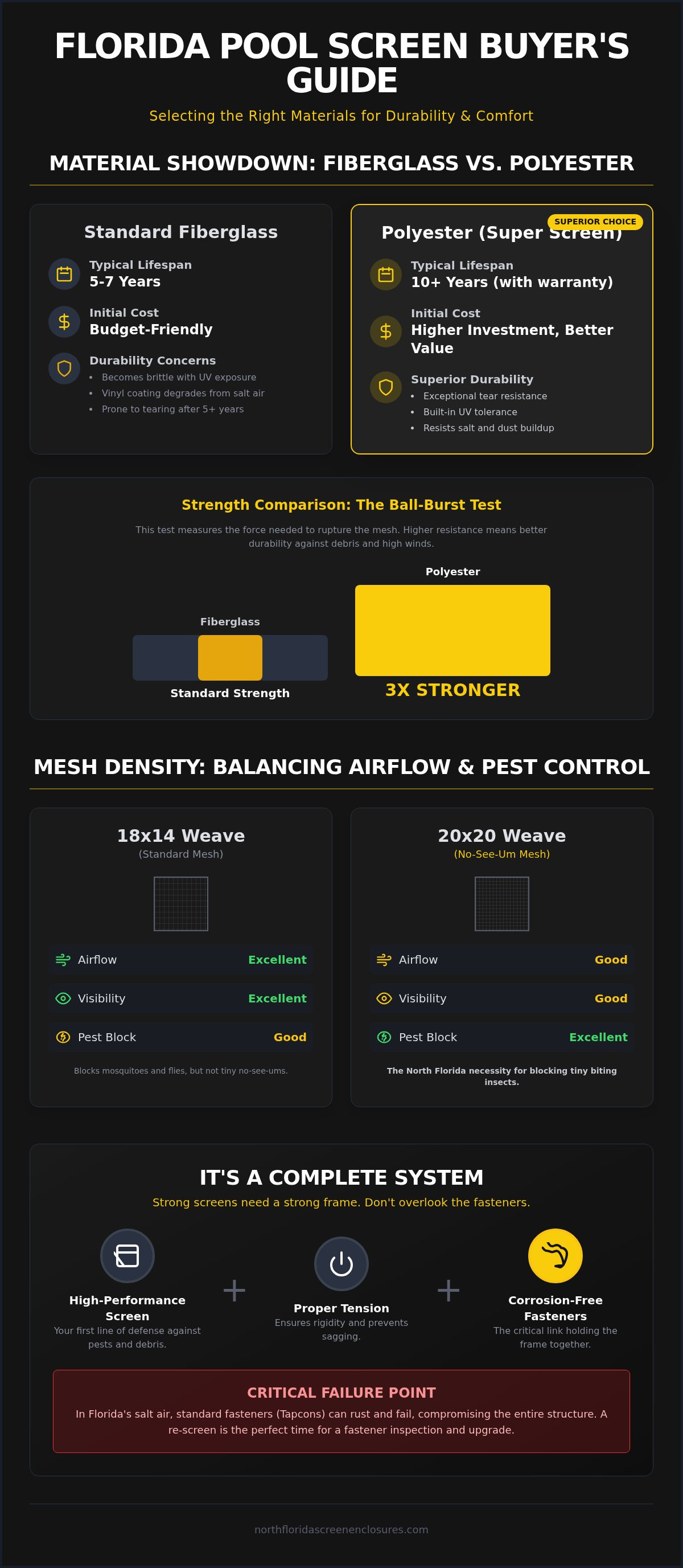
Fiberglass remains the industry standard, largely because it offers a functional barrier at a lower initial price point. Most installations use an 18x14 mesh, which provides excellent visibility and airflow. This traditional window screen material is coated in protective vinyl to resist the elements, but it has limitations in our region. In Saint Augustine, the combination of intense UV radiation and salt spray eventually wears down this coating. You'll likely notice the screen becoming brittle or turning "silvery" within 5 to 7 years. Fiberglass is a practical choice if you're on a strict budget or plan to sell the home soon, but it won't offer the multi-decade resilience of modern synthetics.
Polyester and Super Screen: Engineered for Longevity
For homeowners seeking a "one and done" solution, polyester mesh, often branded as Super Screen, is the superior upgrade. Unlike fiberglass, which has a glass core that can snap, polyester is a solid synthetic fiber. This material is significantly more tear-resistant, making it ideal for the heavy wind loads we face during hurricane season. It often comes with a 10-year manufacturer warranty, reflecting its ability to withstand UV degradation without losing its structural integrity. When evaluating pool enclosure screen types Florida residents must consider these environmental stressors:
UV Resistance: Prolonged sun exposure breaks down the vinyl coating on fiberglass, leading to "splining" and easy tearing.
Salt Air Durability: In coastal Saint Augustine, salt crystals can embed in fiberglass mesh, accelerating the degradation of the fibers.
One of the most impressive metrics for this material is the "ball-burst" test. This industrial standard measures the amount of force required to push a steel ball through the mesh. Polyester consistently outperforms fiberglass by a wide margin, often resisting three times the pressure. When you look at a 15-year cost-benefit analysis, polyester usually wins. Even though the upfront cost is higher, you'll avoid the expense of a full re-screen every few years. It's a durable choice for those who value long-term protection and minimal maintenance. The specialized coatings on premium polyester also prevent the "fuzzy" buildup of salt and dust that often plagues older fiberglass enclosures.
Mesh Density: Choosing the Right Weave for Your Environment
While material choice dictates how long your enclosure lasts, the mesh density determines how much you'll actually enjoy being inside it. When browsing pool enclosure screen types Florida contractors offer, you'll see numbers like 18x14 or 20x20. These figures represent the number of openings per square inch. An 18x14 mesh has 18 tiny holes across and 14 holes down. This configuration creates a specific balance between keeping out debris and allowing the Atlantic breeze to circulate through your patio area.
Choosing the wrong density can lead to two common regrets. A weave that's too open allows tiny biting insects to ruin your evening. Conversely, a weave that's too tight can significantly reduce airflow, making your pool deck feel several degrees warmer during a humid Saint Augustine afternoon. Finding the right fit requires looking at your specific landscape and how close you live to standing water or marshes.
Standard 18x14 Mesh: The All-Rounder
The 18x14 weave is the default choice for most residential pool cages in North Florida. It's designed to block common pests like mosquitoes and flies while offering the best possible visibility. If your backyard is well-manicured and away from the brackish water of the Intracoastal, this mesh provides excellent ventilation. It allows for a clear, unobstructed view of your landscaping, which is a priority for many homeowners. However, it's worth noting that it won't stop the tiny "no-see-ums" that often emerge at dawn and dusk.
No-See-Um 20x20 Mesh: A North Florida Necessity
If your home borders the marshes or wooded areas common in Saint Augustine, you likely deal with Ceratopogonidae, better known as no-see-ums. These biting midges are small enough to fly right through standard 18x14 mesh. A 20x20 weave is the gold standard for marsh-front properties where smaller insects are a constant nuisance. This tighter weave provides total protection from the smallest pests, though it does slightly restrict airflow and can catch more dust over time. Because the tighter mesh creates more surface area, it's vital to ensure your structure meets the current Florida Building Code requirements for wind loads, as a denser screen catches more wind during a storm.
The long-term ROI of a 20x20 mesh is found in your ability to use the pool area 24 hours a day without chemical repellents. If you aren't sure which density fits your backyard's micro-climate, consulting with a specialist for complete re-screens can help you weigh the airflow trade-offs against pest protection. Selecting a mesh that matches your environment ensures that your investment provides both comfort and utility for years to come.
Specialized Screening Solutions: Pets, Privacy, and Shade
Standard mesh provides a baseline of protection, but many Saint Augustine properties benefit from a more tailored approach. When evaluating pool enclosure screen types Florida residents often find that a single mesh type doesn't solve every problem. Your enclosure can be customized to feature different materials in different sections, allowing you to optimize for durability, seclusion, and temperature control simultaneously. In our region, where the combination of high humidity and salt air can make unventilated spaces feel stagnant, choosing the right specialized mesh is vital for daily comfort.
Pet-Resistant Mesh: Heavy-Duty Protection
Pet-resistant screening is a specialized material made from vinyl-coated polyester that is significantly thicker and more flexible than standard fiberglass. It's designed specifically to withstand the scratching and impact of dogs and cats without tearing or pulling out of the spline channel. While standard screens might fail under the pressure of a large dog jumping against the frame, this heavy-duty mesh absorbs the force and returns to its original shape. Claws won't pierce it. Most homeowners choose to install this material on the lower panels where pets are most active, though some opt for a full-cage installation for maximum security. It's a practical way to extend the lifespan of your enclosure while maintaining your peace of mind.
Florida Glass: Privacy and Debris Shielding
If your home is located in a high-density neighborhood where houses are built close together, privacy becomes a primary concern. Florida Glass is a unique laminated screen material that features a plastic coating over the mesh; this creates a translucent, frosted effect. It allows natural light to filter through while completely blocking the view from the outside. Beyond privacy, it acts as an excellent debris shield. When installed on the bottom panels, it prevents dirt, mulch, and lawn clippings from blowing into your pool area during yard maintenance. This makes it an essential choice for Saint Augustine homes with active landscaping or neighbors in close proximity.
Solar screening is another high-performance option designed to block a significant percentage of UV rays before they reach your pool deck. By reducing solar heat gain, these screens can lower the temperature of your outdoor living area, making the space more comfortable during the peak of a Florida summer. These specialized pool enclosure screen types Florida homeowners select can be mixed and matched. For instance, you might choose Florida Glass for the bottom panels to block dirt, pet-resistant mesh for the mid-sections, and a high-airflow 18x14 mesh for the roof panels. It's about long-term value. This strategic combination ensures your enclosure is as functional as it is durable.
The Intersection of Screen Type and Structural Integrity
A pool enclosure is only as resilient as its weakest fastener. While selecting between various pool enclosure screen types Florida homeowners often forget that the mesh is anchored to a frame that must withstand immense environmental pressure. If you choose a high-performance polyester mesh, the tension is significantly higher than standard fiberglass. This increased tension requires a rigid, well-secured aluminum structure to prevent bowing or collapse during high winds. The mesh and the frame work as a singular system; if the frame is compromised, even the strongest screen will fail.
Tapcon Replacement: The Silent Protector
Tapcons are the specialized screws that anchor your aluminum base tracks to the concrete pool deck. In Saint Augustine, the salt air is a constant threat to these components. Standard steel fasteners often rust from the inside out, a process that is frequently invisible until the head of the screw snaps off. When these fasteners fail, the entire enclosure loses its connection to the ground, which is a leading cause of "cage lift" during tropical storms. Upgrading to stainless steel or specialized coated fasteners during a re-screen is a critical maintenance step. It ensures that the structural integrity matches the longevity of your new mesh. For more details on maintaining these vital components, you can explore Professional Screen Enclosure Repair in Saint Augustine.
Hurricane Preparedness for Your Pool Cage
Wind load management is a technical necessity in North Florida. Denser screens, such as the 20x20 no-see-um mesh discussed previously, create a "sail effect" that catches more wind than standard weaves. This increased resistance places extreme stress on support cables and corner bracing. It's essential to inspect these elements annually to ensure the cables haven't frayed and the braces remain tight. A professional pool enclosure installation in 2026 must adhere to updated local wind codes to ensure the structure remains standing during major weather events. These codes often require structures in coastal areas to withstand wind loads of 110+ mph.
Look for signs of trouble like white powder oxidation on the aluminum or orange rust streaks around the base of the cage. These are clear indicators that the metal and fasteners are failing. If your cage wobbles when pushed or if you see loose cables, the mesh isn't your only concern. Ensure your home is ready for the next storm season by scheduling a professional inspection and Tapcon replacement to secure your investment for the long term.
Planning Your Re-screen or Installation Project
Deciding between a minor repair and a total overhaul depends largely on the age of your current mesh and the condition of your aluminum frame. While a single panel replacement might seem like a quick fix, it often signals that the rest of your enclosure is nearing the end of its functional life. When you evaluate the various pool enclosure screen types Florida contractors provide, consider the long-term labor costs. Frequent small repairs quickly exceed the price of a one-time professional re-screen that restores the entire structure to peak performance.
The installation process for a full re-screen is methodical. It begins with the removal of all old mesh and the vinyl spline that holds it in place. We then clean the aluminum grooves to ensure the new material seats perfectly. This is also the most practical time to inspect the structural fasteners and support cables, as the frame is most accessible when the screen tension is removed. A professional installation ensures that the new mesh is pulled to the correct tension, preventing sags that catch wind and debris.
When to Choose a Complete Re-screen
We typically recommend the "7-year rule" for standard fiberglass installations. After seven years in the Saint Augustine sun, the vinyl coating on fiberglass mesh often begins to flake off, leaving the glass core exposed and brittle. If you can rub the screen and see "silver" dust on your fingers, the material has lost its structural integrity. Choosing a complete re-screen at this stage allows you to upgrade your material to a premium polyester or a specialized mesh that better fits your current lifestyle, such as pet-resistant or no-see-um varieties. It's also the most efficient time to perform a full structural fastener inspection to ensure your cage remains anchored against coastal winds.
Working with North Florida Screen Enclosures
Our team takes a precision-led approach to every custom aluminum project. We understand that Saint Augustine’s coastal weather patterns require more than just a standard installation; they demand a deep knowledge of local wind loads and corrosive salt environments. From the initial measurement to the final spline installation, we focus on creating a tight, resilient barrier that enhances your home’s value. If you’re ready to secure your outdoor space, you can get a free estimate for your pool enclosure project today. We’ll help you navigate the best pool enclosure screen types Florida has to offer for your specific property.
To maximize the lifespan of your new installation, follow these professional maintenance tips:
Rinse Regularly: Gently spray your screens with fresh water once a month to remove salt crystals and abrasive dust that can act as sandpaper on the mesh.
Avoid Pressure Washers: High-pressure water can damage the vinyl spline or stretch the mesh; a standard garden hose is usually sufficient for cleaning.
Clear Debris: Remove leaves and twigs from the roof panels and gutters promptly to prevent organic rot and staining.
Inspect Fasteners: Check the base of your enclosure for rusted Tapcons annually, especially after the peak of hurricane season.
Securing Your Backyard Oasis for the Future
Choosing the right pool enclosure screen types Florida offers is about balancing immediate comfort with long-term resilience. You've learned that while mesh density blocks specific pests, the structural fasteners underneath are what keep the entire system standing during a storm. Investing in premium materials like polyester and ensuring your Tapcons are corrosion-resistant will save you from the cycle of frequent, costly repairs. It's a strategic move that protects both your pool and your property value for years to come.
As a locally owned and operated specialist in Saint Augustine, North Florida Screen Enclosures provides the expertise needed to navigate coastal weather patterns. We specialize in hurricane-rated aluminum construction and expert Tapcon replacement to ensure your cage survives the next decade of Florida sun and wind. Request a Professional Re-screen Estimate from North Florida Screen Enclosures today to protect your investment. Enjoy the peace of mind that comes with a durable, professionally installed barrier that's built to last.
Frequently Asked Questions
What is the best type of screen for a pool enclosure in Florida?
Polyester mesh is the most durable choice for a pool enclosure in Florida because it resists UV degradation and high winds better than traditional fiberglass. While fiberglass is common, polyester options often come with a 10-year warranty and superior tear strength. This material is particularly effective for homeowners who want to minimize long-term maintenance costs. It stays flexible and maintains its color even after years of exposure to the intense Atlantic sun.
How much does it cost to rescreen a pool enclosure in Saint Augustine?
The total investment for a re-screen varies based on the enclosure's square footage, the height of the cage, and the specific mesh material you select. While standard fiberglass is the most affordable option, choosing a premium polyester mesh will increase the initial cost but provide greater value over time. Factors like the number of doors and the complexity of the roof design also influence the final professional estimate for your home.
How long do pool enclosure screens typically last in Florida?
Standard fiberglass screens typically last between 5 and 7 years in Saint Augustine before the vinyl coating begins to fail. In contrast, high-performance polyester screens can remain structurally sound for 10 to 20 years. The proximity to the ocean and the amount of daily sunlight are the primary factors that dictate the exact lifespan. Regular rinsing to remove salt buildup can help extend these timelines for any material you choose.
What is the difference between 18x14 and 20x20 mesh?
An 18x14 mesh is the standard weave designed for maximum airflow and visibility, while a 20x20 mesh is a tighter weave specifically engineered to block tiny no-see-ums. The numbers refer to the number of openings per linear inch. While 20x20 provides total insect protection, it does slightly reduce the breeze and can trap more dust than the 18x14 all-rounder. Your choice depends on your property’s proximity to marshes or standing water.
Can I use a pet-resistant screen for the entire pool cage?
You can certainly use pet-resistant mesh for an entire enclosure, though most homeowners prefer to use it only on the lower panels. This material is much thicker and heavier than standard options, which can significantly reduce your visibility of the backyard. It's a highly effective way to prevent tears from large dogs, but the increased weight requires a very sturdy frame and professional tensioning to prevent the mesh from sagging over time.
What is Florida Glass and where should it be used?
Florida Glass is a unique laminated screen material that features a plastic coating to create a translucent, frosted appearance for privacy. It's most commonly used on the bottom panels of an enclosure to block the view from neighbors and keep lawn debris out of the pool area. Because it's solid, it doesn't allow airflow, so it should be used strategically in areas where privacy or shielding is a higher priority than ventilation.
Do I need to replace my Tapcons when I get a re-screen?
Replacing your Tapcons during a re-screen is highly recommended because these fasteners are the primary anchor points for your entire structure. In our coastal environment, salt air causes standard steel screws to rust and weaken over time. Since the screen must be removed to access many of these fasteners, a re-screen provides the most cost-effective opportunity to upgrade to stainless steel fasteners that ensure structural stability during hurricane season.
How do I clean my pool enclosure screen without damaging it?
The safest way to clean your screen is with a soft-bristled brush and a mixture of mild dish soap and lukewarm water. Avoid using pressure washers, as the high-force stream can easily stretch the mesh or blow the spline out of its channel. Rinse the screen thoroughly with a standard garden hose to remove salt and dirt. Regular cleaning prevents organic growth and keeps your pool enclosure screen types Florida looking new for years.


Comments