


Aluminum Railing Contractor in Saint Augustine: Choose a Durable, Well-Fitted Solution

What makes an aluminum railing right for your Saint Augustine home? It should suit the balcony, the way you use it, and the conditions around it. Choosing an aluminum railing contractor Saint Augustine homeowners can rely on starts with understanding those details, not simply picking a style.
It’s reasonable to want a railing that looks right, feels secure, and is straightforward to maintain. In a coastal setting, exposure and finish are worth considering alongside the layout, measurements, and mounting surfaces. Installation planning also means accounting for building and permitting requirements that may apply to the specific project.
This guide covers what to consider when planning aluminum balcony railings, from location and design to measurements, installation, and upkeep. North Florida Screen Enclosures is a locally owned Saint Augustine contractor that provides aluminum balcony railings as part of its outdoor improvement work. A property-specific plan helps the railing fit the home’s outdoor space.
Table of Contents
Why Saint Augustine Homes Need the Right Aluminum Railing Contractor
A railing has to do more than complete the look of a home. It should suit the way an outdoor area is used, provide an appropriate boundary at an elevated edge, and complement the property’s architecture. Good planning brings these needs together instead of treating the railing as a decorative add-on.
Start with practical questions: Where will people walk or sit? How will the railing connect to the home? Should the layout feel open or more defined? These decisions depend on the property, the balcony, and its intended use. An aluminum railing contractor Saint Augustine homeowners work with should plan around those details rather than rely on a one-size-fits-all layout.
A railing contractor plans and installs a railing to suit the location, use, and conditions of a particular project. The first step is understanding the space and how the railing will relate to the home’s outdoor environment.
Where aluminum railings fit around a home
Balconies are a common place for railings. The railing follows the exposed edge of a raised platform, helping define the usable area and shape the home’s exterior appearance. The plan should account for the balcony’s shape, access points, and how residents use the space, whether it’s a sitting area or an outdoor connection to nearby rooms.
Other elevated areas, such as raised outdoor landings or walkways, have their own shapes and purposes. Railing placement should reflect how people approach, move through, or pause in each area. A balcony layout may not suit every elevated space. General background on how railings and handrails function is available in Handrail - Wikipedia; each project still needs to be planned around the home and its intended use.
Why local conditions belong in the conversation
Saint Augustine’s coastal setting makes exposure a practical planning consideration. Salt air, humidity, weather, and nearby landscaping can affect the conditions a railing faces and the care it may need. Exposure varies by property, so consider the actual installation location rather than relying on broad assumptions about material performance.
Useful details include whether the balcony is sheltered or open, how close it is to the coast, and whether leaves or other debris collect around the railing. The mounting surface and existing structure matter too, because they affect how the railing can be fitted. Considering location, exposure, and intended use together helps shape a plan for the property.
North Florida Screen Enclosures is locally owned and based in Saint Augustine, and provides aluminum balcony railings as part of its outdoor improvement work. Planning around the property helps connect the railing’s practical role with the appearance and function of the outdoor space.
How to Choose Aluminum Railings for Your Saint Augustine Property
Begin with the space, not just a preferred look. Consider what the railing needs to do, how exposed the location is, and how it should relate to the home. A balcony used for seating may call for a different balance of openness and definition than a narrow elevated walkway.
Railing selection depends on site conditions: the location, mounting surface, intended use, and surrounding architecture all help determine what will fit the project.
Match railing design to the location and intended use
Decide whether you want to define an edge, preserve an open view, or create more separation. Then consider the balcony’s shape, entry points, and nearby doors, windows, and exterior details. These factors affect both placement and appearance. Measurements should include corners, transitions, and the surface receiving the railing, since each can influence the installation plan.
Choose a finish and appearance that work with the home rather than assuming one style will suit every property. A railing may complement existing exterior details or create a deliberate contrast. An aluminum railing contractor Saint Augustine homeowners work with can plan the project around those priorities and the site conditions.
Compare aluminum with other common railing materials
Materials differ in appearance and upkeep. The table provides a general comparison, not a universal ranking: suitability depends on the property and project. North Florida Screen Enclosures provides aluminum balcony railing work, with project details planned around the home’s setting.
Before choosing a plan, compare the intended use with the balcony’s dimensions and mounting surface. A site review helps establish where sections begin and end, how corners meet, and how the railing relates to nearby exterior features. For a home-specific discussion of local aluminum balcony railing work, North Florida Screen Enclosures brings its Saint Augustine experience to the planning process.
What to Expect When Planning Aluminum Railing Installation in Saint Augustine
A well-planned installation starts with the actual balcony, not an assumed standard layout. Measurements, mounting-surface condition, access to the work area, and how you intend to use the space all affect the plan. An aluminum railing contractor Saint Augustine homeowners engage should account for these details before installation begins.
Site assessment and project planning
The existing balcony guides the layout. Its dimensions, corners, edges, and adjoining surfaces help establish where railing sections can go and how they connect with the home. Access matters too: the route to the work area and nearby features can affect how the project is organized. Clarify priorities such as maintaining a view, defining the balcony boundary, or coordinating the railing with the exterior.
A practical planning sequence typically moves through these stages:
Discuss the project. Describe the railing’s location, intended use, and priorities for function and appearance.
Review the site. Consider the balcony’s dimensions, mounting surfaces, nearby features, and access to the installation area.
Develop the project plan. Use the site details to shape the layout and establish how the railing will relate to the home.
Address applicable requirements. Identify which building-code and local approval requirements may apply to the project and its circumstances.
Complete installation and review. After the work, review the installed railing and how it fits the planned location and use.
Each stage contributes to a coherent result. A balcony with several corners and a doorway, for example, needs a different layout discussion than a simple straight edge. The aluminum balcony railings guide offers more context on how a railing relates to a home’s outdoor space.
Installation requirements and local approvals
Code and permit requirements can depend on project scope and property circumstances, so include them in the planning process. Verify applicable Florida Building Code provisions and St. Johns County processes for the specific project using current local information. Requirements may differ between a replacement and a project that changes the layout or involves other building work.
Keep project records and plans aligned with the proposed work, and resolve applicable approval questions before installation proceeds. A general rule may not fit every property. The location, existing construction, and project scope all matter.
At final review, consider whether the railing is positioned as planned, fits the space, and serves its intended purpose. Coordination from the initial discussion through the final review helps connect installation details with everyday use.
How to Maintain Aluminum Railings in Coastal North Florida
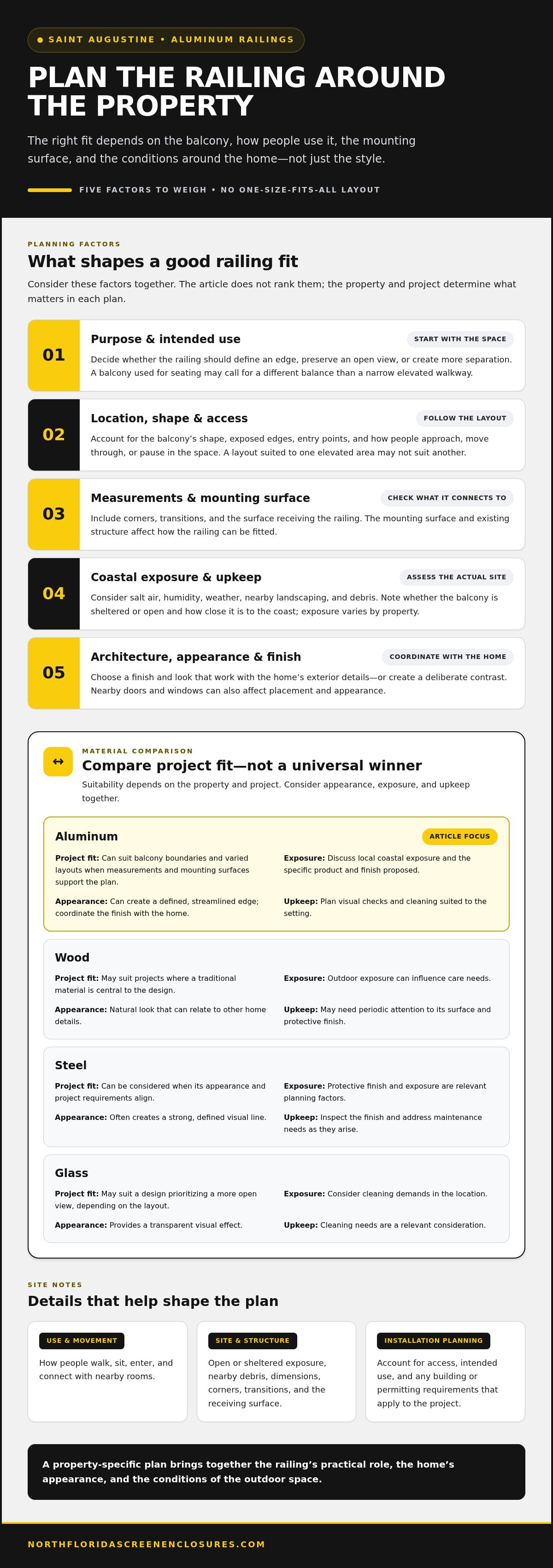
Routine attention can help you notice changes that need a closer look. In coastal North Florida, salt air, humidity, and windblown debris make the railing’s location relevant to basic care. A covered balcony and an exposed one may collect different residue, so let conditions at your home guide how often you inspect the railing instead of following an arbitrary schedule.
Routine cleaning and visual checks
Follow the railing’s care instructions for cleaning products and methods. If they recommend a simple cleaning approach, use it as directed. Avoid abrasive tools, harsh chemicals, or strong treatments unless the care guidance specifically permits them. A suitable method can remove ordinary dirt while respecting the finish.
During a visual check, look over the railing and the places where it connects to the balcony. Pay attention to residue or debris around joints, corners, and attachment points, since buildup can obscure the surfaces beneath. Don’t assume that every mark is corrosion or that every finish change signals a structural concern. Note what you see and seek an assessment if you’re unsure.
During a visual check, look for visible corrosion, changes in the finish, movement in the railing, damaged parts, and loose or altered connections.
Clear loose leaves and debris that collect around the railing or its connections.
Use only cleaning products and methods allowed by the railing’s care instructions.
Note changes in appearance or fit so you can describe them clearly if an assessment is needed.
These checks are observational, not a substitute for testing the railing by leaning heavily on it or attempting repairs. Don’t tighten, alter, or replace components unless you have the appropriate guidance for that railing system.
When a railing needs professional attention
Movement, damaged components, or a visible change where the railing attaches to the balcony warrants professional attention. These signs may involve the connection or supporting surface, so cleaning alone won’t resolve the concern. If a railing appears unstable, limit use of the affected area until it has been evaluated. Don’t put weight on it to test whether it is secure.
A professional assessment can help determine what a visible change means and what next steps suit the property. North Florida Screen Enclosures works on exterior improvements, including aluminum balcony railing projects in Saint Augustine. The appropriate response depends on the condition and scope of the work. Homeowners planning a new railing or evaluating an outdoor-space project can discuss aluminum balcony railing work with the local team.
Work with a Saint Augustine Aluminum Railing Contractor
A well-planned railing should suit the balcony it serves and the way your household uses that outdoor space. North Florida Screen Enclosures is a locally owned contractor based in Saint Augustine that provides aluminum balcony railings as part of its residential outdoor improvement work. Planning begins with your property’s details, not a one-size-fits-all configuration.
Local project planning keeps the conversation grounded in the home’s setting. A balcony may be sheltered or exposed, used mainly for access or arranged for sitting, and connected to exterior features that affect how the finished railing fits visually. Discussing practical priorities and the surrounding outdoor environment helps shape a plan for the property.
A local contractor for aluminum balcony railings
North Florida Screen Enclosures provides aluminum balcony railings in Saint Augustine, planned in relation to the balcony and the home’s exterior. Access to the space, what the railing needs to accomplish, and nearby features all inform the project plan. The aim is to fit the railing’s function to the outdoor setting.
For homeowners considering how exterior improvements work together, the Saint Augustine patio roofing guide offers related context on outdoor spaces. Each balcony railing project has its own needs, so keep the plan specific to its location and use.
Prepare to discuss your railing project
A few notes can make an initial project conversation more useful. You don’t need a finished design or construction drawings to describe what you have in mind. Share what you know and list any questions you want the discussion to address.
Location: Identify the balcony or outdoor area where the railing is needed, and mention whether it’s sheltered or exposed.
Approximate dimensions: Note the length of the edge or area involved. Rough measurements can provide a starting point for discussing the layout.
Intended use: Explain how people use the space and what you want the railing to do, such as define the balcony edge or preserve an open view.
Project priorities: Describe appearance preferences, nearby exterior details, and any concerns about maintenance or existing conditions.
Helpful visuals: Share relevant photos of the balcony, adjoining surfaces, and the surrounding area when requesting project guidance.
Clear details connect the railing’s purpose with the property’s layout and outdoor environment. If you’re ready to discuss an aluminum railing project, talk with North Florida Screen Enclosures about your balcony railing.
Take the Next Step Toward a Better-Fitted Balcony
A railing project is an opportunity to make an outdoor space work more naturally for the people who use it. Start by identifying what you want the balcony to do, what matters most about its appearance, and which site details could shape the plan. Those priorities give the project a practical starting point.
North Florida Screen Enclosures is a locally owned specialty contractor based in Saint Augustine, providing aluminum balcony railings as part of its exterior improvement work. If you’re looking for an aluminum railing contractor Saint Augustine homeowners can discuss their property with, bring the location, approximate dimensions, intended use, and photos of the area to the conversation.
Discuss your aluminum railing project with North Florida Screen Enclosures. Share what you need from the railing and where it will go to start planning a fit for your home and outdoor space.
Frequently Asked Questions
Can aluminum railings be installed on an existing balcony?
Yes, aluminum railings can often be planned for an existing balcony, but the site needs to be assessed first. The balcony’s condition, dimensions, and mounting surface help determine whether preparation is needed and how the project should be laid out. An aluminum railing contractor Saint Augustine homeowners work with can use details such as the balcony’s age, visible surface damage, and intended use to understand the project before installation planning.
Do aluminum railings need special maintenance near the coast?
Coastal exposure can affect the care a railing needs, so follow the manufacturer’s instructions rather than assuming aluminum is maintenance-free. A balcony exposed to salt air or one that collects leaves may need attention to residue around joints and connections. Use suitable cleaning methods, and treat visible changes, damaged components, or movement as reasons for assessment, not issues that cleaning alone will resolve.
Do I need a permit for an aluminum balcony railing in Saint Augustine?
Whether a permit is needed depends on the project, property location, and current local requirements. Before work begins, confirm the rules that apply with the relevant local authority and have the project scope available, including whether the railing is being replaced or the layout is changing. General information online may not reflect your property’s circumstances, so use current local guidance for a project-specific determination.
How do I know what railing height my balcony needs?
The required height depends on the applicable building-code provisions and the specific project, so don’t use a measurement from another home as a rule. Check the proposed railing plan against current requirements that apply to your property before installation. Share the balcony location and project details during planning so relevant dimensions can be considered alongside the layout and intended use.
Can aluminum railings be customized to match my home?
The railing’s appearance can be planned to complement the home. Consider whether you want it to blend with existing exterior details or create a contrast, and note nearby colors and materials. Photos of the balcony and surrounding exterior can help communicate your preferences and guide the design discussion.
What should I share when requesting an aluminum railing project?
Start with the property location, the balcony or outdoor area involved, and what you want the railing to accomplish. Approximate dimensions, photos from different angles, and details about the mounting surface can add useful context. Mention access concerns, existing damage, and appearance or maintenance priorities too. You don’t need to determine technical specifications before describing the project.
How long does aluminum railing installation take?
There isn’t one reliable duration for every railing project. The layout, access, existing site conditions, preparation needs, and overall scope can all affect the schedule. A straightforward layout may involve different work from a balcony with multiple corners or changes to existing construction. Share the project details during planning so timing can be discussed in relation to the actual work, not a generic estimate.
Comments