


Best Screen Type for No-See-Ums: How to Choose the Right Mesh

The tightest screen isn’t automatically the best choice for a North Florida enclosure. A finer weave can help keep no-see-ums out, but it may also reduce airflow and visibility, changing how comfortable the space feels. Choosing the best screen type for no-see-ums means balancing insect protection with the way you use your pool or patio.
If tiny biting insects are getting through ordinary-looking mesh, opening size may be part of the problem. No-see-um screening commonly uses a 20x20 mesh: 20 strands per inch in each direction, creating smaller openings than standard screen. That tighter weave can help block smaller insects, but mesh count alone won’t tell you whether a re-screen will solve the issue.
This guide explains how mesh count relates to openings, what to consider about airflow, visibility, and upkeep, and how screen material fits into the decision. It also covers why gaps, damaged panels, or other enclosure issues can matter as much as the mesh itself. For homeowners in Saint Augustine and elsewhere in North Florida, a complete re-screen or screen enclosure repair may be the practical next step when screening is worn or insects keep getting inside.
Table of Contents
What Is the Best Screen Type for No-See-Ums?
No-see-um screen is a tighter-weave insect screening designed to restrict very small biting midges by using smaller openings than many standard screens. “No-see-ums” is a common name for these tiny insects, not a mesh rating or a specific screen product. A finer weave can reduce insects passing through intact screen fabric, but it can’t promise a pest-free enclosure.
In Saint Augustine, homeowners may consider tighter mesh when tiny biting insects are disrupting time by the pool or on a screened patio. The right choice depends on more than the insect: the screen’s weave, the enclosure’s condition, and how the outdoor space is used all matter. A screen panel is also distinct from the enclosure’s structural frame, which supports the screened space but does not determine the mesh opening size.
How does no-see-um mesh differ from standard screen?
The main difference is the size of the openings. No-see-um screening commonly uses a 20x20 mesh, meaning 20 strands per inch run horizontally and 20 run vertically. The strands form openings between them; the count describes the weave, not the size of an insect the screen is guaranteed to block. By comparison, standard screening often uses a more open 18x14 or 18x16 weave.
That denser pattern is intended to limit passage by smaller insects that may get through wider openings. The terms “no-see-um screen” and “20x20 mesh” describe screening, not the frame, roof, or other structural parts of a pool enclosure. For background on the insects, see Ceratopogonidae (biting midges), also known as no-see-ums; some midges are small enough to pass through ordinary insect screening.
Does a tighter weave guarantee that no-see-ums stay out?
No. A finer mesh may reduce insects passing through intact screen fabric, but it can’t seal openings elsewhere in the enclosure. Even a well-chosen mesh won’t address an unlatched door, a torn panel, or a gap at a corner. Installation and overall screen condition matter alongside the weave, so recurring insect problems may call for checking the full enclosure rather than changing mesh alone.
Check whether insects appear near a door or when it is open.
Look for tears, loose screen, and gaps around panel edges or corners.
Inspect attachment areas and fasteners for openings around the screen.
If insects seem to pass through intact panels, tighter screening may be worth considering. If they’re entering through damaged sections or perimeter gaps, those openings need attention too. A careful inspection helps distinguish a mesh issue from a repair need and keeps the screen choice grounded in the enclosure’s actual condition.
Compare No-See-Um Screen Mesh: Insect Control, Airflow, and Visibility
A tighter weave can make it harder for small biting insects to pass through the screen fabric, but that benefit comes with practical trade-offs. More strands create smaller openings and may also make the enclosure feel less open. The right balance depends on where insects are getting in and how you use the space. Consider whether you prioritize a comfortable breeze, a clear view, or fewer insects passing through the mesh.
What does 20x20 mesh mean for screen selection?
A 20x20 mesh has 20 strands per inch in each direction. Its denser weave creates smaller openings than more open mesh, such as common 18x14 or 18x16 screening. The University of Arizona Cooperative Extension discusses finer screening, including 30x30 mesh screens, as an option for managing no-see-ums. A higher count alone, however, doesn’t tell you how a screen will feel across your particular enclosure.
The comparison below is a practical guide, not a guarantee of performance. Mesh material, colour, panel size, and installation can influence the experience. Even fine screening won’t address gaps elsewhere in the enclosure.
Will tighter screen reduce airflow or visibility?
It can change both, but the effect isn’t identical in every enclosure. A small patio panel and a broad pool enclosure won’t necessarily feel the same, and material and colour can influence how noticeable the mesh is. Before choosing a denser weave, consider where you sit, how much natural ventilation matters, and whether the view beyond the screen is a priority.
Mesh density is one part of screen performance; the best fit also depends on your enclosure’s condition and how you want the space to feel. If you’re weighing a finer weave against comfort across a pool enclosure, an enclosure-wide screen assessment can help connect the mesh choice to the panels and openings that need attention.
Why No-See-Ums Still Get Into North Florida Screen Enclosures
Insects inside a screened space don’t automatically mean every panel needs replacement. They may be passing through the fabric, but a door left ajar, a damaged edge, or a gap where enclosure sections meet can also provide a route in. Before choosing the best screen type for no-see-ums, look for a pattern. That helps separate a mesh concern from a localized repair need.
Outdoor conditions can influence when biting midges are active around a home. The University of Florida's IFAS Extension on Biting Midges provides background on their biology and distribution. For a homeowner, noting when and where insects appear is more useful than assuming the screen fabric is the cause.
How can you tell whether insects pass through mesh or gaps?
Start with a visual inspection, especially around the areas where insects seem most noticeable. Look for tears, loose screen edges, and places where a panel appears separated from its frame. Then check whether doors close fully and whether transitions between screened sections appear secure. These clues can help narrow down the likely route without treating every panel as the source.
Keep a brief record over several occasions: the time, outdoor conditions, where insects gather, and whether a door was recently open. A recurring pattern near one corner or entrance may point to a specific opening. Insects noticed throughout the enclosure, without an obvious gap, may warrant closer evaluation of the screen panels themselves.
What should Saint Augustine homeowners inspect around an enclosure?
Move around the enclosure methodically rather than checking only the panel nearest where you were sitting. Include pool-cage doors, panel edges, fasteners, corners, and places where separate enclosure sections meet. Look for worn or damaged screen and signs that a panel no longer sits securely. Avoid climbing or disturbing structural parts during a visual check.
Start at the entry points. Check that doors close and look for visible gaps around their edges.
Follow the panel boundaries. Examine corners, seams, and attachment areas for separation or loose edges.
Scan the screen surface. Note holes, tears, or sections that appear worn, and record their locations.
Compare your observations. Match the condition of those areas with the places and times you’ve recorded insect activity.
A single damaged panel or localized opening may call for targeted screen enclosure repair. Widespread wear, or recurring issues across several sections, may make a complete re-screen more practical. The important first step is identifying the pattern and condition, not replacing sound panels by assumption. Homeowners seeking broader context about enclosure planning can refer to the pool enclosure installation guide.
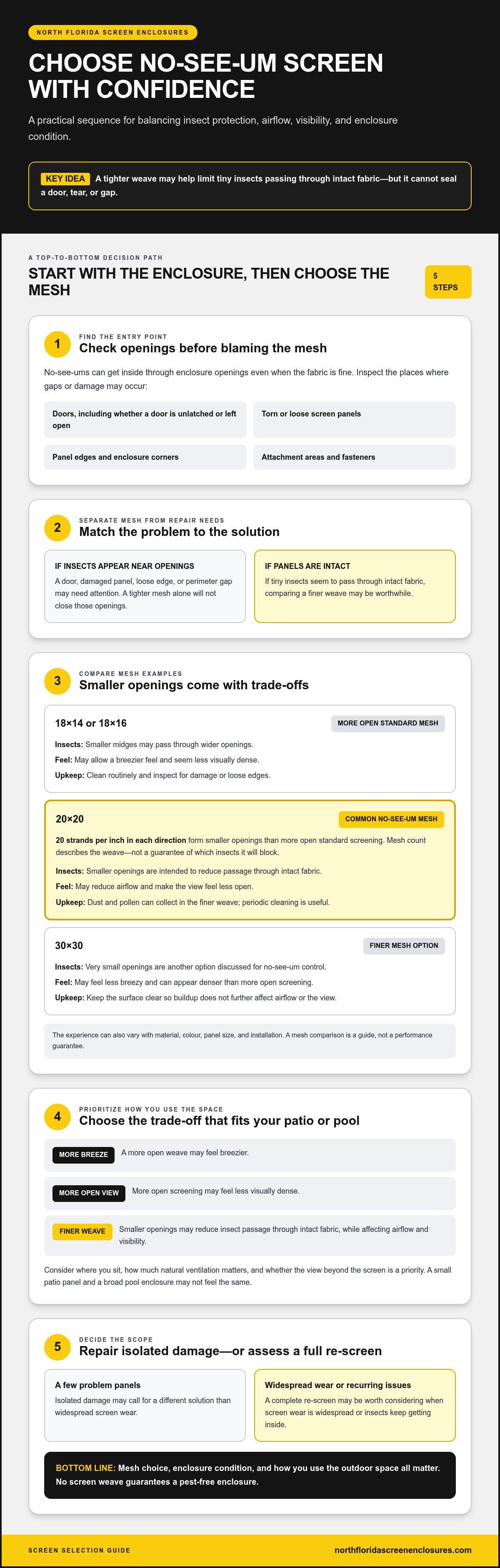
How to Choose No-See-Um Screen for Your Enclosure
A sound choice starts with the problem you can observe, not just a label on a screen sample. The best screen type for no-see-ums should suit both the insect issue and the way your North Florida enclosure is used. Follow this checklist before deciding whether to replace a few panels or re-screen the whole space.
Identify the insect issue. Note where and when insects appear, and whether the problem is limited to one area or occurs throughout the enclosure. This helps distinguish a possible opening from a mesh concern.
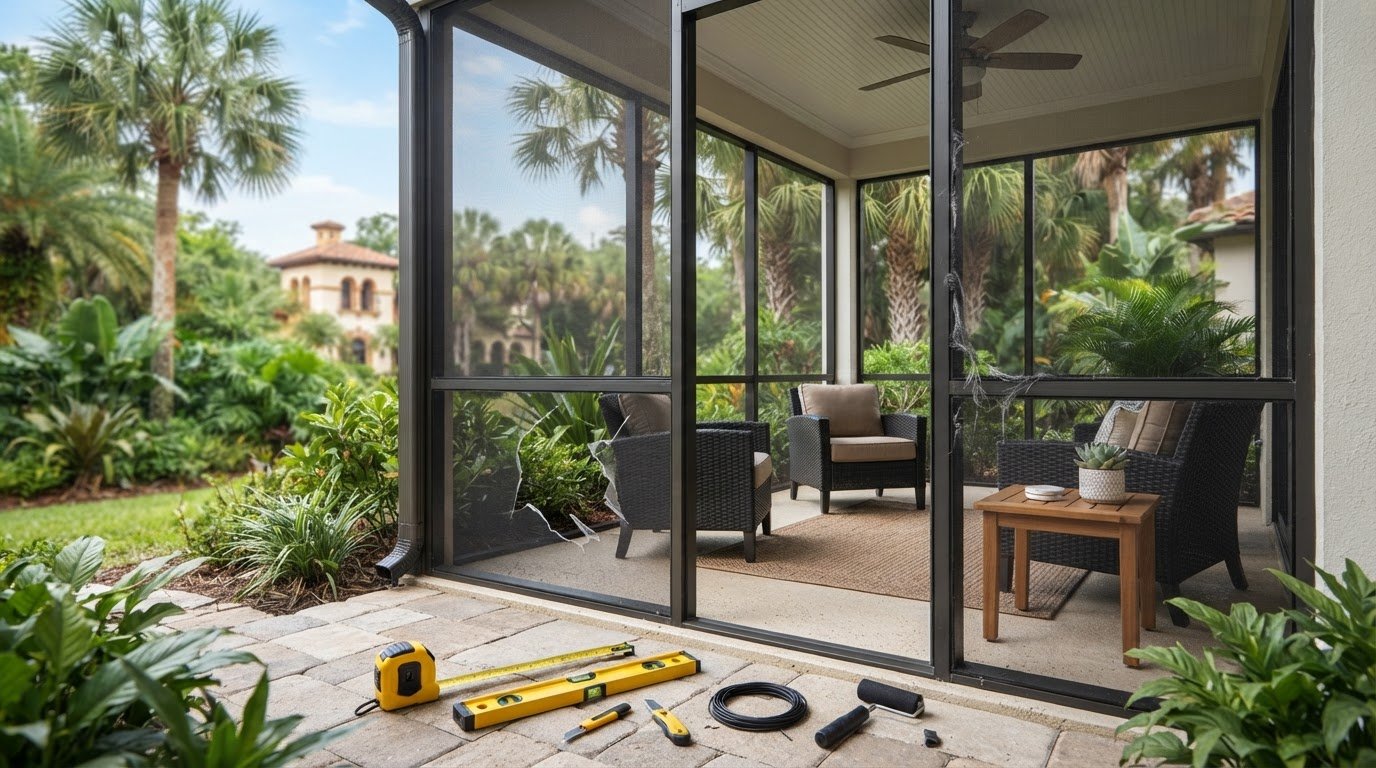
Inspect the enclosure. Look for tears, loose edges, gaps, and doors that don’t close securely. Separate localized damage from widespread wear. Changing the mesh won’t address an opening around a door or a panel that no longer sits securely.
Weigh everyday comfort. Consider how often you use the pool or patio, how much airflow you want, and whether a clear view is a priority. A denser weave may be a worthwhile trade-off in a space where tiny biting insects are a recurring problem.
Compare mesh specifications. Look for documented mesh count and material information rather than relying on broad descriptions such as “tiny mesh.” Use manufacturer specifications to understand what’s being considered, without treating a label as a guarantee of insect exclusion.
Choosing a tighter weave can improve the barrier through the screen fabric, but the trade-off is balancing insect control with airflow and visibility.
Which factors should guide your mesh choice?
Match the decision to the enclosure’s actual use. A pool area used often for relaxing may call for a different balance of breeze and insect control than a space where reducing insect passage is the main concern. Compare the mesh count and material in manufacturer information, then consider them alongside the problem you observed. Don’t choose by mesh label alone.
When is a complete re-screen worth considering?
If only a few panels are damaged, targeted screen repairs may be appropriate. Worn or loose screening across many sections, or recurring issues in several parts of the enclosure, can make a complete re-screen worth considering. Re-screening addresses screen fabric, not damaged frames, doors, or other structural concerns. North Florida Screen Enclosures provides screen enclosure repairs and complete re-screens for Saint Augustine homeowners, helping address the condition of the screening itself.
Get a Screen Enclosure Solution That Fits Your North Florida Home
Choosing screening is only one part of addressing insects in an outdoor space. The condition of the panels, possible openings around the enclosure, and the way your household uses the area all help shape a practical solution. A screen choice suited to a pool enclosure used for relaxing may differ from one for a patio where airflow and an open view are top priorities.
North Florida Screen Enclosures is a locally owned and operated specialty contractor based in Saint Augustine. The company builds pool enclosures and provides complete re-screens and screen enclosure repairs. Considering the enclosure as a whole helps connect your concern with the right next step, rather than assuming a different mesh will address every entry point.
What to expect from an enclosure assessment
An enclosure review should distinguish worn or damaged screen from gaps at doors, panel edges, or enclosure transitions. It should also take into account how you use the space, whether insects are a frequent concern during outdoor meals or mainly near a pool area, and how much you value airflow and an unobstructed view. These details help guide a project-specific plan without assuming a mesh specification or promising a particular result.
Before discussing the work, note which sections appear worn, where you’ve noticed openings, and how insect activity affects your use of the enclosure. Include whether the concern seems limited to a particular area or occurs across the space. This gives the project discussion a useful starting point.
Isolated panel damage: Screen enclosure repair may address a small number of problem areas.
Widespread screen wear: A complete re-screen may be worth considering across the enclosure.
Door, frame, or structural concerns: These are separate from replacing screen fabric and may require attention beyond a re-screen.
Plan a re-screen or enclosure repair in Saint Augustine
When wear is spread across multiple panels, a complete re-screen can address the enclosure’s screening as a project rather than piecemeal. If the issue is limited to specific damaged sections, screen enclosure repairs offer a more targeted path. Neither option should be treated as a fix for damaged frames or other structural concerns; those need to be distinguished from screen condition.
The best screen type for no-see-ums is the one that fits the enclosure’s needs and your priorities for using the space. A practical plan can account for the mesh under consideration while also identifying concerns that screening alone won’t resolve. That distinction keeps the work focused on the condition of your enclosure and how you want your North Florida outdoor area to function.
If you’re planning a re-screen or repair for your Saint Augustine enclosure, discuss your screen enclosure project with North Florida Screen Enclosures.
Make Your Enclosure More Comfortable to Use
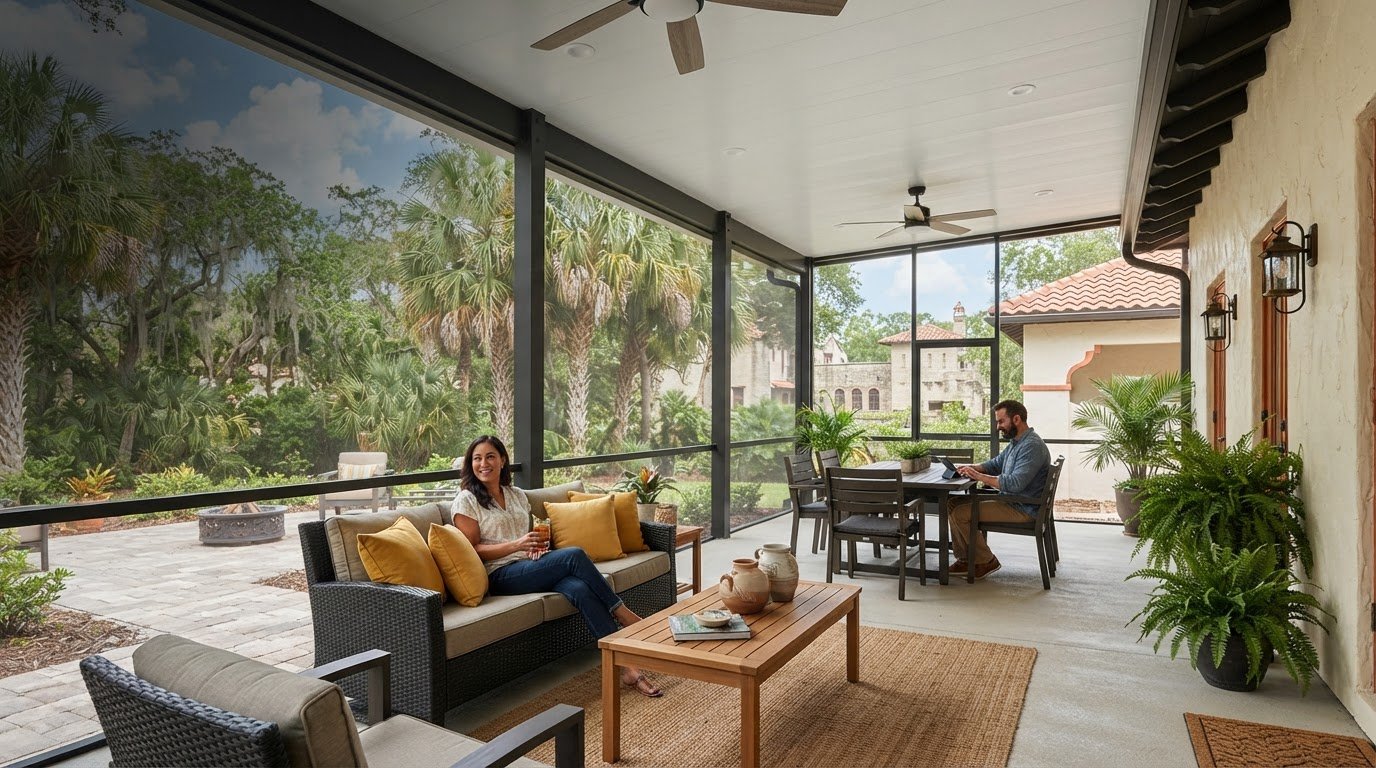
The best screen type for no-see-ums is ultimately the one that supports how you want to enjoy your outdoor space. Rather than choosing mesh in isolation, think about the experience you’re aiming for: relaxing by the pool, sharing a meal outdoors, or keeping the patio open to fresh air. A considered screen plan can help balance those priorities while accounting for the enclosure itself.
North Florida Screen Enclosures works with Saint Augustine homeowners on enclosure projects, including screening needs. If you’re unsure what your screens need, share what you’ve observed and how you use the space to identify a practical next step.
Discuss a screen enclosure solution for your Saint Augustine home with North Florida Screen Enclosures.
Frequently Asked Questions
Can no-see-ums get through regular window or pool screen?
Yes, they may pass through openings that are large enough for them. If you notice them near a window, compare the screen condition there with the pool enclosure rather than assuming both have the same issue. A tighter weave is designed to reduce passage through the fabric, but fit and condition matter too. Check for tears, loose edges, and openings around doors before deciding the screen itself is responsible.
Is 20x20 mesh the best screen for no-see-ums?
A 20x20 mesh is a commonly used option for no-see-um screening, but it isn’t automatically the best choice for every enclosure. The best screen type for no-see-ums depends on the mesh specifications and your priorities for airflow and visibility. Before comparing products, check how the manufacturer defines the mesh count and describes its intended use. A pool area used for relaxing may call for a different comfort balance than a space where insect control is the main concern.
Do no-see-um screens block airflow?
A tighter weave may change how much air moves through the screen compared with more open mesh. The result can vary with the screen material, the dimensions and layout of the enclosure, and nearby conditions. A small screened sitting area may feel different from a large pool enclosure. Before selecting mesh, consider where you usually sit, how much cross-breeze you rely on, and whether maintaining an open view matters during everyday use.
Are no-see-ums and sand flies the same insect?
Not always. “No-see-um” commonly refers to very small biting insects, including biting midges, while “sand fly” can describe different insects depending on the region. Common names don’t always identify one particular species. For enclosure decisions, the useful point is that some tiny insects may pass through more open screening. If you’re unsure what’s causing bites around your Saint Augustine home, local extension or public-health information can help identify appropriate next steps.
When are no-see-ums most active?
There’s no single activity schedule that applies to every yard. Species and local conditions can affect when biting insects are noticeable. Keep a simple note of the time, location, and circumstances, such as whether a door was open or outdoor lights were on. If activity repeatedly appears near one entrance, that pattern may help focus your inspection. If it occurs in different areas, record that too before planning screen work.
Can no-see-ums bite through clothing?
Some very small biting insects may reach skin through thin or loosely woven clothing, but protection depends on the fabric, fit, and insect. A lightweight shirt, for instance, may not provide the same coverage as denser fabric. Clothing also won’t address an opening in an enclosure. If bites persist or you’re concerned about personal protection, seek advice from a trusted public-health or local extension source, and consider whether your enclosure needs inspection.
Comments