


Cost to Replace Screen Panels in Pool Cage: 2026 Price & Value Guide

What if that small tear in your pool enclosure is actually a structural warning sign rather than just a minor gateway for mosquitoes? Most homeowners in Saint Augustine see a damaged panel as a nuisance, but neglecting the cost to replace screen panels in pool cage systems can lead to significant integrity issues when hurricane season arrives. You're likely tired of bugs invading your sanctuary and feeling uncertain about which mesh type actually justifies the investment.
This guide provides a detailed look at the variables driving repair costs and helps you determine the most resilient solutions for the Florida climate. We'll explore the technical benefits of different screening materials, the importance of hardware like Tapcon fasteners, and the specific scenarios where a full re-screen is more economical than piecemeal fixes. You'll gain a clear understanding of how to maintain a safe, durable enclosure that protects your home and provides peace of mind for years to come.
Table of Contents
The Economics of Pool Cage Screen Replacement
Maintaining a pool enclosure in North Florida requires a clear understanding of how labor and logistics drive the total invoice. While the mesh itself is a manageable expense, the professional labor required to safely access high roof panels and secure them with proper tension accounts for the majority of the project's value. When calculating the cost to replace screen panels in pool cage structures, homeowners often find that the complexity of the cage design, such as steep mansard or dome roofs, influences the final estimate more than the square footage alone.
One factor that often surprises residents in Saint Augustine is the minimum service fee. Professional contractors must account for travel time, fuel, and the setup of specialized ladders and safety equipment. Because of these fixed overhead costs, replacing a single damaged panel can feel disproportionately expensive compared to a larger project. It's often more practical to group several small repairs together or consider a more comprehensive service to maximize the value of the technician's visit.
Per-Panel vs. Complete Re-screening
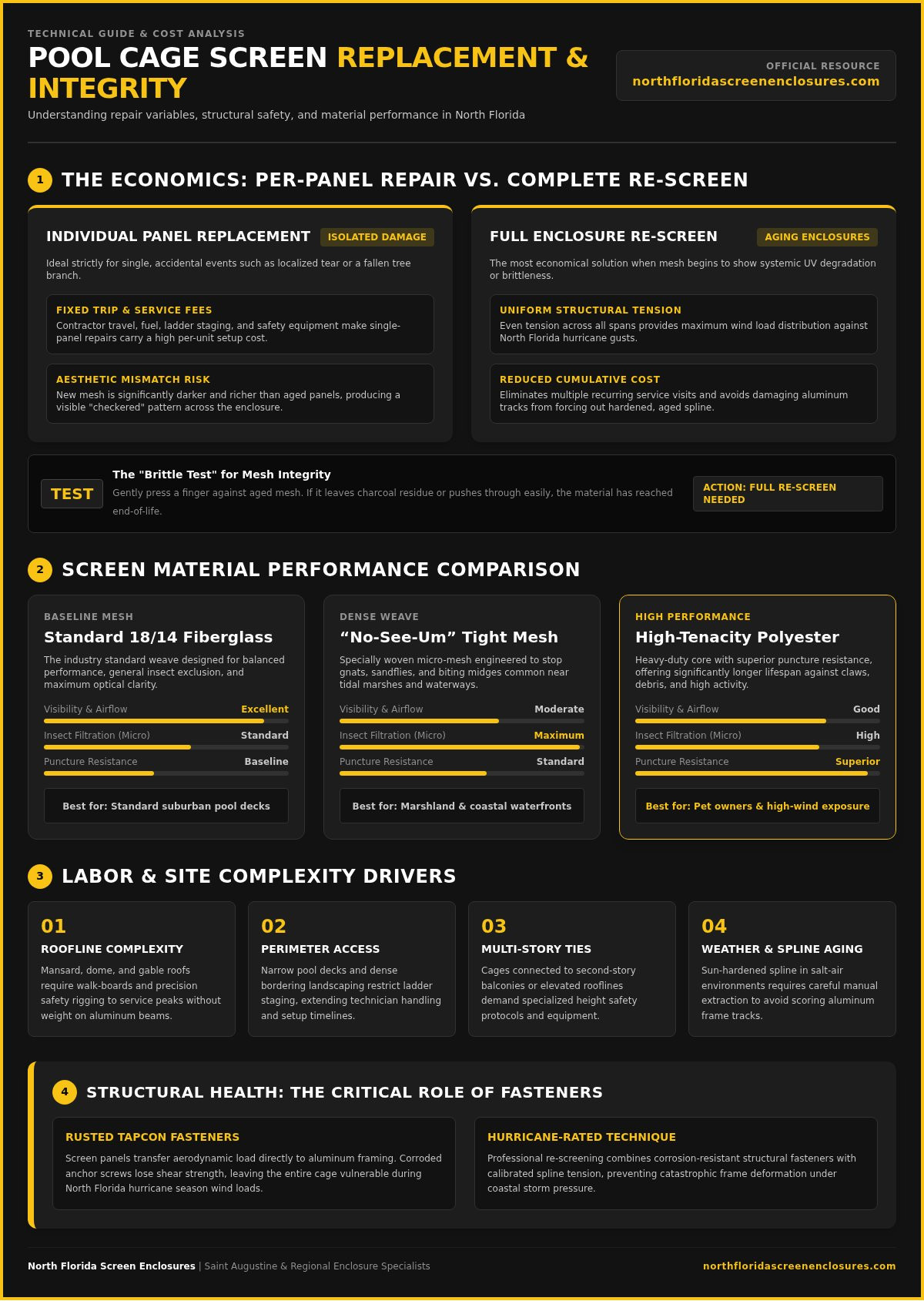
Individual panel replacement is an excellent solution for isolated incidents, such as a fallen branch or a localized tear. However, it's vital to perform a "brittle test" on the surrounding mesh. If you can easily push a finger through the screen or if it leaves a charcoal-like residue on your skin, the material has reached the end of its lifespan due to UV degradation. In these cases, the cost to replace screen panels in pool cage systems becomes a recurring burden. A complete re-screen ensures uniform tension across the entire aluminum frame, which is essential for structural stability during the high winds common in our coastal environment.
The Hidden Costs of Partial Repairs
Opting for multiple partial repairs over several years often results in a higher cumulative spend than a single, complete installation. Beyond the repeated trip charges, there is the technical risk to the enclosure itself. Old, sun-hardened spline, the rubber cord that holds the screen in place, can become difficult to remove. Forcing brittle spline out of the aluminum tracks can sometimes score or damage the frame's finish. Furthermore, new screen material is significantly darker and more vibrant than older, faded panels. Replacing only a few sections can create a checkered, mismatched appearance that detracts from your home's curb appeal and overall value.
Key Factors That Determine Your Repair Estimate
North Florida's unique environment dictates specific requirements for any outdoor aluminum structure. The intense UV exposure and salt-laden air in Saint Augustine can degrade standard materials faster than in inland regions. When assessing the cost to replace screen panels in pool cage systems, we look beyond the size of the tear to evaluate the specific environmental demands placed on your enclosure. Factors such as material density and the physical geometry of the cage determine the level of protection your home receives.
Comparing Screen Material Options
Choosing the right mesh is a balance between visibility, airflow, and protection. Standard 18/14 fiberglass mesh serves as the industry baseline, offering excellent clarity and ventilation. However, for homes near the marshes of Saint Augustine, "No-See-Um" mesh is often necessary to block smaller biting insects that slip through standard weaves. For households with active pets or children, high-tenacity polyester options provide superior puncture resistance. These materials offer significantly higher longevity and resilience compared to standard fiberglass, making them a wise investment for high-traffic areas where durability is the priority.
Structural Obstacles and Special Equipment
The physical design of your enclosure plays a major role in the labor requirements. Simple flat-roof cages are straightforward to service, but complex geometries like mansard, dome, or gable roofs require more time and precision. Technicians must use specialized walk-boards and safety rigging to reach the center of these high peaks without putting weight on the aluminum beams. The complexity of the roofline is perhaps the most significant labor driver when determining the cost to replace screen panels in pool cage structures.
Accessibility around the perimeter also impacts the project timeline. If your pool deck is narrow or if dense landscaping hugs the screen walls, it limits the space for ladders and staging. Multi-story enclosures or those attached to second-story balconies require even more rigorous safety protocols and specialized equipment. North Florida's weather patterns, characterized by sudden afternoon thunderstorms and high humidity, mean that the tension of the screen is just as important as the material itself. Because every home has a unique footprint, a professional assessment of your screen enclosure repairs is the most reliable way to ensure a precise and durable installation that stands up to coastal winds.
Professional vs. DIY: Analyzing the Real Value
Many homeowners consider handling the work themselves to save on the immediate cost to replace screen panels in pool cage structures. While the process looks simple in online videos, the reality involves complex physics and significant physical risk. Professional installation isn't just about convenience; it's about the structural integrity of the entire aluminum frame. A mistake during a DIY attempt can lead to much larger expenses down the road if the frame is damaged or the screen fails during the next storm.
A DIY project often requires purchasing specialized equipment that you won't use again. You'll need professional-grade spline rollers, heavy-duty extension ladders, and high-quality utility knives. Additionally, disposing of large amounts of old fiberglass mesh and sun-damaged spline requires proper waste management. When you factor in these purchases and the hours of labor required, the perceived savings often vanish. Licensed contractors also bring the benefit of insurance, which protects you from liability if an accident occurs on your property.
The Risk of Improper Tensioning
Achieving the perfect balance of tension is the most difficult part of the job. If a screen is too loose, it will suffer from "wind-slap" during Florida's frequent afternoon storms. This constant movement causes the mesh to rub against the aluminum tracks, leading to premature tearing. Conversely, over-tensioning a screen can actually warp the aluminum beams, compromising the cage's ability to withstand high-velocity winds. Professional spline seating ensures the mesh acts as a cohesive unit with the frame, which is critical for hurricane resistance in Saint Augustine.
Longevity and Contractor Accountability
Working with a specialist provides a level of durability that DIY attempts rarely match. A professional pool enclosure repair St. Augustine includes a labor warranty, ensuring that if a panel slips or fails due to installation errors, it's corrected at no additional cost. Specialists also have access to commercial-grade mesh and UV-resistant spline that isn't typically available at local big-box hardware stores. This higher-grade material, paired with expert installation, often lasts twice as long as a standard DIY repair.
Safety is perhaps the most compelling reason to hire a pro. Working on roof panels requires specialized walk-boards and fall-protection gear. Attempting to balance on narrow aluminum beams while managing a large roll of screen is a significant hazard. By hiring a local expert, you ensure that the cost to replace screen panels in pool cage systems translates into long-term value and structural safety for your family.
Structural Integrity: Fasteners and Frame Health
A pool cage functions as a unified system of tension and support. While most homeowners focus on the cost to replace screen panels in pool cage structures, the hardware holding the aluminum beams together is the foundation of that investment. If the fasteners are failing, even the highest-quality mesh won't protect your patio during a significant weather event. Structural integrity depends on the health of every screw, anchor, and beam within the enclosure.
In our coastal environment, neglecting the frame's hardware can lead to catastrophic failure during hurricane season. Professional screeners don't just look at the mesh; they evaluate the "skeleton" of the cage. Ensuring that the aluminum remains securely connected to your home and the foundation is the only way to guarantee the long-term resilience of the structure. This holistic approach prevents minor repairs from turning into a total loss.
The Importance of Tapcon Replacement
Rusted fasteners are a common sight across Saint Augustine and the surrounding coastal areas. You'll likely recognize them by the "bleeding" orange or brown stains running down the white aluminum tracks. These stains are a clear indicator that the protective coating on the steel screws has failed. Salt air is incredibly aggressive, turning standard fasteners into brittle liabilities that can snap under pressure. When calculating the total cost to replace screen panels in pool cage units, always factor in the value of new hardware. Replacing these with stainless steel or modern coated Tapcons during a re-screen is highly efficient. It's much simpler to swap screws while the old mesh is removed, ensuring the cage remains hurricane-ready for years to come.
Assessing the Aluminum Frame
Take a moment to inspect the aluminum frame for more than just broken screens. White, powdery oxidation or peeling paint suggests that the metal's protective finish is beginning to degrade. This isn't just an aesthetic concern; it's a chemical reaction that can pit and weaken the aluminum over time. You should also pay close attention to the base plates where the cage meets your concrete deck or pavers. If these anchors are loose or the base is wobbling, the cage is no longer properly secured to the foundation. For homeowners dealing with aging enclosures, understanding the standards for custom pool enclosure installation can help you decide if your current frame is worth restoring or if a new structure is necessary. If you've noticed rust stains or loose beams, contact North Florida Screen Enclosures for a comprehensive structural evaluation to ensure your family's safety.
Choosing the Right Specialist in Saint Augustine
Not every screen contractor is equipped to handle the specific demands of coastal North Florida construction. When you're evaluating who should manage the cost to replace screen panels in pool cage systems on your property, the contractor's local knowledge is as important as their technical skill. A specialist who works regularly in Saint Augustine understands the wind load requirements, the corrosive effects of salt air on aluminum hardware, and the precise tensioning standards that keep enclosures stable through hurricane season.
Local Expertise and Coastal Standards
Florida's building codes establish minimum wind resistance standards for screen enclosures, but a contractor who only meets the minimum isn't necessarily preparing your cage for the conditions specific to the Saint Augustine coastline. Ask any prospective contractor directly about their experience with hurricane-rated installation techniques and whether they assess fastener integrity as part of a re-screen. Verify that they carry current liability insurance and can provide local references from homeowners in your area, not just general reviews.
It's also worth choosing a specialist whose expertise extends across the full aluminum construction system. A contractor experienced with aluminum balcony railings and structural enclosures understands how aluminum behaves under load and in corrosive environments. That broader technical foundation translates directly into better decisions about your pool cage's frame, anchors, and mesh tension.
Material specifications: the mesh type, density, and spline grade being used
Hardware assessment: whether Tapcon or fastener replacement is included
Labor scope: how roof panels and complex roofline sections are priced
Warranty terms: what installation defects are covered and for how long
A vague, single-line estimate is a red flag. Transparent, itemized quotes reflect the kind of professional accountability that protects your investment.
Scheduling and Preparation
The optimal window for scheduling a re-screen in North Florida runs from late fall through early spring, when humidity is lower and afternoon storm activity is minimal. Dry conditions allow the mesh to be seated with consistent tension, and cooler temperatures make working on roof panels safer for technicians. Scheduling before hurricane season arrives is the most practical approach to ensuring your enclosure is structurally sound when it matters most.
Before the technician arrives, clear the pool deck of furniture, potted plants, and any items stored against the screen walls. Trim back any landscaping that presses against the enclosure's perimeter, since restricted access around the base slows the installation and can affect the quality of the lower panel work.
Understanding the full cost to replace screen panels in pool cage structures starts with an accurate, on-site assessment of your specific enclosure. Request a professional quote from North Florida Screen Enclosures to receive a detailed evaluation from a locally owned Saint Augustine specialist with proven expertise in hurricane-rated installation and coastal aluminum construction.
Secure Your Outdoor Sanctuary for the Future
Investing in your pool enclosure is about more than just aesthetics; it's about safeguarding your home's structural integrity. We've explored how the cost to replace screen panels in pool cage systems is influenced by material quality, cage height, and the critical health of your fasteners. By prioritizing professional installation and high-performance mesh, you ensure your enclosure remains a durable barrier against North Florida's humidity and high-velocity winds. Choosing a specialist who understands these local environmental stressors prevents recurring repair expenses and protects your patio for years to come.
As a locally owned Saint Augustine specialist, North Florida Screen Enclosures provides the precision and hurricane-rated expertise your home deserves. We take pride in our diligent craftsmanship, focusing on complete re-screens and specialized Tapcon maintenance that reinforces your cage against the elements. Get a Professional Quote for Your Pool Screen Replacement today to restore the safety and comfort of your outdoor living space. Our team is ready to help you make an informed decision for your home's long-term protection.
Frequently Asked Questions
Is it cheaper to replace one screen panel or the whole pool cage?
Replacing a single panel often carries a higher per-unit price because of minimum service fees and travel costs. While the immediate cost to replace screen panels in pool cage sections is lower for one panel, a complete re-screen offers better long-term value. Grouping repairs or choosing a full re-screen eliminates repeated trip charges and ensures uniform tension across the frame, which is more economical than paying for several individual service calls over a few years.
How long do pool screen panels typically last in North Florida?
Standard fiberglass mesh typically lasts between seven and ten years in the Saint Augustine climate before UV exposure makes it brittle. Factors like salt air and intense sun can accelerate this degradation. High-performance polyester materials often provide a longer lifespan, sometimes exceeding fifteen years. If your screens leave a charcoal-like residue when touched or tear easily under light pressure, the material has reached the end of its functional life and requires replacement.
What is the best type of screen for homes near the coast in Saint Augustine?
Homes near the marshes or coast in Saint Augustine benefit most from "No-See-Um" mesh, which features a denser weave to block tiny biting insects. For homeowners seeking maximum durability against wind and debris, polyester-based screens are superior to standard fiberglass. These materials resist tearing and maintain their integrity longer in coastal environments, providing a resilient barrier that stands up to the unique environmental pressures of the North Florida region.
Can I replace pool screen panels myself?
While DIY replacement is possible for lower wall panels, it's generally discouraged for roof sections due to significant safety risks. Achieving the correct tension requires specialized tools and experience; improper installation often leads to "wind-slap" or warped aluminum frames. Professional installers use safety rigging and walk-boards to access high peaks without damaging the cage. Hiring a specialist ensures the work is warrantied and the structure remains hurricane-ready, which DIY attempts rarely guarantee.
Does home insurance cover the cost of pool screen replacement after a storm?
Coverage for screen enclosures varies significantly between insurance carriers and specific policy endorsements. Many standard Florida homeowners' policies exclude screen mesh from storm damage coverage or apply a separate, higher deductible for unattached structures. It's essential to review your policy's "Other Structures" section or contact your agent to confirm if the cost to replace screen panels in pool cage systems is included following a named storm or high-wind event.
Why are some screen panels more expensive than others?
Price differences are primarily driven by material composition and the labor required for installation. Polyester and pet-resistant meshes use stronger fibers and specialized coatings, making them more resilient than standard fiberglass. Additionally, roof panels are more expensive to service than wall panels because they require specialized safety equipment and more time to install. The complexity of the weave, such as the dense patterns found in No-See-Um mesh, also contributes to the material's higher manufacturing cost.
What are Tapcons, and do they need to be replaced with the screen?
Tapcons are specialized masonry fasteners used to anchor the aluminum enclosure to your concrete deck or foundation. In Saint Augustine, salt air causes these steel screws to corrode, often visible as orange rust stains on the aluminum. Replacing rusted Tapcons during a re-screen is vital for structural safety. New, coated fasteners ensure the cage remains securely anchored, which is a critical requirement for maintaining wind-load compliance and preventing cage collapse during severe weather.
How long does a professional pool cage re-screen take to complete?
A complete professional re-screen typically takes between one and three days to finish, depending on the size and complexity of the enclosure. Simple wall repairs might only take a few hours, while multi-story cages or those with mansard roofs require additional time for safety setup and precision tensioning. Weather conditions also play a role; technicians generally avoid working during high winds or rain to ensure the screen is seated correctly and the site remains safe.


Comments