


Patio Cover vs. Pergola in Florida: Which Is Best for Your Backyard?

The classic, open-slat pergola you've seen in design magazines might actually be the reason you're stuck inside your house all summer. While these structures offer undeniable architectural charm, the reality of the 8th Edition Florida Building Code and our relentless UV radiation often demands a more resilient solution. Deciding on a patio cover vs pergola Florida depends on whether you prioritize aesthetic airflow or total protection from the daily elements.
You likely want a backyard space that serves as a true extension of your home, but the threat of wood rot and those sudden St. Augustine thunderstorms can make outdoor planning feel like a gamble. This guide will help you understand the critical differences in durability and comfort so you can invest in a structure engineered to withstand 115 to 140 mph winds. We'll compare the thermal protection of insulated Elite roofing systems against the structural integrity of aluminum pergolas, ensuring your new space adds lasting property value and year-round functionality.
Table of Contents
The Battle Against the Florida Elements: Why Your Patio Needs Protection
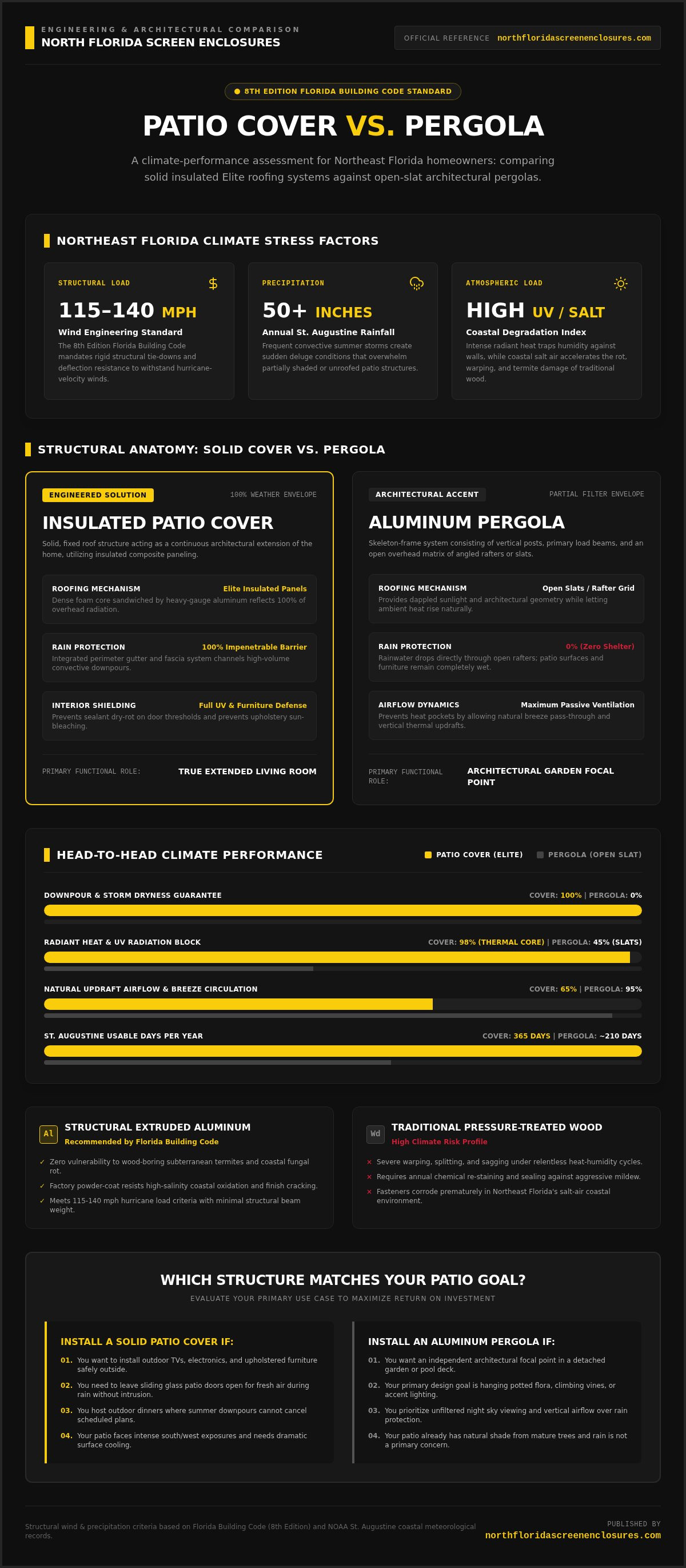
In Northeast Florida, an open concrete slab is rarely enough to create a functional outdoor living space. The unique environmental demands of the Saint Augustine area require a strategic approach to shade and shelter. When evaluating a patio cover vs pergola Florida homeowners must consider that our climate combines intense UV radiation with high humidity and sudden, heavy precipitation. Without a structural barrier, high-end outdoor furniture quickly fades, and the space remains unusable for a significant portion of the year. A patio cover is a fixed, solid-roof structure designed for 100% shade and rain protection.
Protection isn't just about comfort; it's about the longevity of your home's exterior components. The relentless sun can cause significant skin damage and accelerate the degradation of sealants around your doors and windows. By installing a permanent structure, you create a dedicated environment that remains shielded from the most punishing aspects of the coastal climate. This choice protects your investment while expanding your usable square footage.
The Heat Factor: Humidity and UV Radiation
Florida's sun isn't just bright. It's destructive. Uncovered patios often suffer from a greenhouse effect where stagnant, humid air becomes trapped against the home's exterior walls. This elevates the temperature of the immediate outdoor area, making it uncomfortable even if you're sitting in the shade of a nearby tree. Traditional materials like wood often fail under the North Florida sun because they're susceptible to warping and require constant maintenance to fight off rot and termite pressure. Modern aluminum structures, specifically the Elite roofing system, provide a superior thermal barrier by utilizing insulated panels that reflect radiant heat rather than absorbing it.
The Rain Reality: Afternoon Thunderstorms
According to NOAA climate data, St. Augustine averages over 50 inches of rainfall annually. Much of this occurs during convective storms from June through September. While the architectural definition of a pergola highlights its open-rafter design for airflow, this same feature offers zero protection during a typical afternoon downpour. Choosing a solid structure creates a dry transition zone between your interior and the yard. This allows you to keep your sliding glass doors open for fresh air without worrying about water intrusion. If you rely on a partial shade solution, you'll likely find your outdoor plans interrupted frequently by passing storms. A durable patio cover vs pergola Florida decision usually comes down to how much you value a dry, predictable space for year-round entertaining.
Understanding the Structure: What Defines a Pergola vs. a Patio Cover?
Choosing the right backyard addition requires a clear understanding of structural engineering and architectural intent. While both options provide shade, their physical compositions differ significantly. A traditional pergola consists of a skeleton-like frame featuring vertical posts, horizontal support beams, and a roof of open rafters or slats. In contrast, a patio cover is a fully engineered, solid-roof extension. When debating a patio cover vs pergola Florida homeowners often find that the choice hinges on how much structural density they need to feel protected from the environment.
The architectural "vibe" of each structure serves a different purpose. Pergolas lean toward a classic, European aesthetic, often functioning as a standalone focal point in a garden. Patio covers are designed as seamless home extensions, mirroring the lines of your existing roof to create a unified look. For a lasting investment, aluminum is the only logical material choice in St. Augustine. Unlike wood, which eventually succumbs to rot and termites, high-quality aluminum maintains its structural integrity without the need for annual staining or chemical treatments.
The Pergola: Airflow and Filtered Light
The primary advantage of a pergola is its open-rafter design. This configuration promotes natural ventilation, allowing heat to rise and escape rather than trapping it against the house. It creates a space defined by architectural shadows and filtered sunlight. Many homeowners appreciate this aesthetic, especially when paired with climbing vines or hanging plants. However, the weather protection differences between pergolas and patio covers are stark; a standard pergola offers zero precipitation protection. In our high-humidity climate, an aluminum pergola provides the look of wood without the vulnerability to moisture and pests.
The Patio Cover: Total Enclosure and Elite Roofing
For those seeking maximum utility, the Elite roofing system is the industry standard. These systems utilize insulated composite panels, typically featuring an expanded polystyrene foam core sandwiched between durable aluminum facings. This design provides 100% UV blockage and a completely dry environment. A solid cover effectively turns your patio into a true outdoor room, shielded from both the sun and the rain. These structures are often tied directly into the home’s roofline or fascia, requiring engineer-sealed drawings to meet local wind load requirements. If you are ready to expand your living space with a permanent solution, you can consult with our local team to explore custom configurations.
Head-to-Head Comparison: Performance in Florida’s Climate
When comparing the performance of a patio cover vs pergola Florida residents often prioritize how a structure handles the intense summer cycle of extreme heat and sudden downpours. A solid patio cover, particularly one utilizing an insulated roofing system, provides 100% rain protection and creates a completely dry environment for outdoor furniture and electronics. Pergolas offer a different experience. As noted in the UF/IFAS guide to garden structures and pergolas, these architectural features are primarily designed to provide filtered light and aesthetic appeal. While they offer a "dappled" shade that many find attractive, they provide zero protection during the 50-plus inches of rain St. Augustine receives annually.
Thermal performance is another critical differentiator. High-density insulated roofing panels can reduce under-patio radiant heat by 10°F to 15°F compared to open-air structures. This temperature drop is vital during July and August when humidity levels make stagnant air feel significantly hotter. While pergolas promote better vertical airflow, they don't block the overhead infrared energy that causes surfaces to become hot to the touch. Deciding on a patio cover vs pergola Florida style involves weighing the desire for architectural shadows against the need for a truly cooled outdoor living room.
Wind Resistance and Hurricane Safety
In St. Augustine, structural integrity isn't optional. Under the 8th Edition Florida Building Code, structures must be engineered for wind speeds ranging from 115 mph inland to over 140 mph along the coastline. A solid patio cover acts much like a wing; it generates significant uplift during high-wind events and requires precise anchoring into the home's structural lintels or dedicated concrete footers. Professional installation is mandatory to ensure these systems meet the +80 / -80 psf design pressure ratings required for safety. For existing structures, Tapcon replacement is a critical maintenance step to ensure the base remains securely fastened to the slab. Pergolas, with their open-rafter design, allow wind to pass through more freely, which reduces the overall wind load, but they still require engineer-sealed drawings to ensure the posts won't shift during a storm.
Maintenance and Longevity
The salt air environment of Northeast Florida is notoriously harsh on building materials. We avoid wood structures entirely because the combination of 100% humidity and termite pressure leads to inevitable rot within just a few years. Aluminum is the superior choice for longevity. Utilizing high-quality aluminum for soffit and fascia work ensures that moisture cannot penetrate the transition zone between your house and the new cover. Unlike wood, which requires annual staining, powder-coated aluminum remains resilient against salt-induced corrosion. This low-maintenance approach protects your investment and ensures the structure remains a permanent asset to your property value.
Choosing the Right Structure for Your St. Augustine Lifestyle
Deciding on a patio cover vs pergola Florida depends largely on how you intend to use your backyard during our long summer months. While aesthetics are important, the functional impact on your daily life is the most significant factor. If you plan to use your outdoor space regardless of the weather, a solid structure is the only way to ensure your plans aren't cancelled by a sudden afternoon downpour. For those who only venture outside during clear, breezy evenings, the open nature of a pergola might be sufficient. Florida's sun is relentless. A solid roof blocks the sun before it hits your windows, which can significantly lower the temperature in your living room and reduce the strain on your air conditioning system.
You should also consider the architectural alignment with your home. St. Augustine features a variety of styles, from Spanish Colonial to modern coastal designs. A pergola often serves as a beautiful, standalone garden feature that adds a classic touch to the landscape. On the other hand, a patio cover is designed to look like a permanent extension of your house, providing a seamless transition between indoor and outdoor living. When you weigh the benefits of a patio cover vs pergola Florida, remember that your choice impacts not just the yard, but the comfort and lighting of your indoor living areas too.
The Light Trade-Off
One primary concern for homeowners is how a new structure will affect the natural light inside their house. A solid patio cover will inevitably dim the rooms directly behind it. This is often a benefit in Florida, as it reduces glare and heat, but it can make a kitchen or living room feel less bright. Pergolas maintain a much airier feel, allowing sunlight to filter through the rafters even as they provide some overhead shade. We often recommend custom patio roofing solutions that use specific placement and heights to balance the need for weather protection with the desire for interior light.
Functionality: Dining vs. Relaxing
Your intended activities should dictate the structural design. If you are installing an outdoor kitchen or a high-end dining set, a solid cover is almost always the better investment. It protects expensive appliances and upholstery from rain and bird droppings, ensuring your investment lasts for decades. Pergolas work beautifully as "destination" spots in the garden, such as a dedicated area for a fire pit or a quiet reading nook away from the main house. Some homeowners choose to combine both structures to create a multi-functional backyard that offers total protection in some areas and architectural airflow in others. If you're ready to transform your backyard, you can contact our team for a professional assessment of your property.
Durable Aluminum Solutions: Custom Pergolas and Elite Roofing Systems
At North Florida Screen Enclosures, we utilize high-quality aluminum for every project because it's the only material that truly withstands the Northeast Florida climate. When deciding on a patio cover vs pergola Florida, the underlying material determines whether your investment lasts five years or fifty. Aluminum is naturally resistant to the salt-air corrosion common in St. Augustine, and it's entirely impervious to the termites and rot that plague wood structures. By choosing aluminum, you ensure that your outdoor space remains structurally sound without the need for the aggressive maintenance schedules required by traditional building materials.
The Elite roofing system represents the gold standard for solid patio covers. Its interlocking panels are engineered to create a weather-tight seal that prevents leaks during heavy convective storms. These panels also provide significant structural rigidity, allowing the system to meet the 8th Edition Florida Building Code requirements for wind loads reaching 115 to 140 mph. For a truly complete backyard transformation, we recommend integrating your new shade structure with a professional paver patio design. This creates a cohesive foundation that supports the weight of the aluminum posts while enhancing the overall aesthetic of your property.
The North Florida Screen Enclosures Difference
Our approach is defined by a commitment to precision engineering and long-term value. We don't prioritize the cheapest possible materials; instead, we focus on high-performance solutions that offer peace of mind. This dedication to quality extends to every detail, including the installation of aluminum balcony railings and other safety features. We understand that your home is your most significant investment, and our goal is to protect that investment with durable, hurricane-rated structures that look as good as they perform.
Next Steps for Your Backyard Transformation
Transforming your backyard from an unusable, sun-scorched slab into a year-round retreat starts with a professional site evaluation. Our team understands the specific zoning and permitting requirements of St. Johns County, ensuring your project moves from concept to reality without legal or structural delays. During the design process, we'll help you weigh the functional benefits of a patio cover vs pergola Florida based on your home's orientation and your family's lifestyle needs. We'll handle the technical details and engineer-sealed drawings so you can focus on how you'll enjoy your new space. Ready to beat the heat? Contact North Florida Screen Enclosures today to schedule your consultation.
Investing in Your Florida Outdoor Lifestyle
Selecting the right structure involves balancing architectural beauty with the practical necessity of weather protection. Whether you prioritize the total coverage of an Elite roofing system or the classic ventilation of a pergola, the choice between a patio cover vs pergola Florida homeowners make should always focus on high-quality aluminum construction. This ensures your investment remains resilient against salt air, high humidity, and the specific wind load requirements of St. Johns County. By choosing materials that won't rot or attract termites, you create a permanent outdoor room that functions as a seamless extension of your home.
As a locally owned and operated specialist in Saint Augustine, North Florida Screen Enclosures builds structures that provide genuine peace of mind. We specialize in hurricane-rated aluminum construction and offer deep expertise in both custom pergolas and insulated roofing systems. Our team is ready to help you create a durable, low-maintenance space that enhances your property's value and your daily comfort. Get a Free Estimate for Your Saint Augustine Patio Structure and start enjoying your outdoor living area year-round.
Frequently Asked Questions
Which is more expensive in Florida: a patio cover or a pergola?
Generally, insulated solid patio covers like the Elite roofing system have a higher initial cost than open-slat aluminum pergolas due to the volume of materials and structural engineering required. However, high-end motorized pergolas can sometimes exceed the cost of a standard fixed cover. When evaluating a patio cover vs pergola Florida residents should consider that solid covers often provide a higher return on investment by creating a true outdoor room that adds more functional square footage.
Do I need a building permit for a patio cover in Saint Augustine?
Yes, the St. Johns County Building Department requires a permit for any structural addition, including patio covers and pergolas. Because these structures must meet specific wind load requirements under the 8th Edition Florida Building Code, you'll need engineer-sealed drawings for the application. For projects with a contract value exceeding $5,000, Florida law also requires a recorded Notice of Commencement before the first inspection can take place.
How well do aluminum pergolas hold up in a hurricane?
Aluminum pergolas engineered for the North Florida climate are designed to withstand hurricane-force winds, often rated between 115 and 140 mph depending on your proximity to the coast. Their open-rafter design allows wind to pass through the structure, which significantly reduces the uplift and lateral pressure compared to solid roofs. Professional installation ensures that the posts are properly anchored into the concrete slab or dedicated footers to prevent shifting during a storm.
Can I add a screen enclosure to a pergola later on?
Adding a screen enclosure to a standard pergola is technically challenging because the open-rafter design doesn't provide a flat, sealed surface for screen attachment. If you anticipate wanting a screened-in space in the future, starting with a solid patio cover or a specifically designed pool enclosure is a more efficient path. These structures provide the necessary frame and roofing to keep insects out while maintaining a weather-tight environment for your furniture.
Will a patio cover make my house too hot by trapping air?
A solid patio cover actually helps cool your home by blocking direct sunlight before it enters your windows. This reduces the radiant heat transferred into your living space, which can lower your indoor temperatures and reduce cooling costs. To prevent stagnant air under the cover, we recommend a height that allows for natural cross-ventilation. Adding a wet-rated ceiling fan can also help maintain constant airflow during the most humid months of the year.
What is the lifespan of an aluminum Elite roofing system compared to wood?
Aluminum Elite roofing systems have a lifespan that can exceed 30 years with minimal maintenance, whereas wood structures in Florida often show signs of rot or termite damage within five to seven years. Aluminum is impervious to moisture and doesn't require the annual staining or chemical treatments that wood demands. The powder-coated finish on our aluminum systems also resists the salt-air corrosion that is common throughout the Saint Augustine area.
Can I install a ceiling fan in a patio cover or pergola?
Yes, you can install wet-rated ceiling fans in both patio covers and pergolas. Elite roofing systems feature factory-milled internal wire conduits that allow for a clean, flush installation without visible exterior wiring. For pergolas, fans are typically mounted to a central support beam. We always recommend using fans specifically rated for outdoor use to ensure the motor and blades can withstand the high humidity and occasional wind gusts of our coastal environment.
How do I clean and maintain an aluminum patio structure?
Maintaining an aluminum patio structure is straightforward and requires very little effort. We recommend a gentle wash with a garden hose and a mild detergent twice a year to remove salt spray, pollen, and dust. It's also important to keep the integrated gutters and downspouts clear of leaves and debris to ensure proper drainage. Periodic inspections of the fasteners, including professional Tapcon replacement if necessary, will help maintain the structural integrity of the unit for decades.


Comments