


Durable Outdoor Roofing Guide: North Florida (2026)

In Saint Augustine, your outdoor roof isn't just a shade provider; it's a structural shield against corrosive salt air and volatile wind loads. Most homeowners in North Florida understand the anxiety of watching a storm track toward the coast while wondering if their patio cover will survive the night. It's a valid concern since the wind-borne debris region east of Interstate 95 mandates a wind speed of 120 mph. Finding truly durable outdoor roofing requires looking beyond simple aesthetics and focusing on engineered resilience that meets these rigorous demands.
You want a space that adds permanent value to your home without requiring constant repairs after every heatwave. We'll show you how to achieve that by exploring the most resilient materials and structural standards required for our unique climate in 2026. This guide previews the latest Florida Building Code updates, explains the technical benefits of elite aluminum systems, and details how to maintain a cool environment for year-round use. You'll gain a clear roadmap for protecting your investment against the intense summer heat and coastal elements.
Table of Contents
Defining Durable Outdoor Roofing for North Florida
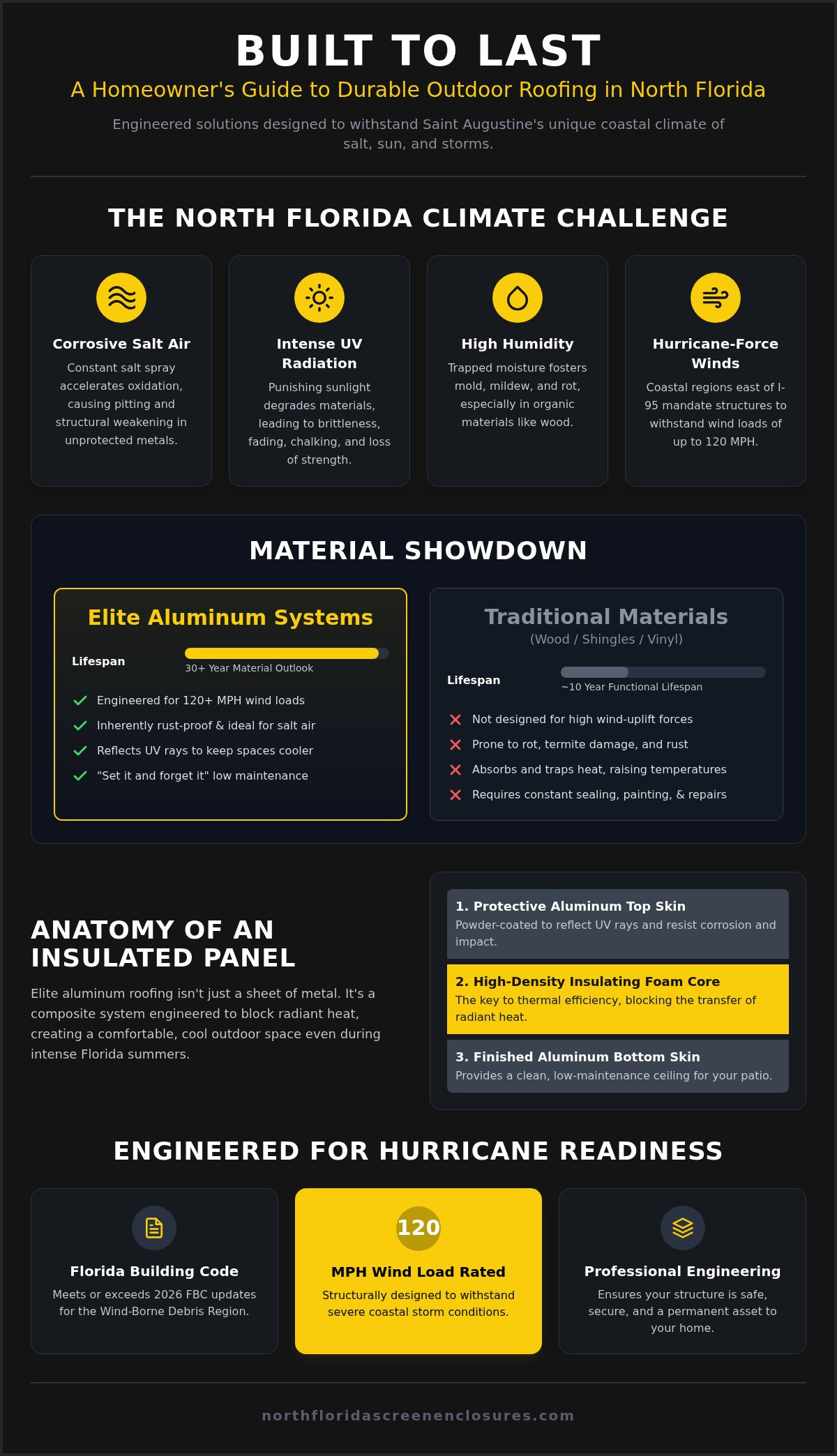
In Saint Augustine and the surrounding coastal communities, durability isn't a vague marketing term; it's a technical requirement. A structure that works in a dry, inland climate will quickly deteriorate when subjected to our unique trifecta of high humidity, intense UV radiation, and corrosive salt spray. While a broad list of roofing materials exists for general construction, many of these options fail to meet the specific demands of an outdoor patio or pool enclosure.
Standard residential roofing materials, such as asphalt shingles or wood, often struggle in outdoor applications where the underside of the roof is exposed to the elements. Without the climate control of an attic, these materials are prone to moisture trapping and thermal expansion. True durable outdoor roofing must maintain its structural integrity during extreme weather events, such as the 120 mph winds designated for the wind-borne debris regions east of I-95. This is why the "Elite" standard, which utilizes high-grade aluminum, has become the regional benchmark for longevity and safety.
The Impact of Salt Air and Humidity
Coastal environments create a relentless chemical stress on building materials. Salt air accelerates oxidation in non-treated metals, leading to "pitting" and structural weakening over time. To combat this, we prioritize aluminum systems with specialized powder-coated finishes. These coatings provide a non-porous barrier that prevents salt ions from reaching the metal surface. Proper moisture-wicking and integrated drainage channels are also critical. They ensure that condensation doesn't settle in crevices where it could foster mold or rot in adjacent house structures like soffit and fascia.
UV Resistance and Material Degradation
The Florida sunshine delivers a punishing level of UV radiation that can cause polymers to become brittle and fabrics to tear. High-quality roofing systems are designed to reflect these rays rather than absorbing them, which protects the material and keeps the area underneath significantly cooler. UV degradation in the context of outdoor roofing materials is the chemical breakdown of a material's molecular bonds caused by prolonged exposure to ultraviolet light, resulting in fading, chalking, and loss of structural strength. By choosing materials engineered for high reflectivity, homeowners ensure their outdoor space remains both aesthetically pleasing and structurally sound for decades.
Comparing Materials: Aluminum vs. Traditional Roofing
When selecting durable outdoor roofing, homeowners often weigh initial costs against long-term performance. In North Florida, this comparison usually pits high-grade aluminum against traditional shingles or organic materials like wood. A standard vinyl or wood structure may only offer a 10-year functional lifespan before significant repairs are needed. Conversely, an engineered aluminum system provides a 30-year material outlook, ensuring the structure remains a permanent asset to the property.
Traditional asphalt shingles are rarely the best choice for detached patio covers. They're designed for steep-slope residential roofs and require a heavy plywood substrate. This added weight puts unnecessary stress on the support columns. More importantly, shingles trap heat. On a July afternoon in Saint Augustine, a shingled patio cover can make the area underneath feel several degrees hotter than the ambient air. Polycarbonate panels offer a middle ground by balancing light transmission with impact resistance, but they lack the structural "Elite" status found in solid metal systems.
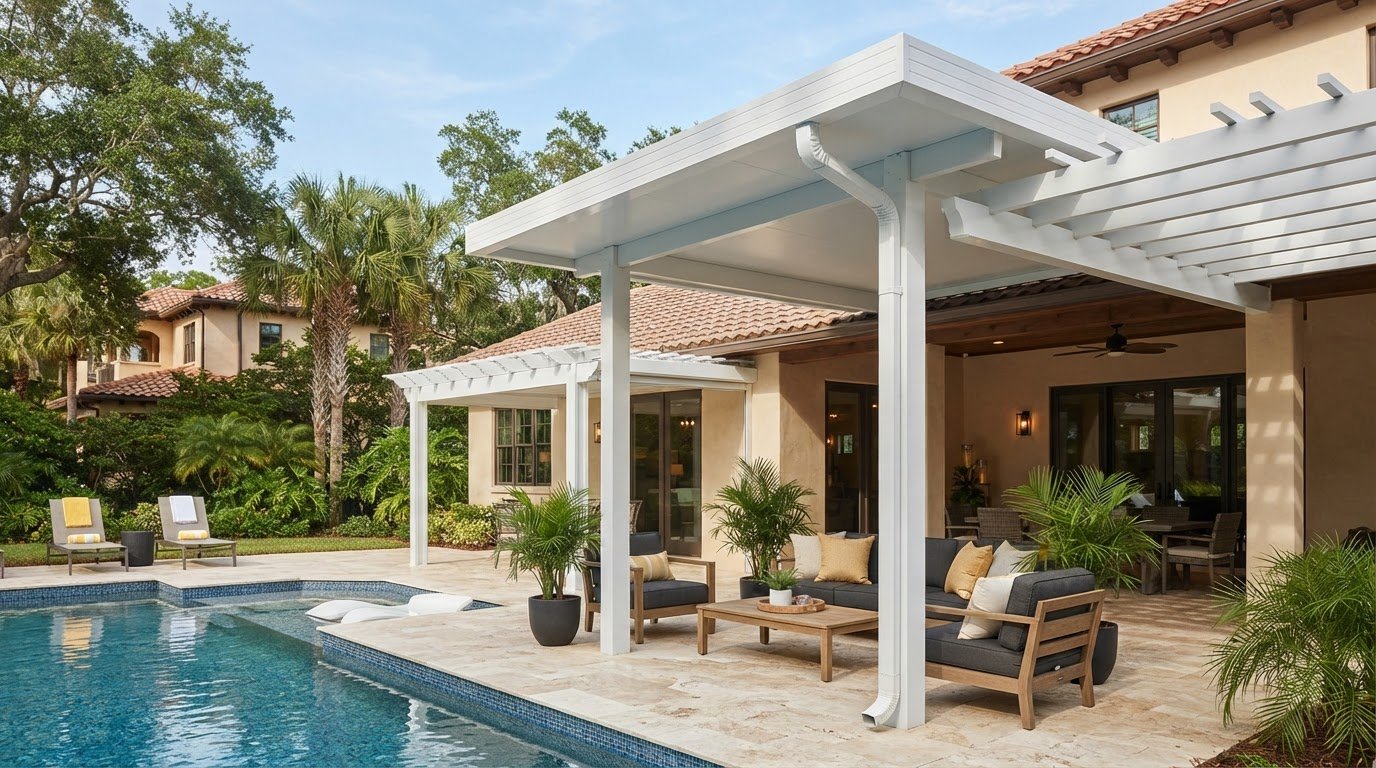
Aluminum Patio Covers
Aluminum is the gold standard for our region due to its superior strength-to-weight ratio. It's essential for meeting the Florida Building Code on wind resistance, which is strictly enforced for coastal structures. Unlike steel, aluminum is naturally non-corrosive. It won't rust when exposed to the salt air of Saint Augustine Beach. These properties allow aluminum to support elite roofing systems that require zero painting and very little maintenance. It's a "set it and forget it" solution for busy homeowners.
The Limitations of Wood and Vinyl
While wood is often cited as a classic choice, it's a liability in our humid climate. Moisture quickly finds its way into the grain, leading to rot and termite infestations. Vinyl might seem like a cost-effective alternative, but it often fails under the intense Florida sun. It warps. It becomes brittle. The high cost of frequent repainting, sealing, and eventual replacement makes these materials far more expensive over time. If you're planning a long-term investment, our aluminum patio covers provide the reliability that organic materials simply can't match.
Thermal Efficiency and the Benefits of Insulated Panels
Many homeowners assume any shade is good shade. However, uninsulated metal roofs can act like radiators. They absorb the intense Florida sun and beam heat downward, making the space beneath them uncomfortable. This is where durable outdoor roofing systems utilizing insulated panels provide a distinct advantage. These panels are engineered as a "sandwich" structure, featuring a high-density expanded polystyrene (EPS) foam core bonded between two resilient aluminum skins. This design creates a permanent thermal break that significantly slows the transfer of heat from the exterior surface to the living area below, ensuring the patio stays cool.
Selecting durable outdoor roofing isn't just about wind resistance; it's also about managing the auditory experience of a Florida storm. Our region's frequent afternoon downpours can be deafening on a single-sheet metal roof, creating a "drumming" effect that disrupts conversation. The foam core within insulated panels acts as a high-performance sound dampener, absorbing the impact of heavy rain and providing a tranquil environment. This thermal stability also contributes to the structural lifespan of the enclosure. By minimizing the extreme expansion and contraction cycles caused by fluctuating daily temperatures, the seals and fasteners remain secure for a longer period.
Energy Efficiency in the Summer Heat
The difference in temperature beneath an insulated roof compared to a non-insulated one can be as much as 15 to 20 degrees on a mid-August afternoon. This cooling effect does more than just improve human comfort; it also protects your property. High-quality outdoor furniture, rugs, and hardscaping are less likely to fade or crack when shielded from extreme radiant heat. Investing in thermal efficiency ensures that your patio or pool enclosure remains a high-use area even during the most oppressive months of the year.
Condensation Control
In high-humidity coastal environments, condensation is a persistent threat to structural integrity. When warm, moist air hits a cold, uninsulated metal surface, it creates a "sweating" effect that can lead to dripping and water damage over time. Insulated panels maintain a more consistent surface temperature, effectively preventing this moisture buildup. This is a critical component of meeting modern Florida Building Code requirements for moisture management. By keeping the underside of the roof dry, you protect the seal integrity and ensure the long-term health of the entire enclosure.
Structural Integrity: Wind Loads and Hurricane Readiness
Structural integrity in North Florida is governed by the 2023 Florida Building Code, which requires all new constructions to meet specific wind load thresholds. In Saint Augustine, structures east of Interstate 95 must be engineered to withstand 120 mph winds. Achieving this level of durable outdoor roofing requires more than just strong panels; it demands an integrated system where every component, from the rafters to the foundation, works in unison. When a hurricane strikes, the primary threat is uplift. This occurs when high-velocity air creates a vacuum effect that attempts to pull the roof off its supports.
Proper patio cover installation is mandatory because an unpermitted or poorly engineered structure can become a projectile during a storm. Professional installers ensure that the roofing weight is compatible with the existing concrete work. If the roof is too heavy for the slab, it can lead to cracking or settling, which compromises the entire structure's stability. Aluminum's high strength-to-weight ratio allows for massive spans without requiring the massive footers that heavier materials might necessitate.
Hurricane-Rated Engineering Standards
A hurricane-rated designation means the structure has undergone rigorous testing to prove it can survive the pressures of a major storm. This involves the use of heavy-gauge load-bearing beams and reinforced columns that transfer the wind's force safely into the ground. Wind load for a Saint Augustine patio roof is calculated by multiplying the design wind pressure, derived from the 120 mph regional wind speed, by the surface area and specific pressure coefficients of the structure's geometry. This precise engineering ensures the roof remains attached even when subjected to intense gusts.
The Importance of Tapcon Replacement
Fasteners are often the overlooked weak link in outdoor structures. In coastal zones, standard steel screws and Tapcons are highly susceptible to corrosion from the salt-laden air. Over time, a rusted fastener loses its grip on the concrete or aluminum frame. If these fasteners fail during a storm, the entire roof can lift, leading to catastrophic damage. We prioritize high-grade stainless steel or specialized coated fasteners to prevent this oxidation. If your current enclosure has visible rust streaks near the base or joints, it is time to consider a professional inspection. Our team at North Florida Screen Enclosures specializes in structural upgrades and fastener replacement to keep your home and family safe.
Planning Your Custom Outdoor Roof in Saint Augustine
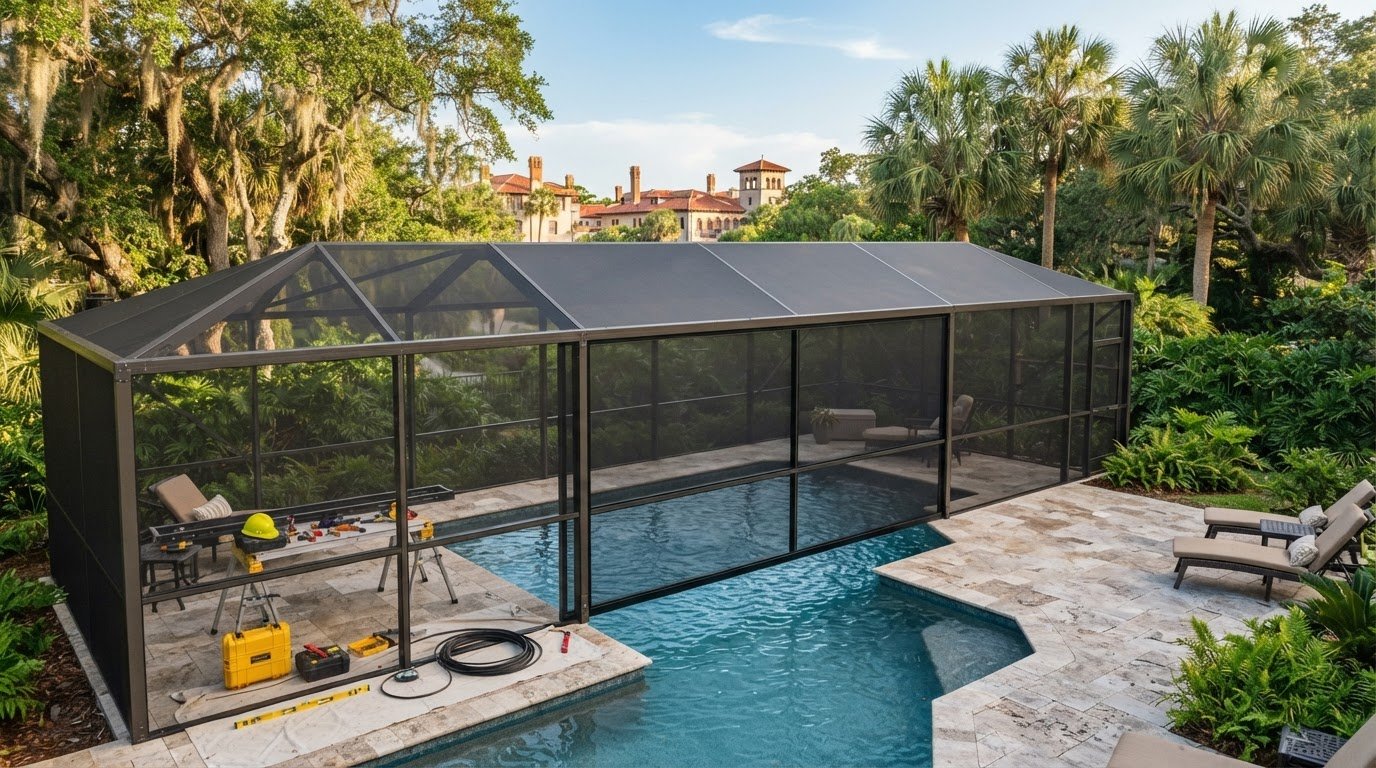
Planning a project in Saint Augustine requires a holistic view of your property. If you're already considering a pool enclosure installation, integrating a solid patio cover into the design ensures a seamless transition between covered and screened areas. This unified approach prevents the patchwork look common in DIY projects and ensures the entire system meets the same 120 mph wind load requirements. Achieving a truly durable outdoor roofing solution means ensuring the new structure shares the same structural integrity as your primary residence.
Navigating the local approval process is a critical step that requires precision. In unincorporated St. Johns County, homeowners currently benefit from a 30% reduction in general building permit fees, which helps offset the cost of high-quality materials. However, any project exceeding $5,000 requires a recorded Notice of Commencement before the first inspection to protect against potential liens. While some minor improvements under $7,500 are exempt from permits in the City of Saint Augustine, this exemption doesn't apply to structural work or projects in flood hazard areas. A specialist handles these filings to ensure your investment is fully compliant with the 2023 Florida Building Code.
Customizing Your Aesthetics
A durable structure should also be a beautiful one. We focus on matching the new roof's soffit and fascia to the existing trim of your home for a built-in appearance. Modern aluminum systems are available in various powder-coated finishes that resist the fading effects of UV radiation discussed earlier. Beyond color, insulated panels allow for the clean integration of electrical wiring. This makes it simple to install ceiling fans and recessed lighting, turning your patio into a functional living room that retains its curb appeal for decades.
Selecting a Local Specialist
Choosing a contractor with deep roots in Saint Augustine is the ultimate factor in long-term durability. Local experts understand the specific soil conditions and wind patterns that define our coastal environment. When interviewing a team, ask about their experience with St. Johns County wind-borne debris regions and their approach to Florida Product Approval. A comprehensive provider manages everything from the initial concrete work to the final roof panel installation. This single point of accountability ensures that your durable outdoor roofing system is built to the highest standards of the diligent craftsman.
Securing Your Investment with Engineered Outdoor Roofing
Investing in your home's exterior requires a balance of aesthetic vision and technical precision. We've explored how high-grade aluminum outperforms organic materials in our corrosive coastal environment and why insulated panels are essential for managing Florida's intense radiant heat. Remember that the structural integrity of your system depends on more than just the panels; it relies on professional engineering that meets the 120 mph wind load standards required for Saint Augustine. By prioritizing durable outdoor roofing and high-performance fasteners, you ensure your outdoor living space remains a permanent, low-maintenance asset for years to come.
As a locally owned and operated team in Saint Augustine, we specialize in hurricane-rated aluminum construction and provide a complete service from initial design to tapcon replacement. If you're ready to upgrade your property with a structure built to last, Request a Free Estimate for Your Durable Outdoor Roof. We look forward to helping you build a resilient environment where your family can relax with total peace of mind.
Frequently Asked Questions
What is the most durable material for an outdoor roof in Florida?
High-grade aluminum is the most resilient choice for durable outdoor roofing in coastal Florida. Unlike wood, which rots in our high humidity, or vinyl, which warps under intense UV radiation, aluminum maintains its structural integrity without rusting. When paired with a professional powder-coated finish, it provides a non-corrosive barrier against the salt air common in Saint Augustine and surrounding coastal communities.
How long does an aluminum patio roof last in a coastal environment?
An engineered aluminum patio roof typically lasts 30 years or more in a coastal environment. This longevity far exceeds the 10-year lifespan of traditional wood structures that quickly succumb to moisture and pests. Because aluminum does not oxidize like steel or decay like organic materials, it remains a permanent fixture. Regular rinsing of salt deposits from the surface helps maintain the finish and extend the material's aesthetic life.
Do I need a permit for a patio cover in Saint Augustine?
Yes, a building permit is required for structural patio cover installations in Saint Augustine. While the city may exempt minor non-structural improvements under $7,500, any project involving wind-load engineering must be permitted. In unincorporated St. Johns County, residents currently benefit from a 30% reduction in permit fees. This makes it an ideal time to ensure your structure is fully compliant with the 2023 Florida Building Code.
Is an insulated patio roof worth the extra cost?
An insulated patio roof is a high-value investment because it creates a thermal break that uninsulated metal lacks. By blocking radiant heat transfer, these panels keep the space beneath them significantly cooler during peak summer months. Additionally, the foam core dampens the sound of heavy rain and prevents condensation "sweating" in high humidity. This added comfort and structural protection increase the long-term usability of your outdoor space.
How do I maintain my outdoor roof to ensure it lasts 20+ years?
Maintaining durable outdoor roofing requires minimal but consistent effort. We recommend rinsing the structure with fresh water every few months to remove corrosive salt spray and coastal debris. It is also vital to keep gutters clear to prevent water from backing up into the internal channels. Finally, a periodic inspection of the fasteners ensures that no oxidation has occurred, preserving the roof's resistance to high wind uplift.
Can a durable outdoor roof withstand a Category 3 hurricane?
A roof engineered to current Florida Building Code standards is designed to withstand the wind pressures associated with major storms. In Saint Augustine, structures must meet a 120 mph wind speed requirement, which covers the wind speeds found in a Category 3 hurricane. However, durability depends on the quality of the installation and the use of hurricane-rated fasteners. Proper engineering ensures the roof remains attached during extreme weather events.
What happens if my patio roof fasteners are rusted?
Rusted fasteners are a critical safety hazard because they represent the weakest link in your roof's structural system. When Tapcons or screws oxidize, they lose their ability to grip the concrete or aluminum, which can lead to total roof failure during high winds. We recommend immediate Tapcon replacement with stainless steel or specialized coated fasteners. This structural upgrade restores the integrity of the enclosure and protects your home from storm damage.
Can I install a ceiling fan in an insulated outdoor roof?
Yes, you can easily install a ceiling fan in an insulated outdoor roof. These panels are specifically designed with internal electrical raceways that allow wiring to be hidden safely inside the structure. This creates a clean, finished look without exposed conduits. Because the panels are solid and rigid, they provide a stable mounting surface that prevents the fan from wobbling, further enhancing the comfort of your shaded environment.
Comments