


Expert Hardscaping Contractor in St. Johns County: A Homeowner's Guide

In the coastal environment of Northeast Florida, a beautiful paver patio is far more than a cosmetic upgrade; it's a critical structural investment. You've likely noticed pavers in your neighborhood that have begun to sink or shift after just one heavy hurricane season, creating trip hazards and unsightly puddles. It's a common frustration when a significant investment loses its integrity because the installation didn't account for our unique, sandy soil conditions. Finding an expert hardscaping contractor St. Johns County homeowners can rely on is the difference between a temporary surface and a permanent extension of your living space.
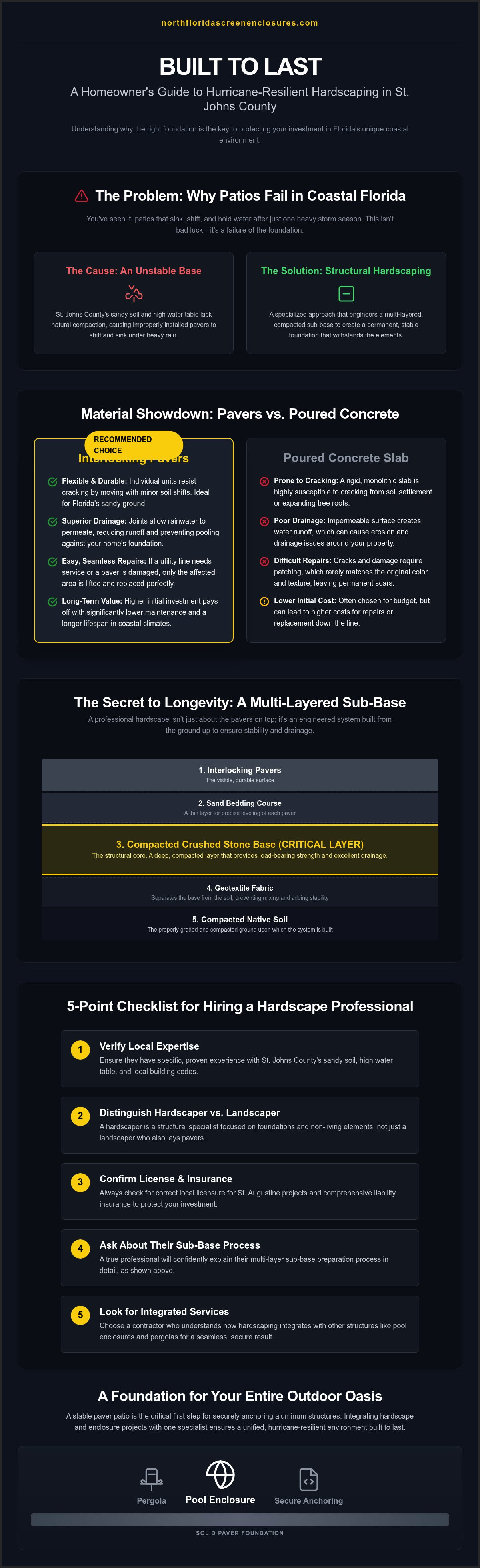
We understand that you want more than just a place to put a grill; you want a durable, level foundation that adds real property value and protects your home from drainage issues. This guide will show you how to choose a specialist who builds specifically for our local climate and soil requirements. You'll learn the technical distinctions between generic landscaping and structural hardscaping, why proper sub-base preparation is non-negotiable, and how to design a seamless transition from your backdoor to your pool area that stands up to the elements.
Table of Contents
Choosing a Hardscaping Contractor in St. Johns County
Selecting a hardscaping contractor St. Johns County homeowners can trust requires looking beyond a portfolio of pretty pictures. While many companies offer basic outdoor services, the structural integrity of your patio or walkway depends on a specialized understanding of local geology. You need a partner who views your backyard as a construction site rather than just a garden. In our region, the difference between a project that lasts decades and one that fails in two years often comes down to the contractor's technical knowledge of soil stabilization and drainage.
Hardscaping vs. Landscaping: Why the Distinction Matters
It's helpful to understand the fundamental differences between these two fields before you begin your project. While landscaping primarily focuses on living, softscape elements like sod, trees, and ornamental plants, hardscaping deals with the permanent, non-living structures. If you're wondering, What is Hardscaping?, it's essentially the "bones" of your outdoor space, including paver patios, retaining walls, and concrete foundations. Because these elements are structural, they require a different set of skills, including heavy excavation and precise grading, which generic landscapers might not be equipped to handle.
St. Johns County Environmental Factors
Our local environment presents unique challenges that can quickly ruin a poorly installed hardscape. St. Johns County is known for its high water tables and sandy soil, which lacks the natural stability found in clay-heavy regions. Without specific sub-base preparation involving deep excavation and high-quality crushed stone, pavers will inevitably shift or sink during our frequent heavy rains. Because of the high permeability of our sandy terrain, the longevity of your paver installation is directly tied to the depth and density of the structural base layers beneath it.
Beyond the soil, coastal drainage patterns and salt air affect material durability. A professional hardscaping contractor St. Johns County residents hire should be well-versed in local building codes and drainage requirements to prevent water from pooling against your home's foundation. Before signing a contract, always verify that the business holds the correct local licensure for St. Augustine projects and carries comprehensive liability insurance. This protects your investment and ensures the work meets the rigorous standards required for our hurricane-prone region. Choosing a specialist who understands these coastal variables ensures your outdoor living space remains level, beautiful, and safe for years to come.
Comparing Hardscaping Materials: Pavers vs. Concrete
Selecting the right surface for your outdoor living space involves balancing immediate budget concerns with future maintenance. In St. Johns County, the choice usually narrows down to pavers or concrete. Both materials offer distinct advantages, but their performance varies significantly under the intense North Florida sun and heavy seasonal rains. A qualified hardscaping contractor St. Johns County homeowners trust will often explain that while concrete has a lower initial cost, the long-term resilience of pavers provides superior value for coastal properties. The constant cycle of heat and moisture requires a material that can breathe and shift without losing its structural integrity.
The Case for Paver Patios in St. Augustine
Paver systems are engineered for flexibility. In the sandy, shifting soils of our region, a rigid monolithic slab of concrete is highly prone to cracking as the ground settles or tree roots expand. Pavers consist of individual units that move independently, allowing the surface to remain level and intact even with minor soil fluctuations. Reviewing paver patio design ideas Florida residents prefer highlights how these interlocking systems also facilitate superior drainage. By allowing water to permeate through the joints, these patios reduce runoff and align with Sustainable Landscaping principles. This permeability is vital for managing the heavy downpours common during hurricane season. If a utility line or irrigation pipe beneath the patio ever requires service, a contractor can lift the specific pavers and replace them seamlessly, avoiding the unsightly patches common with concrete repairs.
Site Concrete and Decorative Finishes
Concrete remains a functional choice for high-traffic areas like driveways or utility pads. Modern decorative finishes, such as stamped or stained concrete, provide aesthetic variety that can mimic the look of natural stone. However, homeowners should consider the maintenance cycle. Unsealed concrete is highly porous; it absorbs oils, leaf stains, and moisture that leads to mold growth in our humid climate. Even with professional installation, the risk of structural fractures remains high because of the high water table in North Florida. If you're planning a new outdoor project, consulting with a hardscaping contractor St. Johns County residents trust, such as a hardscape installation expert, can provide clarity on which material suits your budget and your home's architectural style. Ultimately, the goal is to choose a surface that withstands the elements while enhancing your property's overall market value.
A 5-Step Framework for Selecting Your Hardscape Professional
Selecting a hardscaping contractor St. Johns County homeowners can trust involves more than comparing quotes. You're hiring a technician to manage the weight and water of your property, which requires a specific set of local competencies. Use this five-step framework to ensure your investment stands the test of time.
Step 1: Verify Local Credentials. Ensure the business has a valid license for St. Augustine and carries comprehensive liability and workers' compensation insurance. Having a local physical office builds consumer trust because it provides a tangible location for accountability and long-term service.
Step 2: Review Local Projects. A qualified hardscaping contractor St. Johns County residents hire should provide a list of completed projects within the county to prove they understand our specific environmental demands.
Step 3: Discuss Sub-Base Standards. Ask for specifics on excavation depth and the type of base material used. In our sandy terrain, a standard four-inch base is often insufficient for driveways or heavy structures.
Step 4: Confirm Permitting Expertise. St. Johns County has strict regulations regarding impervious surface ratios and drainage, especially near pool areas. Your contractor must know how to navigate these local building department requirements.
Step 5: Evaluate the Warranty. Distinguish between the manufacturer's warranty on the pavers and the contractor's warranty on the structural labor. A reliable professional will stand behind their compaction and grading work for at least one to two years.
Vetting the Contractor's Technical Knowledge
During the initial consultation, pay close attention to how the professional discusses water management. You should ask specific questions about the planned slope of the project and how they intend to direct runoff away from your home's foundation. Avoid any contractor who doesn't mention soil compaction or the use of commercial-grade plate compactors. Without mechanical compaction of both the sub-grade and the base material, your pavers will eventually shift. A true expert will explain how they intend to stabilize the "sub-grade," which is the native Florida sand beneath your new patio.
Portfolio Review: Looking Beyond the Surface
When reviewing a contractor's past work, look for "aged" projects that are at least three to five years old. New installations always look good, but time reveals the quality of the underlying structure. Check for consistency in joint lines and the presence of sturdy edge restraints, which prevent the perimeter pavers from spreading outward. Seeing local projects in neighborhoods like Nocatee or Ponte Vedra is particularly valuable. These areas have distinct wind and soil conditions, and a contractor with a proven track record there will likely understand the nuances of your own property.
Integrating Hardscaping with Pool Enclosures and Pergolas
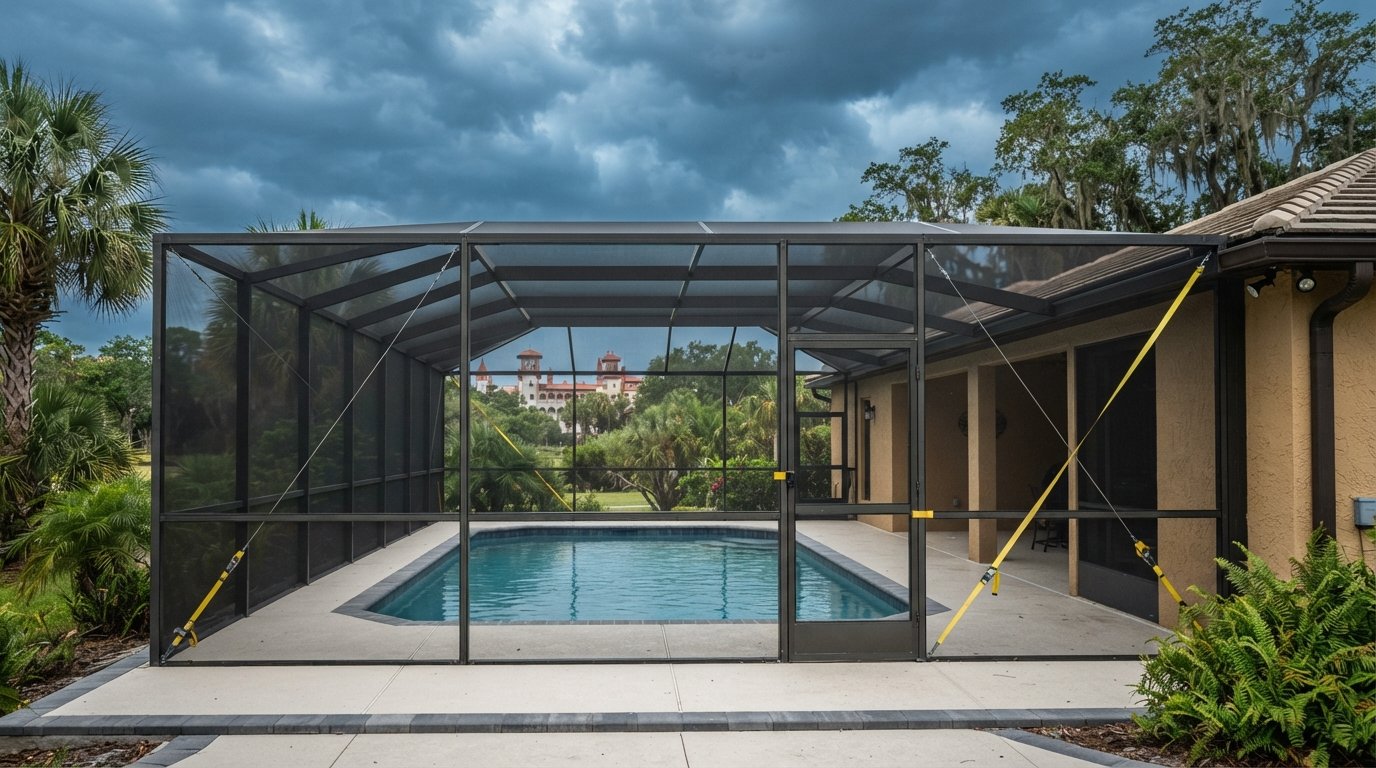
A frequent mistake in residential construction is treating the paver patio and the screen enclosure as two unrelated projects. When these elements are designed in isolation, homeowners often face structural alignment issues or drainage failures later. A specialized hardscaping contractor St. Johns County residents hire understands that the stone foundation must be engineered to support the weight and wind load of aluminum structures. Achieving a seamless transition between your backdoor and the pool area requires precise grading so that the frame of the enclosure sits perfectly flush with the hardscape surface.
Structural Integrity: The Foundation of the Pool Cage
The success of a pool enclosure installation depends entirely on the stability of the surface beneath it. If your pavers shift even half an inch due to poor soil compaction, the entire aluminum frame can twist, leading to popped screens or door alignment problems. We use specialized Tapcons and heavy-duty anchors to secure these structures, but these fasteners require a dense, level sub-base to maintain their grip. Rusted or loose Tapcons are often a symptom of poor integration, where water trapped between the pavers and the aluminum base plate causes premature corrosion. Maintaining the structural health of your outdoor space often involves addressing these foundational issues through proactive pool enclosure repair St. Augustine services to ensure your cage remains hurricane-rated and secure.
Expanding Your Living Space with Aluminum Pergolas
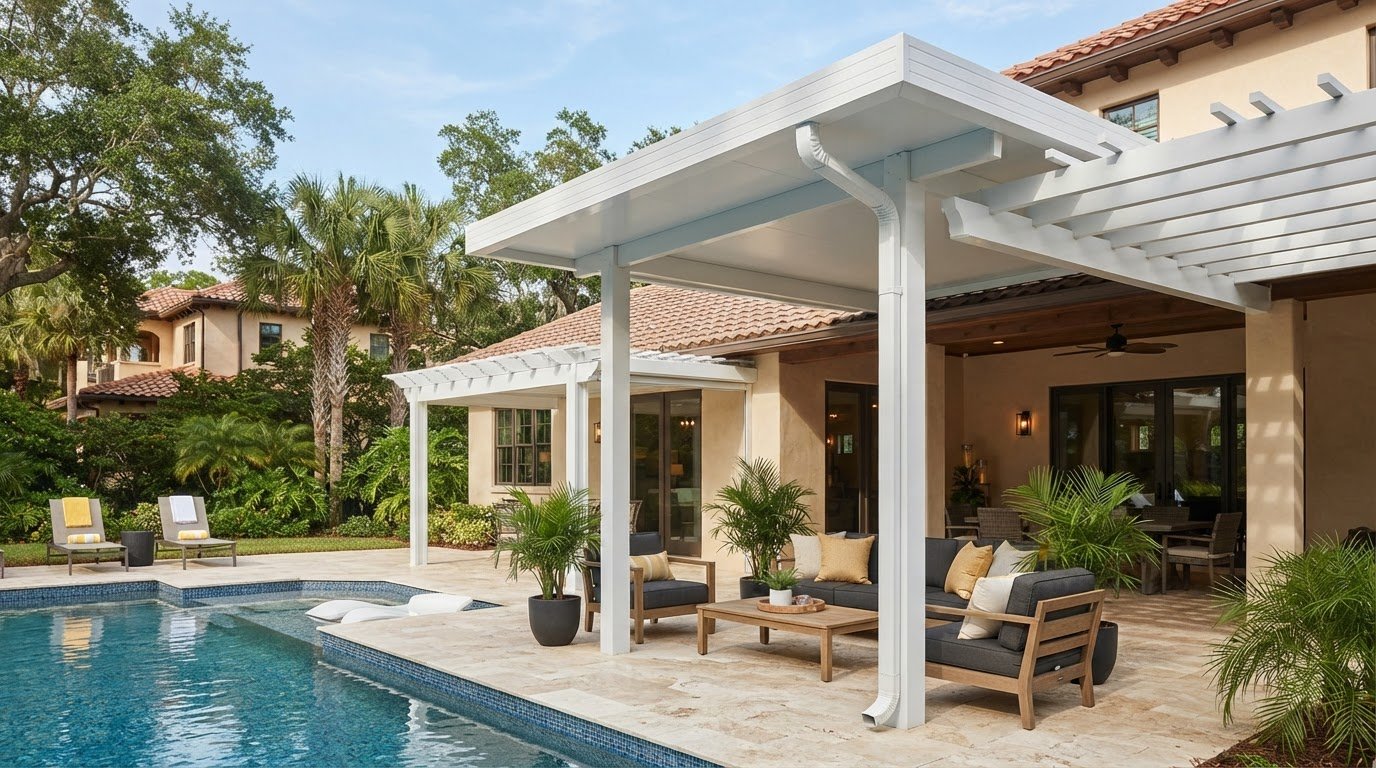
While patios provide the floor of your outdoor room, aluminum pergolas and patio covers provide the vertical interest that defines the space. These structures create distinct zones for dining or poolside lounging, effectively turning a flat hardscape into a multi-dimensional living area. By combining the durability of powder-coated aluminum with the timeless aesthetic of stone pavers, you create a resilient environment that withstands salt air and UV exposure. For a cohesive exterior design, many homeowners also incorporate matching aluminum balcony railings to tie the different levels of the home together. When you work with a hardscaping contractor St. Johns County families trust for both stone and aluminum work, you eliminate the risk of mismatched materials or conflicting installation schedules. If you're ready to build a unified outdoor retreat, schedule a consultation with our experts to discuss your project requirements.
Why North Florida Screen Enclosures is Your St. Johns County Partner
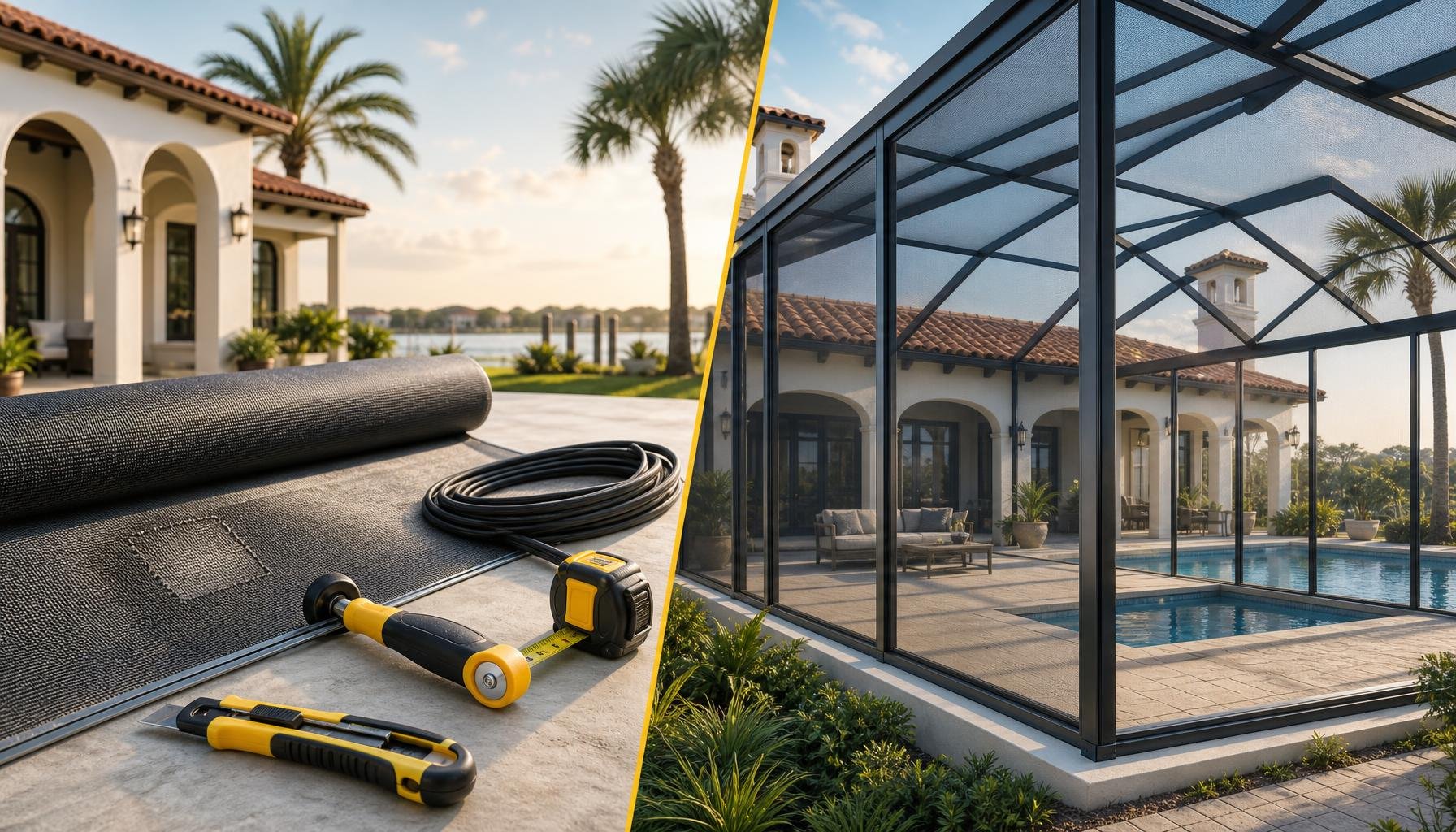
Choosing a hardscaping contractor St. Johns County homeowners can rely on means finding a team that takes full accountability for the finished result. At North Florida Screen Enclosures, we don't just lay pavers or pour concrete; we build resilient outdoor environments designed to withstand the specific pressures of our coastal climate. Our unique advantage lies in our deep technical understanding of both aluminum construction and stone hardscaping. This dual expertise ensures that your pool enclosure, pergola, and patio function as a single, unified system rather than a collection of separate parts.
Being locally owned and operated in St. Augustine gives us a distinct perspective on the environmental demands of the region. We've seen how salt air and intense UV exposure degrade inferior materials, which is why we prioritize structural integrity over quick, cheap fixes. Our team manages every phase of your project, from the initial design layout to the final inspection. This comprehensive approach eliminates the communication gaps that often occur when multiple subcontractors are involved, providing you with a streamlined experience and peace of mind.
The Local Advantage: Built for Florida Weather
We specialize in hurricane-rated structural improvements that protect your investment during the most volatile months of the year. Our experience with local building codes and drainage requirements ensures that your project isn't just beautiful, but also compliant and safe. You have direct access to our local team, meaning we're here to answer your questions and provide support long after the last paver is set. We focus on longevity because we understand that an outdoor living space is a significant investment in your home's future value.
Start Your Outdoor Transformation Today
The journey toward a better backyard begins with a thorough site visit. During this consultation, we evaluate your property's specific soil conditions, existing drainage, and architectural style. We provide clear, professional estimates that reflect the true scope of work required for a durable installation. You won't encounter high-pressure sales tactics here; instead, you'll receive practical advice from a hardscaping contractor St. Johns County residents trust for honest, expert guidance. Our goal is to act as a diligent craftsman and a helpful guide throughout the entire construction process.
When you're ready to enhance your property's value and functionality, Contact North Florida Screen Enclosures for your hardscaping quote and let us help you build an outdoor space that lasts for decades. We look forward to showing you the difference that local expertise and professional care can make for your home.
Build a Resilient Outdoor Space for Your St. Johns County Home
Investing in your home's exterior requires a balance of aesthetic vision and technical precision. We've explored why our region's sandy soil and high water table demand specialized sub-base preparation to prevent sinking. You now understand that a truly durable outdoor space relies on the seamless integration of stone foundations and hurricane-rated aluminum structures. These elements work together to protect your property and provide a functional area for your family to enjoy for years to come.
When you're ready to move forward, choosing a hardscaping contractor St. Johns County families trust ensures your project meets the highest standards of craftsmanship. As a locally owned St. Augustine specialist, North Florida Screen Enclosures brings expert knowledge of both hardscaping and aluminum enclosures to every site. We're committed to building high-value, resilient environments that stand up to the elements year after year. Request Your Hardscaping Consultation today to start designing a professional-grade patio or pool area. Your dream backyard is within reach, and we're here to help you build it right.
Frequently Asked Questions
Do I need a permit for a paver patio in St. Johns County?
Yes, most hardscaping projects require a permit because St. Johns County has strict regulations regarding impervious surface ratios and lot coverage. Even though pavers allow for some water infiltration, the county must ensure the project doesn't negatively impact local drainage patterns or exceed allowable buildable limits. A professional hardscaping contractor St. Johns County homeowners hire will manage the necessary documentation to ensure your installation meets all municipal building codes and zoning requirements.
How long does a typical hardscaping project take to complete?
Most residential projects, such as a medium-sized paver patio, take between three to five business days to complete once excavation begins. This timeline depends on the complexity of the site preparation and the specific materials chosen. Larger installations that integrate concrete work or pool enclosures may require up to two weeks. We prioritize a methodical installation pace to ensure the structural base is properly compacted and leveled before the final surface is laid.
What is the best way to prevent weeds from growing in my paver joints?
Using high-quality polymeric sand is the most effective method for preventing weed growth and insect infestation in your paver joints. This specialized sand contains a binding agent that hardens when activated by water, creating a durable seal that resists erosion. Regular maintenance, such as periodic professional cleaning and reapplying the sand every few years, ensures the joints remain stable. This structural seal also prevents the underlying base material from washing away during heavy Florida rains.
Can you install a pool enclosure on top of existing pavers?
Yes, it is possible, but the underlying foundation must be structurally sound to support the significant wind load of the cage. We often replace standard pavers with a reinforced concrete footer or a thickened paver base at the specific anchor points. This ensures the Tapcon fasteners have a secure, permanent grip in the ground. A specialized hardscaping contractor St. Johns County residents trust will always evaluate the existing foundation to prevent the enclosure from shifting or failing.
How do you handle drainage for a new concrete patio?
Proper drainage is managed through precise grading and the installation of strategic runoff solutions like French drains or channel drains. We ensure the patio surface slopes away from your home's foundation at a rate of at least one inch for every ten feet of length. In low-lying areas of St. Augustine, we may also incorporate subterranean pipes to direct water toward a designated discharge point, preventing stagnant pools and protecting your landscape from erosion issues.
What is the difference between a paver patio and a concrete slab for Florida homes?
The primary difference lies in flexibility and long-term durability within our coastal environment. Concrete slabs are rigid and prone to cracking as Florida's sandy soil shifts or settles over time. In contrast, paver patios consist of individual units that move independently, which prevents structural fractures. Pavers also offer better drainage through their joints, making them a more resilient choice for regions where heavy rainfall and high water tables are constant factors.
Why is soil compaction so important for hardscaping in St. Augustine?
St. Augustine's native soil is predominantly sand, which lacks the natural stability of clay-heavy regions. Without mechanical compaction using a heavy-duty plate compactor, the weight of the pavers or concrete will cause the ground to settle unevenly. This leads to sunken areas and unsightly trip hazards. We compact both the raw sub-grade and the crushed stone base to create a dense, immovable foundation that maintains the integrity and level surface of your outdoor space.
How often should I seal my pavers or concrete?
We generally recommend sealing your hardscape surfaces every three to five years to protect them from the intense Florida sun and salt air. Sealing prevents the colors from fading and provides a protective barrier against oil stains, mold, and mildew growth. For pavers, the sealant also helps lock the joint sand in place, preventing erosion. Regular sealing is a practical investment that extends the lifespan of your materials and keeps your patio looking professional and clean.
Comments