


Expert Pool Enclosure Maintenance Checklist for Saint Augustine Homeowners

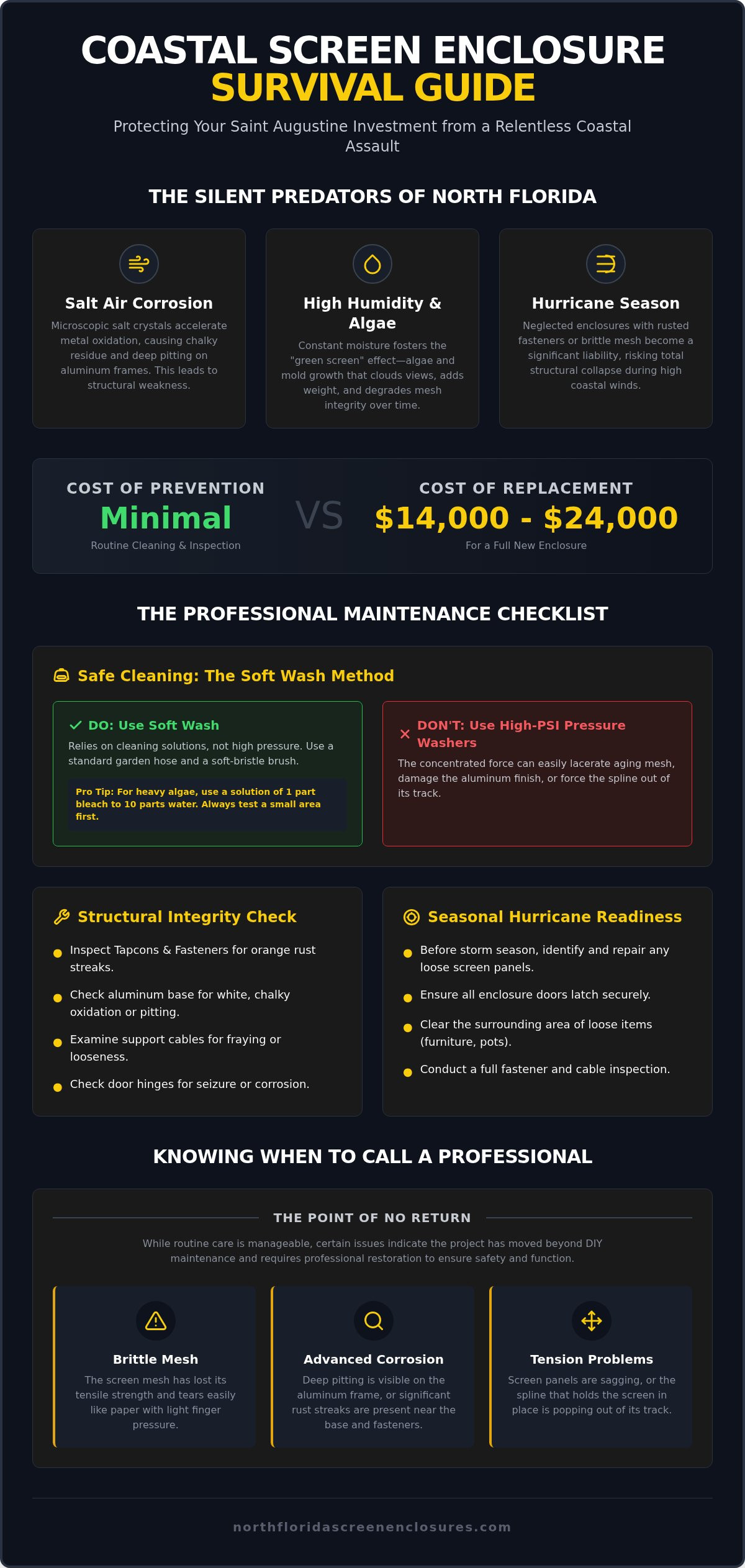
What if those faint orange streaks on your white aluminum beams are actually the silent signals of a failing structure? In Saint Augustine, your screen room faces a relentless assault from salt air, high humidity, and the looming threat of North Florida's hurricane season. Many homeowners view screen care as a simple aesthetic chore, but in our coastal environment, a comprehensive pool enclosure maintenance checklist is a critical protocol for structural safety and long-term resilience.
We understand that you take pride in your outdoor living space and want to avoid the staggering $14,000 to $24,000 cost of a full cage replacement. It's frustrating to see green algae clouding your view or to worry if your anchors will hold when the wind picks up. This professional guide is designed to protect your investment and provide peace of mind through durable, high-quality maintenance practices tailored to our specific region. We will walk you through the technical details of inspecting your Tapcons, identifying mesh wear, and ensuring your sanctuary remains a safe, crystal-clear extension of your home for years to come.
Table of Contents
Why Screen Enclosure Maintenance is Critical in Saint Augustine's Climate
Living on the North Florida coast offers beautiful views, but the environment is notoriously aggressive toward outdoor structures. In Saint Augustine, your pool enclosure acts as the first line of defense against local elements. Without a consistent pool enclosure maintenance checklist, a cage that should last 20 years can begin to fail in less than a decade. The combination of high salt concentration in the air and intense UV radiation creates a chemical reaction that slowly degrades both the aluminum frame and the screen mesh.
Regular upkeep is not just about aesthetics; it's about preserving the structural integrity of your home. When salt accumulates on the aluminum, it triggers oxidation. This process manifests as a white, chalky residue that eventually pits the metal. Simultaneously, the "green screen" effect occurs when moisture trapped in the mesh pores fosters algae and mold growth. This organic buildup restricts airflow and adds unnecessary weight to the screen panels. From a financial perspective, small investments in cleaning and fastener checks are logical. A full cage replacement for a standard enclosure currently ranges from $14,000 to $24,000, making prevention the most cost-effective strategy. Beyond the money, swimming pool safety depends on a secure barrier. A neglected enclosure with rusted fasteners or brittle mesh becomes a significant liability during a hurricane, as one failing panel can lead to a total structural collapse.
The Role of Humidity and Salt Air
Salt air is a silent predator for North Florida enclosures. As sea spray evaporates, it leaves behind microscopic salt crystals that attract moisture. This constant dampness accelerates the brittleness of standard 18/14 fiberglass mesh, often reducing its expected 7 to 12 year lifespan. Homeowners should pay close attention to "hot spots" where wear is most aggressive. These include the lower splines near the pool deck where salt water splashes frequently and door hinges that can seize due to corrosion.
Maintenance vs. Restoration
It's vital to distinguish between routine care and professional restoration. While a homeowner can manage light cleaning and debris removal, structural health requires a more technical eye. If your aluminum frame shows deep pitting or if you notice orange rust streaks near the base, the project has moved beyond simple maintenance. We define the "point of no return" for aging enclosures as the moment the mesh loses its tensile strength; if the screen tears like paper when you apply light finger pressure, cleaning will no longer suffice. At this stage, a professional re-screen or Tapcon replacement is necessary to restore the safety and function of the space.
Safe Cleaning Techniques: Protecting Your Screen Mesh and Frame
Cleaning your enclosure is a delicate balance between removing stubborn contaminants and preserving the structural materials. A common error in any pool enclosure maintenance checklist is the use of high-PSI pressure washers. While it's tempting to blast away grime, the force of concentrated water can easily lacerate aging fiberglass mesh or force the spline out of its track. This compromises the panel's tension and leaves your pool area vulnerable to pests. Instead, we recommend a "soft wash" approach that relies on specialized cleaning solutions rather than raw mechanical force.
For most Saint Augustine homes, a mixture of water and white vinegar is sufficient for light cleaning. If you're dealing with a heavy "green screen" effect, a mild bleach solution-specifically one part bleach to ten parts water-is effective for killing mold spores without damaging the aluminum finish. Always test a small, inconspicuous area first to ensure no discoloration occurs. If you discover that your mesh is becoming too brittle to withstand even a gentle cleaning, it may be time to consider professional screen enclosure repairs to restore the safety of your outdoor space.
Step-by-Step Soft Washing Guide
Step 1: Initial Rinse. Use a standard garden hose to thoroughly soak the enclosure. This removes loose salt deposits, dust, and spider webs that could scratch the frame during the scrubbing process.
Step 2: Apply Solution. Use a low-pressure pump sprayer to apply your chosen cleaning mixture. Start from the top and work your way down, ensuring the solution penetrates the mesh pores.
Step 3: Gentle Agitation. For stubborn algae patches on the aluminum frame, use a soft-bristle brush. Avoid metal scrapers or abrasive pads, as these will strip the protective powder coating from the metal.
Step 4: Final Rinse. Rinse the entire structure with fresh water before the cleaning solution has a chance to dry. Inspect the splines at the base of each panel to ensure they haven't shifted during the process.
Cleaning Mistakes to Avoid
Avoid using abrasive household chemicals or degreasers that aren't specifically rated for painted aluminum. These substances can cause the frame to peel or pit, leading to permanent structural degradation. Additionally, never lean a ladder directly against the screen mesh or the mid-span aluminum beams. The weight of an adult on a ladder can easily bend the frame or pop the screen panels out of their grooves. Finally, try to schedule your cleaning for the early morning or late afternoon. Cleaning during the peak heat of a Florida day causes water and soap to evaporate too quickly, which often leaves behind permanent mineral spotting on both the frame and the pool deck.
The Structural Integrity Checklist: Inspecting Tapcons and Cables
While a clean screen improves your view, the structural skeleton of your cage dictates its survival during a storm. A vital component of any professional pool enclosure maintenance checklist is the inspection of Tapcons. These are specialized concrete screws that anchor the aluminum base track of your enclosure directly into the concrete pool deck. Despite their small size, they're the primary point of resistance against wind uplift. In Saint Augustine's coastal environment, standard carbon steel screws often become the "weak link" because they're prone to rapid oxidation when exposed to salt air.
Identifying fastener failure is straightforward if you know what to look for. Check the base of your aluminum beams for orange or reddish-brown rust streaks bleeding onto the concrete. This is a clear sign that the internal integrity of the screw has been compromised. You should also physically test the base plates; if they feel wobbly or if the metal has lifted away from the deck, the anchor has likely lost its grip. Professional replacement with stainless steel or Nylotec fasteners is essential to maintain the 130 to 150 mph wind load ratings required by the current Florida Building Code. For those considering a new project, understanding these structural requirements is a key part of planning a custom pool enclosure installation.
The Danger of Rusted Fasteners
A single rusted screw can compromise the wind rating of the entire structure. When a fastener fails, it creates a "zipper effect" where the increased load on neighboring screws causes them to snap in rapid succession. This is often caused by galvanic corrosion, a process where two dissimilar metals, like a steel screw and an aluminum frame, react chemically in the presence of salt and moisture. Rusted Tapcons are the #1 cause of enclosure failure during wind events because they cannot withstand the immense pressure of a North Florida storm.
Hardware and Cable Inspection
Beyond the anchors, your enclosure relies on a network of support cables and functional hardware. Support cables should be taut; if they appear slack or are fraying, the structural tension of the cage is uneven. You should also inspect door hardware and self-closing hinges. According to Florida Statute 515.29, pool gates must be self-closing and self-latching for safety. If doors are dragging or the closers have lost their hydraulic fluid, they must be adjusted or replaced immediately. If you find multiple snapped fasteners or a frame that sways when pushed, stop your DIY inspection and call for a professional structural assessment to avoid a total collapse.
Seasonal Care and Hurricane Readiness for Your Pool Cage
Maintenance requirements for North Florida structures fluctuate with the calendar. A reliable pool enclosure maintenance checklist helps you stay ahead of environmental stressors before they cause permanent damage. Spring in Saint Augustine brings heavy pollen and rising humidity. This combination creates a sticky residue that traps moisture against the aluminum and mesh. If you don't rinse this away, it becomes the foundation for the algae cycles that cloud your view and weaken the screen fibers.
As we enter the hurricane window from June through November, your focus should shift to wind mitigation. One misunderstood aspect of enclosure design is the "blowout" phenomenon. During extreme wind events, certain screen panels are engineered to pop out of their tracks. This release of pressure prevents the entire structure from acting like a giant sail. While a missing panel is an inconvenience, it's a deliberate safety feature that can save your frame from a total collapse. After any major storm, perform a walk-around inspection to check for loosened splines or bent members that might have been stressed by high gusts.
The Hurricane Readiness Checklist
Secure the perimeter. Verify that all enclosure doors are properly latched and that the self-closing mechanisms are functioning. A door that swings open during a storm can be ripped off its hinges.
Clear the interior. Remove hanging plants, loose patio furniture, and decorative items. These objects become dangerous projectiles in high winds and can easily shred your screen panels.
Structural check. Perform a final check of your anchor bolts. If you notice any movement in the base track, you may need immediate screen enclosure repairs to ensure the cage is properly tethered to the deck.
Winter Maintenance and Debris Removal
Winter is the ideal time to focus on the roof and gutter sections of your enclosure. Leaf buildup in the gutters can lead to standing water, which causes rot in the fascia and attracts wood-destroying organisms. You should also clear the bottom tracks of any sand or organic debris. These tracks feature small drainage holes designed to let water escape. If these holes are blocked, water will pool against the aluminum, accelerating the corrosion of your fasteners. Finally, inspect the area for overhanging branches. Winter storms in North Florida can bring sudden gusts that snap dead limbs, posing a direct threat to your roof panels.
Knowing When to Repair vs. Replace Your Screen Enclosure
Determining the exact moment to move from routine cleaning to structural restoration is a vital part of your pool enclosure maintenance checklist. Every enclosure eventually reaches a "threshold" where DIY patches and soft washing are no longer sufficient to ensure safety. While minor tears can be addressed with individual panel repairs, widespread degradation suggests that the material has reached the end of its functional life. Attempting to push a compromised screen through another Florida summer often leads to a sudden, catastrophic failure during the first major wind event of the season.
The risks of DIY re-screening are often underestimated. Achieving the correct tension is a precise science; if the mesh is too loose, it will flutter and pull out of the track, but if it's too tight, it can actually cause structural misalignment by bowing the aluminum beams. Professional expertise is necessary to maintain the hurricane wind ratings of the structure. A specialist ensures that the screen is seated perfectly within the spline groove, providing the necessary resistance against the high-pressure differentials created by coastal storms.
Signs You Need a Complete Re-screen
The most definitive way to assess your mesh is the "Finger Test." If you apply light pressure to the screen and the fibers crumble or turn to dust, the UV damage is terminal. You may also notice significant "silvering" or a faded, brittle appearance caused by the intensified 2026 UV levels. This discoloration indicates that the protective coating has worn away, leaving the fiberglass core exposed to the elements. Another red flag is consistent spline failure. If the rubber spline is popping out across multiple panels, it usually means the material has shrunk or lost its elasticity, and a complete re-screen is the only way to restore the enclosure's integrity.
Choosing a Local Saint Augustine Contractor
Hiring a licensed and insured Florida contractor is a non-negotiable requirement for any structural work. Local experience is critical because Saint Augustine has specific building codes and environmental demands that a distant corporation might overlook. At North Florida Screen Enclosures, we take pride in our identity as diligent craftsmen who understand the local landscape. We focus on long-term structural health, utilizing specialized techniques for Tapcon replacement and complete re-screening that go beyond simple aesthetics. We ensure that every component, from the anchors to the roof panels, meets the high standards required for life on the North Florida coast. Before the next storm season begins, we recommend scheduling a professional inspection to identify hidden weaknesses and secure your outdoor sanctuary for the year ahead.
Securing Your Sanctuary for the Seasons Ahead
Maintaining a pool cage in North Florida is a continuous commitment to structural resilience. By following a consistent pool enclosure maintenance checklist, you protect your home from the corrosive effects of salt air and the high wind loads of the coastal Atlantic. Remember that while soft washing preserves your view, the integrity of your Tapcons and support cables determines the cage's survival during a storm. Addressing minor issues like rusted fasteners or brittle mesh today prevents the high costs of a total structural failure tomorrow.
As locally owned Saint Augustine experts, we understand the specific environmental pressures facing your home. Our team serves as specialized Tapcon replacement specialists, and we provide full-service repair and re-screening capabilities to restore your cage to its peak condition. Request a Professional Enclosure Inspection from North Florida Screen Enclosures today to ensure your structure is ready for whatever the Florida weather brings. Your investment deserves the care of a diligent craftsman.
Frequently Asked Questions
How often should I clean my pool screen enclosure in Saint Augustine?
You should clean your enclosure at least twice a year to prevent salt and organic buildup. Saint Augustine’s coastal air carries high salt concentrations that settle on the aluminum frame and mesh. If left unattended, this residue traps moisture and accelerates oxidation. Adding a bi-annual cleaning to your pool enclosure maintenance checklist helps you maintain a clear view and prevents the "green screen" effect from taking hold.
Can I use a pressure washer on my screen enclosure without damaging it?
We don't recommend using a high-PSI pressure washer on your screen mesh. The concentrated force of the water stream can easily slice through aging fiberglass or force the spline out of its track. Instead, use a soft wash technique with a standard garden hose and a gentle cleaning solution. This approach protects the structural integrity of the cage while effectively removing surface grime without the risk of lacerations.
What is the best way to remove green algae from my screens safely?
The most effective way to remove green algae is to apply a mild bleach and water solution using a low-pressure sprayer. Mix one part bleach with ten parts water and let it sit for several minutes before rinsing thoroughly. This kills the mold spores at the root. For homeowners who prefer a non-toxic option, a white vinegar and water mixture is an excellent alternative for light organic growth and hard water spotting.
Why are there rust stains coming from the screws in my pool cage?
Rust stains usually indicate that your carbon steel fasteners are failing due to galvanic corrosion. When moisture and salt air interact with the steel screw and the aluminum frame, it triggers a chemical reaction that eats away at the metal. These orange streaks are a warning sign that your anchor system is compromised. Including a fastener check in your pool enclosure maintenance checklist is essential for ensuring hurricane safety.
How do I know if my screen enclosure needs to be re-screened or just cleaned?
Perform the "finger test" to determine if your mesh is past its functional life. If the screen material crumbles or tears easily when you apply light pressure, cleaning will only cause further damage. A screen that shows significant silvering or is consistently pulling away from the spline needs a complete re-screen. If the mesh remains flexible and intact, a thorough soft wash should restore its appearance and transparency.
Is it safe to leave my screen enclosure doors open during a hurricane?
It's not safe to leave your enclosure doors open during a hurricane. Open doors allow wind to enter the structure and create internal pressure that can lift roof panels or buckle the aluminum frame. Florida building codes require gates to be self-closing and self-latching for safety and structural reasons. Ensuring your doors are securely shut and latched is a vital step in protecting your cage from total collapse during high-wind events.
How long do screen enclosures typically last in North Florida's salt air?
In North Florida’s salt air, a properly installed aluminum frame typically lasts 18 to 25 years. However, the screen mesh itself has a shorter lifespan of approximately 7 to 12 years before UV exposure and salt make it brittle. Regular maintenance and timely Tapcon replacement can extend the life of the frame, but the mesh will eventually require a full re-screen to maintain its protective capabilities and structural tension.
What should I do if a screen panel pops out during high winds?
If a panel pops out during high winds, do not attempt to secure it while the storm is active. This is often a "blowout" safety feature designed to release pressure and save the main frame from collapsing. Once the weather clears, inspect the spline and the track for damage. If the mesh is intact, it might be re-inserted, but frequent pop-outs often suggest the spline has failed and requires a professional repair.
Comments