


Expert Pool Enclosure Repair in St. Augustine: Restoring Safety and Style

What if the only thing holding your pool cage together during the next tropical storm is a row of rusted, brittle screws? In St. Augustine, the salt air is a relentless force that compromises structural integrity, often snapping standard fasteners before you even notice the hidden damage. If you've spotted green algae on your frames or screens sagging under the weight of Florida humidity, it's time to prioritize professional pool enclosure repair St. Augustine homeowners can rely on for long-term durability.
You deserve an outdoor space that feels like a sanctuary, not a safety hazard or a gateway for no-see-ums. It's frustrating when standard mesh fails to keep the pests out or when you feel a sense of dread every time the wind picks up. This guide will show you how to identify critical structural risks, choose high-performance screen materials, and upgrade to stainless steel or ceramic-coated fasteners that won't fail. We'll walk through the essential steps to transform your weathered cage into a hurricane-ready, clear-view retreat that provides genuine peace of mind and lasting protection for your investment.
Table of Contents
Common Signs Your St. Augustine Pool Enclosure Needs Repair
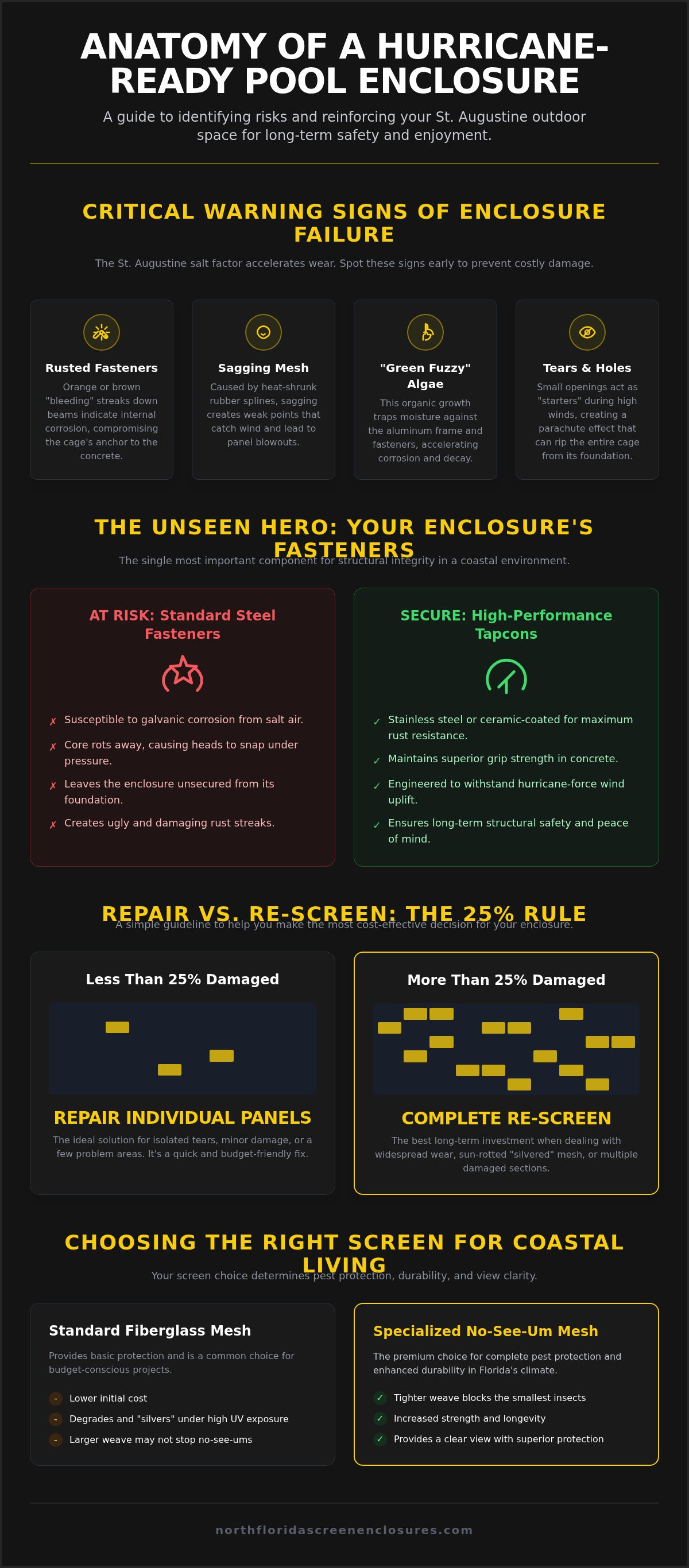
Living in St. Augustine involves a constant battle with a beautiful but aggressive coastal environment. The air carries microscopic salt particles that settle on every surface of your home. Unlike a standard screened porch in a drier climate, local enclosures face a unique phenomenon known as the "St. Augustine Salt Factor." This environmental pressure accelerates aluminum oxidation, turning a sleek frame into a pitted, chalky surface that loses its structural resilience over time. Identifying these issues early is the best way to avoid a full cage replacement.
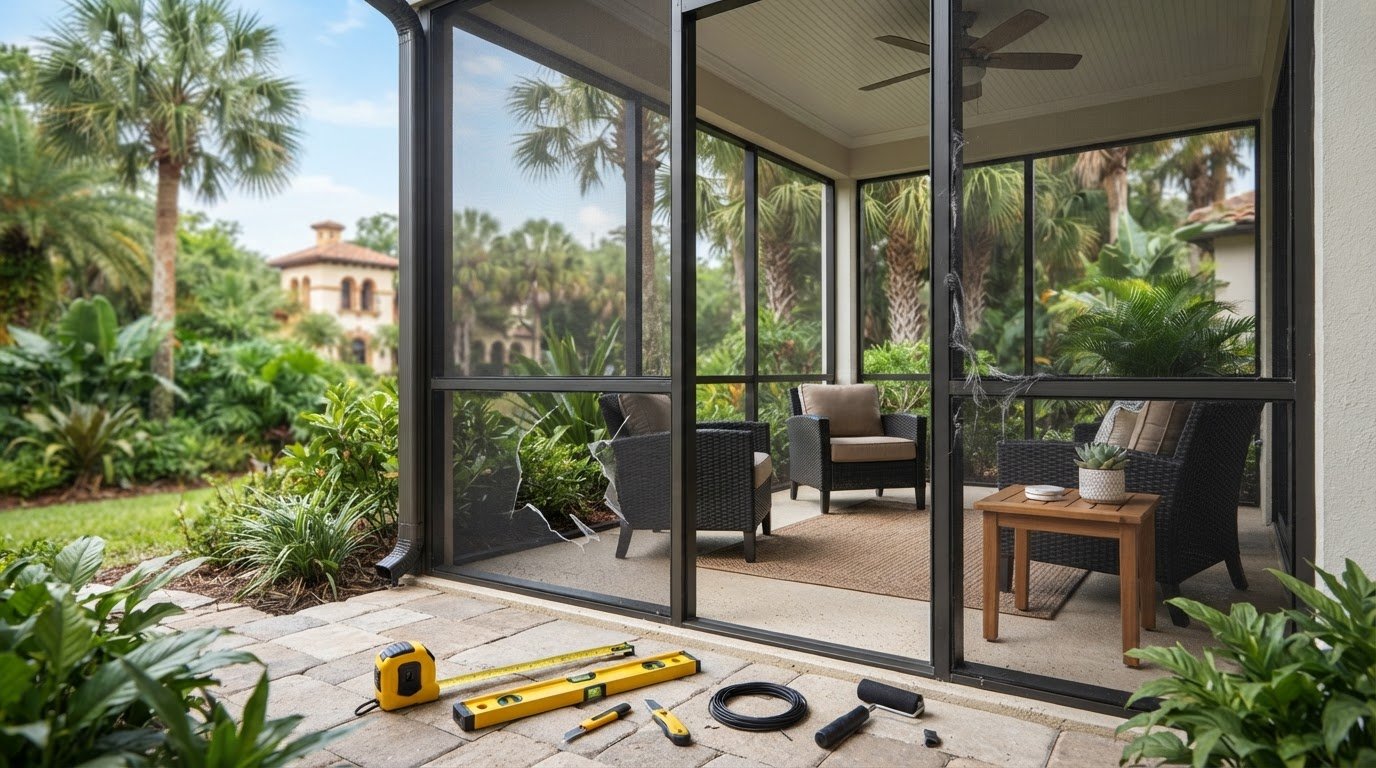
Homeowners should look for specific visual cues that indicate the system is failing. One of the most obvious signs is sagging mesh. This often occurs because the rubber spline, the cord that locks the screen into the frame, has become brittle and shrunk due to heat. You might also notice "green fuzzy" algae growing in the tracks. This organic growth isn't just an eyesore; it traps moisture against the aluminum and the fasteners, creating a breeding ground for corrosion. If your screen panels have small tears, don't ignore them. These openings act as "starters" during high-wind events, allowing air to get trapped inside the cage and significantly increasing the wind load on the entire frame.
Perhaps the most critical warning sign is the appearance of "bleeding" fasteners. These are orange or brown rust streaks that run down the vertical beams of your enclosure. They indicate that the internal steel core of your Tapcons or anchor bolts is rotting away. When these fasteners fail, the cage is no longer securely tethered to the concrete. This is exactly why pool enclosure repair St. Augustine specialists prioritize hardware inspection during every service call.
Environmental Stressors in North Florida
The high UV index in St. Johns County is a silent killer for fiberglass mesh. Over time, the sun bakes the vinyl coating until the screen turns a "silvered" color and becomes paper-thin. Properties along the A1A corridor deal with direct salt spray, which causes faster metal fatigue than in inland neighborhoods. These seasonal humidity cycles cause the aluminum to expand and contract, which can loosen the tension of your screens and compromise the stability of the entire frame if the hardware isn't up to the task.
Safety Risks of Neglected Enclosures
Ignoring these signs creates significant safety risks, especially as we move through the 2026 storm seasons. A compromised enclosure is far more likely to suffer a frame collapse during a tropical storm. When panels are loose or missing, wind creates a "parachute effect" that can rip the cage right off its foundation. Beyond structural fears, neglected screens fail to provide a barrier against St. Augustine's notorious gnats and no-see-ums. Professional pool enclosure repair St. Augustine ensures that your sanctuary remains both structurally sound and pest-free, protecting both your family and your property investment.
The Structural Core: Why Tapcon Replacement is Critical
While many homeowners focus on the condition of the mesh, the true strength of a cage lies in its fasteners. Tapcons are the high-performance screws that anchor the aluminum base plates of your enclosure directly into the concrete pool deck. In our coastal environment, these fasteners are the primary defense against wind uplift. When they fail, the entire structure becomes a liability during a storm. Professional pool enclosure repair St. Augustine starts with ensuring these anchors are solid.
The science behind fastener failure is a process called galvanic corrosion. This occurs when two dissimilar metals, like carbon steel and aluminum, come into contact in the presence of an electrolyte like St. Augustine’s salt-heavy air. The steel screw essentially sacrifices itself, rotting away until the head snaps off. This leaves your cage unsecured, even if the aluminum frame looks perfect. Replacing these hardware components is not just about aesthetics; it's about maintaining the engineered load-bearing capacity of your home.
The Process of Fastener Restoration
Restoring structural integrity requires more than just driving in new screws. Our process involves the systematic removal of corroded hardware to ensure we don't crack the surrounding concrete or mar the aluminum. We re-drill and secure new anchors according to current Florida Building Codes, ensuring the cage is hurricane-ready. Every fastener head is then sealed to create a moisture-proof barrier that prevents the return of rust. Hiring a professional screen repair contractor ensures this technical work is handled with the precision required for safety.
Comparing Fastener Materials for 2026
For 2026, we recommend moving beyond standard carbon steel. Options like 304 or 316-grade stainless steel provide superior resistance to the Atlantic spray. We often utilize high-performance capped fasteners, which feature a protective head that never rusts or bleeds orange streaks onto your deck. Ceramic coating acts as a vital barrier against the abrasive salt air, making it the minimum standard for any coastal home in St. Augustine.
Investing in hardware replacement can extend the life of your cage by an additional decade. If you notice rust streaks on your deck, it's likely time for a professional Tapcon replacement to secure your home. This proactive maintenance is the hallmark of high-quality pool enclosure repair St. Augustine services, providing the structural peace of mind every homeowner needs before the next storm season.
Repair vs. Complete Re-screen: Which is Right for You?
Choosing between a targeted fix and a full overhaul is a common crossroads for homeowners. A useful industry standard is the 25% rule. If more than a quarter of your panels are torn, brittle, or sagging, the labor efficiency of individual repairs drops significantly. At this stage, the cumulative cost of multiple service calls often outweighs the investment of a one-time, comprehensive update. Investing in pool enclosure repair St. Augustine should always be viewed through the lens of long-term value rather than just a quick patch.
Take a close look at the spline. This rubber cord locks your mesh into the frame channels. When the spline becomes hard or brittle from years of sun exposure, it loses its ability to grip the screen tightly. In these instances, even a high-quality patch might pull loose during the next heavy rain. If the spline has shrunk or cracked, it's a clear indicator that the entire system is reaching the end of its functional life.
Structural checks are equally vital. If your frame shows a noticeable lean or if the hardware issues mentioned previously have left the skeleton unstable, a re-screen won't fix the underlying danger. A stable frame is the foundation for any successful screen work. We always recommend a full hardware inspection before committing to new mesh to ensure your investment is protected from the ground up.
When to Choose Individual Panel Repair
Targeted repairs are ideal for isolated incidents. If a pet claws through a single panel or a falling branch creates a puncture, there's no need to replace the entire system. This approach is most effective for newer enclosures, typically those under five years old, where the surrounding fiberglass remains flexible and strong. It's also a practical choice for emergency patches before a major event or party where appearance matters but the overall structure is still sound.
The Benefits of a Complete Re-screen
A full re-screen provides a uniform tension that individual patches simply cannot match. It restores that "like-new" aesthetic and eliminates the patchwork look of different mesh ages. This is also the perfect time to upgrade to specialty materials, such as no-see-um mesh for marsh-adjacent properties or heavy-duty pet screen. When performed correctly, a re-screen aligns with professional pool enclosure installation standards, ensuring your outdoor space is ready for several more years of Florida sun. Choosing a complete service for your pool enclosure repair St. Augustine needs often provides the best long-term results and structural peace of mind.
Choosing the Right Screen Materials for the Florida Coast
Selecting the appropriate mesh is just as vital as the structural skeleton of your cage. In St. Augustine, the choice often depends on your proximity to the Matanzas River or the Atlantic coastline. Standard fiberglass mesh, typically an 18/14 weave, remains the baseline for most homes. It provides excellent visibility and allows for maximum airflow, which is essential during our sweltering summer months. However, fiberglass has its limits in our harsh environment, and many homeowners now opt for specialized upgrades during their pool enclosure repair St. Augustine projects.
For those living near marshes or standing water, standard mesh is often insufficient. No-see-um screen, also known as 20/20 mesh, features a much tighter weave designed specifically to block the tiny biting gnats that plague North Florida. While this denser material provides superior pest protection, it does slightly reduce the breeze. Choosing the right material requires balancing your need for insect defense with your desire for a cool, ventilated outdoor space.
Specialty Mesh for Privacy and Protection
Florida Glass is a popular choice for homeowners seeking both privacy and a cleaner pool deck. This is a standard screen mesh that has been laminated with a solid vinyl coating, making it completely opaque and waterproof. We typically install this in the bottom "chair rail" panels. It acts as a highly effective debris shield, preventing grass clippings, mulch, and dirt from blowing into the pool area during lawn maintenance. 20/20 mesh is the gold standard for North Florida gnats because its dense weave prevents even the smallest pests from penetrating your sanctuary.
Longevity and UV Resistance
The 2026 Florida sun is brutal on synthetic materials. While traditional fiberglass screens have a functional lifespan of 10 to 15 years, modern polyester meshes like TuffScreen or Pet Screen are engineered for much higher durability. These polyester options can last 20 to 30 years because they resist the "silvering" and brittleness caused by intense UV exposure. Utilizing brand-name materials like Phifer ensures that your mesh maintains its tension and color for decades. To maximize the life of your new screens, we recommend a gentle freshwater rinse every few months to remove salt crust and abrasive sand.
If you're ready to restore your view and upgrade your protection, contact us for a Complete Re-screen to see which high-performance material best fits your home's needs. Investing in premium materials is a key part of the professional pool enclosure repair St. Augustine process, ensuring your sanctuary remains beautiful and functional for years to come.
Hiring a Professional Screen Repair Contractor in St. Augustine
Selecting a contractor for your project involves more than just finding the lowest quote. In Florida, structural work on aluminum cages requires a specific Specialty Aluminum Contractor license. While general handymen often offer these services on social media platforms, they frequently lack the specialized insurance and technical training needed for a hurricane-resistant pool enclosure repair St. Augustine project. Verifying these credentials ensures that your home remains protected and that all work complies with the 8th Edition (2023) of the Florida Building Code.
Local experience in St. Johns County is equally indispensable. Our region has specific building codes and permitting requirements, especially for properties within high-wind zones along the Atlantic coast. A contractor who understands these nuances will ensure your enclosure is engineered to withstand wind loads of 130 MPH or higher, as required by current safety standards. Before signing a contract, ask about the specific materials they use. A diligent craftsman will be happy to discuss the UV-rating of their spline and the corrosion resistance of their fasteners.
The North Florida Screen Enclosures Process
We approach every project with a commitment to "Diligence and Craftsmanship." Our team begins with a comprehensive structural audit before a single panel of mesh is pulled. This allow us to identify hidden hardware failures or frame misalignments that might compromise the new screens. We take pride in a professional site cleanup. We don't leave old, brittle spline or rusted screws on your pool deck for your family to find later. Every job concludes with a final tension check and a meticulous door adjustment to ensure seamless operation and a perfectly taut finish.
Ready to Restore Your Outdoor Living Space?
Restoring your sanctuary starts with a clear understanding of your enclosure's current health. We provide professional estimates that break down the necessary steps for a lasting pool enclosure repair St. Augustine homeowners can count on. During your renovation, you might also consider exploring upgrades like elite roofing systems to enhance your patio's functionality. Taking a proactive approach today prevents costly emergency repairs after the next storm hits. Schedule your professional pool enclosure inspection today.
Secure Your Sanctuary for the Seasons Ahead
Maintaining a safe outdoor space requires more than just replacing torn mesh. The resilience of your enclosure depends on the integrity of the underlying hardware and the quality of the materials chosen for our coastal environment. Prioritizing expert Tapcon replacement ensures your cage remains anchored against high winds; selecting the right specialty mesh is a core part of the pool enclosure repair St. Augustine homeowners trust for lasting results.
North Florida Screen Enclosures is a locally owned and operated business providing the durable workmanship your home deserves. As a licensed and insured specialty aluminum contractor, we focus on structural stability and aesthetic precision. We understand the specific environmental pressures of St. Johns County and take pride in protecting your investment with professional diligence and expert care.
Don't wait for the next storm to test your cage. Request a Free Estimate for Your St. Augustine Screen Repair today and restore the peace of mind that comes with a hurricane-ready enclosure. We look forward to helping you reclaim your outdoor living space.
Frequently Asked Questions
How much does pool enclosure repair cost in St. Augustine?
Repair costs vary based on the extent of damage and the materials chosen. According to industry data from August 2026, the average cost for pool screen repairs is $926, with a typical range between $80 and $2,950. A complete rescreen often averages between $7 and $9 per square foot. Factors like cage height and the choice of high-performance polyester mesh will influence the total investment for your specific project.
Can I replace just one screen panel on my pool cage?
Yes, replacing a single panel is a practical solution for isolated damage from pets or falling debris. This is most effective when the rest of the mesh is under five years old and retains its flexibility. However, if multiple panels are brittle or the spline is shrinking, individual repairs become less cost-effective than a full rescreen. We assess the condition of the surrounding mesh to ensure a single-panel fix remains secure.
Why are the screws on my pool enclosure rusting?
Screws rust because of galvanic corrosion, a process where steel fasteners react with the aluminum frame in the presence of St. Augustine’s salt air. Standard carbon steel fasteners eventually lose their structural integrity, leading to the orange streaks seen on pool decks. This is why we prioritize Tapcon replacement using ceramic-coated or stainless steel hardware. These materials are engineered to resist oxidation and maintain the cage’s strength against harsh coastal elements.
What is the best screen mesh to keep out no-see-ums in Florida?
The 20/20 mesh, commonly known as no-see-um screen, is the most effective choice for blocking tiny biting gnats. Its dense weave stops pests that pass through standard 18/14 fiberglass mesh. While it provides superior protection for properties near marshes or the Matanzas River, it does slightly reduce airflow. Many homeowners find this a worthwhile trade-off to maintain a comfortable, pest-free outdoor environment during the humid North Florida summer months.
How long does a complete pool enclosure re-screen take?
A complete pool enclosure repair St. Augustine project typically takes between one and three days to finish. The exact timeline depends on the size of the cage and whether structural tasks like Tapcon replacement are required. Weather conditions also play a role; we prioritize safety and precision during the installation. Our team works methodically to ensure every panel is perfectly tensioned and the site is thoroughly cleaned before we finish.
Is it safe to pressure wash my pool screen enclosure?
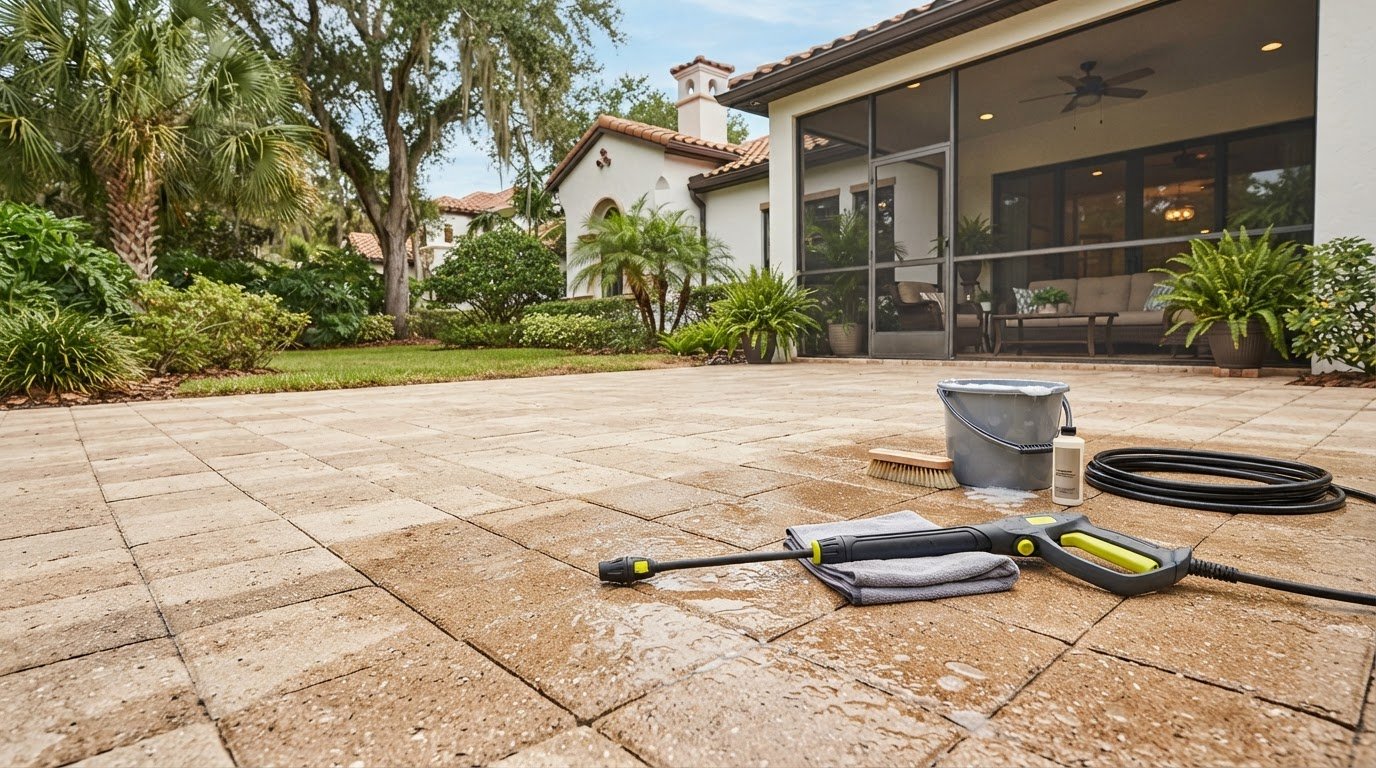
Pressure washing is safe if performed with a low-pressure setting and the correct technique. High-pressure streams can easily tear aged fiberglass or blast the spline out of its tracks, leading to unnecessary damage. We recommend a gentle soft wash using a mild cleaning solution to remove algae and salt buildup. This maintenance preserves the vinyl coating on the mesh and keeps the aluminum frame looking professional without compromising the structural tension of the panels.
Do I need a permit for pool enclosure repairs in St. Johns County?
Permits are generally required for structural modifications or full enclosure replacements in St. Johns County. While minor screen patches might not necessitate a permit, any work involving the aluminum frame or anchor bolts must comply with the 8th Edition of the Florida Building Code. As a licensed contractor, we handle the local permitting process to ensure your project meets all safety requirements and wind load standards for our specific coastal zone.
Will a re-screen make my pool cage hurricane-proof?
No enclosure is entirely hurricane-proof, but a professional rescreen significantly improves storm resilience. By replacing brittle mesh and rusted fasteners, you ensure the structure can handle its engineered wind loads. New screens allow air to pass through properly, reducing the pressure that often causes cage collapse. Combining high-performance mesh with expert pool enclosure repair St. Augustine hardware upgrades provides the highest level of protection available for your outdoor living space.
Comments