


Florida Pergolas With Retractable Canopies and Remote Control

Weather resistance depends on the roof design and how it is used, not simply on whether it has a motor. A pergola with a retractable canopy in Florida offers adjustable shade, while motorized operation lets you move the canopy by remote. Retract fabric canopies when a tropical storm is forecast and keep them retracted until it passes.
That flexibility is useful in Florida, where outdoor spaces need to handle changing sun and rain. Canopy material and coverage style also affect the protection it provides and how well it suits your patio.
This guide covers remote-controlled operation, fabric performance and color choices, and coverage options for pergolas and other outdoor structures. You’ll also learn what to consider when planning design, installation, and maintenance, so you can shape an outdoor space around your home and local conditions.
Table of Contents
Design, installation, and maintenance support
The right installer coordinates the canopy, frame, and mounting plan with your property. In Saint Augustine, the design should also account for applicable local requirements and the needs of the installation.
Professional Installation Options
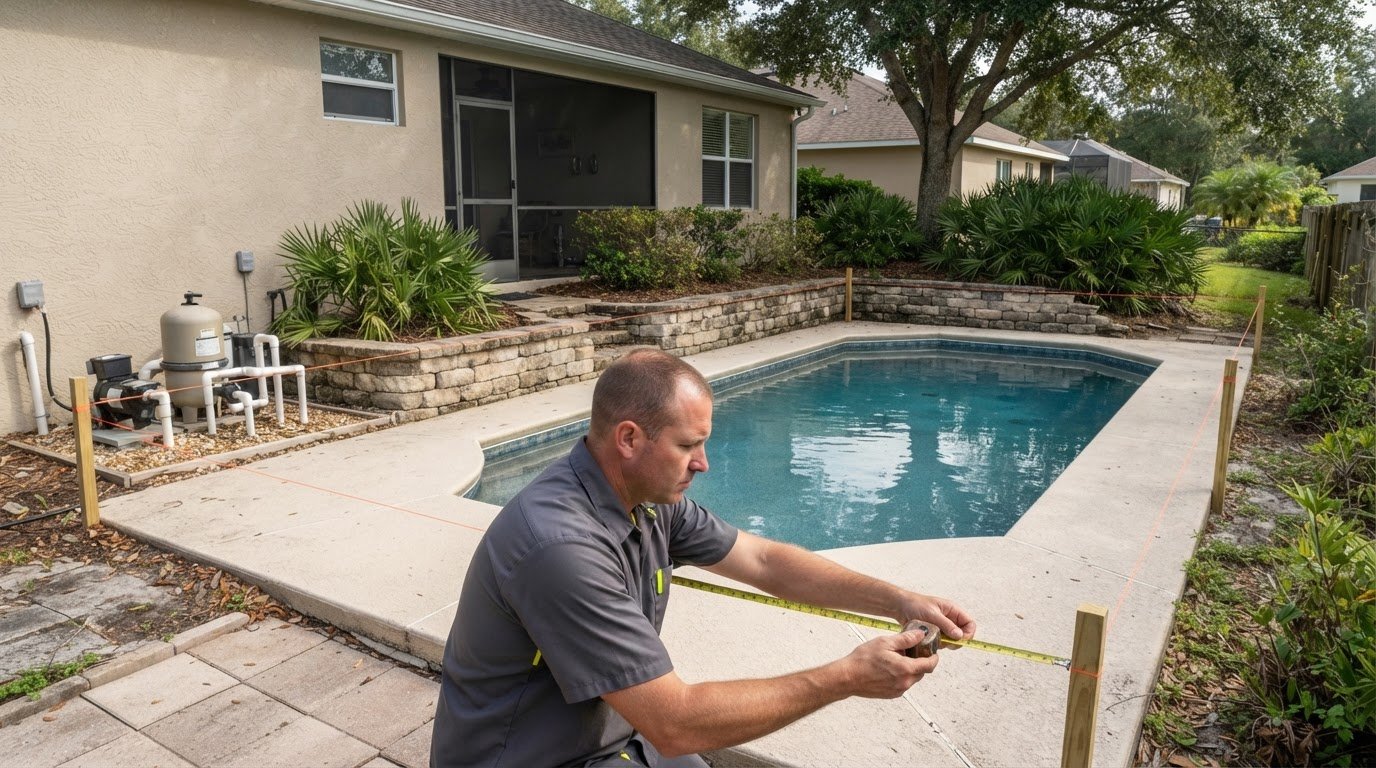
Professional installation typically begins with measuring the patio, reviewing the attachment surface, and planning a canopy layout. Across Northeast Florida, the installer should consider the home’s structure and the area the roof needs to cover. Permit requirements vary by project and jurisdiction, so the installation plan should address applicable approvals. Clear communication about each stage helps set expectations before work begins.
Installation Duration
Most motorized pergola installations can be completed within a few days. The schedule depends on the design, site preparation, and how the frame connects to the home or freestanding supports. A custom layout or additional preparation can affect the sequence of work. Ask for a project schedule that distinguishes preparation, frame installation, canopy fitting, and remote operation checks, so each stage is clear.
Installer and Brand Selection
For a Florida project, choose an installer who explains how the system works, what supports its frame, and how the canopy moves. Fabrics, tracks, motors, and frame materials vary. A clear proposal should identify the components and explain how they suit your patio’s dimensions and intended coverage. The best fit is the system that meets those needs, not simply the one with the most features.
Plan for maintenance after installation, too. Periodically clean frames and louvers with mild soap and water, and lubricate moving components when needed. If a tropical storm is forecast, retract fabric tops and keep them retracted until it passes. These practices help protect the canopy and support smooth operation over time.
Can I operate the motorized pergola with a remote control?
Yes. Depending on the system, you can operate a retractable canopy by remote, smartphone integration, button, or cord. The control and roof style determine how you adjust shade across your outdoor living space.
Canopy Operation and Adjustability
A retractable fabric roof slides open or closed, letting you adjust sunlight and shade as conditions change. Some canopies move along steel cables or thin wires; track-guided versions travel on aluminum or steel tracks attached to the pergola. A Roman-style canopy folds by hand, while an awning-style design extends or retracts with a crank. The mechanism determines how you operate the canopy day to day.
Motorized Canopy Controls
A motorized pergola uses an electric motor to retract its roof or adjust its louvers. Depending on the design, movement may be controlled by remote or smartphone integration; some systems also use a button or cord. Certain motorized roofs can stop at any position between fully open and fully closed, allowing partial coverage rather than only sun or full shade.
There isn’t one wind-speed limit that applies to every retractable canopy. The operating limit depends on the specific system, and a wind sensor doesn’t establish a universal safe speed. A sensor can be used with a motor rated at 50N or larger. For fabric roofs, retract the canopy when a tropical storm is forecast, and leave it retracted until the storm passes.
Frame compatibility matters because the roof’s tracks or support points must work with the pergola structure. Aluminum and steel frames suit different climate conditions. During design, the installer can align the frame and canopy mechanism with the patio layout. For example, a track-guided roof needs tracks attached to the pergola, while a cable-guided fabric roof follows its wire supports.
For a coordinated outdoor living space, explore patio cover planning alongside the pergola design.
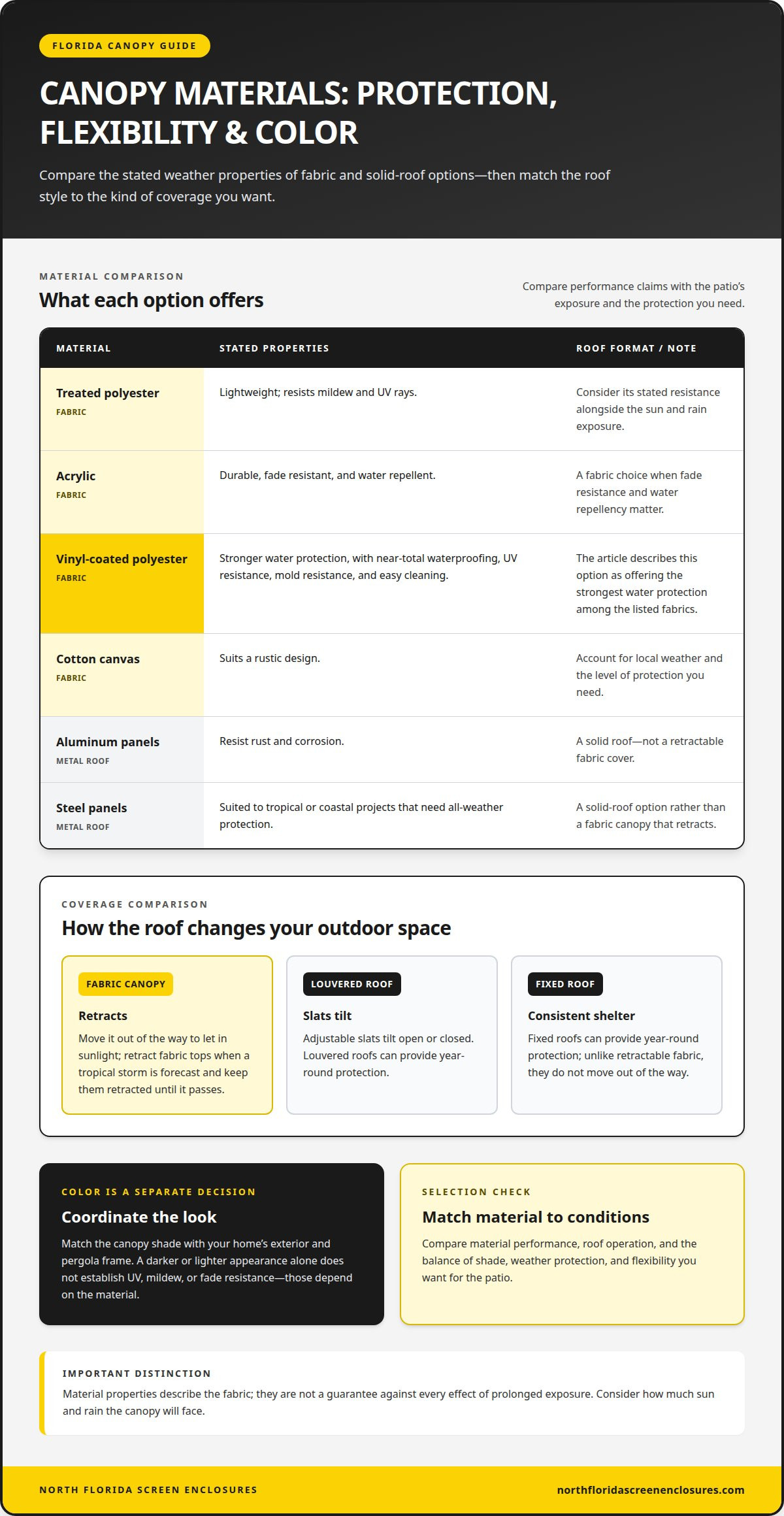
Canopy fabric water protection and color options
For Florida weather, fabric choice affects UV resistance, mildew resistance, fading, and water repellency. Compare these properties with the coverage you want before selecting a roof.
Canopy Material Options
Treated polyester is lightweight and resists mildew and UV rays, while acrylic is durable, fade resistant, and water repellent. Vinyl-coated polyester offers stronger water protection, with near-total waterproofing, UV resistance, mold resistance, and easy cleaning. Natural cotton canvas suits a rustic design, but material selection should account for local weather and the protection you need.
Metal is another roof option. Aluminum panels resist rust and corrosion, while steel panels suit tropical or coastal projects that need all-weather protection. Unlike a fabric canopy, these materials provide a solid roof rather than a retractable cover. Match the material to your desired balance of shade, weather protection, and flexibility.
UV Protection and Florida Weather Resistance
For UV and mildew resistance, treated polyester is a practical option; acrylic adds fade resistance and water repellency. Vinyl-coated polyester combines UV and mold resistance with near-total waterproofing. These properties describe the material, not a guarantee against every effect of prolonged exposure. Consider how much sun and rain the canopy will face when comparing fabrics.
Color is a separate design decision. Coordinate the canopy shade with your home’s exterior and pergola frame, then prioritize the fabric’s stated performance in Florida’s climate. A darker or lighter appearance alone does not establish UV, mildew, or fade resistance; those depend on the material.
Roof style also changes the kind of protection. A fabric canopy retracts to let in sunlight, while adjustable louvered slats tilt open or closed. Fixed and louvered roofs can provide year-round protection, unlike a retractable fabric top that can be moved out of the way. Choose based on whether adjustable coverage or more consistent shelter better suits your patio.
For a pergola with retractable canopy in Florida, compare material performance, color, and roof operation together. Considering all three helps align the design with the weather protection and flexibility your outdoor space needs.
Retractable canopy coverage for pergolas and other outdoor structures
Coverage depends on the structure’s size, roof style, and the area you want shaded. Retractable systems come in different sizes for patios and backyards, while the canopy’s movement determines how much open sky remains available.
Slide-on-wire designs move fabric panels along steel cables or thin wires. Track-guided canopies travel along aluminum or steel tracks attached to the pergola. Roman-style fabric folds by hand, while awning-style covers extend or retract with a crank. Each mechanism offers a different way to adjust coverage across an outdoor living space.
Fabric choice also shapes comfort. High-tensile mesh lets airflow and light pass through, making it useful where filtered shade matters more than a solid roof. A retractable top can shade a patio during peak daylight, potentially reducing household energy use. For outdoor dining, partial coverage can preserve daylight while shading the seating area.
Coverage planning can extend beyond a backyard pergola. Resorts can use pergolas along paths between pools, beaches, bars, lounges, and dining areas, guiding foot traffic through outdoor transition spaces. Restaurants and cafes can add outdoor seating or create an open-air lounge bar. In each case, the canopy’s footprint should match the path, seating area, or gathering space it serves.
For a home patio, map the area that needs shade, then compare canopy size, movement style, and airflow. Consider how frame and fabric colors relate to the exterior, furniture, and surrounding landscape. This creates a cohesive design without letting appearance replace practical coverage decisions. Retract fabric tops when a tropical storm is forecast and keep them retracted until it passes.
Planning a covered patio or a larger outdoor area? Discuss your outdoor coverage design as part of the overall layout.
North Florida Screen Enclosures
North Florida Screen Enclosures can help you coordinate your canopy plans with the surrounding outdoor space. If your project includes a patio cover, pool enclosure, aluminum balcony railing, or paver patio, planning these elements together can keep the layout functional and visually consistent.
Turn to the team when you’re considering how shade, access, and nearby structures should work together. A covered patio beside a pool enclosure, for example, may need a different layout from a standalone seating area. North Florida Screen Enclosures handles exterior projects that support broader outdoor plans, helping you consider how each element fits your property.
Contact North Florida Screen Enclosures to discuss your outdoor project.
Plan a Canopy That Fits Your Next Step
A pergola with a retractable canopy in Florida works best when it supports how you want to use your outdoor space, not just how it looks. Before moving forward, picture a typical afternoon: where you want shade, which areas should remain open, and how the structure will connect with the rest of your property. These priorities give the design purpose and guide decisions about layout and operation.
Think beyond the canopy itself. A coordinated plan can account for outdoor access, nearby structures, and how your household uses the patio throughout the year. North Florida Screen Enclosures can help you consider these relationships as part of a broader exterior project, with careful attention to how each element fits your property.
When you’re ready to discuss the next step, contact North Florida Screen Enclosures. Start with the space you want to improve and how you hope to use it. A well-planned design can make that outdoor area feel more purposeful and inviting.
Frequently Asked Questions
Are motorized pergolas weather-resistant?
Pergolas can be designed for outdoor exposure, but weather resistance depends on the roof, frame, and system. A fabric canopy offers adjustable coverage, while solid-panel roofs provide a different level of shelter. In Saint Augustine, consider how wind-driven rain, humidity, and sun affect your intended use. Regular cleaning and care of moving parts also help keep the system operating as designed.
Can a motorized pergola be used in both sunny and rainy conditions?
Yes, a motorized pergola can provide shade in sunny weather and shelter during rain, depending on its roof design and material. Water-repellent fabric is not the same as a fully waterproof roof. A louvered or solid-panel cover, for example, provides a different rain barrier from a fabric canopy. Choose based on whether your outdoor area needs intermittent shade or more consistent weather protection.
How does a motorized pergola system work?
An electric motor moves the roof components, letting you change the coverage without manually repositioning each part. Depending on the system, a remote control sends the command, and the canopy moves along its tracks or support structure. Louvered roofs adjust their slats; retractable fabric roofs open or close across the frame. The system’s design determines its movement and controls.
What types of pergolas with retractable canopies work best in Florida’s heat, humidity, and storms?
Choose materials and coverage according to the conditions the structure will face. Treated polyester resists UV rays and mildew; acrylic resists fading and repels water. Aluminum frames resist corrosion, while steel can suit coastal projects that need all-weather protection. In storm-prone conditions, a retractable fabric roof can be moved out of exposure. The right combination depends on the shade, airflow, and shelter you want.
Are retractable-canopy pergolas hurricane rated or safe in high winds?
Hurricane ratings and high-wind performance apply to a particular system and installation, not every retractable pergola. A wind sensor is an operating feature, not proof of hurricane resistance or a universal safe wind limit. Retract fabric canopies when a tropical storm is forecast and keep them retracted until it passes. Do not assume a canopy is intended to remain extended during severe weather.
Do Florida building codes require permits for pergolas or retractable canopies?
Permit requirements can depend on the structure’s design, attachment, and local jurisdiction. A freestanding pergola may be treated differently from one attached to a home, and local rules can affect the project. In Saint Augustine, include applicable Florida building requirements in the installation plan. Address permit needs alongside the site layout and structural design.
Comments