


Pool deck paver installation in St. Augustine: material options

Pavers around a pool aren’t automatically slippery. The surface finish and texture matter, as does how the deck is graded to drain. For pool deck paver installation in St. Augustine, choosing a suitable texture and planning slope and drainage are key to a comfortable, practical poolside surface.
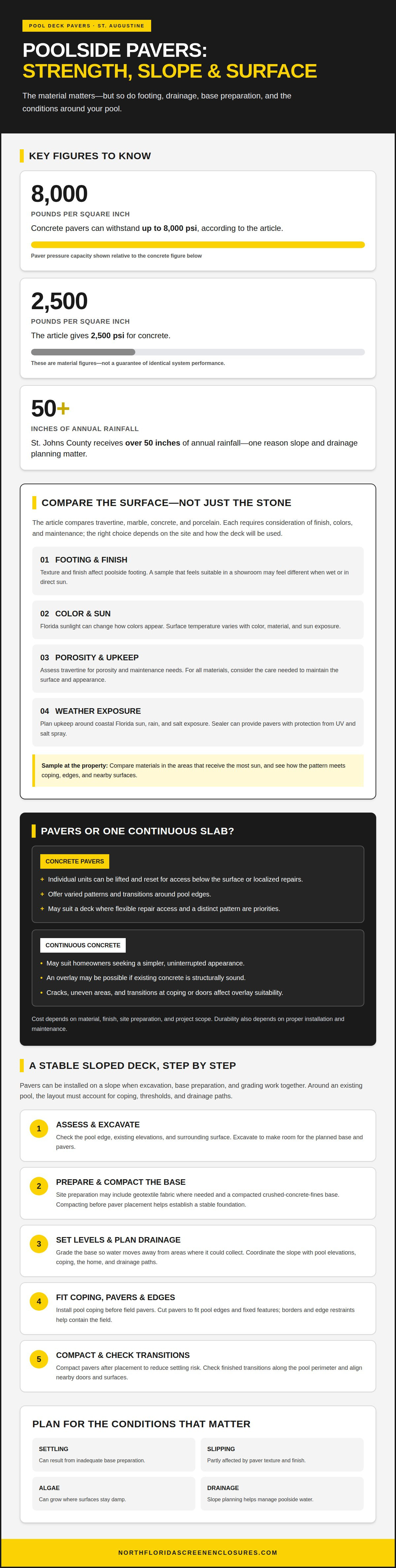
When choosing materials for a wet area, consider both footing and appearance. This guide compares travertine, marble, concrete, porcelain, and other paver options, including their finishes, colors, upkeep, and feel under the Florida sun.
You’ll also learn how site conditions shape design and installation, why pavers may suit some pool decks better than a continuous concrete surface, and which project details affect the result. The aim is to help you understand your options before choosing a pool deck that fits your property and how you use it.
Table of Contents
Travertine, marble, concrete, and porcelain materials
Pool deck paver installation in St. Augustine starts with matching the material to the site. Travertine, marble, concrete, and porcelain each offer different finishes, colors, and maintenance needs.
Paver material alone does not determine whether a permit is required. St. Johns County requirements depend on the project scope and related construction, such as changes to drainage or structures. Identify applicable approvals as part of the project design before installation begins.
Colors, Textures, and Patterns
Compare samples at your property, where Florida sunlight can change how colors appear and surfaces feel. Light, warm-toned travertine can look quite different from darker concrete or patterned porcelain. Texture and finish matter for poolside footing: a surface that feels suitable in a showroom may feel different when wet or in direct sun.
Patterns also shape the deck’s overall appearance. Running layouts, repeating shapes, and mixed-size pavers can define transitions between the pool, patio, and walkways. Consider how the pattern meets the pool coping and nearby edges, then compare the sample with your home’s exterior.
Material Selection and Maintenance
Assess travertine by its finish, color, porosity, maintenance needs, and suitability for the site. Marble and porcelain also require consideration of surface finish and the care needed to maintain their appearance. Concrete offers another pool-deck option, with colors and textures to suit the surrounding design. For all four materials, surface temperature varies with color, material, and sun exposure.
In coastal Florida, account for sun, rain, and salt exposure when planning upkeep. Sealer can provide pavers with protection from UV and salt spray, while the right maintenance routine depends on the material and finish. Compare samples at your property, especially in areas that receive the most sun.
Common problems include settling, slippery surfaces, and algae growth. Settling can result from inadequate base preparation; slipping is partly affected by paver texture and finish, while algae can grow where surfaces stay damp. Planning the slope and drainage helps manage poolside water.
Why Choose Pavers Over Concrete?
Concrete pavers offer a modular alternative to a continuous concrete deck. Because the surface is made of individual units, a damaged area can be addressed without replacing the entire field. Pavers also allow varied patterns and transitions around pool edges. Travertine and marble offer distinct natural-stone options, while concrete pavers provide a different look and layout flexibility.
Costs for concrete, travertine, and porcelain vary with material, finish, site preparation, and project scope; the price depends on the case and is given after a quote request. Durability also depends on proper installation and maintenance: pavers can withstand up to 8,000 pounds per square inch, compared with concrete’s 2,500 pounds per square inch, while properly installed and maintained brick pavers can last for decades.
These differences describe material options, not a guarantee that every paver system will perform identically. Pool traffic, drainage, the base, and the selected surface all matter. Assess travertine and marble for site suitability, finish, and upkeep. Concrete pavers consist of individual units that can be lifted and reset, which can help with access below the surface or repairs to a localized section.
An overlay may be possible when the existing concrete is structurally sound. Surface condition and elevations still matter: cracks, uneven areas, and transitions at coping or doors all affect whether an overlay is suitable. A professional assessment can determine whether the slab can support the planned pavers or needs another approach.
For a deck that needs flexible repair access and a distinct pattern, pavers may fit better than one continuous slab. A single concrete surface may suit homeowners seeking a simpler, uninterrupted appearance. Explore paver patio options when considering how a paver design could connect poolside areas with nearby outdoor living spaces.
Can pavers be installed on a slope?
Yes. Pavers can be used on a sloped pool deck when excavation, base preparation, and grading work together. Around an existing pool, the installation must account for coping, thresholds, and drainage paths.
Excavation and Base Preparation
Installation starts with excavation to make room for the planned base and pavers. The installer assesses the pool edge, existing elevations, and surrounding surface before setting the finished level. In St. Augustine, site preparation may include geotextile fabric where needed and a compacted crushed-concrete-fines base. Compacting the base before laying pavers helps establish a stable foundation. The pavers are compacted again after placement to reduce settling risk.
At an existing pool, installation must preserve the relationship between the new paver field and the coping. Pool coping is installed before field pavers, which are cut to fit around pool edges and other fixed features. Paver borders and edge restraints help contain the field, while careful elevation planning keeps transitions aligned with nearby doors and surfaces.
Grading and Slope
Grading shapes the surface so water moves away from areas where it could collect. The installer evaluates slope alongside pool elevations, coping, and connections to the home. On steeper sections, paver blocking can help level and reinforce the installation. The base is graded before the pavers are laid, then the finished field is checked for consistent transitions along the pool perimeter.
Weather exposure also informs the layout. St. Johns County receives over 50 inches of annual rainfall, so a stable slope and well-planned drainage matter. Cuts around curves or corners should fit the surrounding border rather than leave unsupported edges. These installation details help manage movement and maintain a coherent surface across sloped and level areas.
Pool Deck Drainage Requirements
Florida Building Code requirements depend on the project and applicable local provisions, so this section does not establish a specific code rule or slope measurement. For pool decks, the design should account for surface slope, drainage routes, coping, and nearby structures. These factors shape how water leaves the deck and whether it could collect beside the pool or home.
Where standing water is a concern, permeable pavers allow water to pass through, reducing runoff and erosion. Consider drainage before setting the final elevations, not as a finishing detail. A practical sequence is to assess existing grades, plan the flow path, prepare and compact the base, then lay and compact the pavers around the pool.
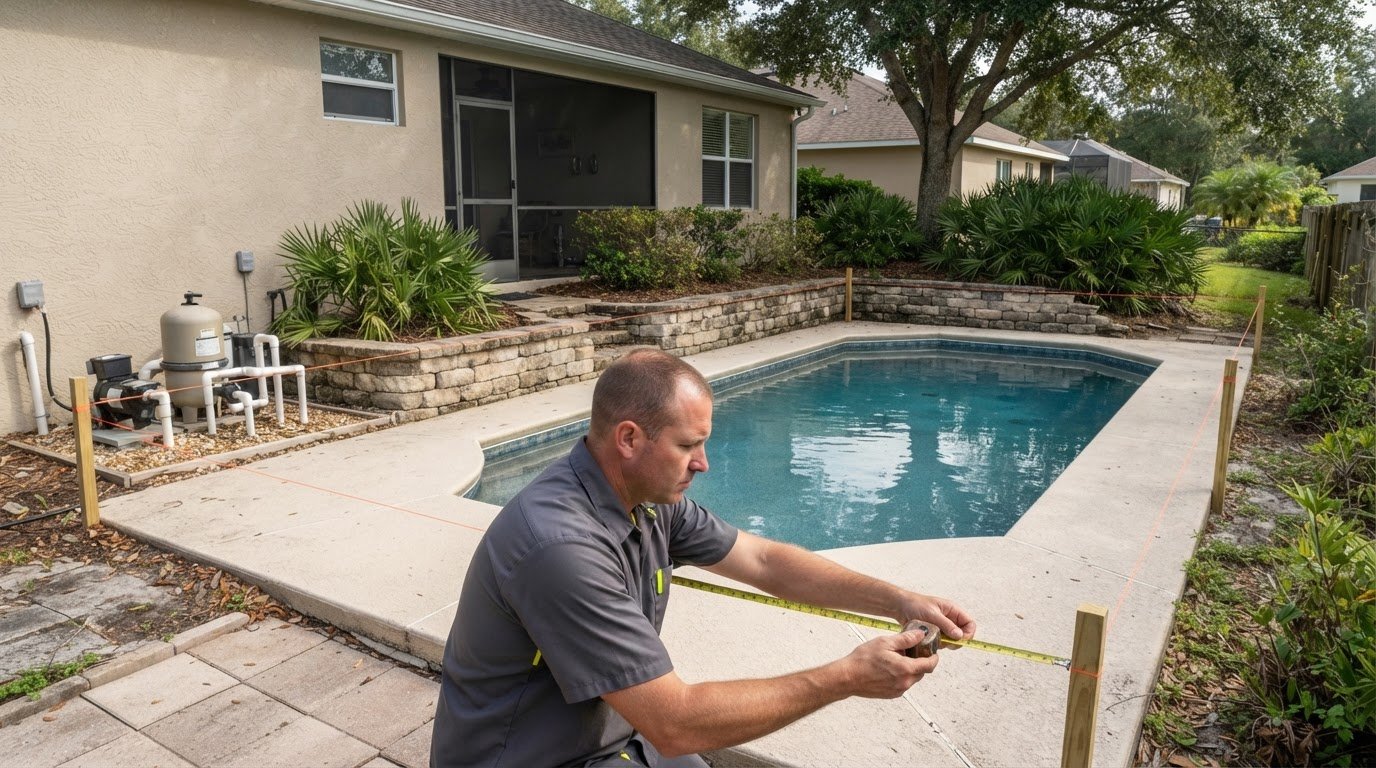
Pool deck paver design and installation in St. Augustine
A well-planned pool deck connects the pool, home, and backyard into one usable outdoor space. In St. Augustine, coordinate appearance with drainage, coping, and site elevations.
Pool Deck Design Planning
Start by mapping the pool edge, coping, doors, screens, and adjoining landscape. These fixed features shape the field dimensions, transitions, and cuts. Then choose colors and a pattern that complement the home and surrounding outdoor space. A running pattern can create a different visual flow from a repeating modular layout, especially across a broad deck.
Texture and surface temperature also guide design decisions. Pool-deck temperature varies with material, color, and sun exposure, so review samples at your property. Pool deck paver installation in St. Augustine should account for foot traffic, slope, drainage, and the connection to the home, not just the paver’s appearance.
Installation Timeline in St. Augustine
Installation time depends on the deck’s area, excavation needs, site access, and the amount of cutting around pool edges. The work includes preparing and compacting the base, setting elevations, installing coping before field pavers, placing the pavers, and stabilizing the joints. Complex borders or grade changes add work compared with a straightforward layout.
Weather and drainage conditions affect scheduling, since the base and finished surface need suitable conditions for installation. The project plan also accounts for transitions at doors, screens, and existing surfaces. Sealing is a later step: allow a 60-90 day waiting period after installation before sealing pavers.
For a durable finish, installation details matter as much as the selected pattern. Polymeric sand stabilizes joints, while compaction helps create an interlocked surface. Edge restraints help keep borders tight during intense rain. To plan a paver layout for your outdoor space, discuss your pool deck project.
North Florida Screen Enclosures: Pool Enclosures
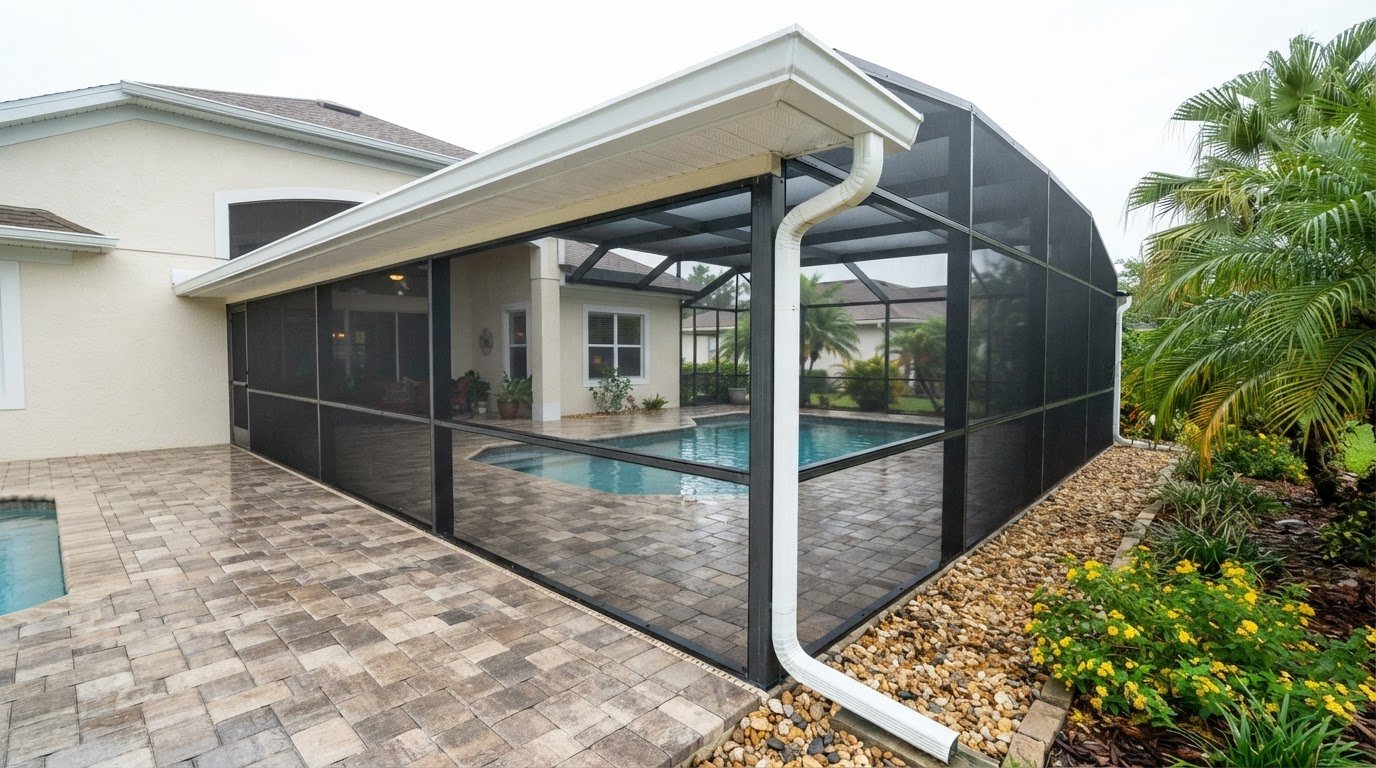
North Florida Screen Enclosures provides pool enclosures for homeowners planning improvements around an outdoor pool. If your project includes both an enclosure and a paver deck, planning them together can help coordinate the layout and the connection between the poolside area and backyard.
Its paver patios can complement poolside plans, while patio covers and Elite Roofing Systems provide options for other outdoor areas. Aluminum balcony railings are another exterior improvement. Choose work that fits your property and project scope.
Contact North Florida Screen Enclosures to discuss your pool enclosure project.
Plan a Poolside Space That Works as a Whole
Start by deciding how you want the pool area to connect with the rest of your property. Consider whether the project should coordinate with a screened enclosure or extend into other outdoor areas. North Florida Screen Enclosures offers pool enclosures, patio covers and Elite Roofing Systems, and aluminum balcony railings for related exterior projects.
For pool deck paver installation in St. Augustine, a clear project scope helps align the layout, material selection, and surrounding features from the start. Bring your priorities for appearance and use into the project discussion so the design reflects how you want to enjoy the space.
Contact North Florida Screen Enclosures to discuss your plans. A considered design can make your poolside area feel like a natural part of your home.
Frequently Asked Questions
Are pavers slippery around a pool?
They can be, depending on the paver’s finish and texture. A smooth-looking surface may feel different underfoot from a more textured finish, especially when wet. For a poolside area, compare samples where they’ll be used and consider how swimmers move between the water, seating, and entry points. Evaluate texture alongside drainage and deck layout.
Can the pool deck connect to a patio or turf area?
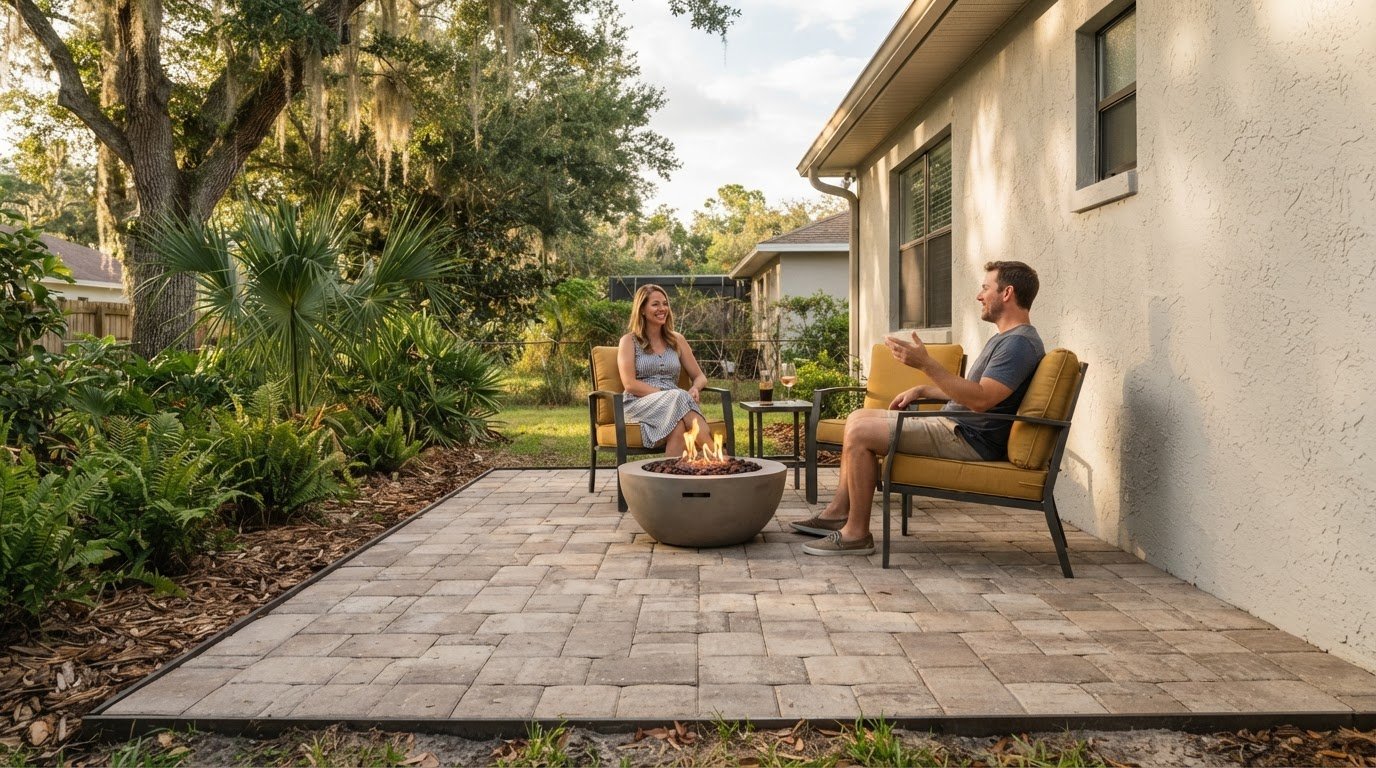
Yes. A pool deck can transition to a patio or turf area when the layout accounts for edges, elevations, and how water moves between surfaces. For example, a paver border can define the change from hardscape to lawn, while a consistent pattern can visually connect the pool area to an adjoining patio. Plan these transitions as part of the overall design.
Why Seal Your Pavers?
Sealing can help protect pavers from UV exposure and salt spray, both relevant to coastal Florida. It can also form part of a maintenance plan tailored to the selected material and site conditions. Sealing doesn’t replace routine care, so consider how much upkeep you’re comfortable with when choosing a finish. Appropriate timing depends on the installation and product guidance.
Will pavers settle?
Pavers can settle if their support beneath the surface is uneven or insufficient. Signs include dips, uneven joints, or individual units sitting lower than the surrounding surface. A localized area can often be repaired by lifting the affected pavers, correcting the support, and resetting them. Prompt attention can help prevent an uneven section from disrupting nearby transitions or drainage.
Which paver materials are best for pool decks in Florida's heat and humidity?
No single material is best for every Florida pool deck. Compare travertine, marble, concrete, and porcelain by finish, color, porosity, maintenance needs, and site suitability. For example, a deck in strong sun may call for different color and comfort considerations than a shaded area. Review samples at your property and weigh upkeep alongside appearance.
How can homeowners find and compare pool paver contractors in St. Augustine, FL?
Compare project scopes by how clearly they describe site preparation, paver layout, coping transitions, drainage, borders, and joint stabilization. These details show how the design connects to the pool and surrounding surfaces. North Florida Screen Enclosures provides paver patios and concrete work as part of its exterior-improvement services. For a St. Augustine project, a defined scope helps align the planned work with your property’s layout and goals.
Comments