


North Florida Backyard Pergola Builders Guide

p>A wooden pergola in Saint Augustine isn't a long-term investment; it is a high-maintenance project that begins to degrade the moment the first summer storm hits. You likely want an outdoor retreat where you can escape the intense Florida heat, yet the thought of a structure rotting in the humidity or failing during a hurricane is a valid concern. It's a common dilemma for homeowners who want to enjoy their patios but need something that stands up to the local environment without constant repairs.
By partnering with professional backyard pergola builders who understand coastal engineering, you can secure a structure that offers both beauty and structural integrity. This guide will show you how high-quality aluminum pergolas provide a durable, low-maintenance alternative to traditional wood. We will explore how these hurricane-ready structures transform outdoor spaces, increase property value, and integrate perfectly with your existing pool enclosures or paver patios. You'll learn exactly what to look for to ensure your new retreat remains a permanent fixture of your North Florida home for decades to come.
Table of Contents
Understanding the Role of Backyard Pergola Builders in Outdoor Design
Material Selection: Why Aluminum is the Gold Standard for Florida
Engineering for the Coast: Wind Loads and Structural Integrity
Planning Your Project: Permits, Utilities, and Site Preparation
Designing Your Private Oasis with North Florida Screen Enclosures
Understanding the Role of Backyard Pergola Builders in Outdoor Design
A backyard pergola is a permanent architectural structure designed to provide partial shade and vertical interest to an otherwise flat landscape. Unlike temporary umbrellas or gazebos, these installations are engineered to become a fixed part of your home's footprint. In Saint Augustine, the intense UV index often makes unshaded patios unbearable during the midday hours. Professional backyard pergola builders create a bridge between the indoor comfort of your home and the natural beauty of your lawn, offering relief from the sun without sacrificing the open-air experience.
The primary difference between a retail kit and a custom build lies in the structural integrity and material choice. While a big-box store kit might seem convenient, it often lacks the wind-load engineering required for North Florida. By consulting with experienced backyard pergola builders, you ensure your investment is anchored correctly and built to last. A well-placed pergola frequently serves as the central focal point for sophisticated paver patio design ideas Florida residents use to define their outdoor dining or lounging areas.
The Functional Benefits of a Professional Build
Choosing a professional build offers the advantage of "architectural cooling." By strategically calculating the spacing and angle of the overhead slats, builders can significantly reduce ambient temperatures in the seating area while maintaining constant airflow. This precision is difficult to achieve with one-size-fits-all solutions. Beyond immediate comfort, permanent aluminum structures provide a steady increase in property value because they require virtually zero maintenance and don't rot like wood. These structures are incredibly versatile. They can define the boundaries of an outdoor kitchen, provide a safe anchor for a fire pit area, or offer a sophisticated backdrop for poolside lounging.
Pergolas vs. Patio Covers: Which is Right for You?
Deciding between a pergola and a patio cover depends on how you intend to use the space. A pergola offers an open-air feel that allows for maximum light transmission and a view of the sky. If you require absolute protection from the rain, you might consider elite roofing systems, which provide total coverage. Pergolas are ideal for homeowners who want to enjoy the breeze without being trapped in a fully enclosed room. These structures can also be integrated into existing pool cages or lanais, creating a multi-layered outdoor environment that transitions smoothly from a screened enclosure to an open-air patio.
Material Selection: Why Aluminum is the Gold Standard for Florida
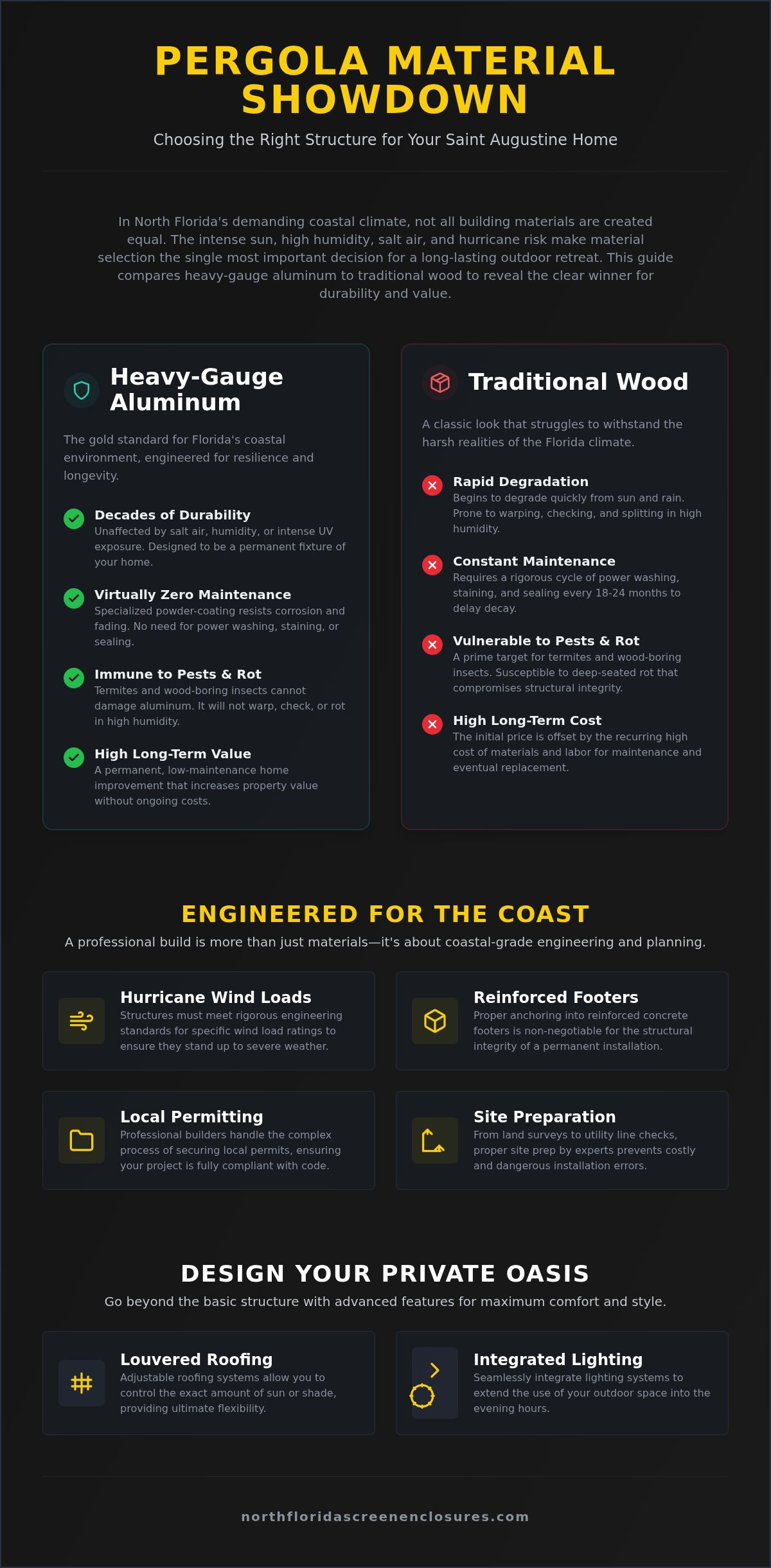
Choosing the right material is the most critical decision you'll make when planning your outdoor space. Professional backyard pergola builders consistently advocate for heavy-gauge aluminum over pressure-treated wood for one primary reason: resilience. In Saint Augustine Beach and along the Matanzas River, the "Salt Air Factor" accelerates the corrosion of inferior materials. While wood may offer a traditional look, it simply cannot match the structural longevity of aluminum in a coastal environment. Modern aluminum finishes now provide aesthetic flexibility, offering textures and colors that mimic natural wood without the inherent weaknesses of organic fibers.
The Downside of Wood in North Florida
High humidity is the primary enemy of wooden structures in the South. In environments where humidity levels frequently exceed 80 percent, wood is prone to warping, checking, and deep-seated rot. Even pressure-treated lumber eventually succumbs to the moisture, leading to structural instability. Homeowners also face a constant battle against termites and wood-boring insects that thrive in the Florida heat. Beyond the physical degradation, the long-term cost of ownership is significant. Maintaining a wooden pergola requires a rigorous cycle of power washing, staining, and sealing every 18 to 24 months. If you neglect these tasks, the structure's lifespan shortens dramatically.
The Performance of Aluminum Structures
Heavy-gauge aluminum is engineered to withstand the specific stressors of the Florida climate. The material undergoes a specialized powder-coating process that creates a hard, durable finish. This barrier prevents oxidation and fading, even under constant exposure to intense UV rays and salt spray. It's the same high-performance material used for aluminum balcony railings, providing a cohesive and durable look for your entire property. Aluminum also offers a superior weight-to-strength ratio. This allows backyard pergola builders to design wider spans between posts, creating open, unobstructed views that wooden beams cannot safely achieve without bulky center supports.
Because aluminum is non-porous, it doesn't absorb moisture or harbor mold growth. You won't have to worry about the structure sagging or twisting over time. If you are looking for a permanent solution that remains as stable on day 1,000 as it was on day one, you can explore our aluminum design options to see how these systems integrate with your home's architecture. Transitioning to a low-maintenance material ensures your outdoor retreat remains a place of relaxation rather than a source of weekend chores.
Engineering for the Coast: Wind Loads and Structural Integrity
In Saint Augustine, "hurricane-ready" isn't a luxury or a marketing buzzword; it's a structural mandate. The coastal environment subjects outdoor structures to extreme pressure, meaning a pergola must do more than provide shade. It has to stay grounded when wind speeds escalate. Professional backyard pergola builders focus on the physics of the build, ensuring every beam and post can withstand the specific uplift and lateral forces common in North Florida. While a structure might look solid on a calm day, its true quality is revealed during a tropical storm when the engineering prevents it from becoming airborne debris.
A secure installation starts beneath the surface. Foundations require deep footers and high-PSI concrete to create a heavy, immovable anchor point. This weight is necessary to counter uplift, which is the force of wind getting underneath the roof slats and trying to pull the structure out of the ground. When attaching a pergola directly to your home, the connection point is equally critical. Integrating the structure with professional soffit and fascia installation ensures that the transition is watertight and reinforced against the house's framing, preventing damage to your home's exterior during high-wind events.
Understanding Florida Building Code (FBC) for Pergolas
North Florida falls into specific wind speed zones, typically requiring structures to be rated for 130 to 150 mph. Navigating these requirements is a core responsibility of backyard pergola builders. There's a significant difference between "unattached" and "attached" engineering. An unattached structure must be entirely self-supporting, while an attached pergola transfers a portion of its load to the existing building. Both scenarios require stamped engineering drawings to verify that the design meets or exceeds local safety standards before a single post is set.
The Importance of Proper Fasteners and Hardware
The strength of an aluminum pergola is only as good as the hardware holding it together. In our salt-heavy air, standard steel screws will corrode within months, leading to "bleeding" or unsightly rust stains that drip down the white or bronze finish. We utilize stainless steel or specialized coated fasteners that resist oxidation. These heavy-duty brackets and anchors maintain structural rigidity, ensuring the frame doesn't rack or lean over time. These same high standards for hardware are what we apply to pool enclosure repair St. Augustine projects, where structural failure is never an option. Using the right fasteners is a small detail that makes the difference between a structure that lasts five years and one that lasts thirty.
Planning Your Project: Permits, Utilities, and Site Preparation
Before construction begins, a methodical planning phase is required to ensure your investment is both legal and safe. Professional backyard pergola builders don't just show up and start drilling; they begin with a comprehensive review of your land survey. This document is vital for identifying property lines and easements. You don't want to build a permanent structure only to discover it encroaches on a utility easement or a neighbor's yard. Coordination is also key if you're working with separate hardscape contractors for pavers or concrete. We ensure the pergola's structural footers are integrated seamlessly with your ground-level plans, preventing future settling or drainage issues.
Navigating the Saint Augustine Permitting Process
Residential backyards in St. Johns County have specific setback requirements. These rules dictate how close a structure can be to your property line, and they vary depending on your specific zoning. If you live in a community with a Homeowners Association (HOA), you'll also need their formal approval. Preparing an HOA submittal typically requires detailed site plans, material samples, and color specifications. The timeline for county permit approval can vary based on seasonal demand, but having a professional handle the paperwork prevents common errors that lead to delays. North Florida Screen Enclosures manages the technical heavy lifting of permitting so you don't have to navigate the local bureaucracy alone.
Site Preparation and Utility Clearances
Safety is our priority during the pre-construction phase. We coordinate the "Call Before You Dig" (811) process to locate underground power, gas, and water lines. This prevents costly damage and ensures a safe work site for our crew and your family. If your home already features a custom pool enclosure installation, we must carefully plan the pergola's placement. This ensures the new structure doesn't interfere with the existing screen's structural integrity or roof drainage.
A level base is non-negotiable for a successful build. Whether you are installing on a new concrete pad or an existing paver patio, the surface must be perfectly level. This ensures the aluminum posts remain plumb and the roof slats align correctly for optimal shade. If you're ready to start the planning phase, you can contact our team for a site evaluation to determine the best placement and foundation requirements for your new structure. Taking these steps early ensures a smooth installation and a structure that stands the test of time.
Designing Your Private Oasis with North Florida Screen Enclosures
Creating a space that feels like a natural extension of your home requires more than just placing a structure on a patio. As specialized backyard pergola builders, we focus on the aesthetic details that define a custom project. You can choose from various decorative end caps, column styles ranging from modern to traditional, and a palette of colors designed to match your home's existing fascia and trim perfectly. This level of customization ensures that the final structure looks like it was built with the house, rather than being an afterthought.
Our end-to-end service model takes the stress out of the construction process. We manage every phase, from the initial design consultation where we map out your vision to the final county inspection. Choosing North Florida Screen Enclosures means you are opting for a premier aluminum pergola installation that prioritizes both form and function. We take pride in our diligent craftsmanship, ensuring that every mitered corner and fastener meets our rigorous standards for quality and resilience.
Custom Features for Modern Florida Living
Modern technology has changed how we use outdoor spaces, and our designs reflect these advancements. Louvered roof systems are particularly effective for the Saint Augustine climate. These systems allow you to pivot the overhead slats with a remote, providing 100 percent shade, partial sunlight, or a fully closed roof for total rain protection. This versatility allows you to use your patio regardless of the weather. We also offer several integrated upgrades to enhance your comfort:
Integrated Lighting: Low-voltage LED systems can be built directly into the pergola frame for evening ambiance.
Fan Mounts: Internal wiring and reinforced brackets allow for the installation of outdoor-rated ceiling fans to maintain airflow.
Motorized Privacy Shades: These can be added to the sides of the frame to block the low-hanging evening sun or provide a barrier from neighboring views.
Why Local Expertise Matters for Your Investment
Working with local backyard pergola builders who understand the specific demands of St. Johns County provides a layer of security that retail kits cannot offer. We know how the intense UV index affects powder-coated finishes and how the coastal wind patterns dictate the placement of motorized accessories. This local knowledge allows us to recommend the best configurations for your specific lot.
Ultimately, a professional build is about peace of mind. Our status as a licensed contractor means your project is backed by professional warranties and adheres to all local safety regulations. We don't just build a structure; we create a durable, low-maintenance retreat that increases your property's value and improves your quality of life. If you are ready to move beyond the limitations of standard shade solutions, we invite you to schedule a consultation to begin your custom backyard transformation.
Invest in a Durable Outdoor Retreat
Investing in a backyard pergola is a significant step toward reclaiming your outdoor living space from the relentless Florida sun. Choosing heavy-gauge aluminum over traditional wood is the most reliable way to ensure your structure survives the humidity and salt air of Saint Augustine. By working with experienced backyard pergola builders, you gain access to hurricane-rated engineering that meets strict local building codes. This professional approach protects your property value and provides a low-maintenance sanctuary that remains stable and beautiful for decades.
North Florida Screen Enclosures offers a complete design-to-installation service tailored specifically to our coastal environment. We're locally owned and operated. We specialize in hurricane-rated aluminum structures that balance architectural elegance with rugged structural integrity. Our team handles every permit and technical detail, ensuring your project is compliant and built to last. If you're ready to transform your patio into a functional oasis, Request a Free Estimate from Saint Augustine's Pergola Experts. We look forward to helping you create a space that truly enhances your home.
Frequently Asked Questions
Do I need a permit for a pergola in Saint Augustine?
Yes, a building permit is required for any permanent architectural structure in Saint Augustine. This ensures the design meets local wind load requirements and adheres to property setback rules. While smaller, temporary structures might be exempt, a professional installation is considered a permanent improvement. We handle the submission of site plans and engineering drawings to the county to ensure your project is fully compliant before construction begins.
How much wind can a professional aluminum pergola withstand?
Professional aluminum structures are engineered to withstand wind speeds between 130 and 150 mph, depending on your specific location in North Florida. This rating is a requirement of the Florida Building Code for coastal regions. Unlike retail kits that may fail in a tropical storm, these custom builds utilize reinforced anchoring and heavy-gauge materials. This level of engineering provides peace of mind that your structure will remain stable during hurricane season.
What is the difference between a pergola and a louvered roof?
A traditional pergola features fixed slats that provide constant, partial shade through a static lattice design. In contrast, a louvered roof incorporates adjustable slats that can be opened or closed via a motor or manual crank. This allows you to choose between full sun, partial shade, or a solid roof for complete rain protection. Louvered systems offer more versatility for Florida homeowners who want to use their patio during summer rain showers.
How long does it take for a backyard pergola builder to complete an installation?
The physical installation typically takes between two and four days, depending on the complexity of the design. However, the pre-construction phase, which includes site surveys, engineering, and the Saint Augustine permitting process, can take several weeks. Reliable backyard pergola builders manage this entire timeline to ensure that once the materials arrive on-site, the construction process is efficient and causes minimal disruption to your daily routine and landscaping.
Can a pergola be installed over an existing concrete or paver patio?
Yes, we can install aluminum pergolas over existing concrete pads or paver patios, provided the base is structurally sound. For paver installations, we often need to remove specific pavers to pour deep concrete footers that anchor the posts directly into the ground. This ensures the structure can resist the uplift forces of high winds. Once the footers are set, the pavers are replaced around the post for a clean, finished appearance.
Is aluminum better than wood for a pergola in Florida's humidity?
Aluminum is the superior choice for North Florida because it is entirely resistant to rot, warping, and termite damage. Wood structures in our high-humidity environments require constant staining and sealing to prevent decay. Aluminum features a durable powder-coated finish that won't peel or fade under intense UV exposure. This makes it a low-maintenance, long-term investment that retains its structural integrity and aesthetic appeal without the recurring costs of wood maintenance.
How do I maintain an aluminum pergola once it is installed?
Maintaining an aluminum structure is straightforward and requires very little effort compared to other materials. We recommend a simple seasonal cleaning with mild soap and water to remove salt spray, pollen, and dust. This is especially important for homes near the Matanzas River or the coast. You should also clear any debris from the roof slats to ensure proper drainage. There is no need for painting, staining, or chemical treatments throughout the structure's lifespan.
Will a pergola provide enough shade to lower my patio temperature?
A pergola can significantly lower the ambient temperature on your patio through strategic architectural cooling. By blocking a large percentage of direct sunlight, the structure prevents the floor surface from absorbing heat. When backyard pergola builders calculate the optimal slat spacing, they create a space that feels noticeably cooler while still allowing for natural airflow. This makes your outdoor area much more comfortable for dining and relaxation during the peak of a Florida summer.


Comments