


Outdoor Living Space Contractor in Florida: 2026 Selection Guide

A screen enclosure can look sound while corrosion quietly weakens the fasteners holding it together. In North Florida’s humid, coastal conditions, material choice and aluminum construction matter as much as appearance. Choosing an outdoor living space contractor Florida homeowners can rely on means looking beyond design ideas and asking how a structure will stand up to weather, wear, and storm season.
A new outdoor space should be durable and practical, not a source of repeat repairs or uncertainty about permits and HOA requirements. This guide explains how to assess a specialized contractor, choose materials suited to the local climate, and ask informed questions about project planning and approvals.
You’ll learn what to look for in a contractor’s experience with aluminum enclosures and patio covers, why fasteners and maintenance deserve attention, and how to compare proposals. Careful planning can help your outdoor area better serve your household, support your property’s value, and provide greater peace of mind when storm season arrives.
Table of Contents
The Evolution of Outdoor Living Space Construction in Florida
Florida outdoor spaces have grown beyond a basic slab and a few chairs. Homeowners plan connected areas for relaxing, dining, and spending time near the pool, with shade and screening to make the space more comfortable across changing weather and seasons. A lanai is one familiar example of this indoor-outdoor tradition; Lanai (architecture) provides helpful background on the form. Today, thoughtful construction brings the comfort of home outdoors while accounting for humidity, salt air, and storm exposure.
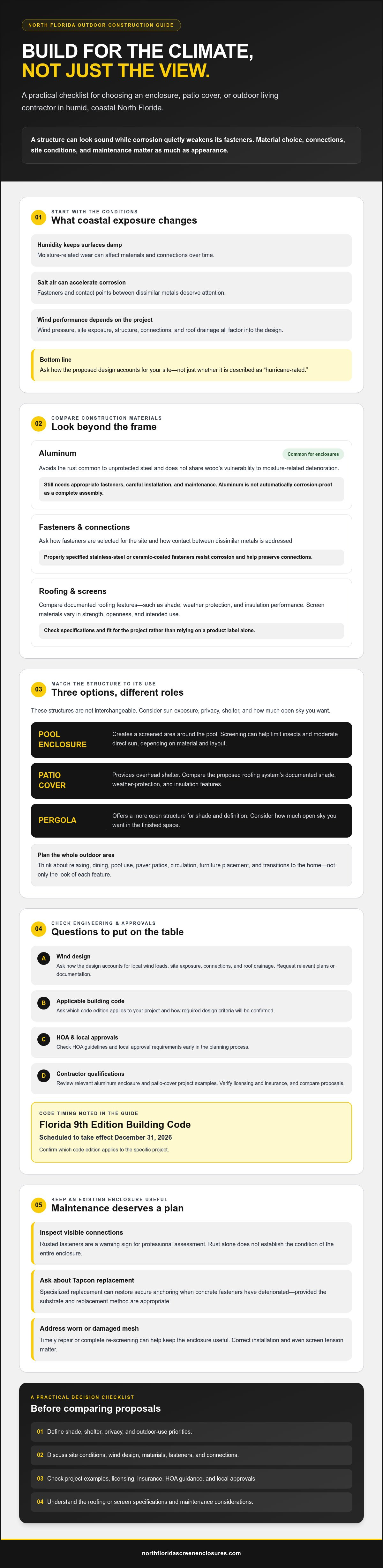
For homeowners comparing an outdoor living space contractor in Florida, material performance belongs in the design conversation from the start. Aluminum is widely used for enclosures and railings because it avoids the rust common to unprotected steel and doesn’t share wood’s vulnerability to moisture-related deterioration. That doesn’t make every aluminum structure corrosion-proof. Fastener selection, connections, and maintenance still matter in coastal conditions.
Why Material Choice Dictates Longevity
Humidity can keep surfaces damp, while salt carried through coastal air can accelerate corrosion on susceptible metals. Aluminum forms a natural oxide layer, but the full assembly still needs appropriate components and careful installation. Ask how fasteners are selected for the site and how the contractor addresses contact between dissimilar metals. For patio covers, compare the proposed roofing system’s documented features, including shade, weather protection, and any insulation performance, rather than relying on a label alone.
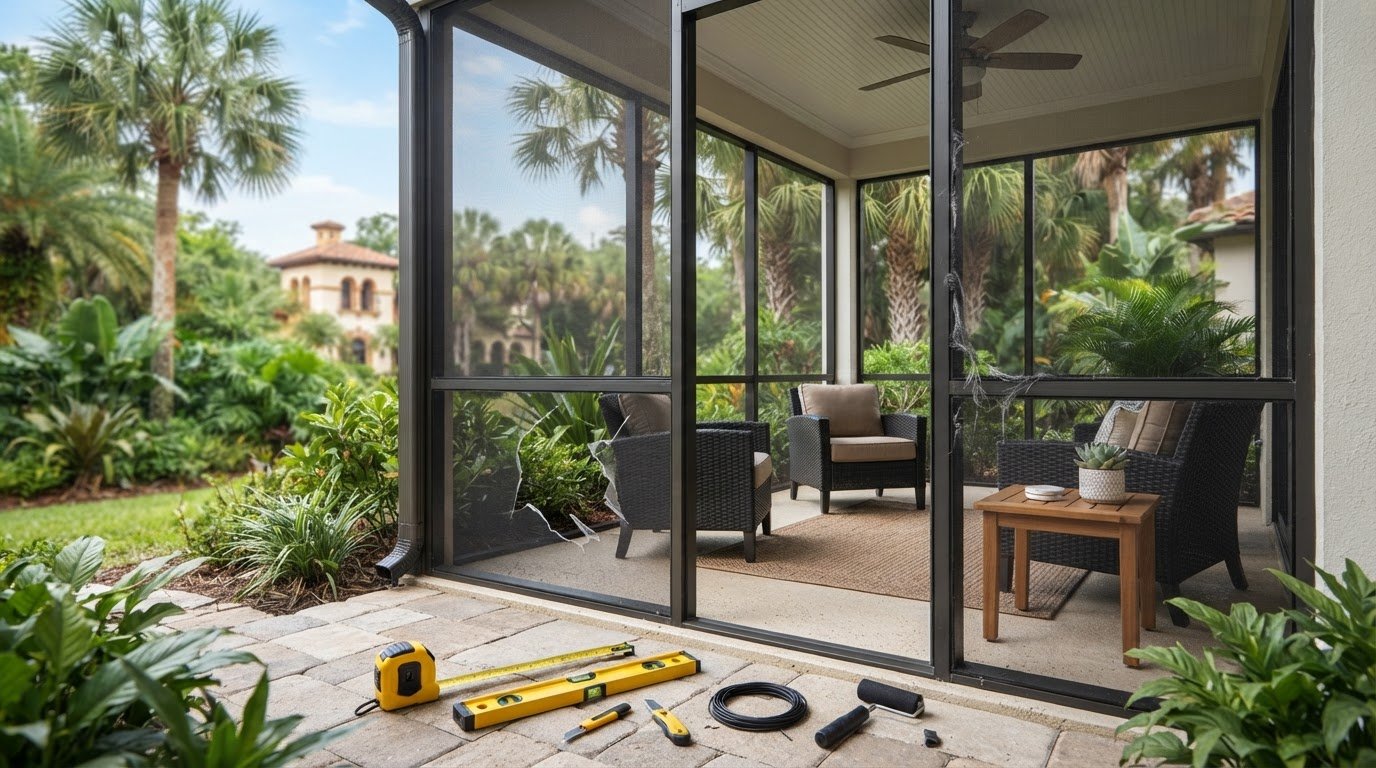
Screen enclosures also serve a practical purpose: they help limit insects and can moderate direct sun, depending on the screen material and layout. A complete re-screen or timely repair can keep an enclosure useful as mesh wears or becomes damaged.
Defining Your Outdoor Living Goals
Start by deciding how you’ll use the space. A pool enclosure creates a screened area around the pool; a patio cover provides overhead shelter; and a pergola offers a more open structure for shade and definition. These options aren’t interchangeable. Consider sun exposure, desired privacy, and how much open sky you want. Ask about screening options suited to your privacy needs, and confirm the specific performance of any proposed material.
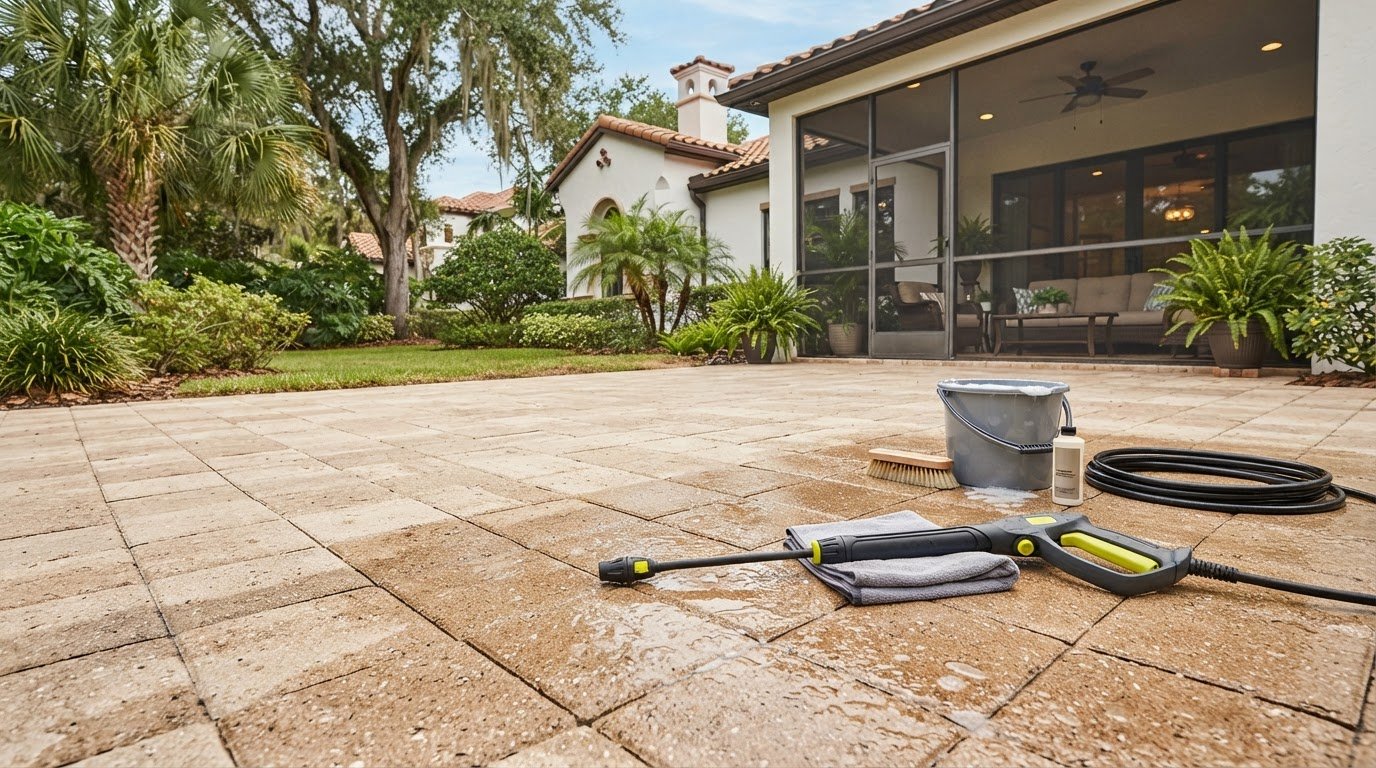
Next, consider how the ground surface connects each zone. Paver patios can define seating or dining areas and coordinate with an enclosure or patio cover. A cohesive plan accounts for circulation, furniture placement, and transitions to the home, not just the appearance of individual features. In Saint Augustine, a specialist in aluminum construction, patio covers, pergolas, and paver patios can help homeowners weigh these options against the property’s conditions and intended use.
Critical Engineering Standards for Coastal Florida Construction
In Saint Augustine and St. Johns County, a sturdy-looking enclosure isn’t enough to assess how it will perform. Wind pressure, site exposure, connections, and roof drainage all matter. Ask an outdoor living space contractor in Florida to explain the design basis for your project and provide relevant plans or documentation. The phrase “hurricane-rated” alone doesn’t tell you what conditions a structure was designed to withstand.
Wind Loads and Fastener Integrity
Wind design depends on the site and structure, so don’t assume one rating applies throughout North Florida. Florida’s 9th Edition Building Code is scheduled to take effect December 31, 2026. Ask which code edition applies to your project and how the contractor will confirm the required design criteria. Inspect existing connections, too. Rusted fasteners are a warning sign that calls for professional assessment, though rust alone doesn’t establish the condition of the entire enclosure.
Salt air and moisture can corrode unsuitable screws and weaken the connections that hold an aluminum frame together. Specialized Tapcon replacement can restore secure anchoring when existing concrete fasteners have deteriorated, provided the substrate and replacement method are appropriate. Properly specified stainless-steel or ceramic-coated fasteners resist corrosion and help preserve connections, reducing one factor that can contribute to enclosure failure during storms.
Enclosures, Screens, and Roof Performance
Ask how the proposed enclosure is engineered for the property’s wind exposure. Don’t rely on a broad promise of protection against “Category 3 and beyond.” Screen materials also vary. Compare manufacturer specifications for strength, openness, and intended use instead of assuming high-tenacity polyester is right for every frame. Correct installation and even screen tension matter, since slack or uneven panels can be more vulnerable to wind stress. For repair or replacement planning, see this guide to pool cage screen replacement.
For an elite roofing system, ask how the roof assembly manages heavy rain, sheds water, and connects to its supporting structure. Soffit and fascia deserve attention as well. Sound installation helps protect roof edges and eaves, while poor detailing can leave vulnerable gaps or direct water where it shouldn’t go. Discuss how these components will work with the patio cover and home.
Check the Whole Site
Engineering doesn’t stop at the frame. Consider how paving, drainage, and nearby planting affect water movement around the outdoor area. The University of Florida IFAS Extension’s Florida-Friendly Landscaping™ guidelines can help inform landscape choices. A local specialist can also assess enclosure repairs and Tapcon replacement as part of maintenance planning. Learn more from North Florida Screen Enclosures.
Vetting an Outdoor Living Space Contractor in North Florida
Choosing an outdoor living space contractor in Florida takes more than comparing photos and totals. Look for relevant experience with aluminum enclosures, patio covers, screening, and the connections that secure them. A specialist who regularly works on outdoor structures is more likely to recognize details a general remodeler may not routinely address, from corroded anchors to screen fit and frame assembly.
Verify Credentials and Local Experience
Before discussing design, ask for the contractor’s license information and verify it through the Florida Department of Business and Professional Regulation. Request proof of insurance, then confirm that the policy is current and appropriate for the work. Ask for references from homeowners in or near Saint Augustine and, where possible, examples of similar projects. A useful portfolio includes close-up views of frames, fasteners, screen installation, and finished connections, not only attractive wide-angle photos.
Use these questions to assess whether the contractor understands the project:
Who confirms permitting requirements for my property in St. Johns County, and what documents will I receive?
What aluminum specifications and fastener types are proposed for this coastal site?
Do you provide maintenance work, such as complete re-screens?
Look for clear, specific answers. If a contractor can’t explain how the materials, installation approach, and approvals relate to your property, ask for clarification before signing.
Read the Quote, Not Just the Total
Compare proposals line by line. One estimate may describe the aluminum and screen in detail, while another leaves those specifications unclear. Ask each contractor to identify the proposed frame dimensions or gauge, screen type, fasteners, anchoring approach, and included work. If bids differ substantially, ask what accounts for the difference in scope or materials rather than assuming the lower amount covers the same project.
Be cautious of vague descriptions, pressure to commit quickly, or an estimate that omits repairs to existing connections or other visible damage. A sound quote should make exclusions and assumptions understandable. For enclosure repairs, ask what will be inspected and replaced, and how the contractor will determine whether the existing frame can be retained.
Clarify Coordination and Maintenance
If your plans include pavers or concrete alongside an enclosure or patio cover, confirm which work is included in the contract and who coordinates any separate trades. Don’t assume expertise in one part of the project covers every other part. North Florida Screen Enclosures specializes in aluminum construction, hardscaping, and maintenance, including Tapcon replacement and re-screening. A clear scope, relevant references, and detailed specifications help you compare contractors on workmanship and accountability, not price alone.
Planning Your Custom Outdoor Environment in Saint Augustine
Planning for a coastal property means accounting for more than the view. In Saint Augustine, salt spray, strong sun, and heavy summer rain can influence material choices, shade, airflow, and drainage. Before settling on a layout, check your HOA’s current architectural guidelines and ask what drawings or approvals it requires. Confirm local permitting requirements separately. HOA approval and government approvals are different steps.
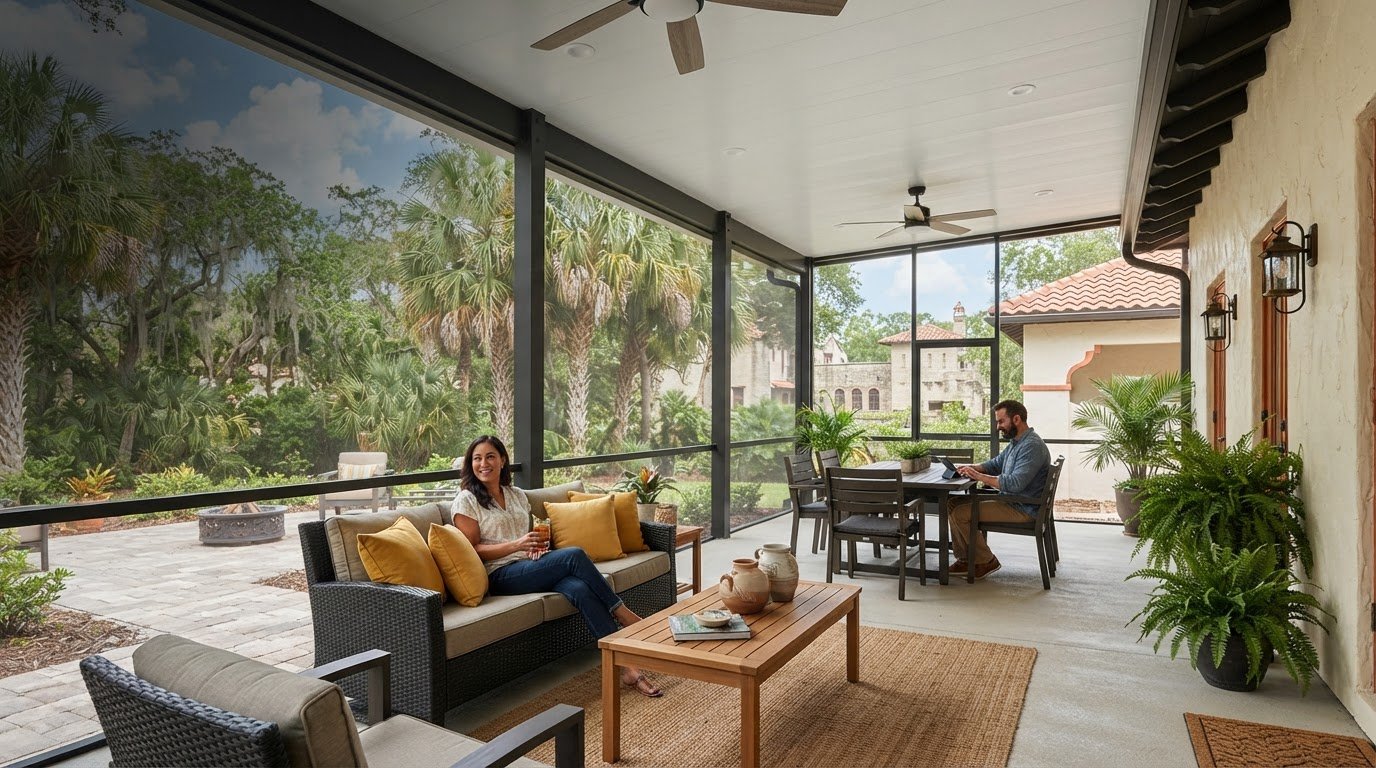
Match the structure to how you want to use the space. A screen enclosure can help keep insects out while maintaining airflow. A patio cover with an elite roofing system provides overhead shelter, while a pergola offers a more open balance of shade and sky. Consider the sun’s path during the hours you expect to use the patio. For an exposed coastal view, aluminum balcony railings can define an edge while keeping the design visually open. Ask about options suited to the site and applicable requirements.
Plan for Coastal Conditions and Water Flow
Choose materials and finishes with the site’s exposure in mind, and ask how routine cleaning and inspection can help you monitor salt-related wear. In screened lanais and pool enclosures, layout matters too: openings and surrounding walls can affect airflow. Map where rainwater currently collects, where downspouts discharge, and how a new patio or cover could change runoff. Resolve drainage questions before construction rather than after the surface is installed.
Coordinate Hardscaping and Structure
Plan concrete, pavers, and aluminum construction as a coordinated sequence. The base, finished elevations, and structural anchor locations should be understood before the enclosure or cover is installed. Depending on the design, some concrete or anchoring work may need to come before the frame, while final paving may follow. Ask the project team to clarify the order and how each trade’s work connects. Explore ideas in this paver patio design guide.
Think ahead, but distinguish future possibilities from confirmed scope. If you may later add lighting or motorized screens, ask the appropriate contractors what clearances, wiring routes, or structural provisions should be planned now. Don’t assume those features are included in an enclosure or patio-cover proposal unless the written scope says so.
A clear plan helps an outdoor living space contractor in Florida coordinate finishes, drainage, and structural details before work begins. To review aluminum structures, patio covers, or paver patio options for your project, explore North Florida Screen Enclosures’ services.
The North Florida Screen Enclosures Advantage
Outdoor construction in Saint Augustine calls for practical knowledge of local conditions and attention to details that affect service life. North Florida Screen Enclosures focuses on aluminum construction, including pool enclosures, aluminum balcony railings, pergolas, and patio covers with elite roofing systems. Its work centers on outdoor structures rather than a broad range of unrelated remodeling.
For homeowners comparing an outdoor living space contractor in Florida for enclosure work, a focused service offering can make it easier to discuss a project’s specific needs. Start with concrete questions: What condition are the existing anchors in? Does the screen need full replacement or a repair? How will the patio cover or enclosure suit the intended use of the space? Clear answers help you understand the proposed work and its purpose.
Why Local Specialization Matters
Coastal air, humidity, sun, and seasonal storms all influence how outdoor structures are used and maintained. A Saint Augustine-based specialist brings a local perspective to projects involving aluminum frames, screens, roofing systems, and hardscaping. Look for a team that explains recommendations plainly, documents the scope, and treats structural details as seriously as appearance. Durability depends on sound choices and workmanship, not just a finished look.
Maintenance matters after construction, too. Worn or damaged mesh can reduce an enclosure’s usefulness, while corroded or deteriorated anchors deserve assessment. North Florida Screen Enclosures offers complete re-screens, screen enclosure repairs, and Tapcon replacement. Its pool enclosure repair information explains how repair and replacement work can support an enclosure’s continued function.
Start Your Outdoor Project with a Clear Scope
Before requesting a quote, note what you want the space to do, where you need shade or screening, and whether you’re considering a new enclosure, patio cover, paver patio, or repairs to an existing structure. Photos and a list of concerns, such as loose anchors or damaged screens, can help define the conversation. Ask what the proposed work includes, what may require separate coordination, and which approvals you should confirm for your property. Don’t move forward based on assumptions about materials, scope, or permitting.
For a project-specific discussion of pool enclosures, patio covers, re-screening, Tapcon replacement, or related outdoor work, contact North Florida Screen Enclosures for a custom quote.
Build an Outdoor Space You Can Rely On
A lasting outdoor environment starts with choices suited to the North Florida coast. Prioritize materials and connections designed for local conditions, verify a contractor’s experience with aluminum structures, and plan approvals, drainage, and maintenance before work begins. These steps can help protect your investment and make the finished space more useful throughout the seasons.
Choosing an outdoor living space contractor Florida homeowners can trust means looking for specialized knowledge as well as clear communication. North Florida Screen Enclosures is a locally owned Saint Augustine specialist in aluminum construction, patio covers with elite roofing systems, and related outdoor work. Services also include maintenance and repairs, such as Tapcon replacement, screen enclosure repairs, and complete re-screens. Ask specific questions about your project, materials, scope, and applicable approvals so you understand the work before moving forward.
Ready to discuss a pool enclosure or patio project? Request a professional consultation from North Florida Screen Enclosures and take the next step toward an outdoor space planned around your needs.
Frequently Asked Questions
What is the best material for an outdoor living space in Florida?
Aluminum is a practical choice for outdoor frames and railings in Florida because it won’t rot like wood and is less prone to rust than untreated steel. Material selection still depends on the feature: pavers can suit patio surfaces, while screens, roofing, and fasteners have different requirements. In Saint Augustine’s coastal environment, ask about material specifications, connections, and maintenance instead of relying on a broad “weather-resistant” description.
How often should I have my pool enclosure re-screened?
There isn’t one re-screening schedule that fits every pool enclosure. Sun exposure, weather, nearby vegetation, screen material, and routine care all affect how long mesh remains serviceable. Inspect for tears, loose or sagging panels, and damaged spline or frame areas. Small problems may call for repair, while widespread wear can make a complete re-screen worth discussing with a qualified contractor in Saint Augustine.
Do I need a permit for a screen enclosure in Saint Augustine?
Permit requirements depend on the project and property, so confirm them with the City of St. Augustine or the relevant St. Johns County building department before construction. Don’t assume an enclosure is exempt because it’s attached to an existing home or patio. Ask the contractor who will verify applicable requirements, prepare any needed documents, and clarify whether HOA approval is also required. HOA approval does not replace government permits.
What is an elite roofing system and how does it differ from a standard patio cover?
“Elite roofing system” is a service description, not enough by itself to identify a specific roof design or performance level. The difference depends on the materials, construction, and features described in the proposal. Ask what roof assembly is included, how it handles rain and provides shade, and whether insulation performance is specified. Compare those details with the written description of any other patio-cover option before choosing.
Why are my pool enclosure screws rusting and is it dangerous?
Screws can rust when their material or protective coating isn’t suited to moisture and salt carried in coastal air. Corrosion may weaken a connection, but rust on one screw alone doesn’t establish that the entire enclosure is unsafe. Don’t ignore widespread rust, loose fasteners, or movement in the frame. Have a qualified enclosure professional assess the affected connections and determine whether repair or Tapcon replacement is appropriate.
Can a screen enclosure actually withstand a hurricane?
Some enclosures are designed for specified wind loads, but no screen enclosure should be described as hurricane-proof. Performance depends on site conditions, engineering, construction, anchoring, maintenance, and storm intensity. Ask for project-specific design information and confirm which building-code requirements apply to your property in Saint Augustine or St. Johns County. Have damaged frames, anchors, or screens assessed, since deterioration can affect how the structure performs.
How long does it typically take to install a new paver patio and enclosure?
There isn’t a reliable single timeline for a combined paver patio and enclosure project. Duration depends on design, site preparation, drainage, material selection, permitting, weather, and how the work is sequenced. Ask for a project schedule that identifies major stages, dependencies, and factors that could affect timing. Confirm whether patio preparation and enclosure installation are handled by one contractor or require coordination between separate teams.
Is aluminum better than wood for pergolas and balcony railings in coastal areas?
Aluminum is often a practical coastal choice because it doesn’t rot like wood and generally requires less protection from moisture-related deterioration. It can also avoid the rust concerns associated with unprotected steel, although aluminum components and connections still need suitable specifications and care. For pergolas or balcony railings in Saint Augustine, compare proposed materials, fasteners, finish, maintenance needs, and project-specific requirements before deciding.
Comments