


Patio Cover Drainage Solutions: How to Keep Rainwater Moving Away From Your Home

A gutter can collect rainwater and still leave the patio wet if runoff has nowhere suitable to go next. Effective patio cover drainage solutions create a complete path from the roof edge to a discharge point that carries water away from the home. If rain splashes onto your outdoor space or gathers beside the foundation, start by identifying where water leaves the cover, where it lands, and what happens after that.
Adding gutters may help, but the result depends on more than the gutter itself. Roof design affects how water leaves the cover, while grading and other site conditions determine where it flows afterward. A well-planned system considers both stages to help manage runoff and reduce persistent pooling.
This guide compares common drainage options, explains how roof shape and yard layout influence the choice, and outlines what to consider when planning a patio cover project in Saint Augustine and North Florida. By following the water’s route, you can make a more informed plan for a functional outdoor space.
Table of Contents
Patio cover drainage solutions: why runoff needs a clear path
How a patio cover drainage system moves water from roof to ground
Comparing patio cover drainage solutions for different site conditions
How to assess patio cover drainage problems before choosing a fix
Plan a durable patio cover drainage solution with the roof design
Patio cover drainage solutions: why runoff needs a clear path
Patio cover drainage is the planned route that carries rainwater off the roof and directs it to a suitable discharge point. The goal isn’t simply to keep water off the roof. It’s to control where runoff leaves the cover, how it travels across or below the ground, and where it can disperse without creating persistent wet areas.
A complete drainage path carries water from the patio cover’s roof edge to a suitable discharge point, without allowing it to collect beside the home or disrupt the patio. Gutters and downspouts may manage water at the roof, while grading, surface channels, or subsurface systems may help move it across the site. Roof drainage and yard drainage are different stages of the route, but they may need to be planned together.
What happens when patio cover runoff has nowhere to go?
Look for concentrated drips along one section of the roof edge, splashback against walls or patio furniture, and puddles that reappear after rain. Runoff may also wash soil or mulch from nearby landscaping, expose roots, or leave patio surfaces wet and slippery. These signs help show where water is traveling, but a puddle by itself doesn’t prove that the foundation or patio has been damaged.
Notice whether water drains away or remains in the same place. Persistent pooling can indicate that the surface or surrounding ground isn’t carrying water onward. To understand why, trace the full route from the roof edge to the place where water collects.
Why North Florida rain changes the planning conversation
In Saint Augustine, patio cover planning should account for intense rain and wind-driven water. Wind can affect where rain lands around an open-sided cover, while the roof’s size and pitch influence how much runoff collects and which edges release it. Nearby walls, paving, planting beds, and changes in ground level can then alter the water’s path.
That’s why the same roof drainage setup may behave differently on two properties. A broad roof surface can concentrate runoff at its edges; a sloped or exposed area may send water toward a particular side of the patio. Existing yard drainage matters too. For example, a French drain system is a subsurface approach that may be considered as part of broader site drainage, rather than as a substitute for collecting water at the roof.
For a new patio cover, plan the runoff route alongside the roof layout and how you’ll use the patio. For an existing cover, observe where water leaves the roof, where it lands, and where it finally collects. This helps distinguish a roof-edge issue from a yard-level one before comparing patio cover drainage solutions.
How a patio cover drainage system moves water from roof to ground
Rainwater follows the roof’s shape. A complete system manages each stage: the roof surface guides water, the roof edge or gutter collects it, downspouts convey it downward, and a discharge point releases it where it can move away from the patio and home. If any part is poorly positioned or unable to handle the flow, water can spill over, splash onto the patio, or collect in an unwanted spot.
Drainage works as a connected system, not a single accessory. Each component must carry water reliably from the roof to an appropriate discharge point. Gutter capacity and outlet placement should suit the roof area and the conditions around the patio, rather than follow a one-size-fits-all layout.
Roof surface: Pitch guides water toward an edge or designated collection point.
Edge collection: Gutters capture runoff along the roof edge.
Conveyance: Downspouts carry collected water toward ground level.
Discharge: Extensions or other site features direct water onward.
Gutters and downspouts: collecting and directing roof runoff
Gutters form a collection channel at the roof edge. Downspouts connect to the gutter outlets and carry water down, but their location determines where that flow reaches the ground. An outlet beside a walkway may leave it wet; one aimed toward a low spot may contribute to pooling. Plan outlet locations around the patio and yard so the system doesn’t simply relocate the runoff problem.
Leaves and other debris can obstruct gutters or downspouts and affect how well they convey water. Watch for overflow, uneven discharge, or visible blockages from the ground, and clear buildup as needed.
Roof pitch, flashing, and discharge points
A roof’s slope determines how water travels across its surface and which edge receives the flow. The layout matters too: adjoining roof sections or changes in direction can concentrate water in particular areas. A drainage plan should account for those collection points so the gutter and outlet arrangement can handle the runoff the roof directs toward them.
Where a patio cover meets an adjacent structure, flashing helps manage the transition and direct water away from the joint. At ground level, downspout extensions or splash blocks can spread or redirect concentrated discharge instead of letting it strike the same spot beside the patio. They still need to release water where the site can carry it onward.
For a new cover, tracing this route before settling roof and support placement can prevent drainage details from becoming an afterthought. Custom patio cover planning can account for roof layout and how the outdoor space will be used, helping align the cover with a practical runoff path.
Comparing patio cover drainage solutions for different site conditions
The right approach depends on where the water begins and where it needs to go. Gutters and downspouts manage runoff at the roof; grading, channels, and subsurface drainage address water after it reaches the ground. These methods can work together, but one doesn’t automatically solve the other problem. A gutter can collect roof runoff effectively and still discharge it into a low spot beside the patio.
Use this comparison as a starting point. The right combination of patio cover drainage solutions depends on the roof layout, patio surface, surrounding ground, and a workable route for discharge.
When gutters and downspouts may be the primary solution
Gutters and downspouts may be the main roof-level measure when runoff falls in concentrated bands from the cover and needs controlled conveyance. Their layout should account for roof edges, corners, and obstacles that may affect where outlets can go. Just as important is the destination: collecting water at the eave helps only if the downspout releases it where the site can carry it onward.
When grading or a drainage channel may also be needed
If water spreads across a patio or walkway, grading may guide surface flow away from areas people use. Where runoff crosses paving, a surface channel may intercept it before it reaches a doorway or low point. Subsurface drainage is a site-dependent option, not a default fix. Persistent pooling or unclear underground flow calls for assessment of the broader site.
Think of the roof and yard as connected parts of the plan, not interchangeable drainage problems. Match the solution to the water’s observed route and the property’s practical discharge options.
How to assess patio cover drainage problems before choosing a fix
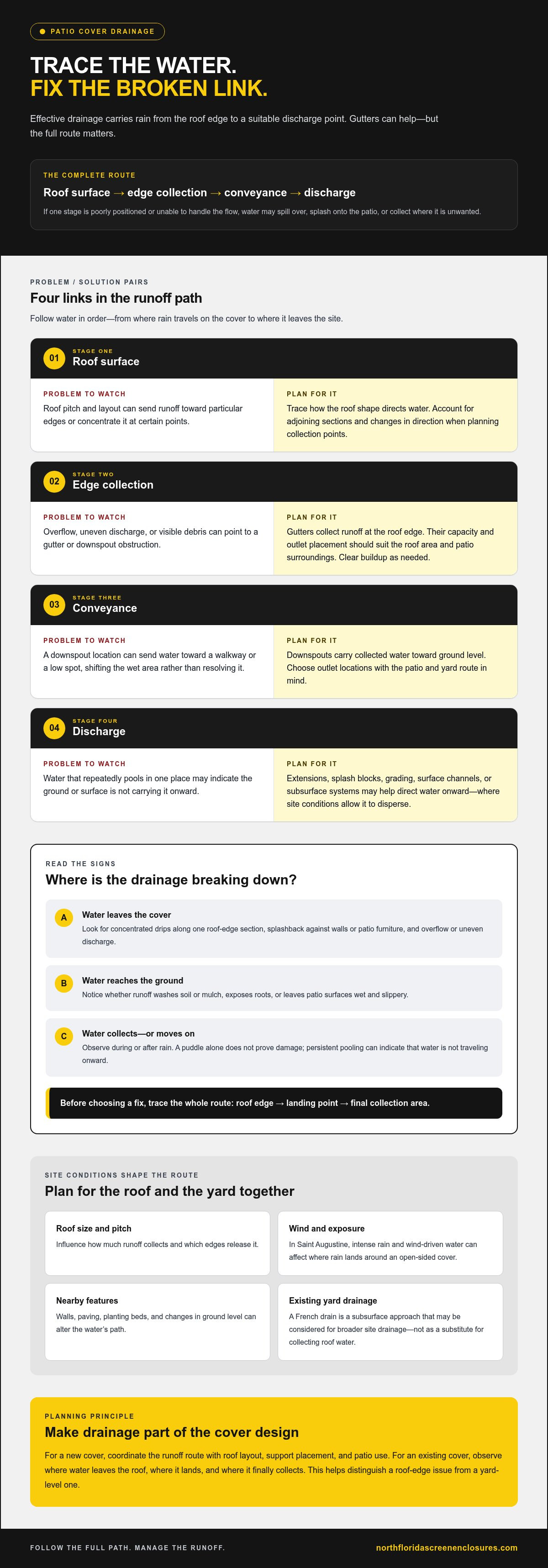
Start by observing, not by selecting a drain or changing the roof. During or after rainfall, follow water from the cover to the ground and note where it changes direction, slows, or collects. This record can help distinguish a roof-runoff issue from a yard-water problem, so patio cover drainage solutions address the source rather than just the most visible puddle.
Stay at ground level and choose a safe viewing spot. Don’t climb onto the roof or reach over wet, slippery surfaces to inspect components. Clear notes about the water’s route can make the next planning step more informed.
A safe, step-by-step runoff observation checklist
Observe during rain if conditions allow, then check the area afterward. Look for recurring patterns rather than treating one isolated puddle as a diagnosis. Record what you see and where it occurs.
Locate the source. From the ground, note where water leaves the patio cover, gutter, or a nearby roof edge.
Mark the landing area. Look for concentrated drips, splash marks on walls, or water striking the same section of paving or soil.
Trace its route. Note whether runoff moves across the patio, follows a walkway, or runs toward a garden bed or wall.
Record repeated effects. Look for puddles that return, washed-out soil, displaced mulch, or water crossing a walking route.
Note nearby features. Include doors, walls, landscaping, hard surfaces, and any existing drains or downspout outlets along the route.
A photo taken safely from the ground can help you compare conditions after different rain events. Keep the observation factual: “water gathers at the patio corner” is more useful than assuming the foundation is damaged.
Questions that help match the fix to the problem
Before choosing a component, work out which surface is contributing water and what happens after it lands. Runoff may come from the patio cover, an adjacent roof, or the yard itself. These sources can overlap, so consider the whole route rather than attributing every wet area to the cover.
Does water come from the patio cover edge, a nearby roof, or a low area in the yard?
Where are the roof’s slopes, existing gutters, and downspout outlets positioned?
Does the patio surface appear to guide water toward a door, wall, or frequently used path?
Where could collected water discharge without simply creating another pooling spot?
Visible symptoms help describe the problem; they don’t establish the cause or determine whether grading, a channel, or subsurface work is appropriate. If the water’s origin or route remains unclear, a broader site assessment can inform the plan before construction details are settled.
For a new project, bring these observations into your custom patio cover planning so roof layout and drainage can be considered together.
Plan a durable patio cover drainage solution with the roof design
Drainage is most effective when it’s part of the patio cover plan from the start, not a detail added after the roof is installed. Roof configuration influences where rainwater travels and where collection components can fit. Support placement, nearby walls, doors, and the intended use of the patio also affect practical locations for gutters, downspouts, and discharge routes.
Before construction details are finalized, identify where collected water can go once it reaches the ground. An outlet that empties beside a doorway, across a walking route, or into a low area may simply shift the problem. Considering roof runoff and its destination together helps align the cover with the surrounding site. For broader context on roof configuration and patio cover design, explore elite roofing for Saint Augustine patio covers.
Coordinate drainage with patio cover design and installation
Start with the roof’s shape and the direction its surfaces will guide water. Those choices influence which edges collect runoff and where drainage components can be placed. Then consider how people will use the space: a downspout or discharge point shouldn’t send water onto seating, toward a door, or across a regularly used path. Planning these relationships before installation helps keep the drainage route compatible with the finished patio.
A useful planning discussion can address several connected decisions:
Roof layout: Identify where slopes direct water and which edges need collection.
Support locations: Consider how posts and structural elements relate to gutters and outlets.
Patio use: Account for doors, seating, walking routes, and areas that should remain comfortable to use.
Discharge destination: Choose a route that carries water away without creating a new nuisance elsewhere.
When to plan drainage alongside patio and yard improvements
Coordinate the work if roof runoff lands on paving, or if yard water already crosses the area where the patio cover is planned. Hard surfaces shape how surface water travels, so a change to the patio can affect the route of runoff around it. Reviewing Florida paver patio design ideas can help homeowners consider hardscape layout as part of the broader outdoor plan.
For Saint Augustine homeowners, North Florida Screen Enclosures designs and installs custom patio covers and elite roofing systems. The company also builds paver patios and concrete features, making it possible to consider the cover and surrounding hardscape together as part of an outdoor project. Plan the roof layout, patio use, and intended runoff route before construction details are finalized.
Make drainage part of your next patio cover plan
A well-planned outdoor space should work for the way you live, not just look complete on installation day. As you consider your next project, think about how you want to use the patio in different weather and what a dependable drainage path should protect, from entryways to seating areas. These priorities can help shape patio cover drainage solutions around your home instead of relying on a generic layout.
North Florida Screen Enclosures is locally owned and operated in Saint Augustine, with a focus on patio covers and elite roofing systems. The company designs and installs custom covers and can plan the roof layout around how you intend to use the space. Share your goals for the patio and the runoff patterns you’ve observed to start planning an outdoor area that works for your home.
Discuss your patio cover project with North Florida Screen Enclosures, and plan an outdoor space with the roof design and drainage route in mind.
Frequently Asked Questions
Do all patio covers need gutters?
No, not every patio cover needs gutters. Whether they’re appropriate depends on how the roof sheds water and whether runoff can disperse without soaking an entrance, patio edge, or planted area. Some layouts may direct water to a suitable open area; others can concentrate it where it causes inconvenience. For Saint Augustine homes, consider how the cover interacts with nearby walls and outdoor spaces before deciding whether gutters belong in the design.
Can patio cover runoff damage a house foundation?
Runoff can contribute to persistent wet conditions near a foundation, but a puddle alone doesn’t establish that damage has occurred. Pay attention to recurring water against the same wall, damp areas that remain after surrounding surfaces dry, or soil that repeatedly washes away. Those observations are reasons to look more closely at the site, not a diagnosis. If you see changes to the home or its surrounding ground, arrange an appropriate assessment.
Where should a patio cover downspout discharge?
A downspout should release water where it can disperse without creating another problem. Avoid aiming it at an entrance, across a frequently used path, or toward the base of the home. For example, a downspout beside a paver patio may need a route that doesn’t leave the walking surface slick or direct water toward a low corner. The right destination depends on the property’s slope and available drainage path.
Can I add gutters to an existing patio cover?
Often, gutters can be added to an existing patio cover, but the roof edge and support details affect how they can be attached. Check whether the roof has a suitable edge for collection, where downspouts could fit, and whether their outlets have a useful destination. A gutter that can’t convey water effectively or discharges beside a doorway may not address the underlying concern. Consider the cover and proposed route together before installation.
Why does water still pool under my patio cover when it has gutters?
Gutters collect water at the roof edge, but pooling can continue if the outlet releases it nearby or if water is entering from another source. During rainfall, note whether the puddle appears below a downspout, beneath an adjacent roof edge, or in an area where water crosses the patio. Also look for gutter overflow or a visible blockage from the ground. These clues help identify what to investigate next.
Are French drains suitable for patio cover drainage?
Sometimes, but a French drain isn’t automatically the right way to handle roof runoff. It’s a subsurface option that may suit a broader site-water issue if the ground conditions and discharge route support it. A direct connection from a downspout needs suitable design rather than assumption. If water pools despite roof collection, first distinguish runoff delivered from above from water moving through or across the yard before considering a buried system.
How can I reduce water splashing from a patio cover downspout?
Start by checking where the downspout releases water and whether it strikes bare soil, paving, or a planting bed. A properly directed extension or splash block can spread the flow and reduce impact at the outlet, provided it sends water toward a suitable area. If splash reaches a doorway or walking route, changing the discharge direction may help. Observe the area during rain from a safe spot, then reassess the result.

Comments