


Paver Patio vs. Concrete Patio in Florida: Which Is Right for Your Yard?

The smoother, simpler patio isn’t always the better fit for a Florida yard. In the paver patio vs concrete patio Florida decision, heavy rain, drainage, and shifting ground matter as much as appearance. A surface that suits one property may create upkeep concerns on another.
Both pavers and poured concrete can create a durable outdoor space, but they differ in how repairs are handled, what maintenance they may need, and the design choices they offer. It helps to weigh those differences against your yard’s conditions and how you plan to use the patio.
This guide compares the practical considerations, from runoff and slope to surface repairs and layout. North Florida Screen Enclosures is locally owned in Saint Augustine and provides both paver patio and concrete work. Each option can be planned around your property and the way you want to use your outdoor space.
Table of Contents
Paver Patio vs. Concrete Patio in Florida: What Is the Real Difference?
Both pavers and poured concrete can create a functional outdoor living space. The better fit depends on your preferred look, how you’ll use the patio, and the conditions on your property. In the paver patio vs concrete patio Florida comparison, neither material is a universal winner. The surface is only one part of a well-planned patio.
How pavers and poured concrete are constructed
Pavers are separate units arranged over a prepared base to form a connected surface. They may be made from concrete or other materials, and their shapes and joint patterns affect the finished appearance. For a basic overview, see this description of an interlocking concrete paver.
Poured concrete, by contrast, creates one continuous slab. It’s placed and finished to suit the patio’s intended use and appearance. Pavers create a patio from individual pieces; poured concrete forms one continuous surface.
Which patio qualities matter most in Florida?
Rainfall, drainage, sun exposure, and everyday outdoor use all belong in the planning discussion. Look at the yard’s slope, existing runoff patterns, and the surfaces around the proposed patio. These factors can affect where water flows. Conditions vary across Saint Augustine and from property to property, so base the material choice on the site rather than assumptions about the region.
Preparation and workmanship matter, too. A suitable surface can still have problems if the ground beneath it or water flow around it hasn’t been considered. Plan how the patio will connect to the home and yard, and how it will support everyday activities.
Use the comparison as a starting point, not a final verdict. Weigh your preferred appearance, likely repair approach, and plans for the space alongside drainage and site preparation. Considering these details together helps make the patio a practical part of your yard.
How Florida Weather and Drainage Affect Pavers and Concrete
Water management is essential when planning a patio in Florida, but the surface material alone doesn’t determine where rain goes. Before choosing pavers or concrete, observe how water moves across the yard, whether it collects near the home, and how the patio will meet the surrounding ground. Drainage and preparation should inform the material choice.
Rainfall, grading, and where water flows
Grading helps direct surface water, while drainage planning addresses where that water can go. If rain already pools in a low area or flows toward the house, installing a patio without accounting for those patterns can leave the underlying issue unresolved. A site-specific assessment is particularly useful if the yard has noticeable slopes, soft areas, or recurring drainage challenges.
Material selection and water management are related, but they aren’t interchangeable. Some paver systems are designed to let water pass through joints and layers beneath the surface. That doesn’t mean every paver patio is permeable or that it replaces appropriate grading. The University of Florida IFAS guide to Permeable Pavement Systems explains how these systems are designed to manage water. Poured concrete has a continuous surface, so its placement and surrounding drainage plan also need careful consideration.
Ground movement and cracking are possibilities to assess, not inevitable results of Florida conditions. Changes in the supporting ground may affect either patio, while a rigid concrete slab can show cracks if movement occurs. Individual pavers may shift or become uneven. Proper preparation and attention to water flow help address site conditions before they become surface concerns.
Heat, sun exposure, and everyday outdoor use
Sun exposure affects how comfortable a patio feels and when you use it. Consider which areas receive direct sunlight, where you’ll place seating, and whether shade should be part of the plan. A patio cover or pergola can be planned alongside the surface if you want a more comfortable area for dining or relaxing.
Think about routine use, too. A space for frequent foot traffic, outdoor furniture, or entertaining may call for different layout and shade decisions than a small sitting area. In Saint Augustine, conditions vary from one property to the next, so plan around the actual yard rather than a one-size-fits-all assumption about Florida weather.
North Florida Screen Enclosures provides paver patio and concrete work, with the choice shaped around the property and intended use. Explore patio options for your outdoor space while considering drainage, shade, and how you want to use the finished area.
Pavers vs. Concrete: Compare Repairs, Upkeep, and Design Flexibility
Repair needs and day-to-day care can influence which patio is the better long-term fit. Pavers and concrete can both show wear or damage, but the way a problem is addressed depends on the surface, its condition, and what caused the issue. Neither option is maintenance-free or immune to damage.
What repairs may look like for each patio surface
Because pavers are separate units, a problem limited to a small area may allow targeted work on the affected pieces. If units have shifted or become damaged, work on the surrounding area may also be needed to create a stable, even finish. The right approach depends on the issue’s extent and location.
Concrete repairs are different because the surface is a continuous slab. The response depends on whether damage is localized or extends across a larger area, and a repaired spot may remain visible. For either material, the result can vary with the original material, surface finish, exposure, and site conditions. Consider both how damage could be addressed and how noticeable a repair might be.
How appearance and upkeep shape the decision
Pavers offer a modular look, with individual unit shapes, colors, and arrangements creating visible patterns. That flexibility can help define the patio’s character or complement features around the home. For layout and appearance ideas, browse this Florida paver patio design and installation guide.
Concrete creates a more continuous visual field, while its finish influences the overall look and feel. Upkeep for either surface depends on installation, sun and rain exposure, how the patio is used, and your preferences. Paver joints may need attention; concrete care depends on its finish and condition. The University of Florida IFAS resource on permeable pavement systems also provides context on maintenance considerations for permeable surfaces.
For the paver patio vs concrete patio Florida decision, compare your preferred appearance with your repair expectations and willingness to maintain the surface. North Florida Screen Enclosures provides both paver patio and concrete work, so the plan can reflect your property and how you intend to use it.
How to Choose the Right Patio Surface for Your Florida Home
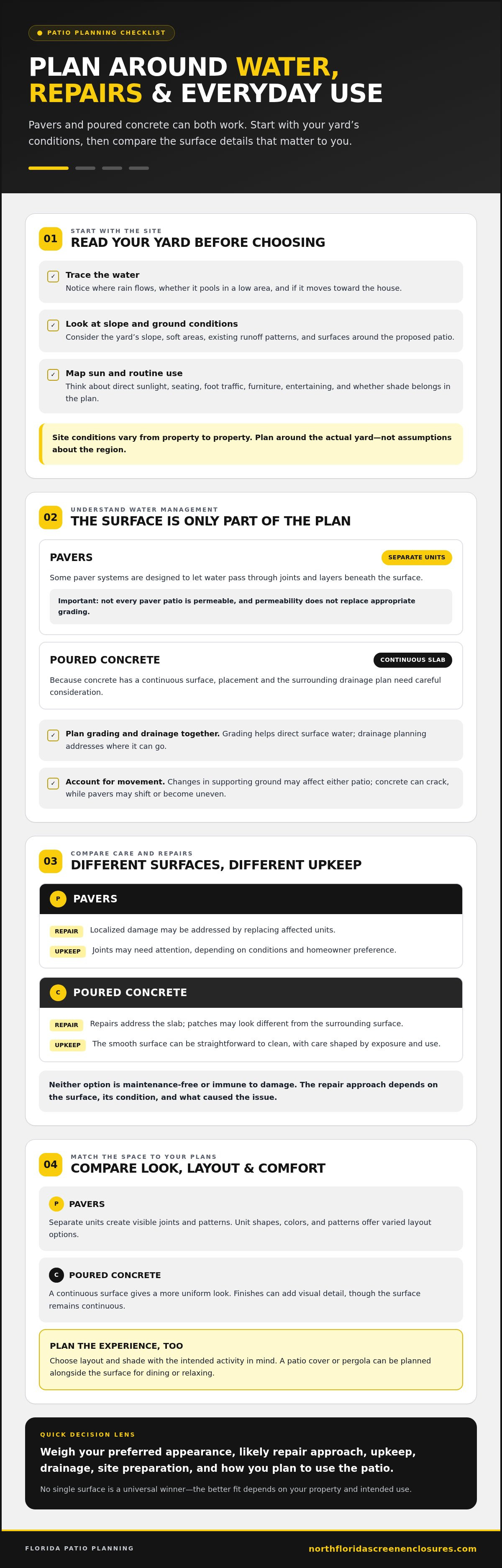
A clear decision process helps you compare pavers and concrete without treating either as the automatic choice. Start with how the patio will function, then assess the property and your upkeep preferences before choosing a look. Consider drainage and preparation before settling on a finish.
Match the surface to how you use the patio
Picture a typical day in the space. Dining may call for room for a table and clear paths around it. A lounge area may prioritize seating and space to relax, while entertaining may benefit from distinct zones. Poolside circulation also affects how people move between the patio and pool.
Next, consider the appearance you prefer. Pavers create visible patterns from individual units, while concrete offers a continuous surface with different finish options. If you value a modular look and flexibility in arranging units, pavers may suit your design priorities. If you prefer a more uniform visual field, concrete may be a better match. These are preferences, not universal rules. Explore the Florida paver patio design and installation guide for more ideas.
Review the site and your maintenance preferences
Before choosing the surface, consider the yard’s slope, where rainwater currently flows, and whether water collects in particular areas. Preparation and drainage planning matter for both materials. Then weigh the repair approach you prefer: localized paver work may involve individual units, while concrete repairs address a continuous slab and can leave a visible difference.
Think about the care you’re prepared to provide, too. Sun and rain exposure, everyday use, and your expectations for appearance all affect upkeep. There isn’t one maintenance routine that fits every patio, so include your preferences in the decision rather than assuming either material will need no attention.
Plan the patio as part of a larger outdoor space
A patio’s comfort depends on more than the ground surface. Shade and overhead coverage can influence how often you use the area and where dining or seating makes sense. If you’re considering a covered patio, this Saint Augustine patio cover roofing guide can help you think through the relationship between the patio and overhead protection.
In the paver patio vs concrete patio Florida decision, consider intended use, site conditions, repair preferences, and appearance together. North Florida Screen Enclosures provides paver patio and concrete work in Saint Augustine. Explore outdoor living options as you plan a patio for your property and the way you want to use it.
Plan a Paver or Concrete Patio in Saint Augustine
The right patio plan starts with your property and how you want to use it, not a one-size-fits-all material choice. For the paver patio vs concrete patio Florida decision, compare drainage needs, preferred appearance, repair expectations, and intended use together. North Florida Screen Enclosures provides paver patio and concrete work in Saint Augustine, with planning tailored to the home, site, and selected outdoor use.
What to plan before patio construction
Before choosing a surface, outline the basics of the project:
Purpose: Decide whether the patio will be used mainly for dining, relaxing, entertaining, or connecting to a pool area.
Approximate layout: Consider the space needed for furniture, walking routes, and the activities you expect to happen there.
Existing features: Note how the patio should relate to the home, yard, pool, or other outdoor elements.
Site conditions: Include grading, drainage patterns, access to the work area, and the surrounding outdoor space in the plan.
These details help shape the surface choice and how the finished patio fits the property. A layout with several seating and circulation areas may call for different design priorities than a simple space for a small table. Address drainage and preparation early, before appearance becomes the deciding factor. Including the site conditions in planning helps align the design with the actual yard.
Explore patio construction with a local team
Pavers and concrete are both practical options for a customized outdoor space. Pavers may suit homeowners who want a surface formed from individual units, while concrete may fit those who prefer a continuous patio surface. The choice also depends on your expectations for future repairs and upkeep, along with the character you want the patio to add to your home.
North Florida Screen Enclosures is locally owned and works on paver patios and concrete as part of its outdoor-living and hardscaping services. Planning can account for the property’s conditions and how the patio will connect with broader outdoor improvements. That helps the finished space feel purposeful and connected to the home and yard.
Saint Augustine homeowners planning a patio can start a patio project conversation with the local team. Bring your ideas for use, layout, appearance, and drainage to help shape a plan for your outdoor space.
Choose a Patio That Fits Your Yard
The right answer to the paver patio vs concrete patio Florida question depends on how the surface fits your property and plans. Consider where rainwater flows and how the site should be prepared, then weigh your preferred appearance, repair approach, upkeep, and everyday use. Neither material is right for every yard, but both can support a well-planned outdoor space.
North Florida Screen Enclosures is a locally owned contractor based in Saint Augustine, providing paver patio and concrete work. Planning around your home and intended use can help create a practical patio that feels considered from the start.
Plan your Saint Augustine patio project with North Florida Screen Enclosures. Start with how you want to use the yard, then take the next step toward an outdoor space designed for your home.
Frequently Asked Questions
Are pavers or concrete better for a Florida patio?
Neither material is automatically better for every Florida patio. Pavers may suit homeowners who value a patterned look and the option to address localized issues by working with individual units. Concrete may appeal if you prefer a continuous surface. Your yard’s drainage, site preparation, intended use, repair preferences, and preferred appearance all matter. In Saint Augustine, the best fit depends on your property’s conditions and layout.
Do paver patios handle rain better than concrete patios?
Some paver systems can allow water to pass through joints, but not every paver patio is designed to be permeable. A concrete patio has a continuous surface, so planning should account for where runoff will go. Neither material solves drainage problems on its own. Consider the yard’s slope, existing water flow, and areas where water collects, then plan grading and drainage alongside the patio surface.
Can concrete patios crack in Florida?
Yes, concrete patios can crack, though cracking isn’t inevitable. Movement in the ground beneath a slab and other site conditions can contribute to cracking, so preparation and drainage planning matter. Pavers can also shift or become uneven. Plan around the property’s surface conditions and water flow rather than assuming either material will remain unaffected over time.
Are paver patios easier to repair than concrete?
Pavers can make localized repairs more targeted because individual units may be addressed when damage is limited to a small area. Concrete repair depends on the location and extent of damage, and a patched area may remain visible against the surrounding slab. The result for either material can vary with its finish, replacement materials, and site conditions. Neither surface is immune to damage.
Which patio needs less maintenance, pavers or concrete?
Maintenance depends on installation, exposure, how the patio is used, and your expectations. Paver joints may need attention, while concrete care depends on its finish and condition. Both surfaces can require upkeep over time. Consider how much attention you’re comfortable giving the patio and whether you’d rather monitor joints or maintain a continuous surface. Sun, rain, and everyday use also shape care needs.
Are pavers more expensive than a concrete patio?
Pavers can cost more than a basic poured concrete patio, but the actual project cost depends on the material, design, site preparation, and installation. More elaborate concrete finishes can also affect the comparison. Since costs vary by project, compare the full scope rather than judging by surface material alone. Weigh appearance, repair approach, and upkeep alongside the planned features.
How do I choose between pavers and concrete for a poolside patio?
Consider circulation, drainage, layout, and the look you want around the pool. Think about how people will move between the pool, seating, and home, and how the patio connects with the surrounding area. Pavers offer a modular appearance, while concrete creates a continuous surface. In Saint Augustine, site conditions and preparation should guide the final choice as much as design preference.
Comments