


Paver Patterns for Small Patios by Style, Cost, and Upkeep

A small patio can carry a traditional pattern without feeling crowded, provided the layout works with the space. Paver patterns for small patios can include herringbone, with each paver set at a 45- or 90-degree angle to its neighbor, or a diagonal layout set at 45 degrees. The key is choosing a pattern that supports the patio’s proportions rather than competing with them.
Complex layouts can add character, but in a compact area they may also feel busy or require more upkeep. The right choice depends on more than appearance: paver size, color, joint lines, material, and the number of cuts all affect the finished look and installation. This guide compares popular patterns, explains when simpler layouts work well, and shows how to weigh style, budget, and maintenance before choosing a design.
Table of Contents
Should small patios use complex paver patterns?
A complex pattern may work on a small patio if its shapes and joints suit the space. Herringbone, basketweave, and running bond are traditional options; straight, uniform joints preserve visual rhythm. For a narrow rectangular patio, align the pattern with its longest dimension to help the space feel deeper. A 45-degree diagonal can make it appear wider.
Pattern choice also affects movement and visual character. Herringbone places each paver at a 45- or 90-degree angle to its neighbor, creating an interlocking layout that can resist shifting, particularly under heavy vehicles and turning wheels. Basketweave alternates horizontal and vertical pavers for a woven texture, while running bond offsets each row. Block lattice combines 8-by-8-inch and 4-by-4-inch squares with 4-by-8-inch rectangles. Soldiered and plainweave layouts add other combinations of square and rectangular shapes.
For a smaller-scale example, large-format pavers measuring 24×24 inches or larger reduce joint lines. Square and rectangular units both work; the best choice depends on the patio’s proportions and the pattern’s repeat. Plan furniture locations before finalizing the layout, since a table or seating zone can hide pattern details. A perimeter border between 4 and 8 inches wide can frame the field without taking too much usable area.
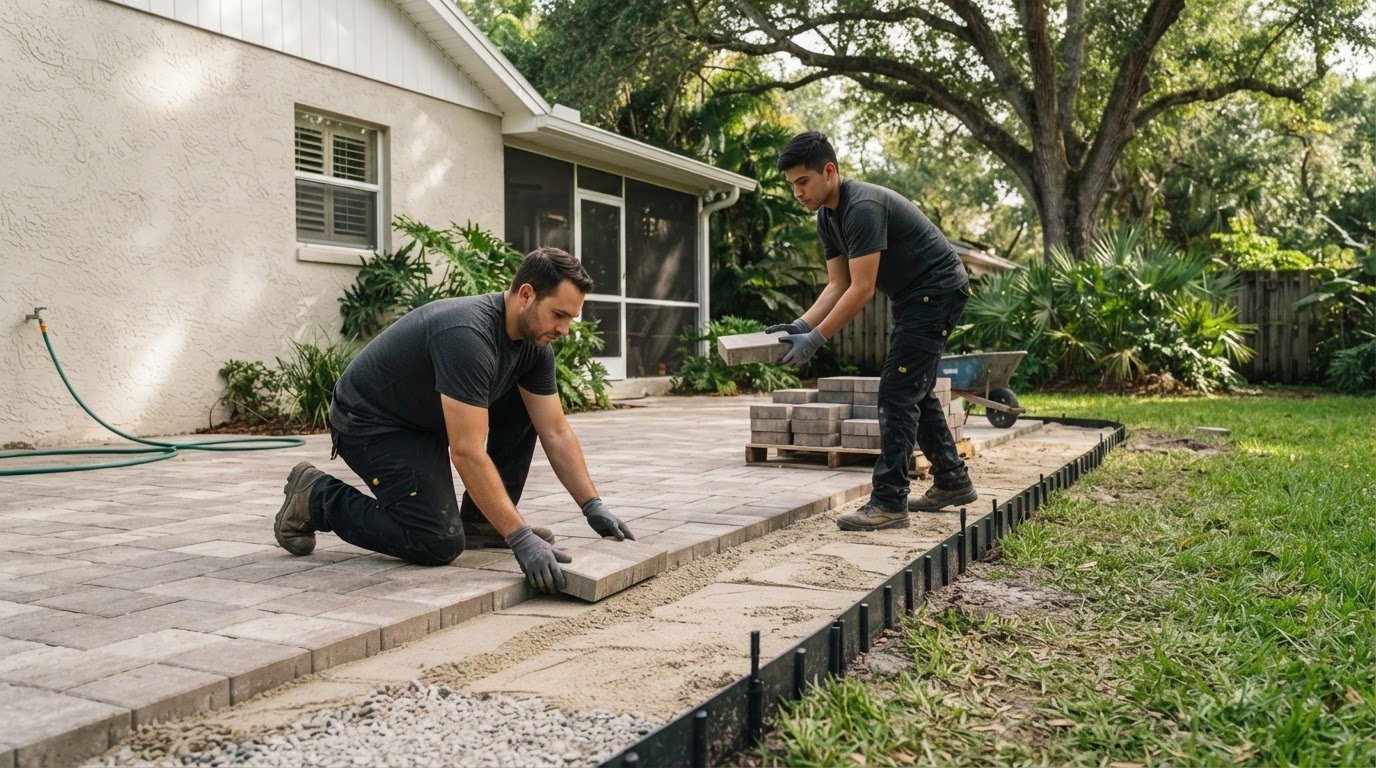
Drainage, slope, and local code requirements depend on the site and jurisdiction. Plan the installation to direct water away from structures, and check applicable local requirements. Base depth also depends on site conditions and intended use, so the base needs to be stable and properly compacted. Set two edge restraints before laying pavers, leaving the remaining edges open during installation.
Estimate the paver quantity by dividing the patio area by the coverage of one paver, then allow for cuts along edges and within the pattern. Complex layouts and irregular borders can increase the cutting allowance. For installation, establish the layout, start from a straight reference edge, and follow the pattern consistently. Fit the main field before making perimeter cuts. Herringbone or running bond can suit a rectangular area, while a diagonal layout may emphasize its width.
Material, color, budget, and maintenance considerations
Choosing paver patterns for small patios starts with how you plan to use the space. A smooth finish creates a more uniform visual field, while textured pavers add character. Texture also affects routine cleaning: debris can settle into deeper surface variation, making sweeping less straightforward. Coordinate paver colors with the house, planting, and nearby concrete so the patio feels connected to the rest of the yard.
Light colors can make a compact patio feel more open. Beige, light gray, and sand reflect more light and may help the space seem larger. Lighter pavers can brighten a shaded seating area, while darker colors create contrast and define a dining zone. Compare samples outdoors, since shade and direct sunlight affect how colors appear. A tone that relates to the home’s exterior helps the new surface fit its setting.
Color variation can soften a broad paved area and help individual marks blend into the surface. One consistent color creates a calmer visual field, while complementary tones add depth. In a herringbone layout, subtle variation can highlight the pattern without making every joint compete for attention. A contrasting border frames the paving; a related tone keeps the edge visually connected to the main field. Consider these effects together when choosing paver patterns for small patios.
Budget depends on material, pattern complexity, border details, and the cuts required by the patio’s shape. A simple rectangular layout may use pavers efficiently, while a detailed design around corners or furniture zones can require more precise fitting. Weigh the material and installation scope against routine sweeping and cleaning needs. Homeowners planning a broader outdoor space can consider how paver patio planning relates to its surroundings. Select the material, color, and texture as a coordinated set, then choose a pattern that suits the patio and the upkeep you expect.
Adjusting the grid for a basketweave pattern
Basketweave relies on a repeating grid, so begin with the patio’s finished dimensions. The pattern alternates paver directions to create a woven appearance. Before installation, map the repeat across the full rectangular surface, including edges that meet walkways or steps. This reveals where the pattern ends and whether the perimeter needs cuts.
For a no-cut arrangement, both patio dimensions should be multiples of 8 inches. A 4-foot-by-10-foot patio illustrates the fit: its width accommodates six 8-inch paver lengths, and its length accommodates fifteen. With those dimensions, the repeat can meet the edges without trimming pavers. If the measured space differs, shifting the grid may change where cuts fall, so plan the border and starting direction together.
Another grid adjustment begins by cutting 4 inches off the first grid in both directions. This establishes the starting layout for the basketweave pattern. Mark the square grid first, then check how the rectangular pavers alternate through the field. A consistent direction keeps the woven shapes aligned instead of allowing the repeat to drift as it reaches the patio edges.
Fit the layout to the setting. If a small patio connects to a straight walkway, align the basketweave repeat with the route for a continuous visual direction. In a square seating area, center the pattern around the main furniture zone to create balanced cuts at the edges. Planning this way helps avoid letting a narrow leftover strip dictate the finish.
Herringbone offers a different approach: each paver turns 45 or 90 degrees against its neighbor, creating a more directional field. Basketweave favors alternating horizontal and vertical pairs, so its grid needs careful coordination at borders. For either pattern, set out a dry section before installation, inspect the edge fit, and adjust the starting line before the full field is laid. A planned grid helps the finished aesthetic remain straight across the patio.
Traditional patio paver patterns
Traditional layouts create distinct character through the direction and repeat of each paver. Running bond offsets each row, producing a familiar surface that suits a narrow rectangular patio. Herringbone turns adjacent pavers at 45 or 90 degrees, adding movement while keeping the field visually connected. For a classic landscape, match the pattern’s direction to the main view from the house, guiding the eye toward the yard. A straight layout can emphasize length; a diagonal can make the patio appear wider.
Basketweave offers a more pronounced, woven format. Single basketweave alternates one horizontal paver with two vertical pavers; double basketweave alternates pairs of horizontal and vertical pavers. Pinwheel is another option: each paver sits at a 90-degree angle to its neighbor, with units rotated in alternating directions. On a small surface, placing the pinwheel at a seating zone can create a central focal point rather than spreading strong visual movement across the whole patio.
For a border, a soldier course places pavers in a continuous line around the field. A border between 4 and 8 inches wide can frame a small patio without overwhelming its usable area. Soldiered layouts combine square and rectangular pavers in a repeating pattern. Plainweave uses a different balance: large squares make up 57.1%, small squares 14.3%, and rectangles 28.6%. These proportions help explain each pattern’s visual rhythm.
Herringbone can fit securely along patio or driveway edges without requiring paver cuts, while pinwheel works best when its focal point has a clear location. Natural stone and concrete pavers create different looks, so choose a material and color that suit the home’s landscape. For a cohesive result, keep joints straight and uniform. Using the same paver material on connected walkways can create a continuous outdoor surface.
North Florida Screen Enclosures: Patio Covers / Elite Roofing Systems
North Florida Screen Enclosures builds paver patios, helping turn a chosen layout into a finished outdoor space. Once you’ve settled on a pattern, the patio can be planned as part of the broader setting. If shade or overhead coverage is also part of the project, Aluminum Patio Covers (Elite Roofing Systems) can complement the paved area.
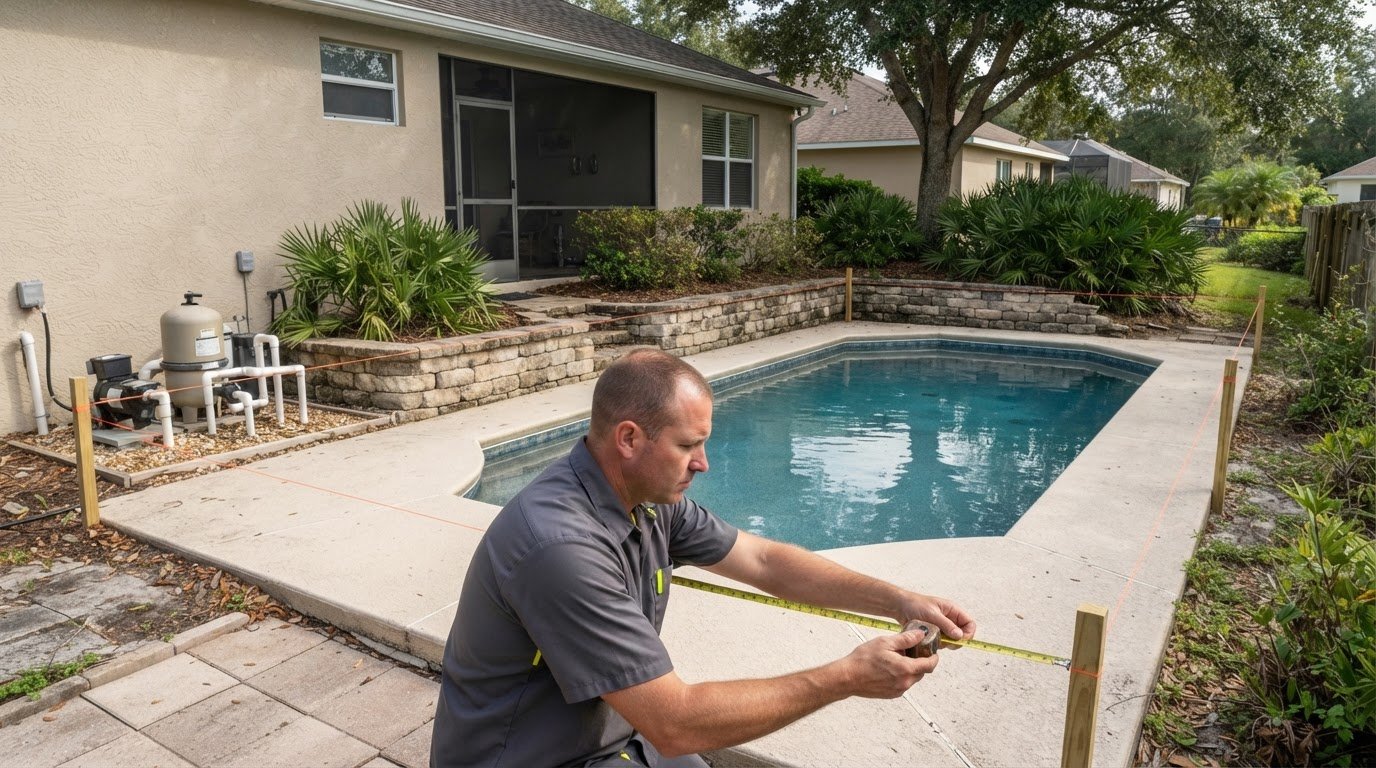
Consider how the patio connects to nearby features before finalizing the design. A pool enclosure or aluminum balcony railing may shape the surrounding space and influence how the patio relates to it. Coordinating these elements can create a more unified exterior while keeping the paver pattern suited to the patio’s size and intended use.
For help planning a paver patio or related exterior project, contact North Florida Screen Enclosures.
Make the Patio Plan Work for the Long Term
Before settling on a design, decide what the patio needs to do: create a clear path, define a gathering place, or connect the house with the yard. That priority gives the pattern a practical purpose and helps keep decorative details from competing with everyday use. Consider how the patio may relate to future exterior improvements, too, so its edges and transitions feel intentional.
Use your preferred paver patterns for small patios as the starting point for a complete site plan. Mark the patio’s boundaries, entry points, and areas that need to stay open for movement. Then review the design as a whole, including how its materials and visual character fit the home. This final perspective can help make a compact paved area a useful part of your outdoor living space.
When you’re ready to discuss the next step, contact North Florida Screen Enclosures. A considered plan is a solid foundation for an outdoor space you can enjoy.
Frequently Asked Questions
What color pavers make a patio look bigger?
Light-colored pavers, such as beige, light gray, or sand, can make a patio feel more open by reflecting more light. Beside a darker home exterior, choose a light tone that still relates to nearby trim or stone. View samples in the patio’s actual light, since shade and direct sun can change how a color appears across the paved area.
Which paver patterns make a small patio look larger?
Running bond or a simple stacked layout can give a compact patio a calmer, more continuous appearance. In a narrow space, orient the pattern toward the area you want to emphasize, such as the route from the door to the yard. Avoid letting furniture or borders interrupt that visual path. The best choice depends on the patio’s shape and the direction people approach it.
How do running bond, herringbone, and basket weave compare for patios?
Running bond creates a restrained look suited to patios where furniture or planting should remain the focus. Herringbone adds stronger visual movement and a more intricate field, while basketweave gives the surface a traditional, woven character. In a compact seating area, consider how much of the pattern will remain visible around the furniture. A simple layout may read more clearly when tables and chairs cover much of the paving.
What drainage, slope, and local code requirements apply to patio pavers?
Direct water away from structures. Slope and applicable local code requirements depend on the site and jurisdiction.
What base depth and edging are needed for a paver patio?
Base depth depends on site conditions and intended use. The base should be stable and properly compacted. Set two edge restraints before laying pavers, and leave the remaining edges open during installation.
Comments