


Vinyl vs Aluminum Soffit: How They Compare on Durability and Damage

The tougher-looking material isn’t automatically the better choice for every type of damage. In a vinyl vs aluminum soffit comparison, vinyl provides a lightweight covering for the underside of a roof overhang, while aluminum is a durable alternative that can still dent on impact. Each material has different strengths when it comes to fading, scratches, cracking, and wildlife damage.
Durability is a reasonable priority: soffit helps protect the roof edge and supports ventilation, so damage can affect more than appearance. The material, panel condition, and airflow all influence how well it performs over time.
This guide explains what vinyl soffit is and how it compares with aluminum in everyday wear, dents, scratches, and wildlife exposure. You’ll also learn the practical trade-offs that can help you choose the material best suited to your home and eaves.
Table of Contents
Why is Soffit Material Important?
Soffit covers the underside of a roof overhang, helping protect it from moisture while supporting attic ventilation. Material choice affects appearance, cleaning, and durability. A panel can look intact from the ground yet still restrict airflow if its vent openings don’t provide enough net free area.
Ventilation depends on the panel’s profile, not simply whether it’s vinyl or aluminum. Building codes typically call for net free ventilating area of at least 1/300 of the attic floor area, balanced between intake and exhaust. Where a home lacks standard soffit intake options, the typical figure is 1/150. Select panels by their net free area rating, then consider how their finish will look against the fascia and roof edge.
Cleaning needs differ by material. Aluminum soffit can be washed with a hose or pressure washer every other year. Vinyl needs more care when choosing cleaners and tools, as abrasive materials can mark its surface. Include either material in routine exterior inspections. Look for grime, loose or damaged panels, and blocked vent openings; gently remove buildup rather than scraping the finish.
Both materials work as soffit, but their finishes and maintenance needs differ. In a vinyl vs aluminum soffit comparison, consider how each will look with the roofline, along with cleaning needs and rated airflow. Neither material alone guarantees adequate attic ventilation.
Choose based on the finish you prefer, the upkeep you can manage, and the panel rating needed to support balanced attic airflow.
What Is Vinyl Soffit?
Vinyl soffit is a panel system fitted beneath a roof overhang. It covers exposed framing and can include vented profiles to support attic airflow. Panels are available in colors and grain patterns, including styles that resemble wood, allowing the finished exterior to coordinate with fascia and siding. Vinyl generally has a lower upfront material cost than aluminum, which can appeal when the initial budget is the main concern.
Both vinyl and aluminum soffit can last decades, but aluminum is expected to last longer overall. Vinyl’s service life depends on exposure to heat and moisture, ventilation, and whether panels develop cracks or other damage. Replacement costs can depend on the existing soffit’s condition, project size, panel profile, and installation access. Installed pricing depends on the project and is provided after a quote request; material, labor, preparation, and access affect the total.
Vinyl soffit installation is generally straightforward, while aluminum’s flexibility can help it fit tight spaces. Replacing either material involves removing damaged panels, preparing the eave, and fitting new panels without blocking ventilation. The roof edge and panel profile affect the work required, so installation difficulty varies with the existing structure.
For a practical cost comparison, separate the initial material expense from the potential long-term costs of repair or replacement. Vinyl generally costs less upfront, while aluminum’s longer expected lifespan may affect its value over time. Neither material guarantees lower future expenses: impact, moisture, ventilation, and maintenance all influence how panels hold up. A homeowner prioritizing lower initial material costs may lean toward vinyl; someone focused on longevity may consider aluminum.
Dents, scratches, and wildlife damage
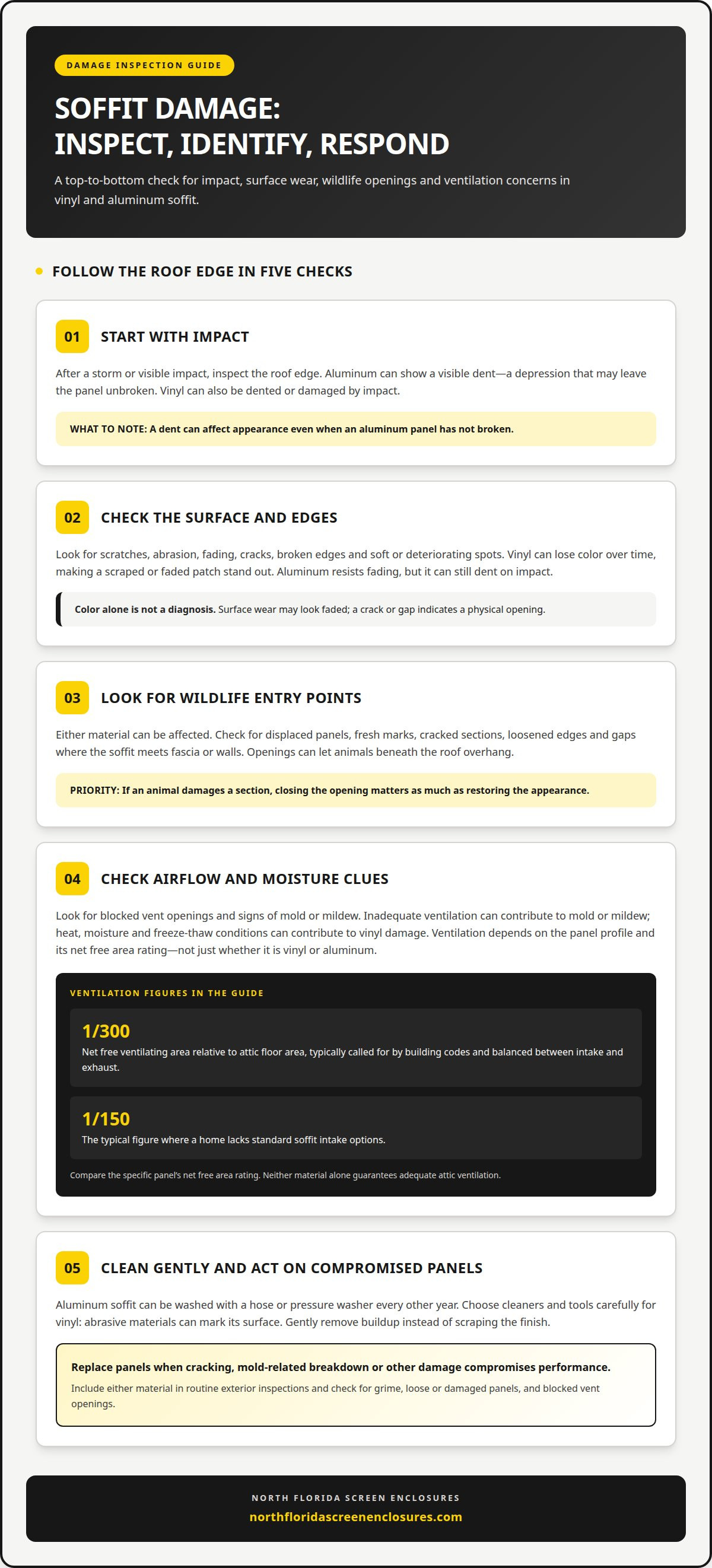
Impact affects the two materials differently. Aluminum soffit can dent, leaving a visible depression without breaking the panel. Vinyl can also be dented or damaged by impact, and scratches or surface abrasion may wear its finish. Over time, vinyl can lose color, making a scraped or faded area more noticeable against surrounding panels.
Wildlife damage can affect either material. An opening, cracked panel, or loosened edge can let animals beneath the roof overhang. Check for displaced panels, fresh marks, and gaps where the soffit meets fascia or walls. If an animal damages a section, closing the opening matters as much as restoring the appearance.
Heat and moisture can contribute to vinyl damage, while freeze-thaw conditions can cause it to crack. Mold or mildew may develop when ventilation is inadequate. A cracked panel or growth that breaks down the material can reduce the soffit’s ability to protect the eave. Aluminum resists fading but can still show dents after impact.
Inspect damaged areas closely rather than judging by color alone. Look for cracks, broken edges, soft or deteriorating spots, and blocked openings. A faded-looking panel, for example, may have surface wear, while a crack or gap signals a physical opening that needs attention. Ventilation matters too: mold on vinyl can indicate inadequate airflow, not just a cleaning issue.
After a storm or visible impact, inspect the roof edge for damage and openings. Avoid abrasive tools on vinyl, which can add surface scratches. Replace panels when cracking, mold-related breakdown, or other damage compromises their performance. Aluminum may retain its color better, but its susceptibility to dents means impact can still affect its appearance.
How vinyl and aluminum soffit compare
The vinyl vs aluminum soffit decision depends on what matters most: airflow, impact resistance, appearance, or lifespan. Aluminum is non-combustible, resists fading, and is expected to last longer overall. Vinyl generally costs less initially and can help reduce heat loss at the eaves, but heat, moisture, and freeze-thaw conditions can damage it.
For ventilation, the panel profile matters more than the material label. Vented aluminum panels can provide stronger airflow than vinyl alternatives, but compare the net free area rating of the specific panel. A common benchmark is at least 1/300 of the attic floor area, balanced between intake and exhaust; where standard soffit intake is absent, the typical figure is 1/150. Available options include vented panels with different profiles, so match the rating to the attic’s ventilation needs.
Aluminum is non-combustible, but that property alone doesn’t establish a fire rating for a complete soffit assembly or determine applicable code requirements. Don’t infer a rating or code approval from the material name; the assembly and project requirements matter.
Use these trade-offs to compare the materials:
Durability: Both can last decades; aluminum is expected to last longer.
Appearance: Aluminum resists fading; vinyl comes in colors and grain patterns.
Damage: Aluminum can dent on impact; vinyl can fade, crack, or suffer impact damage.
Insulation: Vinyl can help reduce heat loss at eaves; aluminum is less effective as an insulator.
Recycling: Aluminum is recyclable; recycling vinyl can be more difficult.
Choose aluminum if a longer expected life and fade resistance matter most. Choose vinyl if lower upfront cost, appearance options, or insulation are priorities. For either material, consider the soffit and fascia together, and compare the panel’s airflow rating rather than assuming one material always ventilates better.
Discuss soffit material options if you’re planning an exterior project.
Aluminum is non-combustible, but that alone does not establish a fire rating for the complete soffit assembly or confirm code approval. Ratings and code requirements depend on the assembly and project requirements, so they cannot be inferred from the material name.
North Florida Screen Enclosures: Aluminum Balcony Railings
North Florida Screen Enclosures provides Soffit and Fascia services for homeowners planning soffit work after comparing vinyl and aluminum. Turn to this service when existing panels need replacement or soffit damage needs attention as part of an exterior project. Choose materials with the roof edge, panel condition, and ventilation needs in mind, not appearance alone.
For other exterior projects, North Florida Screen Enclosures also offers Aluminum Balcony Railings, Pool Enclosures, and Patio Covers / Elite Roofing Systems. These services address different parts of a home, so the next step depends on the work you’re planning.
Contact North Florida Screen Enclosures to discuss soffit and fascia work for your home.
Make Your Next Exterior Decision With Confidence
Your soffit choice can fit into a broader plan to maintain your home’s exterior. Before work begins, consider how the roof edge will look alongside nearby finishes and whether to coordinate the project with other exterior improvements. Planning related work together can help keep the finished look consistent instead of treating each feature as a separate decision.
Use the vinyl vs aluminum soffit comparison to clarify your priorities, then bring them into the project conversation. You might focus on a particular finish, concerns about visible damage, or the condition of existing panels. Clear priorities make it easier to discuss the work’s scope and practical details while keeping the result you want in view.
North Florida Screen Enclosures can help you plan the next step for your exterior project. Start a conversation with North Florida Screen Enclosures and move forward with a clear direction for your home.
Frequently Asked Questions
What Is Aluminum Soffit?
Aluminum soffit is a metal panel system fitted beneath roof overhangs to cover exposed framing. Panels may be solid or vented, depending on the eaves’ airflow design. For example, replacing an existing solid panel with a vented one changes the intake arrangement, not just the finish. The panel profile and placement should suit the roof edge and attic ventilation plan.
What are the pros and cons of vinyl vs aluminum soffit?
The vinyl vs aluminum soffit choice comes down to the trade-offs you value. Vinyl generally costs less initially and offers color and grain-pattern options, but it can fade, crack, or suffer heat and moisture damage. Aluminum resists fading and is expected to last longer, but impact can dent it. Consider the home’s exposure, appearance goals, and tolerance for visible wear before choosing.
How do vinyl and aluminum soffit compare in cost per square foot installed?
A reliable per-square-foot comparison requires the panel width because soffit costs may be measured by linear foot. The figures aren’t interchangeable without the eave and panel dimensions. Installed cost depends on the project and is provided after a quote request; material choice, eave dimensions, removal, preparation, labor, and access affect the total. Compare estimates using the same project scope and measurement basis.
Which soffit material is more durable against moisture, pests, impact, and weather?
Neither material is immune to damage, and durability partly depends on keeping panels intact. Vinyl can be affected by moisture and heat, while freeze-thaw conditions may cause cracking. Aluminum resists fading but can dent on impact. Pests can enter through gaps or damaged sections in either material, so inspect edges and openings. In Saint Augustine, moisture exposure makes prompt attention to cracked or displaced panels especially relevant.
How do vinyl and aluminum soffits compare for maintenance and cleaning?
Both materials benefit from periodic visual inspections for loose panels, surface damage, and blocked vents. Clean vinyl gently, since abrasive tools or unsuitable cleaners can scratch its surface. Aluminum can tolerate washing, but dents and finish damage still deserve attention. If debris collects near a vent opening, remove it without forcing tools into the panel or bending its edges.
Which soffit material handles heat, cold, and fading better?
Aluminum generally handles fading better because its color is baked onto the material. Vinyl offers color and grain choices, but heat can damage it, and freeze-thaw conditions may cause cracking. For an eave exposed to strong sun, fade resistance may favor aluminum; in colder conditions, vinyl’s vulnerability to freeze-thaw damage deserves consideration. Both the panel’s exposure and condition influence how its finish holds up.
Comments