


Pool Cage Door Repair: Restoring Security and Function to Your St. Augustine Enclosure
- Michael Caruso

- 5 days ago
- 12 min read
A single misaligned pool cage door can compromise the structural integrity of your entire enclosure during a St. Augustine storm. While it might seem like a minor inconvenience, a door that fails to close properly is more than just a gateway for pests; it is a weak point in your home's exterior defense. If you have been struggling with slamming frames or seized hinges, you are not alone. Many homeowners find that the harsh coastal environment quickly turns functional hardware into a corroded liability. Understanding the nuances of pool cage door repair is the first step toward restoring the security and comfort of your outdoor living space.
We recognize the frustration of a door that won't latch or the constant battle against bugs entering through gaps. You deserve a space that remains pristine and functional regardless of the humidity or salt spray. This article will provide you with the essential knowledge to maintain your door hardware and recognize the signs of structural wear. We'll examine the differences between simple DIY fixes and professional-grade restorations. By the end of this guide, you'll know exactly how to ensure your enclosure remains bug-free and hurricane-ready for years to come.
Table of Contents
Common Causes of Pool Cage Door Failure in North Florida
Living in St. Augustine means your home is constantly exposed to the elements. While screened enclosures provide a necessary barrier against pests, the doors are the most active and vulnerable components. Frequent use combined with coastal weather makes pool cage door repair a regular necessity for local homeowners. Identifying the root cause of a sticking or slamming door is the first step toward a permanent fix.
Salt Air and Galvanic Corrosion
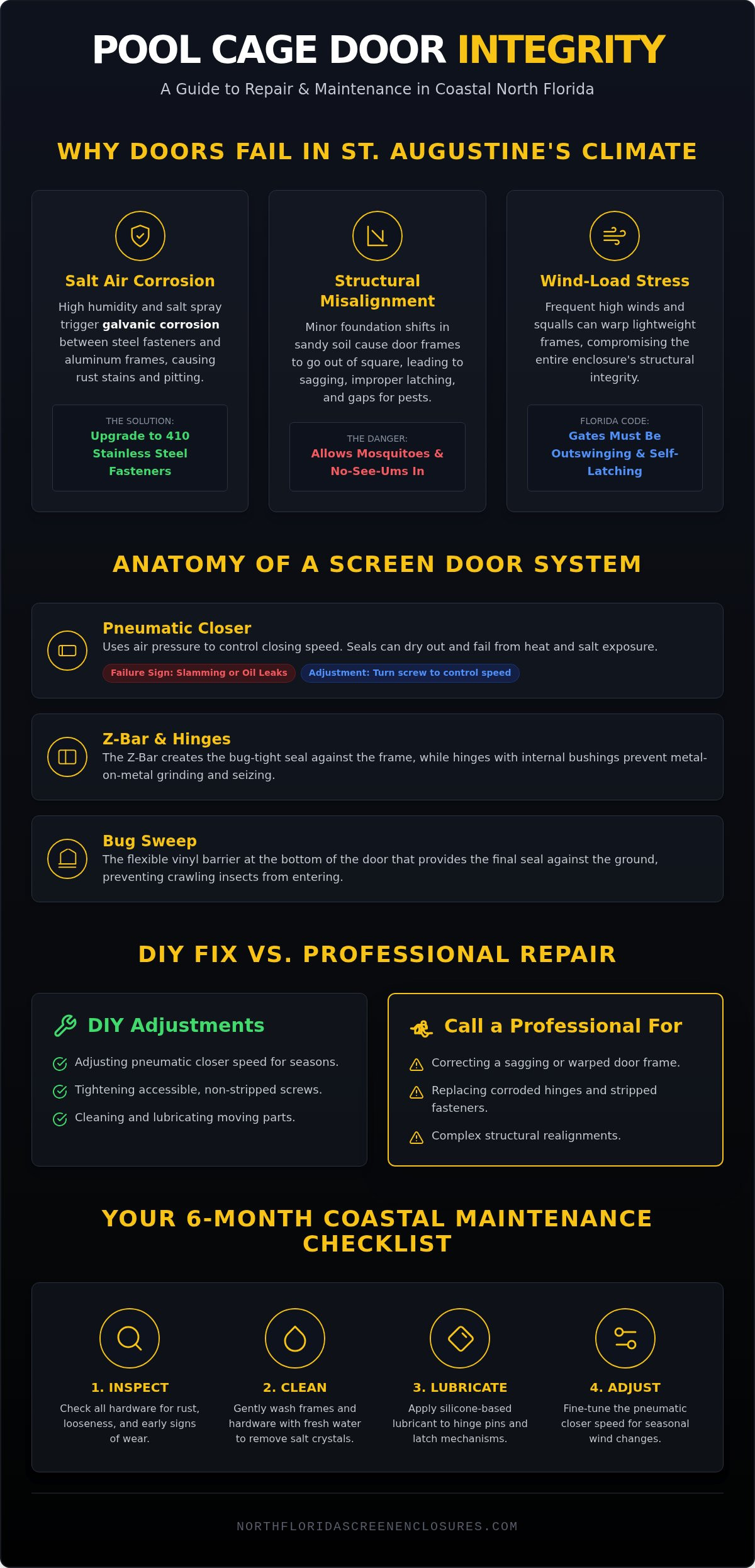
The proximity to Anastasia Island and Vilano Beach introduces high concentrations of salt into the air. This salt settles on your enclosure and triggers galvanic corrosion. This process occurs when different metals, such as standard steel fasteners and aluminum frames, react in a moist environment. You'll often see "bleeding" rust stains around hinges. This indicates the internal pin is failing. Pitting in the aluminum frame near these points is another sign that the metal's structural integrity is compromised. Using 410 stainless steel fasteners is often the best way to combat this specific coastal challenge.
Structural Misalignment and Sagging
Florida’s sandy soil and high water table often lead to minor foundation shifts or concrete settling. Even a fraction of an inch of movement can pull a door frame out of square. You’ll recognize this as the "sag," where the top corner of the door strikes the frame before closing. Loose corner braces within the cage often exacerbate this, as they allow the entire structure to flex under tension. A door that won't latch during a humid Florida summer isn't just annoying; it allows mosquitoes and no-see-ums to bypass your defenses entirely. If the frame itself is warped, simple hardware adjustments won't be enough to restore function.
Wind-Load Stress and Building Codes
North Florida's wind loads play a major role in frame warping. Lightweight frames often bend under the pressure of afternoon squalls or high-wind events. It's vital to follow the Florida Building Code, which requires pool enclosure gates to be self-closing, self-latching, and outswinging. This outswing requirement is a safety measure. It ensures that high-pressure winds don't blow the door inward, which could lead to a catastrophic failure of the entire screen system. When a door is damaged by wind, it often requires professional pool cage door repair to ensure the frame is reinforced correctly.
The pneumatic closer is the final common failure point. These tubes rely on internal seals to control the closing speed. Heat and salt air dry out these seals over time. This leads to doors that either slam dangerously or fail to pull the latch shut. Upgrading to a heavy-duty closer is usually necessary to handle the weight of a reinforced coastal door.
Key Components of a Functional Screen Door System
A pool cage door is a precision-engineered assembly designed to withstand constant use and environmental pressure. Unlike a standard screen door found on a porch, these units must maintain a tight seal against an aluminum frame while remaining light enough for easy operation. Understanding the individual parts is essential when considering pool cage door repair, as failure often begins with a single worn component. Each piece of hardware must resist the corrosive effects of the St. Augustine climate while providing reliable security.
The Z-bar is perhaps the most overlooked element. It acts as the interface between the door and the cage, providing the structural stop that creates a bug-tight seal. If the Z-bar is bent or misaligned, even a new latch won't keep pests out. Supporting this frame are the hinges, which rely on internal bushings to prevent metal-on-metal friction. In our local salt air, these bushings are critical for preventing the aluminum from seizing or grinding. Ensuring these barriers function correctly aligns with the safety standards promoted by the Pool Safely campaign, which advocates for reliable, self-closing gates to protect families and pets.
Understanding the Pneumatic Closer
The pneumatic closer is the engine of your door system. It uses a piston and air pressure to regulate the closing speed, which you can modify via a seasonal adjustment screw. Turning this screw clockwise slows the door, preventing it from slamming, while counter-clockwise adjustments help it overcome wind resistance. If you notice oil leaking from the cylinder or a door that slams regardless of adjustment, the internal seal has likely failed. Upgrading to a heavy-duty closer is often a wise investment for coastal homes where wind gusts are frequent and persistent.
The Importance of the Bug Sweep
The bug sweep is the flexible barrier at the bottom of the door. Without a functional sweep, your enclosure becomes an open invitation for Florida’s lizards, frogs, and snakes. These sweeps are typically made of vinyl or rubber and are designed to brush against the concrete deck without obstructing movement. Over time, heat causes the material to become brittle or tear. A dragging sweep can also put unnecessary stress on the door hinges, eventually leading to a more expensive pool cage door repair. Replacing a worn sweep is a simple task that preserves both your comfort and the door's alignment. If you are unsure which hardware grade is right for your home, consulting with a local specialist can prevent costly mistakes.
DIY vs. Professional Pool Cage Door Repair
Deciding between a weekend project and calling a professional depends on the complexity of the hardware and the current state of the aluminum frame. While many homeowners are comfortable with basic maintenance, pool cage door repair often involves precision work that, if mishandled, can lead to permanent structural damage. Understanding the limitations of common household tools is vital for protecting your enclosure investment. A minor adjustment performed incorrectly can quickly turn into a costly frame replacement.
When DIY is Sufficient
Basic maintenance often solves minor operational nuisances. If your door squeaks or moves sluggishly, apply a high-quality silicone spray to the hinges and closer pivot points. Don't use WD-40; it acts as a solvent and attracts coastal grit, which eventually grinds down the metal. You can also easily handle replacing a single torn screen panel within the door frame or adjusting the latch strike plate if the door fails to "click" shut. These tasks require only basic hand tools and a steady hand. Most homeowners find these small tweaks sufficient for maintaining daily convenience.
One of the most common mistakes in DIY attempts is over-tightening screws. Aluminum is a soft metal, and applying too much torque with a standard drill will strip the threads instantly. Once a screw hole in the Z-bar or door frame is stripped, a standard fastener will never hold again. Professionals use specialized taps to create new threads or install oversized, high-grade fasteners to restore the connection. This level of precision is what separates a temporary fix from a long-term restoration that survives the next storm season.
When to Call a St. Augustine Specialist
Certain failures indicate deeper structural issues that go beyond simple hardware swaps. If your door frame is visibly out of square, it often requires a "come-along" or a structural pull to realign the enclosure’s tension. This is a delicate process that balances wind-load requirements with frame flexibility. You should also seek professional help if the hinges have snapped or pulled completely out of the aluminum Z-bar. For complex issues involving frame integrity or hardware failure, it is best to consult with Expert Pool Enclosure Repair in St. Augustine to ensure your system meets local safety standards.
Professional pool cage door repair ensures that the hardware is not only functional but also hurricane-ready. Specialists bring the heavy-duty components and specialized knowledge required to navigate the unique challenges of the North Florida coast. When you hire a diligent craftsman, you are investing in the peace of mind that comes from durable, high-quality workmanship that resists the salt air of Anastasia Island and the surrounding areas.
Step-by-Step Guide to Adjusting and Repairing Your Door
Restoring a door to its original performance requires a methodical approach that addresses both mechanical hardware and frame alignment. Before you begin any pool cage door repair, clear the area of debris and ensure you have a standard carpenter's level and a manual screwdriver. Avoid using high-torque power drills, as they can easily strip the aluminum threads. Success in this process is measured by a door that latches smoothly without requiring a forceful push or a loud slam.
Start by checking the vertical alignment of the Z-bar, which is the frame attached to the cage itself. Place your level against the Z-bar to ensure it's perfectly plumb. If the frame has shifted due to concrete settling, the door will never hang correctly. Once the frame is verified, inspect the hinges. If you notice rust or sagging, replace them with 410 stainless steel or ceramic-coated hardware. These materials are specifically designed to survive the salt-laden winds of St. Augustine without seizing or "bleeding" rust onto your enclosure.
Tuning the Door Closer
The pneumatic closer controls the final few inches of the door's travel. To tune this, locate the adjustment screw at the end of the cylinder. Follow the 1/4 turn rule: making small adjustments for big results. Turning the screw clockwise will slow the door down, while a counter-clockwise turn increases the closing force. Your goal is a "two-speed" close where the door moves quickly through the first 90 percent of its arc and then slows down just enough to click the latch shut. If you can't achieve this balance, the internal seals are likely blown, and the unit must be replaced.
Fixing a Sagging Door Frame
A sagging door often strikes the bottom or side of the Z-bar. To fix this, you may need to install internal corner gussets or a "door square" kit to pull the frame back into a 90-degree angle. While tightening the hinge screws, have a second person lift the outer edge of the door slightly. This ensures the hardware is secured while the frame is in its most elevated, optimal position. If the screw holes are already enlarged, you'll need to use oversized fasteners to create a secure bite in the aluminum.
Pro-Tip: Re-screening for Stability
Many homeowners don't realize that the screen mesh itself provides lateral stability to the door frame. When the mesh is installed with the correct amount of tension, it acts as a structural diaphragm that helps hold the door in square. If your screen is loose or sagging, it allows the aluminum frame to flex and warp more easily under wind pressure. For detailed instructions on achieving the perfect tension, refer to our Pool Cage Screen Replacement Guide. If your frame remains stubborn despite these adjustments, you can request a professional hardware inspection to identify deeper structural issues.
Long-Term Maintenance for Coastal Enclosures
St. Augustine's coastal air is relentless. Salt crystals accumulate on hardware every day, leading to pitting and eventual mechanical failure. A thorough wash down every six months is the simplest way to prevent premature pool cage door repair. Use fresh water and a mild detergent to rinse the hinges, latches, and the Z-bar. This removes the corrosive film that traps moisture against the aluminum. Beyond cleaning, you should inspect your fasteners. Standard zinc-plated screws are insufficient for homes near Vilano Beach. Upgrading to 410 stainless steel or Nylo-Shield fasteners ensures the structural integrity of your door frame remains intact even when exposed to constant salt spray.
Hardware Upgrades for Anastasia Island Homes
Homes on Anastasia Island face extreme oxidation rates due to their proximity to the Atlantic. Standard residential hardware often fails within 24 months in these conditions. Powder-coated aluminum handles and ceramic-coated hinges provide a superior barrier against the elements. These components don't just look better; they provide the mechanical resilience needed for long-term use. For a complete guide on preserving your outdoor space, consult our Screen Enclosure Maintenance Checklist. Investing in high-grade materials now prevents the frustration of a seized door later.
Hurricane season requires a specific focus on your enclosure's entry points. Inspect the Z-bar seal for any light gaps. These gaps indicate a misalignment that can allow high-velocity winds to catch the door edge, potentially warping the frame or tearing the hinges from the cage. Ensure the pneumatic closer is securely mounted to both the door and the main structure. During a storm, the latch must be locked to prevent the door from swinging open. An unsecured door can lead to catastrophic pressure changes inside the enclosure during a high-wind event.
The Final Inspection
A perfectly functioning door is the result of consistent attention and professional-grade hardware. Use this 5-point checklist for your seasonal review:
Does the door self-close and latch smoothly from a fully open position?
Are the hinges free of rust and visible "bleeding" stains?
Is the bug sweep making uniform contact with the deck without dragging?
Are all fasteners tight and free of white oxidation powder?
Is the Z-bar plumb and securely attached to the main enclosure frame?
Maintaining these standards extends the life of your entire structure and ensures your pool area remains a safe, bug-free retreat. If you've noticed persistent issues with alignment or hardware that won't stay adjusted, it's time to schedule a professional door and enclosure inspection with our team of local specialists. Proper pool cage door repair and maintenance are the keys to protecting your home's exterior investment.
Securing Your Outdoor Sanctuary for the Long Term
Maintaining a functional pool cage door is about more than just convenience; it's a critical component of your home's structural defense. By choosing corrosion-resistant hardware and performing regular salt-water wash downs, you can prevent the most common causes of mechanical failure. Whether you are adjusting a pneumatic closer or identifying a warped Z-bar, understanding the mechanics of your enclosure ensures your outdoor space remains a bug-free and safe environment for your family.
While basic maintenance is manageable for many homeowners, complex alignment issues and structural warping require the precision of a seasoned specialist. Our team brings deep St. Augustine local expertise to every project, providing hurricane-ready structural inspections and high-grade corrosion-resistant hardware upgrades. If your door is sticking, sagging, or failing to latch, it's time to restore its integrity with professional pool cage door repair. Get a Professional Pool Cage Door Repair Estimate today to protect your investment and regain your peace of mind. Your enclosure is built to last, and with the right attention, it will serve your home for years to come.
Frequently Asked Questions
Why does my pool cage door slam shut even after I adjust the closer?
If your door continues to slam after adjustment, the internal pneumatic seals have likely failed. These seals regulate the air or hydraulic pressure required to slow the door's momentum. Over time, the intense Florida heat causes these components to become brittle and leak. Once the seal is compromised, the adjustment screw can no longer control the airflow. Replacing the closer is the only reliable solution to restore a safe, quiet closing speed.
Can I replace just the hinges on my screen door, or do I need a new door?
You can replace just the hinges provided the aluminum door frame remains square and structurally sound. This is a common part of pool cage door repair in coastal areas where salt air corrodes the metal pins. If the original screw holes have become enlarged or stripped, a specialist will use oversized stainless steel fasteners to ensure a secure fit. However, if the frame itself is warped, a full door replacement may be necessary.
What is the best lubricant to use for pool cage door hinges in Florida?
High-quality silicone spray is the best choice for lubricating hinges in our coastal environment. Unlike oil-based lubricants or grease, silicone creates a dry, protective film that does not attract sand, salt crystals, or grit. You should avoid using WD-40 as a long-term lubricant; it acts more as a solvent and can actually accelerate wear by stripping away existing protection. Regular application every six months helps prevent the hinges from seizing due to oxidation.
How do I stop bugs from crawling under the bottom of my pool cage door?
Installing a new bug sweep is the most effective way to block pests from entering under the door. This flexible vinyl or rubber strip attaches to the bottom of the frame and creates a seal against the concrete deck. If your current sweep is torn or brittle from UV exposure, it leaves a gap that invites lizards and insects inside. Ensure the sweep is adjusted so it lightly brushes the surface without causing the door to drag.
Is it normal for my door frame to look slightly crooked?
A crooked door frame is not normal and typically indicates that your enclosure has shifted or the foundation has settled. Even minor movement in the concrete deck can pull the Z-bar out of alignment, causing the door to strike the frame. This structural misalignment often requires professional pool cage door repair to pull the system back into square. Ignoring a crooked frame can lead to warped aluminum members and compromised wind-load integrity during a storm.
How often should I replace the pneumatic closer on my enclosure?
Most pneumatic closers last between three and five years, though coastal homes in St. Augustine often require replacements sooner. The salt-laden air and high humidity accelerate the degradation of the internal piston seals and external mounting brackets. If you notice oil leaking from the cylinder or the door begins to close inconsistently, it is time for a replacement. Upgrading to a heavy-duty, corrosion-resistant model can extend the lifespan of this hard-working component significantly.
Will insurance cover a pool cage door that was blown off during a storm?
Coverage depends entirely on your specific homeowners insurance policy and any added endorsements for screen enclosures. Many standard policies in Florida exclude screened structures or offer very limited coverage for wind damage to pool cages. It is essential to review your policy details or speak with your agent before a storm occurs. If the damage is structural, you should document the failure carefully and consult a professional for a code-compliant repair estimate.


Comments