


Pool Cage Gutter Installation and Replacement in St. Augustine

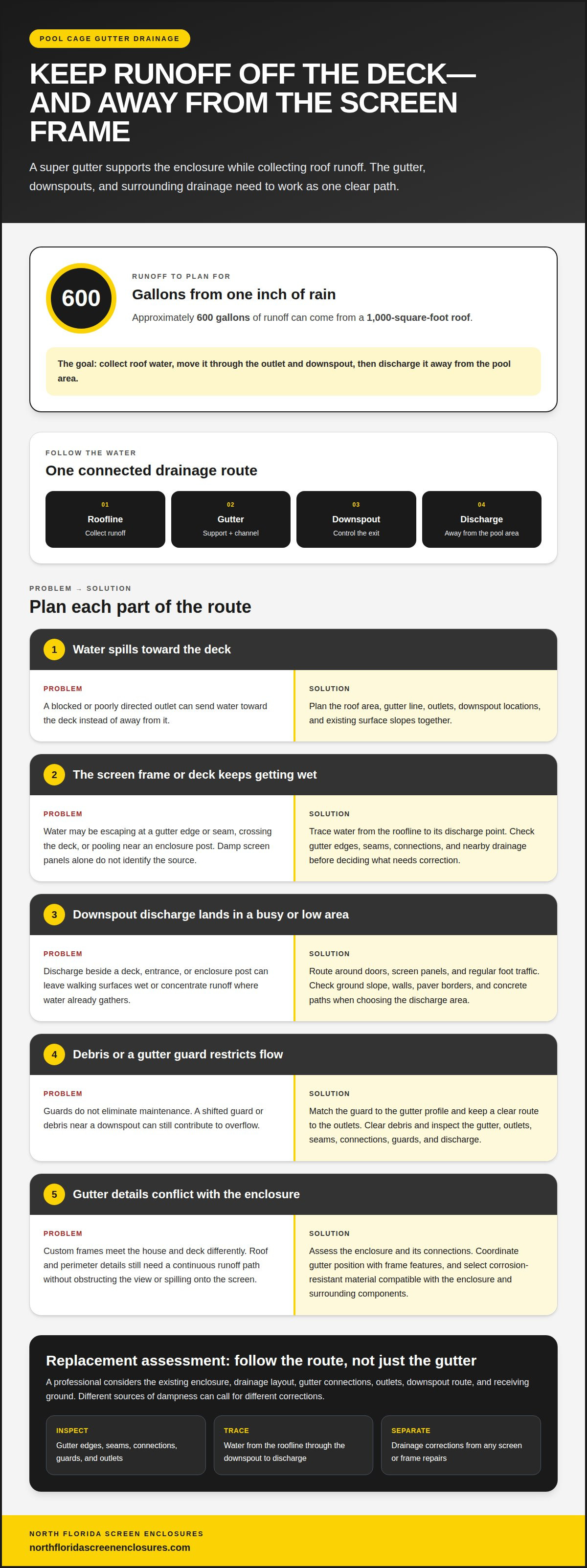
A failing pool cage gutter can put more than rainwater at risk. A super gutter helps support the enclosure while managing runoff, and proper routing directs water away from the deck and screen frame. For pool cage gutter installation in St. Augustine, the key is coordinating the gutter, downspouts and surrounding drainage so water has a clear path away from the pool area. One inch of rain on a 1,000-square-foot roof produces approximately 600 gallons of runoff.
It’s easy to focus on the visible gutter, but its connection to the enclosure and the route water takes after it leaves matter just as much. This guide explains how gutters work with pool cages, what replacement involves, and which details affect drainage, fit, and project cost. You’ll also learn how downspout placement can help protect the deck and screen frame, and what a professional assesses when planning a replacement for a St. Augustine property.
Table of Contents
Drainage coordination around enclosures
A pool cage gutter must work with the enclosure’s roofline and the ground below. The super gutter helps support the enclosure while collecting roof runoff, so its position and connections affect both structure and drainage. Planning considers the roof area, gutter line, outlets, downspout locations, and existing surface slopes together. A blocked or poorly directed outlet can send water toward the deck instead of away from it.
Custom screen enclosures make coordination especially important because each frame meets the house and deck differently. A panoramic or Clear View design can create broad sightlines, while the roof and perimeter still need a continuous runoff path. Chair rail placement also affects the lower screen panels and connection details. Gutter planning should account for these frame features without obstructing the view or letting water spill onto the screen.
Gutter guards can help limit leaves and other debris entering the channel, but they don’t eliminate maintenance. They should fit the gutter profile and leave collected water a clear route to the outlets. A guard that shifts or traps debris near a downspout can still contribute to overflow. The installation plan should coordinate the guard, gutter, outlet, and downspout as one drainage path.
Best gutter materials for Florida coastal weather: Choose a corrosion-resistant material compatible with the enclosure and its existing connections. Selection should account for exposure and how the gutter joins surrounding components, not appearance alone.
Pool cage gutter maintenance and cleaning in St. Augustine: Maintenance includes clearing debris from the gutter and outlets, then inspecting seams, connections, guards, and downspout discharge. These checks can reveal restricted flow or visible overflow before water repeatedly reaches the enclosure frame or deck.
A pool cage chair rail is usually around 3 feet above the deck, so lower-panel screening choices should be coordinated with that boundary and drainage details.
Standard 18×14 pool screen is the baseline mesh for many North Port enclosures. North Port properties near canals, drainage corridors, or wooded lots commonly use 20×20 no-see-um mesh on lower panels. Phifer PetScreen is described as 7× stronger than standard screen.
Protecting pool decks, lanai floors, and screen frames from water
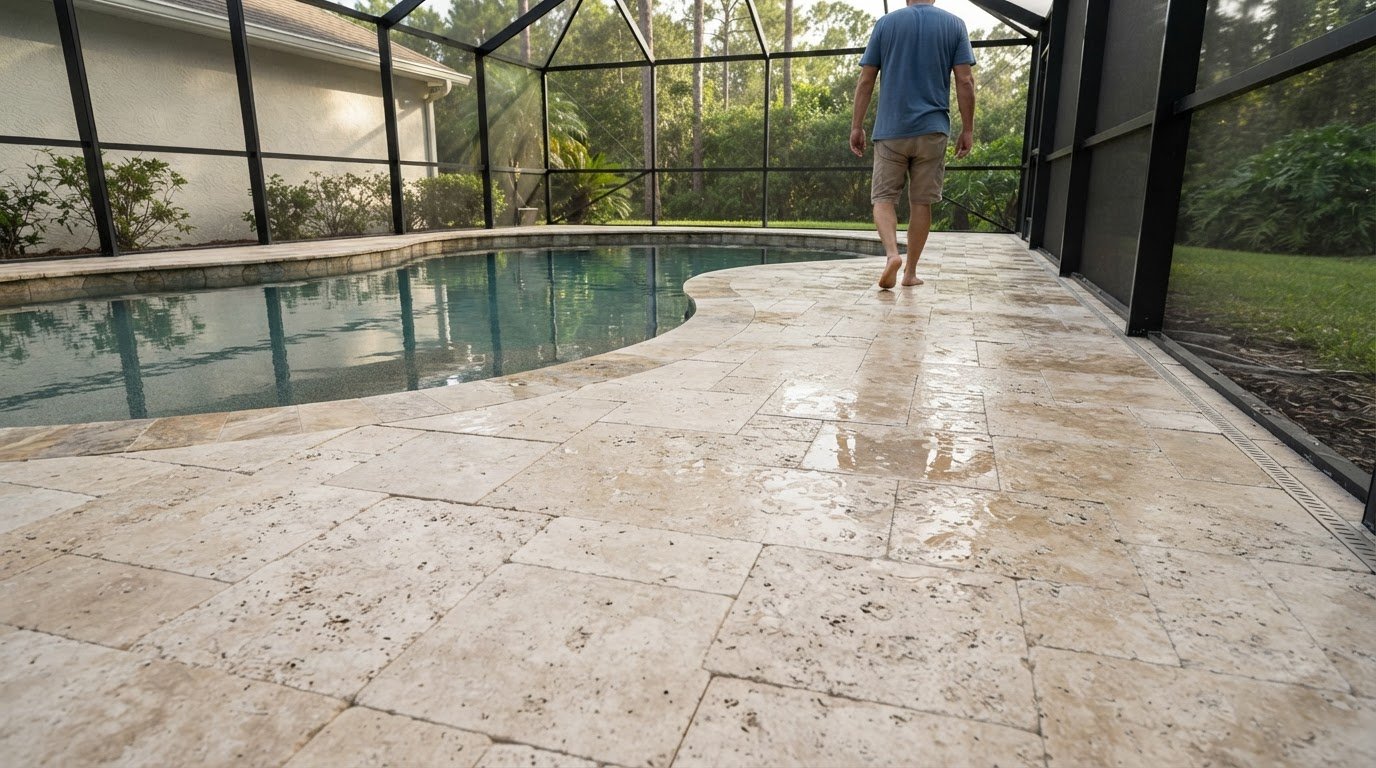
Water escaping a gutter can collect at a deck edge, run beneath a lanai surface, or repeatedly wet the lower screen frame. For pool cage gutter installation in St. Augustine, the runoff path should be traced from the roofline to its discharge point. This helps distinguish gutter overflow from water crossing the deck or pooling near an enclosure post. Each source calls for a different correction, so the inspection follows the water rather than treating every damp area alike.
On Florida properties, deck slope and enclosure connections both matter. If water consistently gathers beside a screen frame, the professional examines the gutter edge, seams, and nearby drainage path. A small gap at a connection can send runoff onto the frame instead of into the channel. Poolside furniture or planters can hide wet areas, so the inspection considers the full walking surface and where water collects after rain.
Screen mesh affects airflow and visibility, but it isn’t a drainage component. Standard mesh and no-see-um mesh serve different screening purposes; neither replaces a properly functioning gutter. A professional assesses whether water is entering through a roofline or gutter fault rather than treating damp screen panels as a mesh problem. Augustine, this distinction keeps the work focused on the actual source.
Kick plates protect lower enclosure panels from contact and debris, but they don’t correct runoff. Water spilling behind a kick plate, for example, can remain against the frame even when the visible panel looks intact. The professional checks the plate’s edges and adjoining frame, then identifies whether the gutter or discharge route is sending water there.
After the drainage path is addressed, damaged screen or frame components may need separate attention. A screen enclosure repair can address enclosure damage, while a complete re-screen concerns the screen panels themselves. Separating those needs helps protect the deck and lanai while preserving the enclosure’s function.
Downspout routing away from pool decks and lanais
A downspout gives collected roof water a controlled exit from the gutter. Its position matters around pool cages because discharge beside a deck can leave walking surfaces wet or concentrate runoff near enclosure posts. Augustine, the water path should be traced from the gutter outlet to its discharge area. The route should account for the pool deck, lanai floor, nearby walls, and existing drainage direction.
Aluminum gutters and enclosure frames need coordinated connections, but the downspout must also clear doors, screen panels, and traffic areas. An outlet beside a lanai entrance, for example, could send water across the path to the pool. The installer considers routing that carries water away from the entrance while preserving access and keeping discharge clear of the main walking area.
Ground conditions guide the final route. A professional considers whether the receiving area slopes toward the pool, a wall, or another part of the yard. If water already gathers beside a deck edge, placing the discharge there may worsen the problem. The assessment follows the surface grade and notes hardscape features, such as a paver border or concrete walkway, that can redirect runoff. This is an important part of planning pool cage gutter installation in St. Augustine.
Gutter outlet: Locate it where collected flow can enter the downspout without spilling over the channel.
Downspout path: Route it around screen panels, doors, and regular poolside foot traffic.
Discharge area: Direct the outlet away from places where runoff returns toward the deck or enclosure.
After routing is planned, the professional evaluates how water leaves the downspout during rainfall. If discharge splashes onto a lanai floor or pools against a pool cage, the route needs adjustment. The finished layout should keep the outlet accessible for maintenance and avoid creating a new wet spot beside the enclosure.
Pool cage gutter replacement
Replacement should address both the gutter’s connection to the enclosure and the path runoff takes afterward. A measured assessment defines the work before installation begins.
Gutter Types for Screened Enclosures
A super gutter is a substantial enclosure component that helps support the pool cage while collecting roof runoff. A seamless gutter uses a continuous run rather than multiple joined sections, reducing seams along that run. The right option depends on the existing frame, roof edge, outlet locations, and drainage layout. The installer evaluates these connections before recommending a replacement.
Permit and building-code requirements can depend on the replacement scope and applicable local rules. The installation plan should account for requirements relevant to the property and proposed work before installation proceeds.
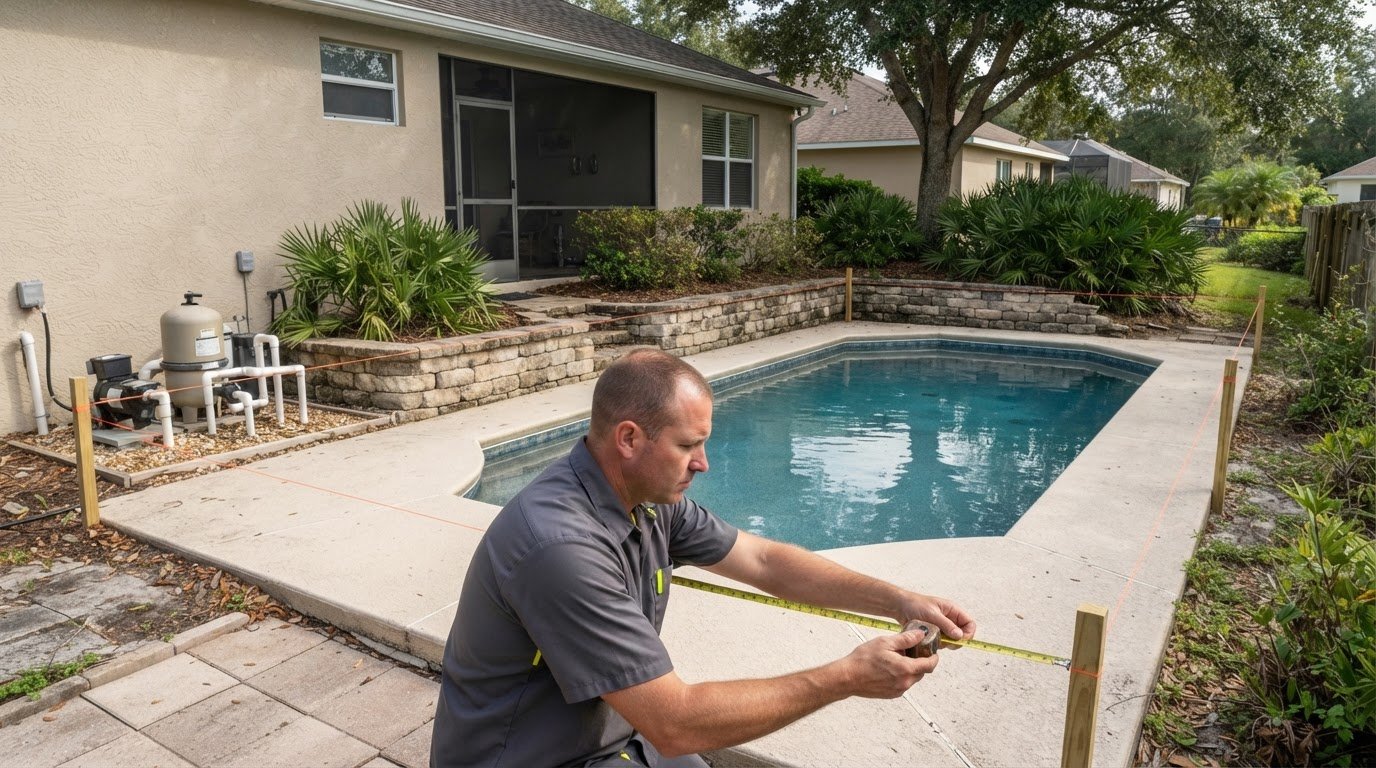
To measure a pool cage, the professional records the gutter run, corners, roofline connections, and outlet locations. The assessment also considers the enclosure frame and downspout route, helping ensure replacement parts fit the existing layout.
The process generally moves from assessment and measurement to removal, installation, and a drainage-flow review. The project scope and site conditions determine the schedule, so timelines vary by enclosure.
Common Enclosure Gutter Problems
Leaks at seams, loose connections, blocked outlets, and visible overflow can signal gutter trouble. A sagging run may also interrupt water flow or cause runoff to spill over. During replacement, the professional examines the gutter and its connection points, then checks whether the outlet route contributes to the problem. Addressing the cause matters: replacing a damaged section alone won’t resolve a blocked or poorly routed discharge.
When choosing a pool cage gutter installation company in St. Augustine, look for clear communication about assessment, fitting, and drainage planning. Reviews can offer insight into reported workmanship and communication. Pay attention to comments about installation quality and follow-up, not just overall ratings.
For an enclosure-specific assessment, request gutter replacement service and discuss the existing gutter’s condition and drainage concerns.
A Aluminum & Rescreening Company offers 6-inch gutters. This gives property owners an option to discuss when comparing replacement choices for a pool enclosure. Ask how the offered gutter would connect with the existing cage and where runoff would discharge, so the selection reflects the measured layout and drainage needs.
North Florida Screen Enclosures: Pool Enclosures
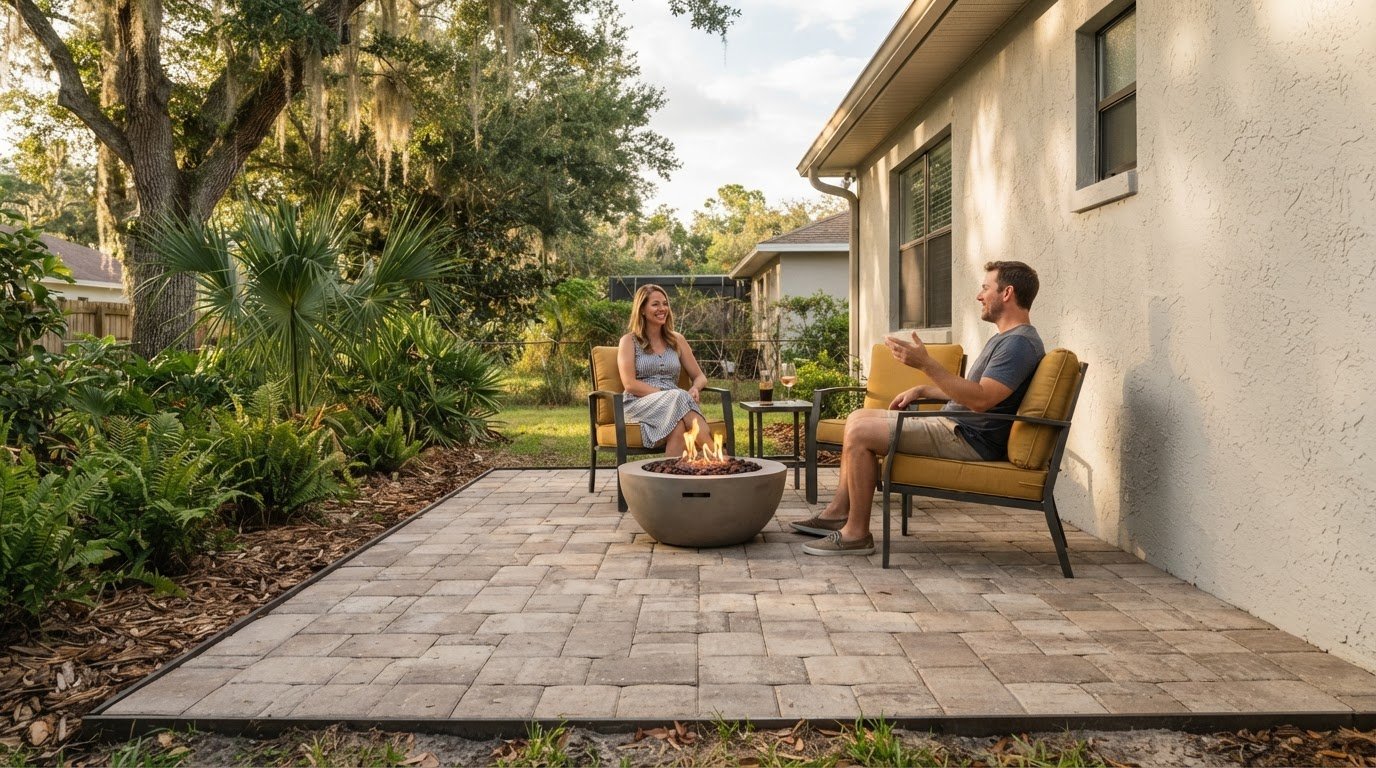
North Florida Screen Enclosures designs and installs custom pool enclosures for homeowners planning a new screened pool area or improving an existing one. A well-planned enclosure connects the roofline, frame, and surrounding outdoor space, so gutter layout belongs in the overall design discussion. The team also installs patio covers and paver patios, which can shape the surrounding space and its drainage considerations. Contact North Florida Screen Enclosures to discuss your pool enclosure project.
Plan the Next Step for Your Pool Area
A gutter decision is also an opportunity to consider how the pool area will function as you plan future outdoor improvements. Before work begins, align the enclosure’s condition, drainage priorities, and any planned changes to the space. This gives the project a clear direction and keeps gutter work connected to the property’s broader layout.
Augustine, start with a project discussion about your existing enclosure and what you want to improve. North Florida Screen Enclosures can help you plan the right scope for a pool enclosure and related exterior work. If the gutter is showing wear or runoff is causing trouble, describe what you’re seeing and where it occurs.
Contact North Florida Screen Enclosures to discuss your project and move toward a well-planned solution for your outdoor space.
Comments