


Pool Cage Rescreening in St. Augustine: What Homeowners Should Know

What if a few torn panels point to a larger problem? For homeowners considering pool cage rescreening St. Augustine, the key question is whether the damage is isolated or whether worn, sagging mesh is failing across the enclosure. A useful first step is to look beyond the most visible tear and compare the condition of the surrounding panels.
Gaps can let insects into the pool area, and it may not be obvious whether the screens are the only part that needs attention. Replacing one or two panels may suit localized damage; widespread wear may call for a complete rescreen. The right scope depends on the condition of the enclosure, not just the number of visible tears.
This guide covers signs that screens may need work, how to compare a targeted repair with a complete rescreen, and how to prepare for a local project. Based in Saint Augustine, North Florida Screen Enclosures handles complete re-screens and screen enclosure repairs. A record of the damaged areas and your priorities can help make the project discussion more specific.
Table of Contents
Pool cage rescreening in St. Augustine: when is it time?
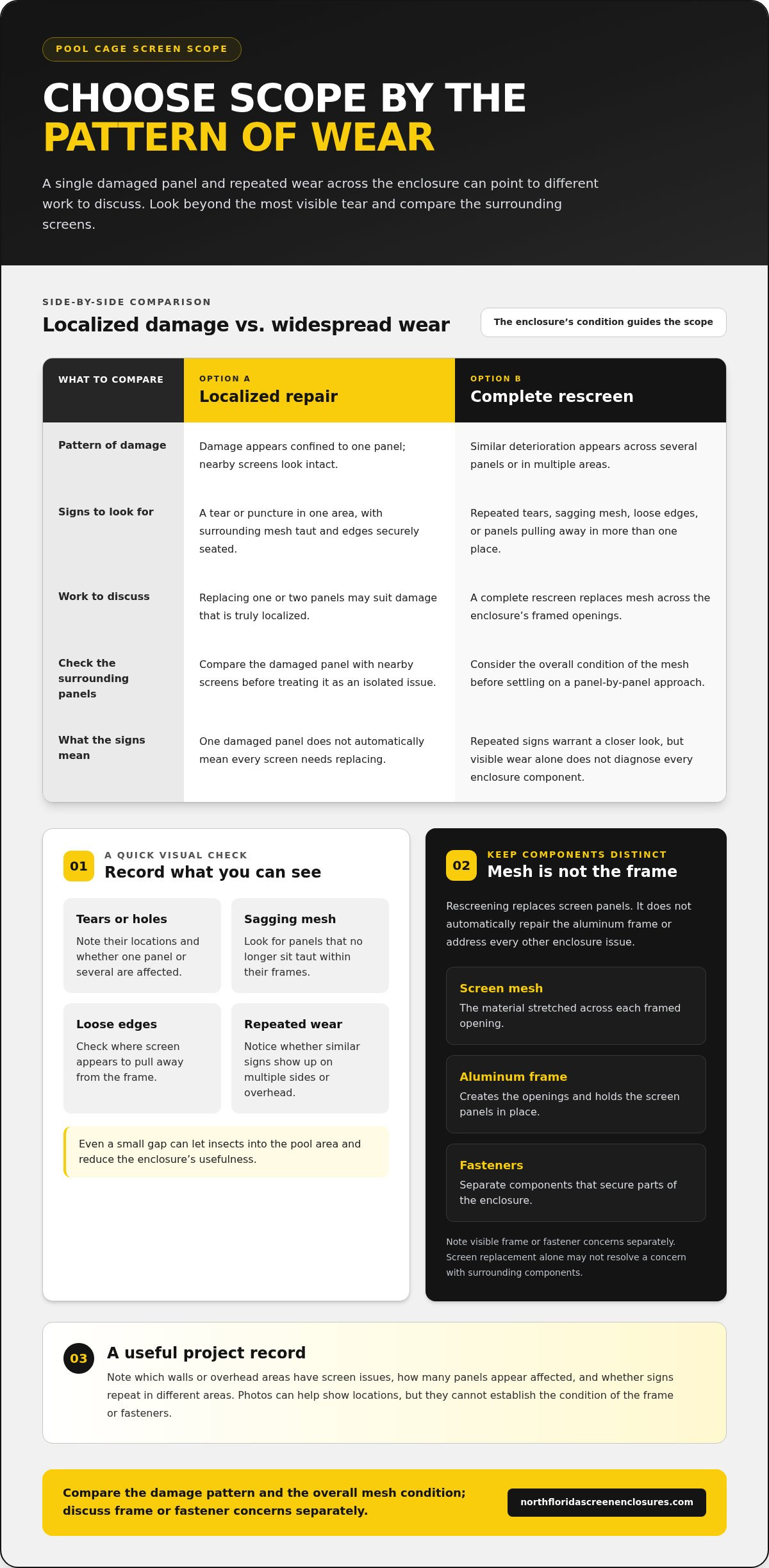
Repeated tears, loose panels, or visible wear are reasons to take a closer look at your pool cage. The choice isn’t always “replace one panel or every screen.” A single tear may be isolated, while similar deterioration across several panels can point to broader mesh wear. Look at the pattern as well as the most damaged spot when deciding what work to discuss.
In St. Augustine, regular visual checks are a practical way to keep track of an outdoor enclosure’s condition. Coastal conditions vary by property, so don’t assume location alone explains the damage. Note what has changed, where it appears, and whether the same signs show up on multiple sides or overhead. That gives you a clearer starting point for discussing pool cage rescreening St. Augustine.
Which visible signs suggest pool cage screens need attention?
Walk around the enclosure and look over the mesh and its edges. Tears and holes are easy to spot, but sagging, loose edges, and panels pulling away from their frames can also signal that screens need attention. Even a small gap can let insects into the pool area and reduce the enclosure’s usefulness.
Tears or holes: Note their location and whether they affect one panel or several.
Sagging mesh: Look for panels that no longer sit taut within their frames.
Loose edges: Check for screen pulling away where it meets the frame.
Similar wear in multiple places: Repeated signs across separate panels deserve a closer look than one isolated blemish.
A single tear near a spot where an object struck the screen may be different from frayed or loose edges on several panels. The visible signs are useful clues, but they don’t establish the condition of the frame or explain the cause of every damaged area. For general background on pools and enclosure types, see this overview of swimming pool enclosures.
When does a small screen repair make sense?
A limited repair may be worth discussing when damage is confined to one panel and nearby screens appear taut, intact, and securely seated. For example, a puncture in one area with no similar wear elsewhere may indicate a localized screen issue. The condition of the surrounding panels matters as much as the tear itself.
If tears keep appearing on separate panels, or multiple screens look worn, sagged, or loose, consider the broader pattern before settling on a panel-by-panel approach. Photos can help you record locations and explain what you’ve noticed, but they can’t establish the condition of the frame or fasteners. North Florida Screen Enclosures handles screen enclosure repairs and complete re-screens, with the scope guided by the enclosure’s condition and the work needed.
What a pool cage rescreening does, and what it does not repair
A pool cage rescreening replaces screen panels, renewing the mesh across the enclosure’s framed openings. It doesn’t automatically repair the aluminum frame or address every other enclosure issue. Keeping these parts distinct helps set a realistic scope for pool cage rescreening St. Augustine and prevents a discussion about mesh from overlooking visible concerns elsewhere.
Screen replacement renews the panels; enclosure repair addresses other components. The work may involve one or both, depending on what the enclosure needs. A screen that looks intact doesn’t prove the frame and fasteners are in good condition, just as one damaged panel doesn’t establish that the frame needs repair.
How screen panels, frames, and fasteners differ
The screen is the mesh stretched across each opening. The aluminum frame creates those openings and holds the panels in place. Fasteners are separate components used to secure parts of the enclosure. Because each has a different role, consider their condition separately rather than treating all visible wear as a screen problem.
A tear in the mesh may call for screen work, while a visibly loose or damaged fastener may point to a separate repair need. Both concerns can appear in the same area, but replacing the panel alone doesn’t necessarily resolve an issue with the surrounding components. Note what you can see without assuming appearance tells the whole story.
What should a rescreening assessment cover?
Look at the whole enclosure, not just the most noticeable damaged spot. Record where the mesh appears torn or loose, how many panels are affected, and whether the same signs show up in different areas. Note any visible frame or fastener concerns separately. These observations help describe the work you’re considering without requiring you to diagnose the enclosure.
Damage locations: Identify which walls or overhead areas have visible screen issues.
Number of affected panels: Note whether the concern is confined to one area or appears across the enclosure.
Visible looseness: Record panels or components that seem loose, without testing them by pulling or pushing.
Other observations: Separate screen concerns from visible frame or fastener concerns.
The project scope depends on the enclosure’s condition and the work required. Some enclosures need screen replacement only; others may need screen enclosure repairs as well as a rescreen. North Florida Screen Enclosures handles both complete re-screens and screen enclosure repairs. Share the areas of concern to discuss a scope suited to the enclosure. For a local project, pool enclosure services can be a useful starting point.
Partial repair or complete pool cage rescreening: how to compare
The choice between replacing a few panels and rescreening the entire pool cage depends on the pattern and condition of the mesh. A limited repair may suit localized damage when surrounding panels appear intact. If several areas show wear, a broader scope may be worth discussing. For pool cage rescreening St. Augustine homeowners can compare the signs they see with the examples below, then consider how they want the enclosure to look and function.
When is replacing a few panels worth considering?
Partial replacement may be appropriate to discuss when damage is localized and the surrounding screens still appear intact. An accidental puncture in one panel, for instance, doesn’t automatically mean every screen needs replacing. Consider nearby mesh and the visible condition of the enclosure so the proposed scope reflects more than the most obvious spot.
When should homeowners discuss a complete rescreen?
A complete rescreen is worth discussing when multiple panels are damaged, loose, or visibly worn. Consider how the enclosure looks as a whole and how you use the space. A mix of aging and newer panels may not meet your priorities for a consistent appearance. Age alone doesn’t determine the right scope; the observed condition and work required matter more.
Use the comparison as a starting point, not a diagnosis. One damaged panel surrounded by sound-looking mesh suggests a different discussion from repeated signs of wear across walls and overhead sections. If you also have concerns about the frame or fasteners, keep those separate from the mesh decision. Rescreening doesn’t automatically resolve other enclosure repairs.
Before settling on a scope, consider three questions: Is the damage concentrated or spread across the enclosure? Do the unaffected panels appear to be in noticeably different condition? Are your priorities limited to damaged mesh, or do you also want to discuss the enclosure’s overall appearance? Clear answers help keep the project discussion focused. North Florida Screen Enclosures handles screen enclosure repairs and complete re-screens, with the scope based on the enclosure’s condition and the work needed.
How to prepare for pool cage rescreening in St. Augustine
A little preparation can turn visible concerns into a clear project discussion. Before arranging pool cage rescreening in St. Augustine, record where the screens are damaged, identify what matters most to you, and note whether you’ve seen anything beyond mesh wear. This gives the conversation a practical starting point without requiring you to diagnose the enclosure.
What should you record before requesting rescreening?
Use a short, organized record rather than relying on memory. Take photos of damaged areas from safe, accessible locations, and list the sides or sections where you see tears, sagging, or loose screens. Note visible frame or fastener concerns separately so they don’t get lost among the mesh observations.
Document the screen damage. Photograph each affected area from a stable location you can safely reach. Avoid climbing or leaning on the enclosure to get a closer view.
Map the affected sections. Note whether the issue is on a particular wall, overhead area, or several parts of the cage. Describe what you see rather than guessing at the cause.
List your priorities. For example, you may want to address openings that let insects in, improve the appearance of visibly worn sections, or discuss whether screens need work across the whole enclosure.
Separate mesh and enclosure concerns. Record visible frame or fastener issues independently from damaged panels. For concerns beyond screen mesh, the pool enclosure repair guide offers further context.
Photos and notes help communicate what you’ve observed, but they aren’t a substitute for an in-person assessment. Their purpose is to make the concern specific: which area, what sign of wear, and what outcome you want to discuss.
What local project details can affect planning?
Consider access around the pool cage. Furniture, planters, or other items close to affected screens may make the work area harder to reach, so note anything that may need to be moved. Also consider how you use the pool area and whether anything should be cleared or protected while the work is planned.
Keep your preferred scope clear, but be open to discussing the enclosure’s observed condition. Your notes can distinguish a screen-focused project from one that also involves visible frame or fastener concerns. For broader context on enclosure projects, see this custom pool enclosure installation guide.
North Florida Screen Enclosures is based in Saint Augustine and handles complete re-screens and screen enclosure repairs. Bring your notes and priorities to discuss your pool cage project and its scope.
Arrange pool cage rescreening with a local St. Augustine contractor
A clear project discussion starts with what you’ve observed. Note where the enclosure is, which sections have damaged or loose screens, whether the issue is isolated or recurring, and what you’d like the work to address. These details keep the conversation focused on your pool cage rather than a general description of screen damage.
North Florida Screen Enclosures is based in Saint Augustine and handles complete re-screens and screen enclosure repairs. When discussing a nearby project, share your priorities and distinguish screen replacement from concerns that may involve other enclosure components. The appropriate scope depends on the enclosure’s condition and the work required.
What to expect when discussing a rescreening project
Bring together three details: where the enclosure is, what damage you’ve noticed, and what scope you’d like to discuss. You might describe tears across several sections, loose screen edges, or one particular area that needs attention. Mention any frame or visible fastener concerns separately so the discussion covers more than the mesh.
Your preferred scope is a useful starting point, not a diagnosis. You may be considering a few panel replacements, a complete rescreen, or help deciding which option fits the enclosure’s condition. The work plan should reflect what’s observed and what the project requires, rather than assuming every screen issue needs the same response. Clear notes about locations and priorities are more useful than guessing at causes.
When should you request a rescreening discussion?
Consider discussing a rescreen when several panels show wear, screens appear loose in multiple areas, or damage keeps recurring. Those patterns help focus the conversation on whether a broader scope is appropriate. You can also raise an isolated repair need, especially when one area is damaged and you want to understand the work involved.
For pool cage rescreening St. Augustine homeowners, a useful starting point is a concise description of the enclosure and the issues that matter most. Separate screen concerns from visible frame or fastener concerns, and explain whether you’re considering a targeted repair or a complete re-screen. North Florida Screen Enclosures handles both complete re-screens and screen enclosure repairs.
When you’re ready to talk through the damage and preferred scope, Discuss your pool cage rescreening project.
Move forward with a clear project plan
A well-planned pool cage project starts with a practical goal: decide what you want the enclosure to do better and describe the concerns affecting it now. Whether your priority is a consistent appearance, recurring screen damage, or a broader review of the enclosure, a focused conversation can help shape the next step.
For pool cage rescreening St. Augustine homeowners, the useful starting point is what you’ve observed, not a guess about the repair. Share the areas that need attention and the outcome you hope to achieve. The project discussion can then focus on a scope suited to the enclosure’s condition and your priorities.
North Florida Screen Enclosures handles complete re-screens and screen enclosure repairs in Saint Augustine. Discuss your pool cage rescreening project and take the next step toward a more comfortable, well-maintained outdoor space.
Frequently Asked Questions
How do I know if my pool cage needs rescreening?
Multiple tears, sagging panels, loose edges, or damage that keeps returning can justify a closer look. One isolated tear may call for a different scope from wear across several parts of the enclosure. For pool cage rescreening St. Augustine homeowners should record where each issue appears and whether it is recurring. Screen appearance alone can’t establish the condition of the frame or fasteners, so note those concerns separately.
Can I replace only one or a few pool cage screen panels?
Limited panel replacement may be worth discussing if damage is confined to one area and surrounding screens appear intact. A single puncture after an object hits the mesh, for example, suggests a different scope from fraying or looseness across several sections. The appropriate work depends on the enclosure’s overall condition and the extent of wear. If damage keeps appearing elsewhere, discuss whether a broader rescreen makes sense.
What is the difference between pool cage repair and rescreening?
Rescreening replaces the screen panels, while enclosure repair may address damage to other components. Replacing mesh doesn’t automatically resolve a concern with the aluminum frame or a fastener. If you notice torn screens and a loose or damaged enclosure component, describe each issue separately so the project discussion can distinguish screen replacement from other repair needs.
How long does pool cage rescreening take in St. Augustine?
Project duration depends on factors such as enclosure size, access, screen condition, and scope. Work involving several areas may differ from a more limited job, so the number of visible tears alone doesn’t determine the timeline. When discussing a project in St. Augustine, share the enclosure’s approximate size and affected sections to help describe the work involved.
Does coastal weather affect pool cage screens in St. Augustine?
Outdoor screens are exposed to weather, so periodic visual checks can help you spot tears, loosening, or general wear. The amount and type of wear can vary, and location alone doesn’t identify its cause. Keep observations about mesh separate from those about aluminum components. If similar damage appears repeatedly or across multiple areas, describe that pattern when discussing the rescreen.
Should I rescreen my pool cage if the frame looks damaged?
Rescreening replaces screen material; it doesn’t by itself resolve a frame concern. Note what you can see, such as corrosion, visible damage, or looseness, and describe where it appears when arranging a project discussion. A photograph may help communicate the location, but it can’t establish structural safety. Keep frame concerns separate from the mesh request so each type of work can be considered appropriately.
Comments