


Pool Cage Screen Replacement St. Augustine: A Homeowner’s Guide to Re-Screening

In the coastal environment of St. Augustine, a pool cage is only as strong as its weakest panel. While many see mesh as a simple barrier against pests, a professional pool cage screen replacement St. Augustine project is actually a vital structural upgrade that protects your investment from the elements. It's frustrating to deal with persistent algae growth or "silvering" mesh that tears at the slightest touch, especially when you want to enjoy a bug-free afternoon by the water.
We understand that local homeowners prioritize both aesthetics and the peace of mind that comes with a hurricane-ready enclosure. This guide will teach you how to identify the critical signs of screen failure and choose high-performance materials specifically designed for the Florida coast. We will walk through the entire re-screening process, including how to ensure your structure remains compliant with the 8th Edition Florida Building Code, so you can achieve a safer, more beautiful outdoor living space that lasts for years.
Table of Contents
Signs You Need a Pool Cage Screen Replacement in St. Augustine
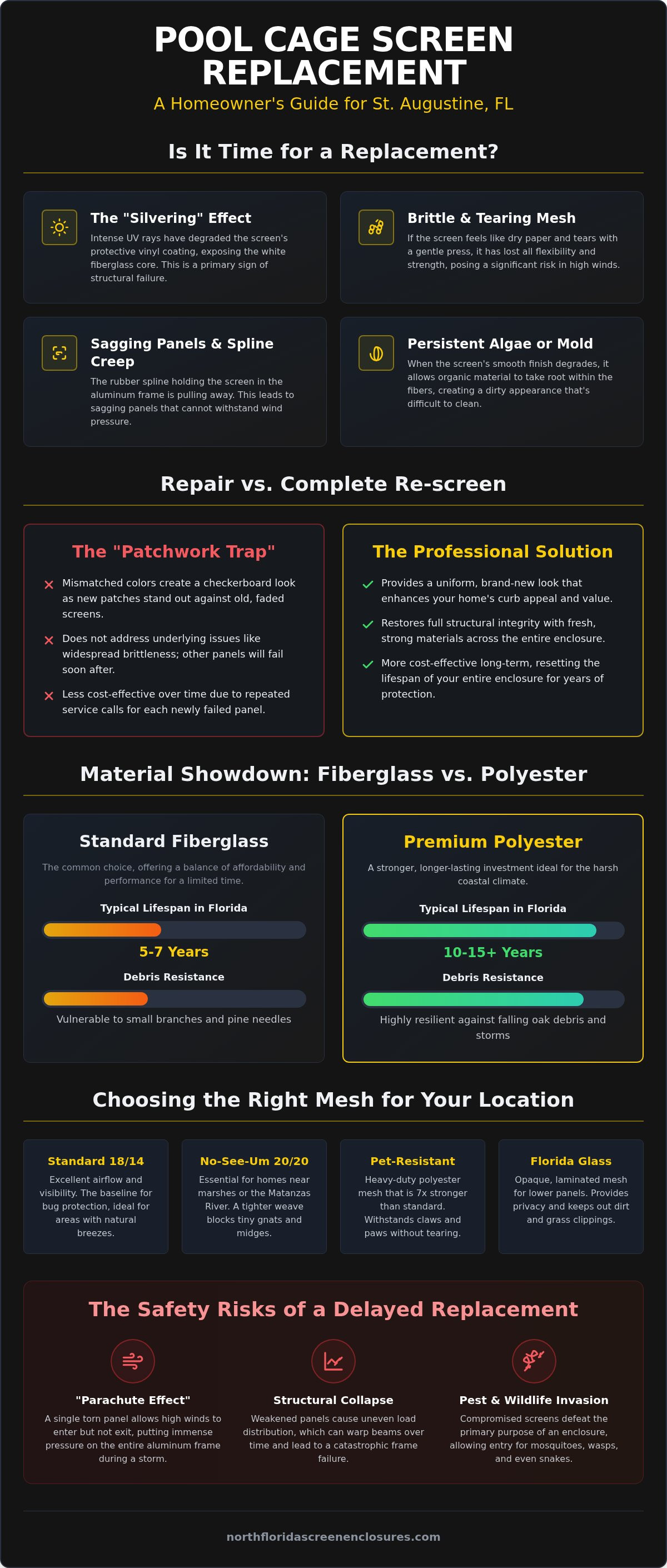
Determining the right time for a pool cage screen replacement St. Augustine project often starts with a visual inspection of the mesh itself. One of the most common indicators of failure is the "silvering" effect. This occurs when the sun's intense UV rays degrade the protective vinyl coating, exposing the fiberglass core underneath. If your screens look white or shiny in the sunlight, they've lost their flexibility and strength. Once this coating is gone, the structural integrity of the individual fibers is compromised.
A simple brittleness test can confirm the extent of the damage. Gently press your finger against a screen panel; if the mesh tears easily or feels like dry paper, it has reached its expiration date. You should also look for "spline creep," where the rubber gaskets holding the mesh in place begin to pull away from the aluminum channels. This results in sagging panels that can no longer withstand wind pressure. Additionally, deep-seated algae or mold growth suggests that the types of screen mesh used have lost their smooth finish, allowing organic material to take root within the fibers.
The Impact of St. Augustine’s Coastal Climate
Living on the First Coast means your enclosure faces a constant barrage of salt spray and moisture. Oceanic air carries microscopic salt particles that settle on the mesh, accelerating the breakdown of standard materials. In St. Johns County, high humidity levels keep this moisture trapped against the screen, weakening its tensile strength over time. While the Florida sun is a major draw for residents, its constant UV exposure is the primary enemy of enclosure longevity, eventually baking the life out of even the highest quality standard mesh.
Safety Risks of Delayed Replacement
Delaying a pool cage screen replacement St. Augustine service creates genuine safety risks for your property. During high-wind events, a single torn or weakened panel can allow air to enter the enclosure without a clear exit. This creates a "parachute effect" where trapped pressure puts immense strain on the aluminum frame, potentially leading to a total collapse. Missing or loose panels also create uneven load distribution across the beams, which can warp the structure over time. Beyond the structural concerns, compromised screens allow wasps, snakes, and mosquitoes to enter your pool area, removing the primary benefit of having an enclosure in the first place.
Choosing the Right Screen Material for the First Coast
Selecting the correct mesh is the most critical decision in a pool cage screen replacement St. Augustine project. While all new screens look similar to the untrained eye, the weave density and material composition determine how your enclosure performs against local pests and the harsh Atlantic environment. Phifer mesh is the industry standard for Florida enclosures, providing a dependable balance of visibility and long-term durability. For homeowners in St. Augustine, the choice usually comes down to how much protection you need from the environment and the local wildlife.
Standard 18/14 Mesh: This is the baseline for bug protection. It offers excellent airflow and visibility, making it a popular choice for homes with plenty of natural breeze.
No-See-Um (20/20) Mesh: Essential for homes near the Matanzas River or coastal marshes, this tighter weave blocks the tiny gnats and midges that standard screens miss.
Pet-Resistant Screening: Made from heavy-duty polyester, this material is seven times stronger than standard mesh. It's designed to withstand claws and paws without tearing.
Florida Glass: This is a laminated, opaque mesh often used on the bottom tier of a cage. It acts as a privacy barrier and keeps grass clippings and dirt out of the pool area.
Beyond bug protection, a secure enclosure serves as a primary barrier for your property. Maintaining these barriers is a key component of meeting national pool safety standards, which emphasize the importance of preventing unauthorized access to water. If you are planning a complete re-screen, matching the material to your specific micro-climate ensures you won't be repeating the process in just a few years.
Polyester vs. Fiberglass Mesh
Standard fiberglass mesh typically lasts between five and seven years in the Florida climate before UV rays cause it to become brittle. In contrast, polyester-coated mesh options often carry a much longer lifespan, frequently reaching 10 to 15 years or more. While the initial investment in polyester is higher, its superior tensile strength makes it much more resilient against falling pine needles, oak debris, and small branches during summer storms. For coastal homes, the cost-to-value ratio favors polyester due to its resistance to salt-air degradation.
Specialty Coastal Enhancements
To maximize the life of your re-screen, look for materials with enhanced UV-resistant coatings. These treatments act like a sunscreen for your enclosure, preventing the "silvering" effect mentioned earlier. Many St. Augustine homeowners also opt for Florida Glass on the lower panels to block the view of nosy neighbors or to stop saltwater splashes from the pool from reaching the surrounding landscape. Using these specialty materials strategically allows you to customize your outdoor space for both function and privacy.
Repair vs. Complete Re-screen: Which Is Right for You?
Deciding between a spot repair and a full re-screen is a common dilemma for St. Augustine homeowners. While it's tempting to simply patch a single hole, this often leads to the "patchwork trap." New mesh has a deep, dark charcoal finish that contrasts sharply with the faded, silvered appearance of older panels. This creates an inconsistent look that can detract from your home's curb appeal. Beyond aesthetics, if one panel has failed due to age or UV degradation, the surrounding panels are likely in a similar state of decline and will soon follow suit.
The general rule for our coastal climate is the 7-to-10-year mark. If your enclosure is within this age range, a full pool cage screen replacement St. Augustine project is typically the most responsible choice. Investing in a complete overhaul restores the "new" look of your entire outdoor living space and ensures that every panel provides the same level of protection. It eliminates the frustration of constant, recurring repairs that never quite solve the underlying issue of mesh fatigue.
When to Opt for Single Panel Repair
There are specific scenarios where a targeted repair is the most practical path. If your enclosure is relatively new, perhaps less than three or four years old, the mesh likely still has plenty of life and flexibility. In these cases, isolated damage from a bird strike, a stray golf ball, or a minor storm event can be fixed without a full overhaul. Choosing an Expert Pool Enclosure Repair in St. Augustine allows you to maintain the integrity of a newer cage without the expense of a full project. It's also a viable temporary solution if you have strict budget constraints but need to keep pests out while planning for a future replacement.
Why a Complete Re-screen is a Better Long-Term Investment
From a financial perspective, a full re-screen offers superior cost efficiency. A significant portion of any professional screen service involves mobilization costs, including transporting equipment, setting up safety gear, and site preparation. When a crew handles the entire cage at once, the labor cost per panel is substantially lower than it would be for multiple individual service calls spread over several years. This methodical approach also allows for consistent tensioning. When the entire structure is screened at the same time, the pulling forces on the aluminum beams are balanced, which prevents the frame from warping or experiencing uneven stress. This professional uniformity is essential for the structural longevity of your pool enclosure.
The Professional Re-screening Process: A Step-by-Step Guide
A professional pool cage screen replacement St. Augustine project is a methodical operation that extends far beyond simply rolling in new mesh. It begins with a comprehensive structural audit. We examine the aluminum frame for signs of oxidation and ensure that the support cables are still providing the necessary lateral stability. This is the only time the frame is fully exposed, making it the ideal moment to address underlying structural weaknesses that could compromise the enclosure during a storm.
Once the inspection is complete, the removal and prep phase begins. We safely strip away the old, brittle mesh and, more importantly, remove the aged rubber spline from the channels. Cleaning out these "spline channels" is a critical step that many DIY attempts skip. If debris or old rubber remains in the groove, the new spline won't seat properly, leading to premature panel failure. During the "roll-in," our technicians use specialized tools to achieve precise tension. The goal is a drum-tight finish that doesn't put enough inward pressure to bow the aluminum beams.
After the mesh is secured, we handle the finishing touches. This involves trimming excess material with surgical precision and inspecting all door hardware. We ensure that self-closing hinges and latches are functioning correctly, as these are vital for maintaining a safe and code-compliant pool area.
The Critical 'While We Are There' Checklist
During a re-screen, certain components are much easier to access. We pay close attention to tapcons, the specialized fasteners that anchor your enclosure to the concrete deck. Over time, salt air causes these to rust and snap, which can lead to the entire cage shifting during a hurricane. You can learn why Tapcon Replacement for Pool Cages is vital for safety. We also check the tension on your hurricane bracing cables, tightening any that have slackened to ensure the cage remains rigid in high winds.
What to Look for in a St. Augustine Contractor
Choosing a partner for your project requires due diligence. Ensure any company you hire is fully licensed and insured specifically for work in St. Johns County. It's also important to distinguish between manufacturer warranties on the mesh and the contractor’s labor warranty. A local reputation is invaluable; a contractor familiar with St. Augustine's specific wind loads will understand which materials and anchoring techniques are necessary for our coastal environment. If you're ready to restore the integrity of your enclosure, contact us for a complete re-screen estimate.
Maximize Your Investment: Post-Replacement Maintenance
Completing a pool cage screen replacement St. Augustine project is a significant step toward protecting your home and enhancing your outdoor lifestyle. However, the coastal environment begins acting on your new mesh the moment our team leaves the site. Establishing a consistent maintenance routine is the most effective way to ensure your enclosure remains structurally sound and visually appealing for its full expected lifespan. A proactive approach doesn't just keep the mesh looking new; it protects the structural integrity of the entire aluminum frame.
One of the most common causes of premature screen failure is contact with surrounding landscaping. St. Augustine’s lush vegetation grows quickly; trees or shrubs rubbing against the mesh act like sandpaper, eventually wearing through the protective vinyl coating. Additionally, keeping your gutters clear is essential for the health of your enclosure. Clogged gutters cause water to back up and overflow directly onto the screen spline and aluminum frame. This constant moisture promotes algae growth and can lead to frame rot or the loosening of the rubber gaskets that hold your panels in place.
Safe Cleaning Practices for St. Augustine Homes
Salt buildup is a silent threat to any coastal enclosure. We recommend a simple fresh-water rinse every 3 to 6 months to remove corrosive salt particles from the mesh and aluminum. If you notice organic growth like algae or mold, avoid using high-pressure washers, as they can easily tear the screen or force the spline out of its channel. Instead, use a mild, screen-safe detergent and a soft-bristle brush for stubborn spots. Soft washing is the preferred method for cleaning enclosures. This technique uses low pressure and specialized solutions to kill algae without risking mechanical damage to the structure or the delicate mesh fibers.
Structural Longevity Tips
Maintaining the frame is just as important as caring for the mesh. Periodically inspect the concrete footers where the enclosure meets the deck. Look for new cracks or shifting anchors that might indicate the structure is under stress. Door hardware is another critical area; lubricating the hinges and closers every few months prevents the frame from twisting when the door is used. These small adjustments keep the cage in balance and prevent the aluminum from experiencing unnecessary fatigue. For a full list of tips, check our Custom Pool Enclosure Installation Guide. Regular inspections allow you to catch minor issues, like a loose spline or a single rusted fastener, before they escalate into the need for another full replacement.
Secure Your Enclosure for the Seasons Ahead
A high-quality pool cage screen replacement St. Augustine project is more than a cosmetic fix; it's a critical investment in your home's safety and curb appeal. By selecting coastal-ready materials and ensuring your enclosure receives a full structural audit, you protect your outdoor living space from the unique environmental demands of the First Coast. Remember that a complete re-screen offers the most consistent tension and long-term value, especially when paired with updated fasteners and cable adjustments.
North Florida Screen Enclosures brings 16+ years of specialized aluminum experience to every job. As a locally owned and operated specialist in St. Augustine, we take pride in using hurricane-resistant materials and expert craftsmanship to ensure your project stands the test of time. We're here to help you navigate the process with professional reliability and local expertise. If you're ready to transform your pool area into a secure, bug-free sanctuary, Request Your Free St. Augustine Re-screening Estimate today. We look forward to helping you protect your home with durable, high-quality workmanship.
Frequently Asked Questions
How long does a pool cage screen typically last in St. Augustine?
Standard fiberglass screens typically last between 5 and 7 years in the St. Augustine climate. The high UV exposure and salt-laden air on the First Coast accelerate the breakdown of the vinyl coating. If you invest in high-performance polyester mesh, you can expect a lifespan of 10 to 15 years. Choosing more durable materials during a pool cage screen replacement St. Augustine project ensures your enclosure remains resilient against the elements for a much longer period.
Can I replace just the roof panels of my pool enclosure?
You can replace only the roof panels, but we generally advise against it if the enclosure is older than five years. Roof panels receive the most direct UV radiation and usually fail first. However, replacing only the top often results in a noticeable color mismatch with the vertical side panels. A complete re-screen ensures uniform tension across the entire frame and prevents the need for another mobilization fee just a few months later.
What is the best screen for keeping out 'no-see-ums' in North Florida?
The 20/20 mesh, often called no-see-um screen, is the most effective solution for homes near St. Augustine’s marshes and waterways. This tighter weave features smaller openings that block tiny gnats and midges that standard 18/14 mesh cannot stop. While it slightly reduces airflow compared to standard options, it's essential for enjoying your pool area during the dawn and dusk hours when these pests are most active.
Does a pool screen replacement include the doors and hardware?
A professional pool cage screen replacement St. Augustine service typically includes a full door tune-up. This process involves installing new bug sweeps, handles, and self-closing hardware to ensure the enclosure remains a secure barrier. We also inspect the hinges and closers to prevent frame stress. Ensuring your doors function correctly is a vital part of maintaining a code-compliant pool area and providing the peace of mind you expect from a full re-screen.
Is it necessary to replace rusted screws (Tapcons) during a re-screen?
Replacing rusted Tapcons is a critical safety step during any re-screening project. These specialized fasteners anchor your aluminum frame to the concrete deck. Over time, salt air causes them to oxidize and weaken. If these screws snap, the entire structure can shift or collapse during a high-wind event. We recommend replacing them with high-quality, corrosion-resistant fasteners to maintain the structural integrity and hurricane resilience of your pool enclosure.
How much wind can a newly screened pool cage withstand?
A properly screened pool cage is designed to meet specific wind load requirements set by the Florida Building Code. When the mesh is in good condition, wind can pass through the enclosure, which reduces the pressure on the aluminum beams. However, if panels are partially torn or loose, they can create a "parachute effect" that traps wind and puts immense strain on the frame. A professional re-screen ensures the structure performs as engineered during a storm.
Will a full re-screen increase my home's value in St. Augustine?
A full re-screen significantly enhances a home's value by restoring curb appeal and ensuring the outdoor space is fully functional. In the St. Augustine real estate market, buyers prioritize move-in-ready homes with well-maintained amenities. An enclosure with "silvered" or torn mesh suggests deferred maintenance, whereas a crisp, dark, and structurally sound cage serves as a major selling point. It demonstrates that the homeowner has protected the structural integrity of the property.
How long does the actual screen replacement process take for an average pool?
The actual installation process for an average-sized pool enclosure usually takes between one and three days. This timeline includes the removal of old mesh, cleaning the spline channels, and performing any necessary structural repairs like Tapcon replacement. Larger or more complex structures with panoramic views or high-pitched roofs may require additional time. We work methodically to ensure every panel is tensioned correctly without rushing the professional finishing touches that define a high-quality job.


Comments