


Pool Enclosure Rescreening Cost Florida: The 2026 Homeowner’s Guide
- Michael Caruso

- Aug 5
- 12 min read
Your pool screen is more than a simple barrier against mosquitoes; it's a vital structural element that helps your enclosure withstand the intense pressures of hurricane season. You've likely noticed the unsightly green algae creeping across the aluminum or the telltale orange streaks left behind by corroded fasteners. It's a common frustration for many in our coastal climate where salt air and high humidity constantly test the limits of our outdoor living spaces.
While aesthetics matter, calculating the pool enclosure rescreening cost Florida residents should expect in 2026 involves more than just measuring square footage. In this guide, we'll explore why a structural-first approach to maintenance is the only way to truly protect your investment. We'll examine the longevity of modern materials like no-see-um mesh, the necessity of professional tensioning for wind resistance, and why replacing those aging Tapcons is just as important as the screen itself. You'll gain a clear understanding of the variables that drive professional pricing and how to ensure your cage remains standing through the next storm.
Table of Contents
Factors Influencing Pool Enclosure Rescreening Cost in Florida
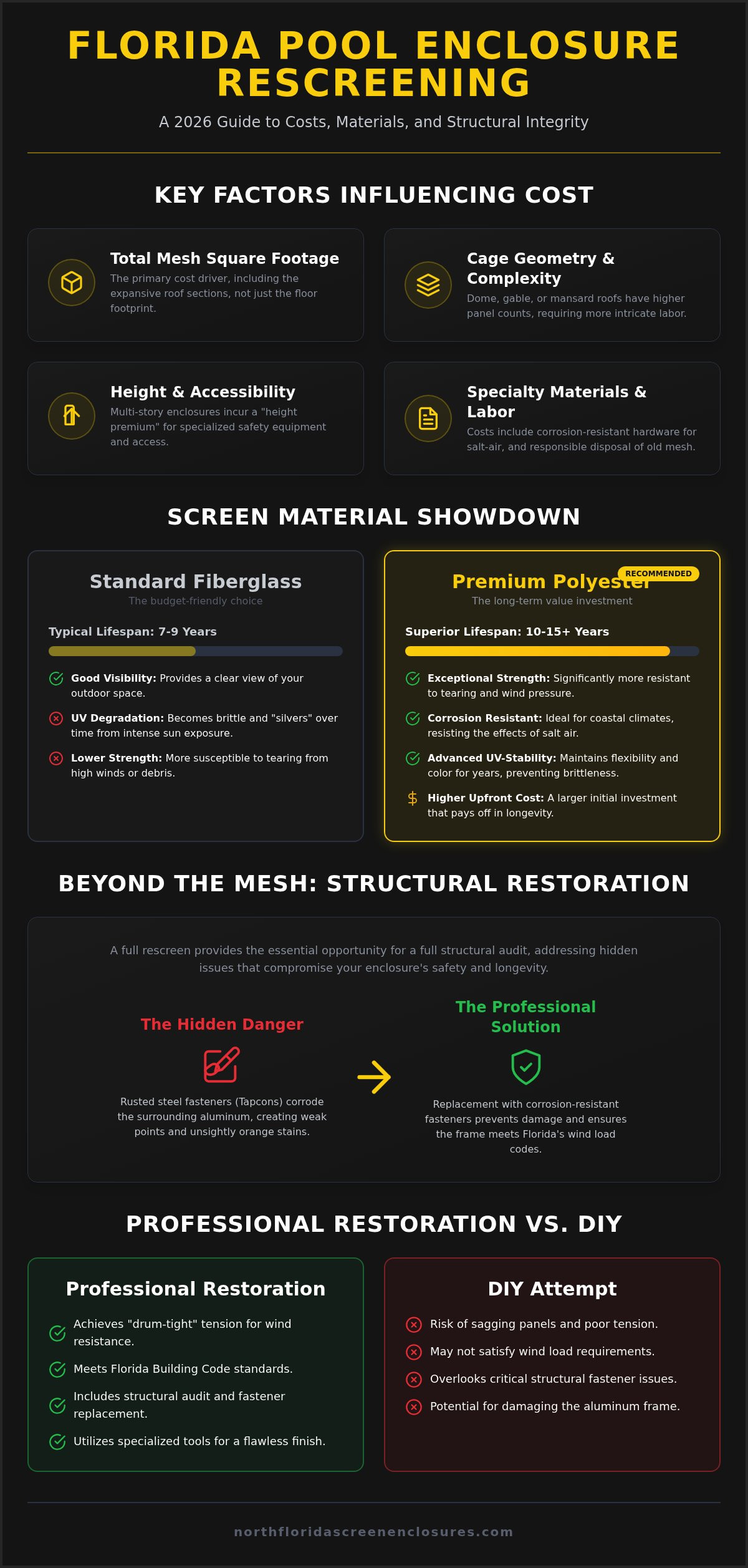
Pool enclosure rescreening is the comprehensive process of removing every existing mesh panel and vinyl spline from an aluminum frame to replace them with fresh, high-performance materials. It's a complete restoration of the barrier that defines your outdoor environment. While homeowners often focus on the footprint of their pool, the primary driver for pool enclosure rescreening cost Florida residents experience is the total square footage of the mesh surface area. This calculation includes not just the perimeter walls, but the expansive roof sections as well. Because these screened-in living spaces are three-dimensional structures, the volume of material required can be surprising to those measuring only by the length and width of their deck.
Verticality adds a layer of complexity that standard estimates often overlook. Multi-story enclosures, which are common in coastal developments, require what professionals call a height premium. This covers the specialized scaffolding, extension ladders, and safety harnesses necessary to reach peak sections safely. Accessibility also dictates the final price. If your enclosure is bordered by dense tropical landscaping or sits on a tight lot line with minimal clearance, the crew will spend more time maneuvering equipment and materials. These logistical hurdles increase the total man-hours required to complete the job with the necessary level of care.
Size, Configuration, and Cage Geometry
The geometry of your cage dictates the technical difficulty of the installation. Dome, gable, and mansard roof styles have more angles and structural members than a simple shed roof. We often evaluate the panel count rather than just raw square footage; each individual panel requires separate cutting, tucking, and rolling of the spline to ensure a secure fit. If you choose to integrate specialty features like Florida glass, which is a laminate-shielded mesh used on the lower perimeter for privacy and to block yard debris, the material cost per linear foot will rise to reflect the added functionality.
Labor and Local Market Trends in 2026
Labor rates in 2026 reflect the specialized nature of aluminum work in coastal environments like Saint Augustine. Unlike inland regions, coastal contractors must account for the specialized tools and corrosion-resistant hardware required to work in salt-air conditions. Modern environmental regulations also mandate specific disposal protocols for old fiberglass mesh, which adds a fee for debris removal and responsible recycling. Rescreening labor is the precision-tensioning of mesh to prevent sagging and ensure the structure can handle high-velocity wind loads. This level of craftsmanship ensures that your pool enclosure rescreening cost Florida investment provides long-term value rather than just a temporary cosmetic fix.
Comparing Screen Materials: Impact on Longevity and Pricing
Selecting the right mesh is the most critical decision a homeowner makes during a project. It directly influences the pool enclosure rescreening cost Florida contractors provide in their estimates and dictates the long-term ROI of the installation. For decades, the industry standard has been 18x14 fiberglass mesh. This material provides reliable protection against mosquitoes and offers excellent visibility, but it has limitations in our harsh coastal environment. The intense UV radiation in Saint Augustine eventually bakes the vinyl coating of fiberglass, leading to a "brittle" texture and a silvering effect that signals the screen is nearing the end of its functional life.
Choosing a mesh that maintains its structural integrity is vital for compliance with Florida's official building code, which mandates specific wind load capacities for screened structures. High-performance materials now feature advanced UV-stabilized coatings that prevent the mesh from becoming fragile over time. This ensures that the screen can flex under wind pressure rather than snapping or tearing away from the spline channel.
Fiberglass vs. Polyester: The Long-Term Value Play
While fiberglass remains the budget-friendly choice with a typical lifespan of 7 to 9 years, polyester mesh is increasingly the preferred option for North Florida homeowners. Polyester is significantly stronger and resists the corrosive effects of salt air much better than traditional fiberglass. Although the upfront pool enclosure rescreening cost Florida residents pay for polyester is higher, it's a superior investment. A polyester screen often carries a 10-year warranty and can last 15 years or more, effectively doubling the time between full rescreens. If you're looking for a balance between durability and clarity, the specialists at North Florida Screen Enclosures can help you compare these materials in person.
Specialty Mesh for Unique Florida Needs
Beyond the standard options, specialty screens address specific environmental challenges. Pet-resistant mesh is a heavy-duty, vinyl-coated polyester designed to withstand claws and paws, making it essential for households with active dogs. For those living near the marshes of Saint Augustine, No-See-Um mesh features a much tighter weave (20x20) to block the tiny biting gnats that pass through standard screens. Solar screening is another popular upgrade; it blocks up to 90% of the sun's heat gain. This not only keeps your patio cooler but also protects your outdoor furniture and rugs from the rapid fading caused by relentless UV exposure. Each of these upgrades changes the pricing profile but adds tangible value to your daily comfort.
Beyond the Mesh: Structural Restoration and Fastener Replacement
A common mistake homeowners make is treating a rescreen project as a purely aesthetic task. In reality, a full rescreen is the only time a contractor has unfettered access to the structural skeleton of your cage. When the old mesh is removed, the aluminum frame is no longer under tension, allowing for a thorough inspection of the fasteners that anchor the structure to your deck and house. Neglecting these components during a project can lead to an artificially low pool enclosure rescreening cost Florida quote that ignores the underlying health of the enclosure.
One of the most visible signs of structural neglect is the "bleeding" effect. This occurs when standard steel screws begin to oxidize in the humid Florida air, leaving unsightly orange streaks down your white or bronze aluminum members. These streaks are more than a cosmetic nuisance; they indicate that the fastener's integrity is compromised. If a screw is rusting on the outside, it's likely failing on the inside where it bites into the aluminum. This degradation creates weak points that can fail under the immense pressure of a tropical storm or hurricane.
The Importance of Tapcon Replacement
In Saint Augustine’s salt-rich atmosphere, standard fasteners simply don't have the lifespan required for long-term safety. We emphasize the use of ceramic-coated or stainless steel Tapcons during every restoration. These premium fasteners are engineered to resist the corrosive "electrolysis" that occurs when different metals meet in a saltwater environment. While upgrading these parts affects the pool enclosure rescreening cost Florida homeowners pay, it's a necessary step to prevent the frame from lifting or collapsing when high-velocity winds create a vacuum effect on the screen panels.
Cables, Bracing, and Hurricane Readiness
The structural stability of your enclosure relies heavily on a system of stainless steel corner cables. These cables act as the "muscles" of the frame, providing the necessary counter-tension to keep the structure square. Over time, these cables can stretch or fray, leading to a condition known as "racking," where the entire cage begins to lean slightly to one side. During a rescreen, we carefully inspect and re-tension these cables to ensure the frame remains rigid.
For homes with integrated patio covers or "Elite Roofing" systems, we also verify that the connection points between the screen walls and the solid roof are secure. Structural integrity is the primary concern for any high-quality pool enclosure installation. Ensuring your cage is hurricane-ready means looking beyond the mesh and addressing the hardware that keeps the entire system anchored to the ground.
How to Extend the Life of Your Screen Enclosure: Maintenance Checklist
Maximizing the lifespan of your enclosure requires a proactive maintenance strategy that accounts for Florida's aggressive environmental cycles. By following a "gentle-first" cleaning philosophy, you can preserve the integrity of your mesh and aluminum frame, effectively deferring the pool enclosure rescreening cost Florida homeowners face when neglect takes hold. The goal is to remove corrosive elements like salt spray and organic growth without compromising the tension of the screen or the finish of the metal.
Surrounding vegetation plays a significant role in the degradation of your screens. Overhanging branches drop debris that traps moisture against the mesh, creating a breeding ground for algae. Keeping trees trimmed at least three feet away from the cage prevents physical punctures during high winds and reduces the amount of organic matter that can clog the weave. When the mesh becomes clogged, it acts like a sail rather than a filter, significantly increasing the wind load on your structural fasteners.
You should avoid high-pressure washers at all costs. While it's tempting to blast away green algae with a 3000-PSI stream, this force often strips the protective powder coating from the aluminum and can loosen the vinyl spline that holds your panels in place. Once the spline is compromised, the screen will begin to sag, leading to premature failure even if the mesh itself is still in good condition.
Safe Cleaning and Algae Mitigation
The most effective way to clean your enclosure is with a soft-bristled brush and a mild, biodegradable detergent. Focus on areas where green algae typically thrives, such as the bottom tracks and the north-facing sections of the roof. You should avoid using bleach, as it's highly corrosive to aluminum finishes and can disrupt your pool's delicate chemical balance if it drips into the water. A simple "rinse-only" method performed once a month with a standard garden hose is often enough to remove salt buildup and keep air flowing freely through the mesh.
The 2026 Florida Seasonal Maintenance Cycle
Spring: Wash away the thick yellow pollen that blankets North Florida. If left to sit, pollen hardens in the mesh, making it difficult to clean and reducing the clarity of your view.
Pre-Hurricane (May): Conduct a thorough audit of all door latches and fasteners. Ensure that every screw is tight and that the frame feels rigid. If you notice orange rust streaks or loose cables, it's time to address these structural issues before the peak of storm season.
Winter: Take advantage of the drier, cooler months. This is the ideal time for complete re-screens because the low humidity allows for better tensioning of the materials.
If your maintenance audit reveals sagging panels or corroded hardware that a simple cleaning can't fix, contact the specialists at North Florida Screen Enclosures for a professional structural evaluation.
Professional Restoration vs. DIY Rescreening
Homeowners often review a professional quote and wonder if they can reduce their pool enclosure rescreening cost Florida by handling the project themselves. While a "patch and pray" approach might work for a single lower panel at ground level, a complete structural restoration is a significantly different undertaking. Professional restoration involves more than just pulling mesh; it's a methodical process of ensuring the entire aluminum skeleton is prepared to support the tension of new materials for the next decade.
Achieving proper drum-tight tension is nearly impossible without professional-grade rolling tools and the experience to judge material stretch. If the mesh is too loose, it will sag and flutter in the wind, leading to premature wear. If it's too tight, it can actually pull the aluminum members out of alignment. Professionals use specialized equipment to seat the vinyl spline evenly across every channel, creating a uniform surface that resists the vacuum effect created by high-velocity winds. Beyond the technical difficulty, the safety risks of working at heights on a pool cage roof are substantial. Navigating narrow aluminum beams ten or fifteen feet above a concrete deck requires specialized safety harnesses and ladders that most homeowners simply don't possess.
The Risks of DIY Screen Replacement
Improper spline installation is the most common failure in DIY attempts. If the spline isn't seated with the correct diameter or pressure, the panels will often "pop out" during the first afternoon thunderstorm. There's also a high risk of damaging the aluminum "groove" or track during the removal of old, hardened spline. Using the wrong prying tool can burr or bend the track, making it impossible to get a tight seal with the new material. Furthermore, many DIYers attempt partial rescreening to save money, which almost always results in mismatched mesh colors and inconsistent tension across the frame, undermining the structural unity of the cage.
Why Local Expertise Matters in Saint Augustine
In 2026, navigating the updated Florida Building Code and its specific wind load requirements is essential for any major enclosure work. As a Saint Augustine specialist, North Florida Screen Enclosures understands how coastal salt air dictates every phase of the project, from the choice of mesh to the grade of the fasteners used. We ensure that your enclosure isn't just visually refreshed but is structurally sound enough to withstand the unique pressures of our tropical climate. Professional craftsmanship adds measurable value to your home’s resale potential, providing a "like-new" appearance that reassures future buyers of the property's integrity. When you're looking for a long-term solution that protects your investment, the expertise of a diligent craftsman is the most cost-effective choice.
Protecting Your Outdoor Investment for the Long Term
Your pool enclosure is a significant structural asset that requires more than a simple cosmetic refresh to remain safe in our coastal environment. We've explored how selecting high-performance materials like polyester mesh and addressing corroded hardware are essential steps for maximizing longevity. A professional restoration ensures that your cage meets modern hurricane-rated standards while providing a drum-tight finish that DIY methods simply can't replicate. When you evaluate the pool enclosure rescreening cost Florida residents encounter, remember that a structural-first approach is what ultimately protects your home.
As locally owned and operated specialists in Saint Augustine, we take pride in our technical expertise. Our team focuses on the precise details, from specialized Tapcon replacement to high-quality aluminum standards, to ensure your enclosure stays anchored during the toughest storms. Get a professional structural audit and rescreening estimate from North Florida Screen Enclosures. By investing in professional craftsmanship now, you'll enjoy a resilient, beautiful outdoor space with total peace of mind for years to come.
Frequently Asked Questions
How often should a pool enclosure be rescreened in Florida?
Standard fiberglass mesh usually lasts between seven and nine years, while high-performance polyester can remain functional for over 15 years. The intense UV exposure and salt air in coastal regions like Saint Augustine often accelerate the breakdown of the vinyl coating on standard screens. You'll know it's time for a rescreen when the mesh feels brittle to the touch or begins to develop silver patches that indicate material fatigue.
What is the average cost per panel for screen repair in Saint Augustine?
Pricing for individual panel replacement depends on the panel's location, its total surface area, and the height of the enclosure. Roof panels generally require more labor and specialized safety equipment compared to lower wall panels that are accessible from the ground. While a single panel fix is a temporary solution, many homeowners find that a full restoration is more cost-effective when multiple panels show signs of age.
Will a new screen help my pool cage survive a hurricane?
Fresh mesh and professional tensioning are vital for hurricane readiness because they help the structure manage wind loads. When screens are installed with the correct drum-tight tension, they allow wind to pass through more efficiently rather than catching it like a sail. This reduces the lateral pressure on the aluminum frame. However, the screen is only as secure as the fasteners holding the frame to the deck.
Why are my pool cage screws rusting and leaving orange stains?
Rusting screws are a sign of galvanic corrosion, where standard steel fasteners react with the aluminum frame in Florida's humid, salt-rich environment. This process weakens the structural connection and leaves unsightly orange streaks on your enclosure members. Replacing these aging screws with ceramic-coated or stainless steel fasteners is a critical part of maintaining the structural integrity of your screened-in space during a restoration.
Is polyester mesh worth the extra cost over fiberglass?
Polyester mesh offers a significantly better return on investment despite a higher initial pool enclosure rescreening cost Florida residents might see in estimates. Its superior tear strength and UV resistance make it nearly impossible to break by hand, even after years of sun exposure. For homeowners in Saint Augustine, the durability of polyester against high winds and salt air makes it the most reliable long-term choice.
How long does a professional rescreening project take to complete?
A professional rescreening project for a standard-sized enclosure typically takes between one and three days to finish. The timeline depends on the complexity of the cage geometry and whether structural repairs, such as Tapcon replacement or cable re-tensioning, are required. Our methodical approach ensures that every panel is rolled with precision and every fastener is inspected without rushing the installation process.
Can I change my screen type during a full rescreening project?
A full rescreening project is the perfect opportunity to upgrade your mesh to better suit your lifestyle and environmental needs. You can choose to install No-See-Um mesh to block tiny gnats, Pet-Resistant mesh for added durability near the floor, or Solar mesh to reduce heat gain. Mixing different mesh types within the same enclosure is also a practical way to address specific privacy or protection requirements.
Does homeowners insurance cover pool enclosure rescreening after a storm?
Most standard Florida homeowners insurance policies don't cover the replacement of screen mesh, as it's often considered a wear-and-tear item. While the aluminum frame itself might be covered under certain windstorm provisions, the mesh is typically excluded unless you have a specific endorsement or rider. It's always best to review your policy details with your agent to understand your coverage before the hurricane season begins.


Comments