


Pool Screen Enclosures: 2026 Homeowner's Guide
- Michael Caruso

- Aug 6
- 11 min read
In North Florida, an unprotected pool isn't a luxury; it's a full-time job that many homeowners didn't sign up for. You likely invested in your backyard oasis to relax, yet you often find yourself constantly skimming leaves, battling persistent mosquitoes, or retreating indoors to avoid harsh UV rays. It's a common frustration to feel that your outdoor space is working against you rather than providing the sanctuary you expected.
This guide helps you navigate the technical and aesthetic choices for modern swimming pool screen enclosures to protect your lifestyle and your property. We'll show you how to select a design that enhances your home's architecture while meeting the rigorous 8th Edition Florida Building Code standards. You'll learn about the latest trends in panoramic views, the importance of hurricane-rated engineering, and how specialized maintenance like tapcon replacement provides lasting peace of mind during the Atlantic storm season.
Table of Contents
What is a Swimming Pool Screen Enclosure?
At its simplest, a swimming pool screen enclosure is a custom-engineered aluminum frame integrated with durable mesh panels. In North Florida, these structures are far more than a basic accessory. They serve as a primary defense system against the environmental challenges unique to the St. Augustine coast. While many people still refer to them as "pool cages," modern architectural designs have moved away from the boxy, restrictive looks of the past. Today's enclosures utilize sleek profiles and wide-span engineering to create an open environment that complements your home's aesthetic rather than hiding it.
The St. Augustine climate presents specific hurdles, including high humidity and corrosive salt air. These factors can degrade standard materials quickly if they aren't specifically rated for coastal use. Professional swimming pool screen enclosures are designed to withstand these local pressures, ensuring that your investment remains structurally sound for decades. By creating a controlled environment, you effectively extend your home's living square footage into the outdoors.
The Core Benefits of Screening Your Pool
Installing a professional enclosure provides immediate functional advantages that go beyond just keeping out leaves. Homeowners often see a significant reduction in weekly pool chemical and cleaning costs because organic debris is blocked before it can affect the water chemistry. The mesh also provides a natural cooling effect, often referred to as a "shade effect," which reduces the intensity of direct sunlight without blocking the sun entirely. This makes the pool deck much more comfortable during the peak of a Florida summer. Additionally, an enclosure acts as a secondary safety barrier, helping to prevent unauthorized access by children or pets.
Anatomy of a High-Quality Enclosure
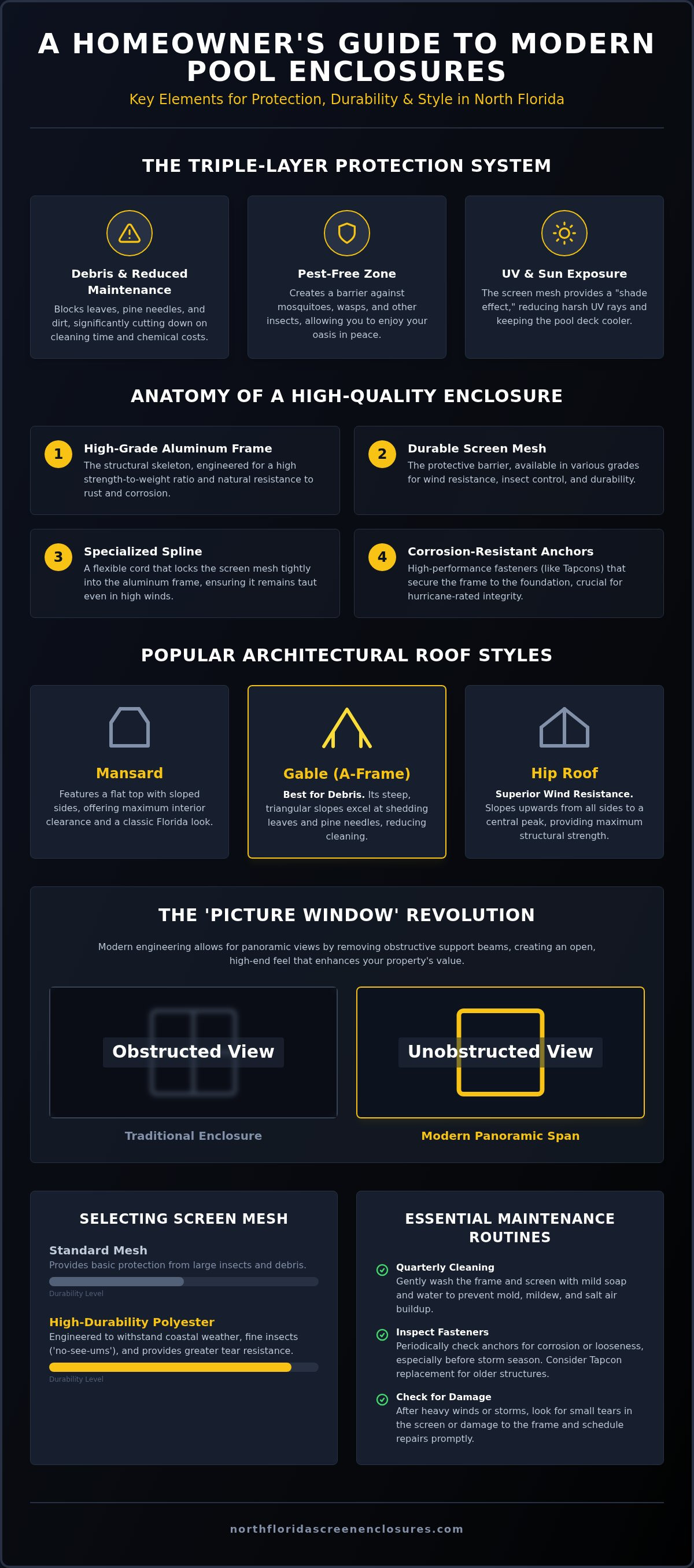
A resilient enclosure depends on the quality of its individual components. The "skeleton" consists of high-grade aluminum extrusions, which are selected for their strength-to-weight ratio and natural resistance to rust. To hold the mesh panels in place, we use a specialized material called a spline. This flexible cord creates a tight seal within the aluminum tracks, ensuring the screen stays taut even during high winds.
The most critical part of the structure is the anchoring system. For homeowners with older structures, Tapcon replacement is a vital maintenance step. Over time, original steel fasteners can corrode due to salt air exposure, which compromises the entire frame's stability. Replacing these with high-performance, corrosion-resistant anchors ensures the enclosure remains securely fastened to the concrete foundation during storm season.
Choosing the Right Design for Your St. Augustine Home
Selecting the right design for your home requires a balance between visual appeal and structural resilience. In St. Augustine, this choice is heavily influenced by the 8th Edition of the Florida Building Code, which mandates specific wind-load compliance for all new swimming pool screen enclosures. It isn't just about picking a shape. It's about ensuring the aluminum framework can withstand the localized pressure of coastal storm systems while maintaining its integrity over decades of sun and salt exposure.
Homeowners in 2026 are increasingly moving away from standard utility looks in favor of modern pool enclosure design. This trend focuses on integrating the structure into the existing architecture of the home. For example, using dark bronze or black frames has become a popular way to create a more contemporary, high-end feel that matches modern window trims and roofing materials. While these aesthetic upgrades might involve a higher initial investment, they significantly enhance the home's resale value and curb appeal.
Popular Roof Styles: Mansard, Gable, and Hip
The roofline is the most visible part of your enclosure and dictates both the interior volume and how the structure handles debris. The Mansard style features a flat top with sloped sides, offering the most interior clearance and a classic look that fits most Florida homes. If your property is surrounded by trees, a Gable roof, or A-frame, is often the better choice. Its steep slopes excel at shedding pine needles and oak leaves, reducing your weekly maintenance. For those prioritizing strength, the Hip roof slopes upward from all sides to meet at a peak, providing superior wind resistance and a complex, custom appearance.
The 'Picture Window' Revolution
Perhaps the most significant shift in modern design is the "picture window" or panoramic span. Traditional swimming pool screen enclosures use vertical and horizontal "chair rails" every few feet to support the screen mesh. A picture window design removes these obstructions by using heavier-gauge aluminum beams to support spans of up to 40 feet. This is currently the top request for waterfront properties in Saint Augustine, where homeowners want to maximize their view of the Matanzas River or the Atlantic coast. If you're considering a more open look, you can consult with a local specialist to see if your site's specific wind-load requirements support these larger, clear-span openings.
Selecting Screen Mesh for Coastal Resilience
Mesh selection represents the final layer of defense for swimming pool screen enclosures. In the St. Augustine area, this choice determines whether your enclosure remains functional for five years or fifteen. While the aluminum frame provides the structure, the mesh handles the daily assault of UV rays, salt spray, and localized pests. Selecting a material that matches your specific micro-climate is essential for long-term satisfaction and structural integrity.
Standard fiberglass mesh is the most common choice, yet it often falls short in coastal environments. High-durability polyester options are superior because they feature a thick vinyl coating that resists the abrasive nature of salt air. This material maintains its tensile strength much longer than fiberglass, which tends to become brittle and tear after a few seasons of intense Florida sun. Additionally, many modern polyester meshes include UV-resistant coatings that prevent "silvering," a process where the screen turns a brittle, metallic gray and loses its transparency.
Aesthetics and privacy also play a role in your selection. Many homeowners opt for a vinyl-laminated screen, often called "Florida Glass," for the bottom panels of their enclosure. This product provides a translucent privacy barrier that obscures the view from the outside while allowing light to filter through. It's also an excellent solution for splash protection, as it prevents dirt, mulch, and lawn debris from blowing into the pool during heavy rains or landscaping work.
Standard vs. Specialty Mesh
18x14 is the industry standard for general use. It provides a reliable balance of airflow and protection against larger insects like flies and mosquitoes. However, high-traffic areas or homes with active pets should consider Pet Screen. This heavy-duty, vinyl-coated polyester is seven times stronger than standard mesh and can withstand claws and paws without sagging. If your pool deck becomes uncomfortably hot, Solar Screen can block up to 90% of the sun's heat, significantly lowering the temperature of the water and the surrounding pavers during the peak of summer.
Engineering for the Coast
The integrity of hurricane rated pool enclosures depends on precise mesh tension and high-quality spline. If the screen is too loose, it can whip in the wind and eventually pull out of the aluminum track. Conversely, if it's too tight, it can place excessive stress on the frame during high-wind events. In Saint Augustine, salt spray can accumulate in the weave of the mesh, leading to a brittle effect that obscures your view over time. 20x20 mesh is essential for coastal marshes because its ultra-fine weave creates a physical barrier that tiny no-see-ums simply cannot pass through.
How to Maintain and Protect Your Enclosure
Proper maintenance is the only way to ensure swimming pool screen enclosures reach their full lifespan in the North Florida climate. The combination of high humidity and organic growth often leads to "green mold" appearing on the mesh and aluminum frame. This isn't actually mold but a type of algae that thrives in the St. Augustine heat. If you leave this growth untreated, it can trap moisture against the structure and accelerate the degradation of the screen mesh. Establishing a quarterly routine is the most effective way to prevent this growth and identify potential structural issues before they lead to expensive failures.
Homeowners should perform a full walkthrough of the structure every three months. This is especially critical during the months leading up to the Atlantic hurricane season. You should look for sagging screen panels, loose spline, or any visible gaps where the frame meets the concrete. Catching these small issues early often prevents the need for a total re-screen after a minor storm event. While cleaning is a manageable task for most, any structural instability requires a professional screen enclosure repair to ensure the system remains wind-load compliant.
Step-by-Step Cleaning Guide
Cleaning your enclosure doesn't require complex chemicals or expensive equipment. You should mix a gentle solution of mild dish soap and warm water in a large bucket. Use a soft-bristle brush to gently scrub the aluminum beams and the mesh panels, paying close attention to the tracks and gutters where leaves and dirt accumulate. It's vital to avoid high-pressure power washing. The intense force of a pressure washer can easily tear the screen spline out of its groove or strip the protective paint finish off the aluminum extrusions.
The 'Tapcon' Check: A Safety Essential
The safety of your enclosure depends on the fasteners holding it to the ground. In coastal environments, salt air accelerates a process called oxidation between the aluminum frame and the steel screws used for anchoring. You should inspect the base of your enclosure for rusted or bleeding fasteners. If the screw heads are orange or crumbling, they've lost their structural integrity. A professional tapcon replacement involves removing these compromised anchors and installing high-performance, corrosion-resistant fasteners. This ensures the structure stays firmly anchored to the foundation during high-wind events.
Maintaining the structural integrity of your backyard is a priority for any St. Augustine homeowner. If you notice rusted fasteners or sagging mesh, you can contact North Florida Screen Enclosures for a professional evaluation of your system's safety.
Professional Installation with North Florida Screen Enclosures
Choosing a contractor for swimming pool screen enclosures in St. Augustine isn't just about finding the lowest price. It's about finding a team that understands the specific coastal engineering requirements of St. Johns County. Our local expertise ensures that every project we undertake meets or exceeds the current Florida Building Code. We don't just build structures; we create durable environments that protect your home's value and your family's comfort. By focusing on precision and structural integrity, we provide the peace of mind that your investment will stand up to the unique demands of our region.
A successful outdoor living project often requires a cohesive plan that goes beyond aluminum and mesh. We provide a holistic approach by integrating pool area hardscaping directly into our design phase. This allows us to ensure the enclosure foundation is perfectly aligned with your paver patio or concrete deck. This integrated method prevents the common drainage and settling issues that occur when different contractors work in isolation. Our goal is to create a seamless transition from your home's interior to your backyard oasis.
Our Custom Construction Process
Our workflow begins with a comprehensive site assessment where we evaluate localized wind blocks and sun exposure. This data allows us to recommend the best roof style and mesh density for your specific lot. Unlike many competitors who rely on "one-size-fits-all" kits, every enclosure we build is custom-fabricated for the specific dimensions of your property. This level of care ensures that the aluminum extrusions fit perfectly against your home's roofline and walls. The final walkthrough is a critical step where we verify every door latch, spline seal, and anchor point to ensure the structure is flawless.
Get Your Custom Quote Today
Preparing for your initial consultation is simple. We recommend having a clear idea of your primary goals, whether you're looking to maximize a waterfront view or prioritize backyard privacy. To help you plan your budget, we've provided a detailed breakdown of the cost of pool screen enclosures in our comprehensive buying guide. This resource explains how size, design complexity, and material choices influence the final investment. When you're ready to take the next step, you can Contact North Florida Screen Enclosures for a free estimate. Our team of diligent craftsmen is ready to help you design a space that offers both beauty and long-term resilience.
Securing Your Outdoor Investment for the Years Ahead
Investing in a professional structure transforms your backyard from a high-maintenance chore into a true sanctuary. We've discussed how selecting the right design and resilient materials for swimming pool screen enclosures ensures your retreat remains functional despite the harsh Saint Augustine climate. By prioritizing 8th Edition Florida Building Code compliance and choosing mesh that resists salt air degradation, you're making a strategic decision for your home's long-term value. These enclosures don't just block pests; they provide a durable shield against the elements when built with technical precision.
As a locally owned specialist in Saint Augustine, North Florida Screen Enclosures brings deep expertise in hurricane-rated engineering and complete maintenance support to every project. Whether you're starting a fresh installation or require specialized repairs to reinforce your current frame, our team focuses on high-grade workmanship and reliable results. You can Request Your Custom Pool Enclosure Quote from North Florida Experts to see how a custom-designed space can enhance your property. We're ready to help you create an outdoor environment that provides peace of mind for years to come.
Frequently Asked Questions
How long do swimming pool screen enclosures typically last in Florida?
A high-quality aluminum frame typically lasts 20 to 25 years with proper care. The screen mesh itself usually requires replacement every 7 to 10 years depending on the intensity of UV exposure and local weather patterns. In St. Augustine, regular rinsing of the frame helps prevent salt air from pitting the aluminum finish, which extends the overall life of the structure significantly.
Will a screen enclosure make my pool area feel too hot?
Actually, swimming pool screen enclosures make the pool deck feel cooler. The mesh panels provide a natural "shade effect" that can reduce the temperature on the pavers by several degrees. While the enclosure allows for consistent airflow, it filters the harshest UV rays. This creates a much more comfortable environment for lounging during the peak of a North Florida summer afternoon.
Can a screen enclosure withstand a Category 3 hurricane?
Enclosures designed and installed according to the 8th Edition Florida Building Code are engineered to withstand significant wind loads. While no structure is entirely "hurricane-proof," modern engineering standards allow these frames to resist the wind speeds associated with a Category 3 storm. Success depends on the quality of the anchoring system and the use of site-specific engineering drawings required for local permitting.
How much does it cost to re-screen a standard pool cage?
Re-screening costs are determined by the total square footage of the enclosure and the specific mesh material you choose. Standard fiberglass is the most common option, while high-durability polyester or "no-see-um" mesh involves a higher material investment. Because every structure has a unique footprint and roof style, homeowners should request a professional onsite evaluation to get an accurate quote for their specific project.
Does a pool screen enclosure reduce the amount of chlorine I need to use?
Yes, an enclosure can significantly lower your chemical requirements. By blocking leaves, grass clippings, and insects, the pool stays cleaner, which reduces the organic load on your filtration system. Additionally, the mesh filters UV rays that typically cause chlorine to dissipate. Many homeowners find they spend less on balancing chemicals and spend much less time manually skimming the water every week.
What is the difference between a pool cage and a lanai enclosure?
The primary difference lies in the structural footprint. A pool cage is a complete aluminum structure that covers the entire pool and deck area. A lanai enclosure usually refers to screening in a porch that is already under the home's primary roofline. While both provide pest protection, a pool cage offers a much larger volume of protected outdoor living space for your family to enjoy.
Do I need a permit for a pool screen enclosure in St. Johns County?
St. Johns County requires a building permit for all new swimming pool screen enclosures. The application process must include certified engineering drawings that prove the structure can handle local wind-load requirements. Working with a local contractor who understands the specific permitting and inspection stages in Saint Augustine is the best way to ensure your project remains fully compliant with county regulations.
How often should I replace the fasteners (Tapcons) in my enclosure?
You should have your fasteners inspected at least once a year. In our coastal environment, salt air accelerates the oxidation of steel screws. Most homeowners find that a full tapcon replacement is necessary every 7 to 10 years to maintain structural safety. Replacing these anchors before they become brittle and orange ensures the enclosure remains firmly attached to the concrete foundation during high-wind events.


Comments