


Pool Screen Panel Replacement Cost: 2026 Guide

If you think paying for a single panel repair is always the thriftiest move, you might actually be fast-tracking your enclosure toward a total collapse during the next North Florida storm season. It's frustrating to see a single tear and worry about getting hit with a massive trip charge just to have a contractor show up at your door. You deserve a fair assessment of your pool screen panel replacement cost without being pressured into a full rescreen that isn't necessary yet.
We understand that homeowners in Saint Augustine value durable workmanship and technical honesty. This 2026 guide provides a clear breakdown of the factors that drive your repair expenses, from mesh types like No-See-Um and SuperScreen to the structural integrity of your aluminum frame. You'll learn how to weigh the immediate expense of a patch against the long-term resilience of a complete update. We also provide the specific questions you should ask to ensure you're hiring a diligent local craftsman who understands our unique coastal climate. By the end, you'll have the confidence to choose a solution that protects both your pool area and your budget.
Table of Contents
Understanding the Basics of Pool Screen Panel Replacement
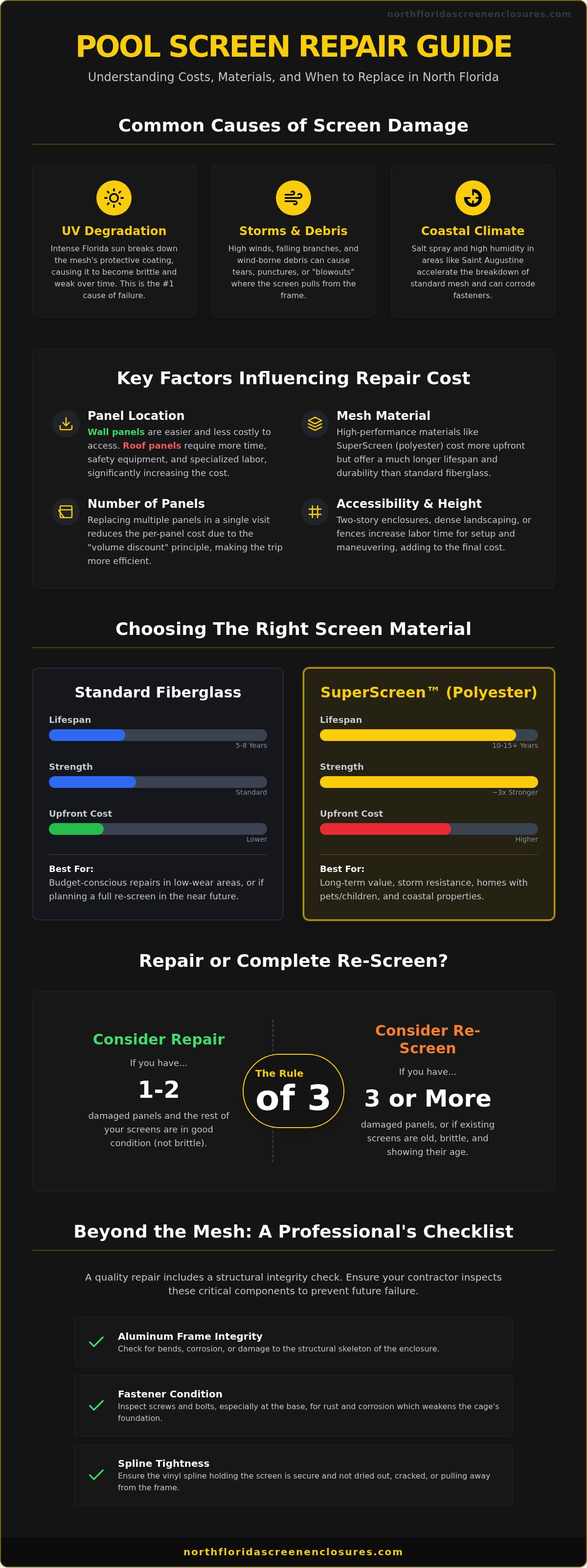
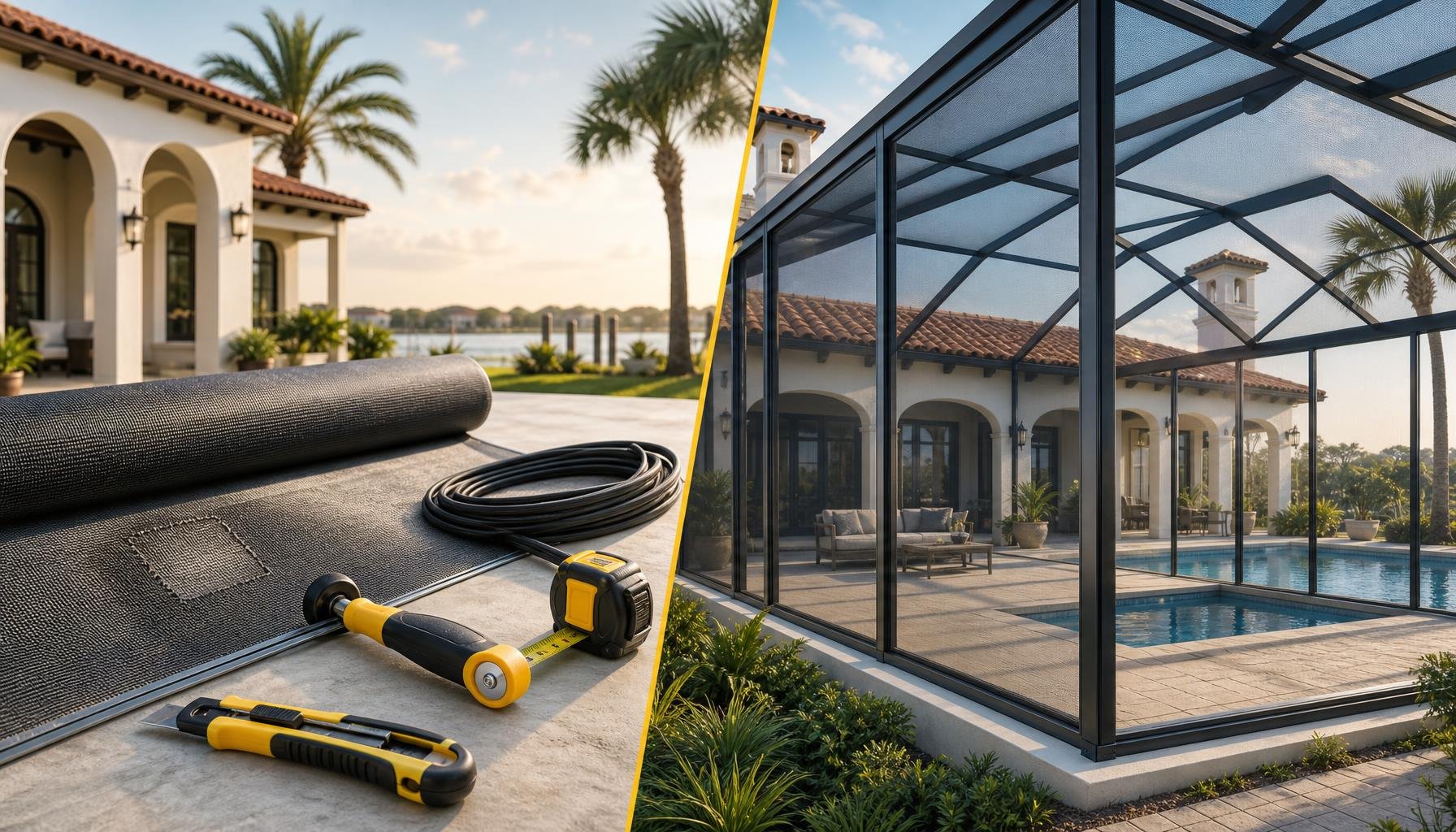
Residents in Saint Augustine understand that the environment is both a blessing and a challenge for outdoor structures. Calculating the pool screen panel replacement cost starts with understanding exactly what you are repairing. A pool screen panel is the individual mesh section located between the aluminum structural members of an enclosure. This mesh is held in place by a vinyl or rubber cord called a spline, which is pressed into a groove in the aluminum frame. This connection is vital; it must be tight enough to resist wind but flexible enough to allow for slight frame movement during temperature shifts.
Common Reasons for Panel Failure
The most frequent culprit for repair is UV degradation. Over years of exposure to the intense Florida sun, the protective coating on fiberglass mesh begins to oxidize and flake away. You can perform a simple "brittle test" by gently pressing your finger against the mesh. If it feels stiff or leaves a dark residue on your skin, the material has reached the end of its functional life. Beyond environmental wear, physical damage from wind-borne debris or active pets often necessitates a repair. Sometimes, the failure isn't in the mesh itself but in the spline. High winds can pull the mesh out of its track, a condition known as "blowout," which compromises the enclosure's ability to keep out pests and debris.
The Impact of Salt Air on North Florida Enclosures
Living near the coast introduces salt spray and high humidity into the equation. These elements accelerate the breakdown of standard fiberglass, causing it to lose its tensile strength faster than it would in inland areas. This degradation is a significant factor in the overall pool screen panel replacement cost over the life of your home. When screens become weak, they can no longer distribute wind loads effectively across the aluminum skeleton. This is a critical aspect of swimming pool safety, as the screen serves as a structural component that helps the cage withstand gusty conditions.
Homeowners should look for warning signs like "silvering" of the mesh or visible sagging. If you notice the screen pulling away from the corners or see rusted fasteners at the base of the frame, it's a sign that the structural integrity of your enclosure is under stress. Addressing these small failures early prevents the cascading damage that often follows during storm season. A diligent craftsman doesn't just replace the mesh; they ensure the frame and spline are prepared to handle the next round of coastal winds.
Key Factors Influencing Pool Screen Replacement Cost
Calculating your pool screen panel replacement cost involves looking at more than just the price of a roll of mesh. While a wall panel at ground level is a straightforward fix, roof panels demand a significantly higher degree of technical skill and safety equipment. Technicians must navigate the aluminum framework while suspended several feet above the pool deck, which increases the labor time and risk profile of the project. Because roof panels endure the most direct UV exposure and wind pressure, they are often the first to fail, yet they are the most complex to replace.
Contractors also factor in a mobilization or "trip" fee to cover the logistics of bringing a specialized crew and equipment to your Saint Augustine property. This base cost is why replacing a single torn panel often feels disproportionately expensive compared to a larger project. Accessibility also plays a role in the final estimate. If your enclosure is a two-story "mansard" style or is tightly hemmed in by dense landscaping and fences, the crew will spend more time setting up specialized ladders and maneuvering materials. These physical obstructions add hours to the labor clock, even if the actual square footage of the screen is small.
Height and Safety Requirements
Tall enclosures require specific safety protocols to ensure both the crew and your property remain protected. Scaffolding or walk-boards are often necessary to reach the highest peaks of a cage safely, and contractors must carry specific insurance for high-altitude work. This attention to detail aligns with broader CPSC pool safety guidelines, which emphasize the importance of maintaining a secure, intact barrier around the water. We also see different labor needs for specialty materials like "Florida glass," which is a vinyl-laminated screen used for privacy or to block lawn debris at the base of the enclosure. These panels are heavier and more difficult to spline into place than standard mesh.
The Volume Discount Principle
Efficiency is the best way to manage your home maintenance budget. Replacing five panels during a single visit is significantly more cost-effective per panel than scheduling five separate trips over a year. If your mesh is over a decade old and showing signs of widespread UV damage, it's often better to invest in a complete re-screen rather than chasing individual failures that will inevitably continue. Choosing a diligent local contractor ensures that your repair strategy prioritizes long-term structural health over temporary, expensive patches. By bundling repairs, you eliminate redundant mobilization fees and ensure your entire enclosure is reinforced for the next storm season.
Material Choices: Comparing Mesh Types and Durability
Material selection is the primary lever you can pull to control your long-term pool screen panel replacement cost. While the aluminum frame provides the structural skeleton, the mesh serves as the sacrificial layer protecting your environment from UV rays, insects, and coastal debris. Selecting the right material requires balancing your immediate budget with the reality of Saint Augustine's environmental demands. In our region, the salt air and high humidity act as a catalyst for material degradation, making the "cheapest" option more expensive over the life of the enclosure.
Standard vs. Premium Mesh Lifespans
Standard fiberglass remains the traditional choice for many North Florida homes due to its balance of visibility and initial affordability. However, it typically offers a service life of seven to nine years before the vinyl coating begins to oxidize and flake away. In contrast, premium polyester mesh is engineered for extreme resilience against both physical impact and chemical breakdown. High-performance polyester mesh can easily maintain its structural integrity for over 10 years, whereas standard fiberglass often begins to shred or "silver" well before its first decade of service. For homeowners dealing with tiny coastal gnats, "No-See-Um" mesh offers a tighter 20x20 weave that provides a superior barrier, though it does slightly reduce natural air circulation compared to the standard 18x14 mesh.
Choosing the Right Mesh for Your Lifestyle
Your specific property location often dictates which mesh offers the highest return on investment. Homes adjacent to golf courses or those with active large dogs should consider pet-resistant screens, which feature a heavy-duty vinyl coating designed to withstand significant punctures and tears. If your pool area faces west and absorbs punishing afternoon heat, solar screens are an excellent upgrade; they can block a significant portion of heat transfer, protecting your skin and patio furniture from sun damage. Adherence to the International Property Maintenance Code ensures that regardless of the mesh density you choose, your enclosure continues to function as a safe and secure barrier. Ultimately, a slightly higher pool screen panel replacement cost upfront for premium materials often pays for itself by doubling the time between necessary maintenance cycles.
Individual Panel Repair vs. Complete Re-screening
Deciding between a quick fix and a total overhaul often comes down to the "Rule of Three." If more than three panels in your enclosure have failed, it's a strong indicator that the remaining mesh has reached its structural limit. Replacing one or two panels might solve an immediate pest problem, but if the surrounding material is oxidized and brittle, you're merely waiting for the next gust of wind to cause another tear. This cycle leads to a much higher cumulative pool screen panel replacement cost than a single, organized project would require.
Labor efficiency is the primary driver behind this price difference. When a technician is already on your roof with the necessary tools and materials, the time required to move from one panel to the next is minimal. In contrast, scheduling multiple individual repairs means paying for the mobilization of a crew and equipment several times over. Beyond the financials, a complete re-screen prevents the "checkerboard" effect, where new, dark mesh stands out harshly against the faded, silvering panels of an aging enclosure. Consistent mesh tension across the entire frame also ensures the structure distributes wind loads evenly, rather than putting undue stress on older, weaker sections.
The Hidden Costs of Partial Repairs
The most significant hidden expense in small repairs is the recurring trip charge. Every service call requires a base fee to cover fuel, insurance, and labor transit time. If you ignore the signs of widespread wear and call for three separate repairs in one season, you've likely spent enough on travel fees to have covered a significant portion of a full update. Additionally, having a professional on-site is the ideal time to address structural vulnerabilities like tapcon replacement. Rusted or snapped fasteners compromise the entire aluminum frame; ignoring them during a minor screen repair is a missed opportunity for total cage stabilization.
Long-Term Value of a Complete Re-screen
Investing in a full update resets the maintenance clock for your entire outdoor living space. It provides a uniform tension across the aluminum structure, which helps the cage move as a single unit during high-wind events. For Saint Augustine homeowners, an intact, modern enclosure significantly boosts curb appeal and property value. Prospective buyers often view an aging pool cage as a looming liability; a fresh, high-performance screen serves as a signal of a well-maintained home. If you're tired of patching a failing system, contact our team for a comprehensive enclosure evaluation to determine the most efficient path forward for your investment.
The North Florida Screen Enclosures Difference
Choosing a contractor for your pool screen panel replacement cost involves more than finding the lowest bid. In Saint Augustine, your enclosure is a structural barrier that must withstand relentless salt air and seasonal tropical winds. We approach every repair with the mindset of a diligent craftsman, focusing on the long-term resilience of your investment. We don't simply replace mesh; we evaluate the entire system to ensure it meets the rigorous demands of our unique coastal environment. This commitment to quality ensures that your outdoor space remains a safe, bug-free sanctuary for years to come.
Beyond the Mesh: Structural Integrity
A screen is only as strong as the frame that holds it. During every repair visit, our technicians inspect the aluminum members for signs of stress, misalignment, or fatigue. We pay close attention to the structural fasteners, identifying rusted tapcons or corroded cables that could lead to a catastrophic failure during a high-wind event. This comprehensive assessment is a standard part of our service because we believe in structural health over temporary fixes. If your fasteners are compromised, we provide professional tapcon replacement to stabilize the entire cage. For those considering a brand-new structure, our guide on pool enclosure installation provides a deeper look at the engineering standards we uphold for every North Florida home.
Getting a Precise Estimate for Your Project
When you contact us for a quote, providing specific details helps us offer a more accurate assessment of your pool screen panel replacement cost. It's helpful to know the approximate height of your enclosure, the total number of panels requiring attention, and the general age of the existing mesh. Being a locally owned Saint Augustine contractor allows us to understand the specific building codes and wind-load requirements of your specific neighborhood. We prioritize streamlined scheduling for our residential clients to ensure your pool area is restored quickly and professionally. We value the relationship with the homeowner and take pride in our accountability. Your next step is to request a professional enclosure evaluation, where we can determine if a targeted repair or a complete re-screen is the most cost-effective and resilient solution for your home.
Securing Your Investment for the Long Term
Managing your pool screen panel replacement cost effectively requires a strategy that looks beyond the immediate tear. By prioritizing high-performance materials and addressing the structural health of your aluminum frame, you protect your home from the unique environmental pressures of North Florida. We believe that a diligent approach to maintenance, including the inspection of rusted fasteners and corroded cables, is the only way to ensure lasting peace of mind during storm season.
Our team is locally owned and operated right here in Saint Augustine. We specialize in hurricane-rated aluminum enclosures and provide a level of technical expertise that distant corporations simply can't match. Every assessment we perform is thorough, ensuring that your repair is not just a temporary patch but a long-term value play for your property. We take pride in our workmanship and our commitment to the safety of our neighbors.
If you're ready to move past the frustration of recurring repairs and secure your outdoor living space, we are here to help. Request a Professional Screen Repair Quote in Saint Augustine today to receive a precise evaluation of your enclosure. We look forward to helping you restore the integrity of your pool area so you can get back to enjoying the Florida lifestyle with confidence.
Frequently Asked Questions
Is it cheaper to replace one pool screen panel at a time?
No, it isn't actually cheaper to replace panels individually over the long term. Each service visit involves a mobilization fee to cover the technician’s transit and equipment setup. Bundling several repairs into a single appointment significantly lowers the average cost per panel by spreading that base fee across more work. It’s a more efficient way to manage your maintenance budget.
How long does a typical pool screen panel last in Florida?
Standard fiberglass mesh typically provides seven to nine years of service in our coastal climate. The intense UV exposure and salt air in Saint Augustine eventually oxidize the vinyl coating, making the material brittle. If you choose a premium polyester mesh, you can expect a lifespan exceeding ten years before the structural integrity of the mesh begins to fail.
Can I replace a pool screen panel myself to save money?
You can attempt a DIY repair, but it often lacks the precision and safety of a professional installation. Roof panels are particularly dangerous and require specialized walk-boards and ladders to navigate safely. Improperly tensioned screens can also put uneven stress on the aluminum frame, potentially leading to more expensive structural issues or "blowouts" during high-wind events.
What is the "trip charge" and why do contractors use it?
A trip charge is a standard mobilization fee that covers the contractor’s operational overhead, such as fuel, vehicle maintenance, and insurance. Because a specialized crew must travel to your property regardless of the job size, this fee ensures the business stays viable for small-scale repairs. It's the primary reason why single-panel fixes feel disproportionately expensive compared to larger projects.
Do roof panels cost more to replace than side wall panels?
Yes, roof panels demand more labor and safety equipment than side wall panels. Technicians must work at heights and carefully navigate the aluminum framework while suspended above the pool deck. This increased risk and the need for specialized safety gear naturally impacts the labor portion of your pool screen panel replacement cost. Roof panels also endure more direct UV stress.
Will insurance cover the cost of pool screen panel replacement?
Homeowners insurance typically only covers screen damage resulting from a sudden, covered peril like a hurricane or a fallen tree. Standard degradation from UV rays or salt air is considered routine maintenance and is rarely covered by a standard policy. You should review your specific policy documents to see if you have a separate rider that covers pool enclosure structures.
How do I know if I need a full rescreen or just a few repairs?
Use the "Rule of Three" as your primary guide. If more than three panels are damaged, or if the remaining mesh feels brittle and leaves a dark residue on your skin, the system has reached its limit. A full rescreen resets the maintenance clock and provides uniform tension across the entire structure, which prevents the cascading failures common in aging enclosures.
Does the type of mesh affect the replacement cost significantly?
The choice of mesh is a major factor in the total pool screen panel replacement cost. While standard fiberglass is the most budget-friendly upfront, specialty materials like No-See-Um mesh or pet-resistant screens involve a higher material investment. These premium options offer specialized benefits, such as doubled lifespans or superior resistance to claws, which often saves you money by reducing the frequency of repairs.
Comments