


Professional Lanai Screen Repair in Saint Augustine: A Complete Guide
- Michael Caruso

- 6 days ago
- 12 min read
A small tear in your mesh is often the least of your worries when it comes to the structural health of your outdoor enclosure. While a visible hole is an obvious entry point for Florida pests, the salt air and high humidity in Saint Augustine often do their worst damage where you can't see it. Most homeowners view a sagging screen as a simple cosmetic nuisance, but it's often a symptom of failing fasteners or frame fatigue. When you invest in professional lanai screen repair, you aren't just fixing a view; you're reinforcing a structure that must stand up to coastal winds and tropical storms.
You've likely spent too many evenings retreating indoors because of constant bug intrusion or felt the headache of cleaning debris out of a pool filter that's working overtime. It's frustrating to see your investment look weathered and worn. This guide provides a clear path to restoring your lanai's integrity, from high-performance mesh replacement to the critical technical details of structural hardware. We'll examine how a craftsman's approach to maintenance can increase your property value and provide lasting peace of mind. By the end, you'll understand exactly what's required to keep your outdoor living space taut, secure, and fully protected from the elements.
Table of Contents
Common Signs You Need Lanai Screen Repair in Saint Augustine
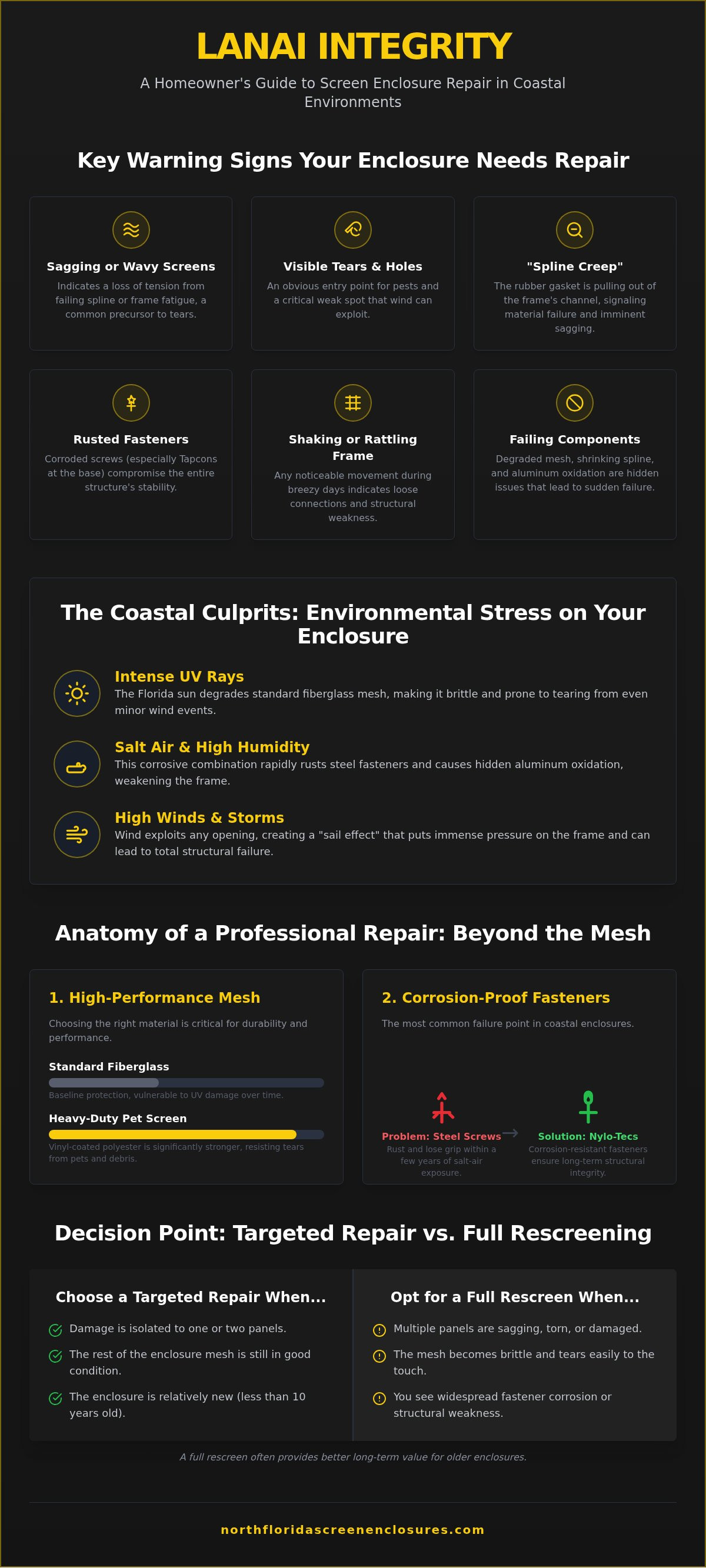
Professional lanai screen repair is the comprehensive restoration of mesh integrity and the structural fasteners that secure the enclosure. While many homeowners only notice a problem when a large tear appears, a truly effective repair addresses the entire system. In a coastal environment like Saint Augustine, your screened porch or lanai is constantly under siege from environmental factors that degrade both the visible mesh and the hidden hardware. Visible damage often manifests as sagging panels or "spline creep," where the rubber gasket that holds the screen in place begins to pull away from the aluminum channel. These issues aren't just cosmetic; they indicate that the tension of the system is failing. Beyond these obvious signs, invisible damage like aluminum oxidation and rusted Tapcon fasteners can compromise the entire cage. If you wait until a major storm to address these weaknesses, you risk a total structural failure that costs significantly more than a routine repair.
The Impact of North Florida Weather on Your Enclosure
The intense UV rays from the Florida sun are a primary cause of mesh degradation. Over time, standard fiberglass mesh becomes brittle and loses its flexibility, making it prone to tearing during even minor wind events. In Saint Augustine, high humidity and salt air accelerate the corrosion of metal components. What begins as a small, localized tear can quickly expand into a major liability during the Atlantic hurricane season, as the wind uses any opening to create a "sail effect" that puts immense pressure on the aluminum frame. Addressing these vulnerabilities early prevents the need for a full teardown after a storm passes.
Identifying Structural Warning Signs
Homeowners should regularly inspect their enclosures for loose support cables or any noticeable shaking in the aluminum frame during breezy days. One of the most critical points of failure involves the fasteners, specifically the Tapcons, which anchor the structure to the concrete base. If these fasteners are rusted or loose, they no longer provide the necessary grip to keep the enclosure stable. The spline is the vinyl cord that locks the screen into the aluminum groove. When this cord fails, the screen loses its tension. Identifying these signs early allows for a targeted lanai screen repair that preserves the longevity of your outdoor living space without the expense of a complete replacement.
Beyond the Mesh: The Components of a Professional Repair
A professional lanai screen repair involves much more than simply rolling in new mesh. The anatomy of a professional enclosure includes the mesh, the spline, the aluminum extrusions, and the fasteners, all of which must be in peak condition to ensure structural safety. These parts function as a unified system where each component relies on the others to maintain tension and stability. For instance, high-quality vinyl spline is essential because cheaper rubber alternatives often shrink when exposed to intense Florida heat, leading to loose screens and poor tension. Using premium materials ensures the mesh remains locked into the aluminum grooves even during high-wind events, preserving the longevity of your outdoor space.
Homeowners have several options for mesh depending on their specific environmental needs. While standard fiberglass mesh is the baseline for many projects, heavy-duty pet screens are becoming increasingly popular in Saint Augustine. This material is made from vinyl-coated polyester and is significantly stronger than standard mesh, providing a durable barrier against pets and debris without sacrificing visibility. Choosing the right material is a fundamental part of a long-term lanai screen repair strategy that prioritizes durability over quick fixes.
Fastener Integrity: Tapcons and Nylo-Tecs
The fasteners are often the most vulnerable part of any coastal enclosure. Original steel screws frequently rust within a few years due to salt-air exposure, losing their ability to hold the aluminum frame together. Upgrading to corrosion-resistant fasteners like Nylo-Tecs during a repair is a critical step in preserving the cage's structural integrity. If these screws fail, an entire panel can "blow out" during a storm because the frame no longer has the strength to resist wind pressure. This is particularly important for the base of the structure, where tapcon replacement for pool cages ensures a secure, permanent bond between the aluminum extrusions and the concrete patio.
Tension and Support Cables
Internal support cables are designed to distribute wind load across the aluminum frame, preventing any single beam from taking the full force of a gust. Maintaining proper tension in these cables is vital for meeting Florida Building Code requirements for structural stability in hurricane-prone regions. You should regularly look for signs of fraying or surface rust on these cables, as these indicate they've lost their load-bearing capacity. If your enclosure feels shaky or leans slightly during a breeze, it's often a sign that the cables require professional adjustment or replacement to restore the structure's safety and peace of mind.
Lanai Repair vs. Full Rescreening: How to Decide
Deciding between a targeted fix and a total overhaul requires a calculated look at your enclosure’s current state. If your mesh is over 7 to 10 years old, individual repairs often become temporary band-aids. The intense Florida sun eventually bleaches the life out of fiberglass, leaving it brittle and prone to shattering under tension. You can assess this by gently pressing your finger against a panel; if the mesh feels stiff or leaves a silver residue on your skin, it's reached the end of its functional life. In these cases, the structural integrity of the material is gone, and patching one hole will likely lead to another tear nearby within weeks.
Another critical factor is the panel count. While a single lanai screen repair is affordable for isolated damage, the math changes when multiple panels are failing. If more than 25% of your panels show signs of wear, the labor involved in individual replacements often approaches the cost of a comprehensive service. Additionally, you must consider the fasteners. If the screws are rusted and the frame is shaky, a full restoration is the only way to ensure the structure remains safe and storm-ready.
When a Simple Repair is Sufficient
Sometimes, a full replacement is unnecessary. If your enclosure is only a few years old and suffers from an isolated incident like a pet clawing through a lower panel or a fallen branch during a summer storm, a standard repair is the most practical choice. You should also check the color of your mesh. If it remains deep black and flexible, replacing individual panels is a cost-effective way to maintain a bug-free environment. This is also the right path if the spline has simply pulled away from a single groove while the mesh itself remains in excellent condition.
The Long-Term Value of a Full Rescreen
When multiple panels show signs of sagging or the "spline creep" mentioned earlier becomes widespread, a complete re-screen offers the best return on investment. This process ensures uniform tension across the entire structure, which is vital for wind resistance. It also provides an opportunity to upgrade to specialty materials, such as "no-see-um" mesh for smaller pests or privacy screens for closer neighbors. When planning your budget, it's helpful to weigh the pool screen panel replacement cost against the long-term protection of a full restoration. A full rescreen allows for a comprehensive inspection of the entire aluminum frame, ensuring every fastener is secure and every cable is properly tensioned.
Maintenance and Hurricane Prep for Saint Augustine Lanais
Living on the coast requires a proactive approach to home care. A consistent screen enclosure maintenance routine is the most effective way to extend the life of your investment and avoid premature lanai screen repair. In St. Johns County, the combination of high humidity and salt spray creates an environment where mold and corrosion thrive. Homeowners should perform a visual inspection at least once every quarter. This involves checking for debris buildup in the tracks and ensuring that the drainage holes are clear. When water pools around the aluminum frame due to clogged gutters, it puts unnecessary stress on the structural footers and accelerates the rusting of base fasteners.
Cleaning Your Screen Enclosure Safely
Keeping your mesh clean is about more than just curb appeal; it's about structural health. You don't want to use a pressure washer at a high PSI setting to clean your screens. High-pressure water can easily shred fiberglass fibers or blow the spline right out of the aluminum groove, necessitating an immediate lanai screen repair. Instead, use a soft-bristle brush and a mild detergent specifically designed for outdoor use to remove North Florida mold and mildew. A simple mixture of water and a non-abrasive soap is usually enough to break down the grime. To prevent salt-air pitting on the aluminum frame, rinse the entire structure with fresh water from a garden hose once a month. This small step neutralizes the corrosive effects of the coastal atmosphere.
The 5-Point Hurricane Safety Check
Before the peak of the Atlantic hurricane season, a thorough inspection can mean the difference between a minor fix and a total loss. Loose panels act like sails in high winds, catching the air and pulling against the aluminum frame with thousands of pounds of force. Your pre-storm check should focus on these five areas:
Footers and Tapcons: Inspect the base of the enclosure for any signs of lifting or rusted fasteners that have lost their grip on the concrete.
Panel Seating: Ensure every screen panel is correctly seated in its groove and that the spline is firm.
Door Hardware: Test the door closers and latches to make sure they stay securely shut during heavy gusts.
Support Cables: Verify that cables aren't frayed and maintain proper tension as discussed in previous sections.
Gutter Clearance: Clear all leaves and debris to ensure water flows away from the frame quickly during torrential downpours.
If you discover compromised fasteners or loose mesh during your inspection, it's vital to address these issues before the clouds roll in. For professional assistance with structural reinforcement, contact us for an expert screen enclosure inspection today.
Why Choose North Florida Screen Enclosures for Your Lanai Repair
Choosing a contractor for your lanai screen repair means finding a partner who understands that your enclosure is a structural investment, not just a series of mesh panels. We are a locally owned and operated team deeply integrated into the Saint Augustine community. Our approach is that of a diligent craftsman; we don't simply patch holes, we restore the structural integrity of your entire outdoor environment. Because we live and work in North Florida, we have firsthand experience with how coastal conditions affect aluminum and mesh. We prioritize long-term value over quick fixes, ensuring that every project we touch is built to endure the unique environmental demands of the region.
Our specialized expertise in pool enclosure repair in St. Augustine allows us to look beyond the visible tears. We examine the entire system, from the concrete anchors to the roofline supports. We use only premium materials specifically engineered for the Florida climate, including UV-resistant mesh and corrosion-resistant fasteners. This commitment to quality ensures that your enclosure remains a bug-free and storm-ready sanctuary for years to come.
Our Professional Repair Process
The rhythm of our work is methodical and thorough, mirroring the precision required in the construction industry. Every repair begins with a comprehensive assessment of the existing mesh and structural hardware. We don't just look at the damaged area; we inspect the tension of the surrounding panels and the condition of the support cables. Our team handles everything from standard screen replacement to specialty aluminum work, including fascia and soffit repairs that are often overlooked by general handymen. We conclude every project with a final tensioning phase, ensuring the mesh is taut and the fasteners are professionally secured. This structured approach provides homeowners with the peace of mind that their outdoor space is stable and reliable.
Get Your Lanai Ready for the Season
It's best to act before small tears or loose fasteners become major liabilities during a storm. A weakened enclosure is far more likely to suffer significant damage when high winds put pressure on the frame. We encourage Saint Augustine residents to prioritize their outdoor maintenance as a form of long-term property protection. Our team is ready to act as your guide, providing functional and high-performance solutions for your living space. If you're ready to restore your enclosure's strength and beauty, reach out to North Florida Screen Enclosures for a professional assessment and experience the difference that local expertise and dedicated craftsmanship can make.
Secure Your Outdoor Sanctuary Today
Maintaining a functional and attractive outdoor space in North Florida requires more than just occasional cleaning. It demands a technical understanding of how salt air and intense humidity impact every component of your enclosure. From identifying the early signs of spline creep to ensuring your Tapcon fasteners remain securely anchored, a proactive approach to lanai screen repair is the best way to safeguard your investment. By prioritizing structural health and storm readiness, you ensure that your lanai remains a comfortable, bug-free retreat regardless of the season.
As a Saint Augustine local expertise provider, North Florida Screen Enclosures specializes in hurricane-ready enclosure restoration. We are a corrosion-resistant hardware specialist dedicated to providing long-term protection for your home. Don't wait for a major storm to expose the hidden weaknesses in your aluminum frame. Our team is ready to provide the durable, high-quality workmanship your property deserves.
Request a Professional Lanai Repair Quote from North Florida Screen Enclosures and let our diligent craftsmen restore the safety and style of your outdoor living space. We look forward to helping you enjoy the best of Florida living with total peace of mind.
Frequently Asked Questions
How much does it cost to repair a single lanai screen panel?
Repair costs for a single panel depend on the square footage, the height of the panel, and the specific mesh material selected. High-reach panels on a second story or roof require specialized ladders and safety equipment, which influences the labor involved. While a single lanai screen repair is a standard service, homeowners should also consider the age of the surrounding mesh. Often, if one panel fails from age, the adjacent sections are likely brittle.
Can I repair a lanai screen myself with a DIY kit?
You can use a DIY kit for minor, low-level repairs; however, achieving professional-grade tension is difficult for most homeowners. Without the proper tools to roll the spline correctly, the mesh often sags or pulls out during the first strong wind. Additionally, repairing roof panels or high-wall sections is dangerous without commercial safety gear. A professional lanai screen repair ensures the mesh is taut and the structural fasteners are checked for stability.
How long does a typical lanai screen repair take to complete?
Most minor repairs involving one or two panels are typically completed within two to four hours. The timeframe expands if the project includes structural work like Tapcon replacement or cable tensioning. For a complete rescreen of a standard pool enclosure, you should plan for one to two full days of work. A professional team works methodically to ensure every spline is seated and every fastener is tightened before concluding the project.
Do I need a permit for lanai screen repair in Saint Augustine?
In Saint Augustine and St. Johns County, simple repairs like mesh replacement for a few panels generally don't require a building permit. However, if the project involves structural modifications, frame replacement, or a complete rebuild of the enclosure, a permit is typically mandatory. You should always verify current local building codes with the St. Johns County Building Department before starting significant structural work to ensure your enclosure remains compliant with hurricane-safety standards.
What is the best type of screen mesh for Florida homes?
Polyester mesh is widely considered the best choice for Florida homes due to its superior durability and UV resistance compared to standard fiberglass. While standard mesh is functional, it often becomes brittle after seven years of intense sun exposure. Polyester options, frequently marketed as pet-resistant or high-durability mesh, withstand clawing and high winds much better. This material maintains its dark color and structural strength for a significantly longer period in our coastal climate.
Why is my lanai screen sagging even though there are no holes?
Sagging often results from "spline creep," where the vinyl cord holding the mesh in place has shrunk or pulled away from the aluminum groove. This is common in Saint Augustine because the heat causes lower-quality spline to contract over time. Sagging can also indicate that the aluminum frame has shifted or that internal support cables have lost their tension. Restoring the tautness requires professional tools to re-roll the spline or adjust the frame's structural hardware.
How often should I replace the fasteners (Tapcons) on my enclosure?
Fasteners like Tapcons should be inspected annually and typically replaced every seven to ten years in coastal environments. The salt air in Saint Augustine causes standard steel screws to oxidize and lose their structural grip on the concrete base. If you see rust streaks running down the aluminum or notice the base of the frame lifting, it's time for an upgrade. Using corrosion-resistant fasteners ensures your enclosure remains hurricane-ready and securely bonded to your patio.


Comments