


Saint Augustine Patio Cover Guide for Florida Heat (2026)

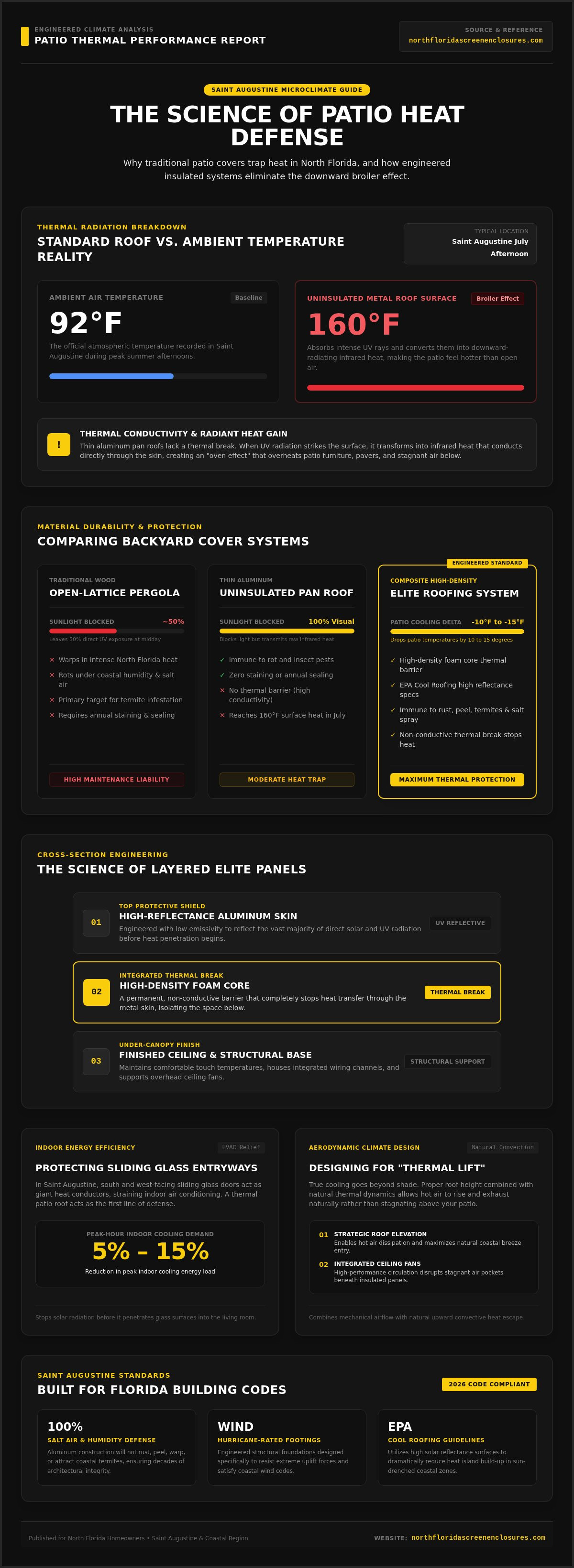
Did you know that a standard metal patio roof in Saint Augustine can reach surface temperatures of 160°F during a typical July afternoon? This creates a "broiler effect" that radiates heat downward, making your outdoor space feel significantly hotter than the ambient air. It's frustrating when you've invested in a backyard only to find the pavers too hot to touch and your indoor AC struggling to keep up with the sun hitting your glass doors. We understand that a patio should be a retreat, not a heat trap. In this guide, you'll discover how to select the best patio cover for Florida heat to reclaim your outdoor living space.
We'll show you how high-performance materials like Elite Roofing Systems can drop patio temperatures by 10 to 15 degrees while standing up to coastal humidity and salt air. We will also break down the 2026 building codes and professional design choices that ensure your structure adds lasting value and structural integrity to your home. By choosing materials specifically engineered for the North Florida climate, you can protect your investment and finally enjoy your backyard year-round without the punishing glare of the sun.
Table of Contents
Why Standard Patio Covers Fail in the Florida Sun
Many homeowners assume any shade structure will solve the heat problem. However, there is a significant difference between blocking the sun's sightlines and blocking its thermal energy. While ambient air temperature in Saint Augustine might be 92°F, the radiant heat gain from a standard uninsulated surface can make the area feel much warmer. Identifying the best patio cover for Florida heat requires looking beyond simple shade to find a system that acts as a true thermal shield rather than just a visual barrier.
Thin aluminum pan roofs and fabric awnings are common choices, but they often struggle in extreme humidity and intense UV exposure. These materials have high thermal conductivity; they absorb solar energy and radiate it directly downward onto your patio furniture and skin. This creates the "oven effect," where heat becomes trapped under the roof. Without a thermal barrier, a poorly designed cover can actually make a patio feel hotter than standing in the open air, as the metal roof radiates heat into the stagnant air below.
The Science of Radiant Heat
When UV rays strike a solid surface, they convert into infrared heat. Dark-colored materials are a significant mistake for North Florida roofs because they have high absorption rates, turning your patio cover into a massive radiator. Professional designs prioritize materials with low emissivity and high reflectivity. By utilizing radiant barrier thermal technology, advanced patio systems reflect a vast majority of solar radiation before it can penetrate the structure. This scientific approach separates a basic shelter from a high-performance cooling system designed for the local climate.
The Impact on Home Energy Efficiency
A poorly designed cover doesn't just make the backyard uncomfortable; it also forces your home's HVAC system to work harder. In Saint Augustine, many homes feature large sliding glass doors that face the afternoon sun. Without a proper thermal barrier, these glass surfaces become massive heat conductors that transfer warmth directly into your living room. A high-quality patio cover acts as the first line of defense, shading these entry points and reducing the thermal load on your home. According to industry data, shading these south and west-facing doors can lower indoor cooling demand by 5% to 15% during peak hours. A thermal break is a specialized non-conductive material integrated into the roof panels to stop the transfer of heat through the metal skin, effectively preventing the sun's energy from reaching the patio surface or the house wall.
Comparing Materials: Aluminum, Insulated Panels, and Pergolas
Choosing a material for your backyard isn't just about style; it's about structural survival. In Saint Augustine, we deal with intense humidity and salt spray that can destroy traditional building materials in a few short seasons. Determining the best patio cover for Florida heat requires a balance between thermal performance and long-term durability. While many homeowners appreciate the classic look of wood, it often becomes a high-maintenance liability in our coastal environment.
Traditional wood pergolas are popular for their aesthetic, but they offer limited protection from the sun. Research indicates that open-lattice pergolas with standard rafters only block roughly 50% of direct midday sunlight. This leaves you exposed to significant UV loads and does little to lower the actual temperature on your patio. Aluminum structures, particularly solid systems, provide total shade and require almost zero maintenance. According to EPA cool roofing guidelines, materials with high solar reflectance are essential for lowering surface temperatures in sun-drenched environments, a standard that aluminum meets far better than porous wood or dark fabric.
Aluminum vs. Wood: The Longevity Factor
Wood is a high-liability choice for North Florida. It warps in the heat, rots in the humidity, and serves as a primary target for termites. Maintaining a wood structure requires annual staining or sealing to prevent it from becoming an eyesore. Aluminum is immune to these issues. It doesn't rust, peel, or attract pests. For homeowners who want a cohesive look, choosing aluminum for your patio allows you to match other structural elements like aluminum balcony railings. This creates a unified, professional appearance that maintains its value over decades without the constant need for repairs.
The Rise of Bioclimatic and Motorized Solutions
Bioclimatic solutions use adjustable louvers to manage the environment. These systems allow you to close the roof for full shade or tilt the louvers to let hot air rise and escape. This natural movement of air, known as thermal lift, can prevent heat from becoming trapped under the structure. While motorized systems offer versatility, they involve mechanical parts that can be sensitive to salt air corrosion. A fixed, solid insulated roof is often the most reliable choice for maximum heat rejection and structural integrity. If you are evaluating these options for your home, our team can help you select a durable aluminum system that fits your specific backyard layout and cooling needs.
The Science of Elite Roofing Systems: Maximum Thermal Protection
While standard aluminum pans act as heat conductors, the Elite Roofing System is engineered specifically as a thermal barrier. It utilizes a composite sandwich design where a high-density expanded polystyrene (EPS) foam core is permanently bonded between two embossed aluminum skins. This construction stops the transfer of heat that typically turns a patio into a broiler. For homeowners seeking the best patio cover for Florida heat, this layered approach is the most effective way to achieve a consistent 10 to 15 degree temperature drop compared to uninsulated alternatives.
This system isn't just about shade; it's about managing R-values. A standard 3-inch insulated panel provides an R-12 thermal rating, while 4-inch panels reach R-16. These ratings represent a significant resistance to heat flow, ensuring the underside of your roof remains cool to the touch even in the direct July sun. This thermal protection also shields your home’s exterior walls, providing a secondary benefit of lowering indoor cooling costs during peak afternoon hours.
Insulated Patio Roof Panels: The Gold Standard
Most installations in Saint Augustine utilize 3-inch or 4-inch panels because they offer the ideal balance of weight, cost, and thermal performance. These panels provide significant structural rigidity compared to thin metal sheets. Because they form an interlocking composite diaphragm, these systems are strong enough for contractors or homeowners to walk on for routine maintenance or gutter cleaning. You can find detailed technical specifications in our guide on Elite Roofing for Saint Augustine Patio Covers. This internal strength also allows for integrated electrical raceways, meaning ceiling fans and LED lighting can be mounted flush without visible, unsightly conduit.
Sound Dampening and Aesthetics
Beyond heat protection, the foam core provides excellent sound dampening. During heavy North Florida downpours, a standard metal roof can be deafening; however, an insulated system absorbs the impact, allowing for a quiet conversation even during a torrential storm. The underside of the panels features a stucco or cedar-embossed finish, creating a clean, finished room appearance that enhances property value and curb appeal.
Proper water management is also essential for structural longevity. We integrate seamless gutters and downspouts to handle the heavy rains common in our coastal environment. Every installation must adhere to strict St. Johns County building code and permitting requirements to ensure the structure survives local wind loads. By combining high R-value insulation with professional structural engineering, these systems provide a permanent solution for reclaiming your outdoor space from the intense Florida sun.
Designing for Airflow: Beyond Just Shade
Shade is only half of the equation when engineering the best patio cover for Florida heat. Without proper ventilation, even an insulated roof can trap rising warm air. This creates a pocket of stagnant humidity. Effective design relies on the "chimney effect," where a higher ceiling allows convective heat to rise away from the seating area rather than radiating directly onto occupants. By positioning the structure to capture the prevailing coastal breezes in Saint Augustine, you can maintain a comfortable environment even on the most humid afternoons.
Integrating ceiling fans is a standard requirement for high-performance patios. These fixtures must be UL-rated for wet or damp locations to withstand our local humidity and salt air. Don't use standard indoor fans. When combined with an insulated Elite roof, these fans don't just move hot air around. They circulate the cooler air maintained by the thermal barrier, which significantly enhances the perceived cooling effect and makes the space usable during the peak of summer.
Optimizing Roof Pitch and Height
The sun’s path in Saint Augustine creates intense East and West exposure that can bypass a low-hanging roof. A higher ceiling height, typically ten feet or more, provides a larger volume of air to dissipate heat. Airflow requires space to move. A minimum pitch of 1/2 inch per foot is recommended to ensure both efficient water runoff and the upward movement of convective heat. This design ensures that as the sun moves, the shaded area remains ventilated rather than becoming a heat trap.
Screening and Sun Protection
While a solid roof stops vertical UV rays, sun can still enter from the sides. Adding a screen enclosure allows for continuous airflow while filtering out a portion of the sun's intensity. For homeowners with specific needs, solar mesh can block up to 90% of UV rays without completely obstructing the breeze. You can learn more about these configurations in our guide to Custom Pool Enclosure Installation. This integrated approach ensures that your outdoor space remains a sanctuary from both the heat and local pests.
If you're ready to design a ventilated outdoor space that stays cool all summer, contact our team to start your project.
Professional Installation in Saint Augustine: Building for Longevity
Building a patio cover in Saint Augustine is as much about engineering as it is about comfort. While selecting the best patio cover for Florida heat involves choosing high-performance insulated materials, the durability of that structure depends entirely on how it is anchored. Our coastal environment presents unique challenges, from high-velocity hurricane zones to the corrosive effects of Atlantic salt air. Professional installation ensures that your investment doesn't just provide shade but also remains a permanent, safe addition to your property that can withstand the rigors of the North Florida climate.
One of the primary reasons DIY patio kits fail during the first major storm is a lack of structural depth. These kits rarely account for the specific soil conditions or the necessary thickness of concrete footings required in St. Johns County. We utilize heavy-gauge aluminum extrusions and structural attachments that bond the roof directly to your home's framing, creating a single, cohesive unit. This approach prevents the "uplift" effect that can tear unengineered roofs away from the house during high-wind events.
Hurricane Readiness and Engineering
In Saint Augustine, structures must meet stringent "Design Pressure" ratings to comply with the Florida Building Code. For 2026, structures in our region are engineered to withstand basic ultimate design wind speeds ranging from 115 mph inland to 140 mph along the barrier islands. This requires signed and sealed calculations from a licensed engineer. Beyond the initial build, maintaining these connections is vital for long-term safety. For instance, Expert Pool Enclosure Repair often involves the critical task of Tapcon replacement. We use high-grade, corrosion-resistant fasteners to ensure that the salt air doesn't compromise the structural integrity of your patio over time.
Working with a Local Saint Augustine Specialist
Working with a local specialist who understands the specific permitting landscape of St. Johns County is essential for a smooth project. We handle the entire process, ensuring your project complies with the latest 2026 regulations, including rear yard setback requirements and impervious surface ratios. A professional installation also considers the total environment, ensuring your new cover complements your existing paver patio design and home architecture. This attention to detail preserves your property value and ensures the structure looks like a natural extension of your home rather than an afterthought.
If you're ready to reclaim your backyard with a structure built to last, Schedule a consultation with North Florida Screen Enclosures to design your heat-proof oasis.
Reclaim Your Backyard with a High-Performance Outdoor Space
Investing in a high-quality outdoor structure is about more than just aesthetics; it's about making your backyard a functional part of your home again. By choosing hurricane-rated Elite Roofing Systems, you don't just block the sun, you create a legitimate thermal barrier that drops temperatures significantly. We've analyzed how standard materials fail under the intense sun, which is why a specialized aluminum build is the best patio cover for Florida heat.
As locally owned Saint Augustine experts, we focus on high-durability aluminum construction that meets the latest structural standards. You don't have to worry about the constant maintenance of wood or the structural risks of unengineered kits. Instead, you get a professionally designed space that adds value and comfort to your property for decades. Our team understands the specific wind loads and salt air challenges of St. Johns County, ensuring every connection is built for longevity.
Ready to transform your patio into a cool, shaded retreat? Get a Free Estimate for Your Custom Patio Cover today and start enjoying the Florida outdoors on your own terms.
Frequently Asked Questions
What is the best material for a patio cover in Florida heat?
An Elite Roofing System featuring insulated foam-core panels is widely considered the best patio cover for Florida heat. Unlike standard aluminum pans or wood, these panels provide a structural thermal break that stops heat transfer. The high-density foam core blocks infrared radiation from reaching the patio surface. This material is also immune to the rot and termite issues that often plague traditional wood structures in our humid Saint Augustine climate.
How much cooler is it under an insulated patio roof?
Homeowners can expect a temperature drop of 10 to 15 degrees directly under an insulated roof compared to uninsulated aluminum or direct sunlight. By creating a permanent thermal barrier, the roof prevents the "oven effect" where heat radiates downward into the seating area. This temperature reduction makes the space usable even during the peak afternoon hours. It also helps lower the cooling load on your home’s adjacent glass doors.
Do patio covers increase home value in Saint Augustine?
Yes, a professionally installed patio cover increases home value by extending the usable living space and improving curb appeal. In the Saint Augustine market, outdoor living is a high-priority feature for potential buyers. A durable, hurricane-rated structure built with high-quality aluminum demonstrates long-term value. It transforms an exposed slab into a functional outdoor room, which often results in a higher appraisal and faster resale in competitive North Florida neighborhoods.
Can an aluminum patio cover withstand a hurricane?
A professionally engineered aluminum patio cover is designed to meet or exceed current Florida Building Code wind load requirements. These structures utilize heavy-duty extrusions and specialized anchoring systems to remain stable during high-wind events. In Saint Augustine, we ensure every installation accounts for specific coastal wind speeds, which can range from 115 to 140 mph depending on your proximity to the ocean. Proper structural attachment to the home is key to preventing uplift.
Will a solid patio cover make my house too dark inside?
While a solid cover blocks direct vertical sunlight, it rarely makes the interior of a home feel dark. The underside of an Elite roof is typically finished in a bright, embossed white or cream that reflects ambient light back into your windows. Strategic design choices, such as optimizing the roof height or pitch, allow plenty of natural light to enter from the sides. Most homeowners find the reduction in harsh glare makes indoor spaces more comfortable.
How much maintenance does an aluminum patio cover require?
Aluminum patio covers require very little maintenance compared to wood or fabric alternatives. Because the material doesn't rot, rust, or peel, you won't need to paint or stain the structure. Most maintenance involves an occasional rinse with a garden hose to remove salt spray or pollen. You should also clear the integrated gutters of leaves and debris once or twice a year to ensure proper water drainage during our heavy North Florida rainstorms.
Do I need a permit for a patio cover in St. Johns County?
Yes, a structural building permit is required for any attached patio cover installation in St. Johns County. Because these are structural additions that must meet specific wind load and setback regulations, they require a formal review by the building department. Working with a local specialist ensures that all engineering drawings and site plans are filed correctly. This process protects you by verifying that the installation meets the 2026 safety standards for North Florida.
Can I install a ceiling fan in an insulated patio roof?
Yes, insulated patio roof panels are specifically designed to support the weight and wiring of outdoor-rated ceiling fans. These panels feature internal electrical raceways that allow for a clean installation with no visible conduit. It's important to use a fan rated for wet or damp locations to ensure the motor survives the Saint Augustine humidity. Adding a fan further enhances the cooling effect of the best patio cover for Florida heat by maintaining airflow.


Comments