


Saint Augustine Pool Cage Rescreening: A Practical Guide

What if the torn panel you noticed isn’t the only sign your pool cage needs attention? A complete rescreen pool cage project replaces the enclosure’s screen mesh, but deciding whether that’s the right solution means looking beyond a few visible tears. Worn screens, damaged fasteners, and concerns with the aluminum frame are related, but they call for separate assessments.
It’s understandable to wonder whether replacing a handful of panels will be enough or whether a full rescreen makes more sense. This guide explains how panel repairs differ from a complete rescreen, what a full project typically involves, and how to prepare your property before work begins.
For Saint Augustine homeowners, North Florida Screen Enclosures provides complete re-screens, screen enclosure repairs, and Tapcon replacement for fastener concerns. Use the steps below to assess the mesh, fasteners, and enclosure as separate parts of the project.
Table of Contents
When a Complete Pool Cage Rescreen Makes More Sense Than Panel Patches
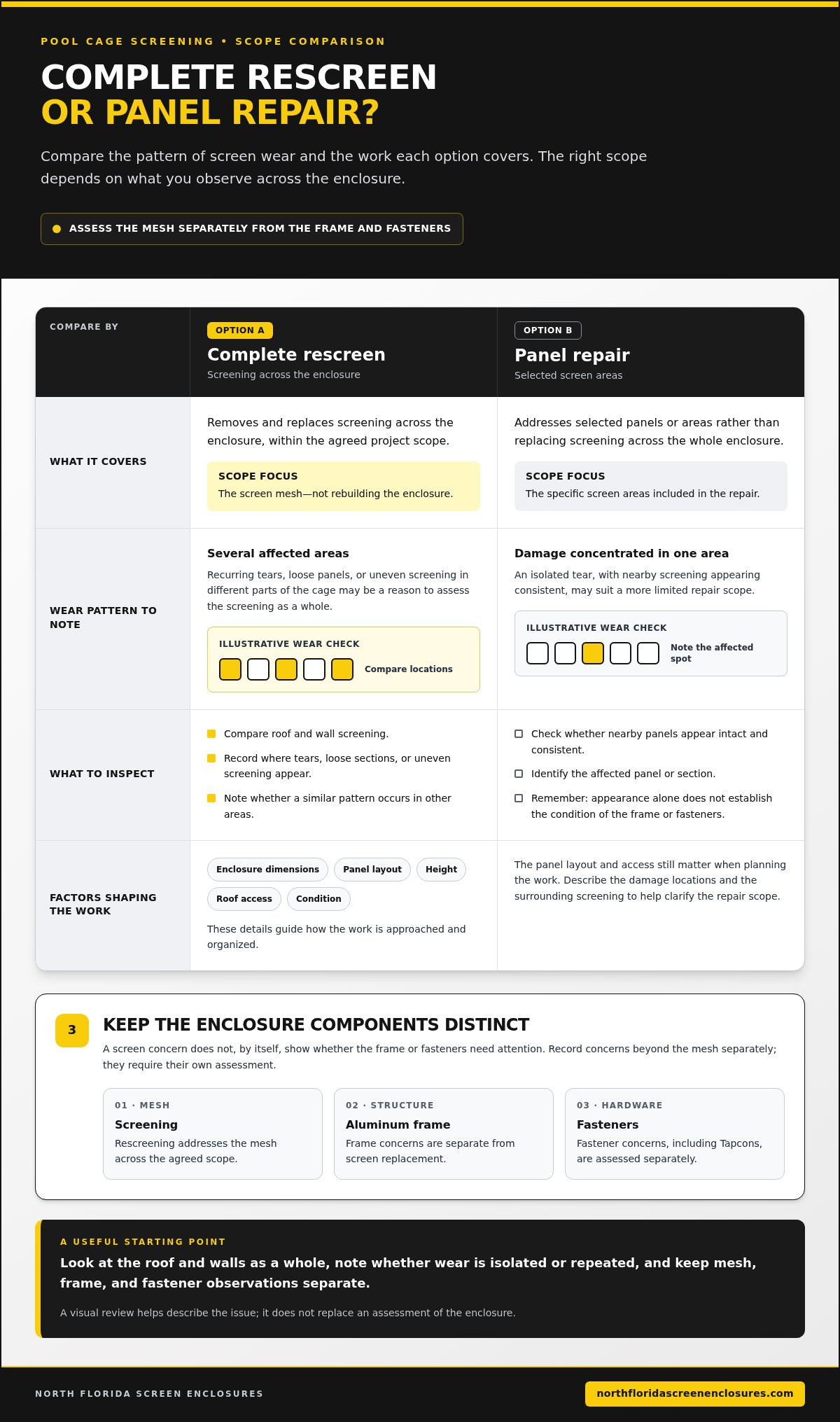
A complete rescreen replaces the screening across the enclosure; a panel repair addresses selected areas. The right scope depends on the pattern of wear, not just the most noticeable tear. If damage appears in several parts of the cage, repairing individual panels may leave other worn screening in place. If the damage is isolated and nearby panels appear consistent, a more limited repair may be suitable.
Start by looking at the enclosure as a whole. Check the roof and wall panels, and note whether tears, loose sections, or uneven screening are limited to one spot or appear in several areas. This visual review helps you describe the issue and discuss the project scope. It is a starting point, not a substitute for an assessment of the enclosure.
What does complete pool cage rescreening mean?
Complete pool cage rescreening means removing and replacing screen across the enclosure rather than repairing selected panels. The work depends on the cage’s dimensions, panel layout, and condition. A complete rescreen pool cage project focuses on the mesh. It does not mean replacing or repairing the aluminum frame.
How to recognize widespread screen wear
Look for several damaged or loose panels, recurring tears in different sections, or screening that looks uneven across the cage. Multiple affected areas may be a reason to assess the screening as a whole. An isolated tear may call for a different scope. Screen appearance alone cannot establish the condition of the frame or fasteners.
Compare similar areas rather than focusing only on one damaged panel. For example, note whether the roof and wall screening show similar wear or whether the concern is limited to one section. Record where panels appear loose or torn and whether the same pattern occurs elsewhere. These observations help distinguish a local problem from broader screen deterioration without deciding the repair scope in advance.
Keep the enclosure’s components distinct in your assessment. The screen is the mesh stretched across the panels. The frame is the aluminum structure that supports them, and fasteners secure parts of the enclosure. A torn or loose screen panel is a reason to assess the mesh, but it does not show whether the frame or fasteners also need attention. Those concerns require a separate assessment.
Damage concentrated in one area: Note the affected panel or section and whether nearby screening appears intact.
Repeated wear in several areas: Record the locations and compare the roof and walls to describe the broader pattern.
Visible concerns beyond the mesh: Record frame or fastener issues separately. Torn screening alone does not establish a problem with those components.
This approach helps you describe what you see without assuming every screen issue requires the same work. North Florida Screen Enclosures provides complete re-screens and screen enclosure repairs in Saint Augustine, as well as Tapcon replacement for fastener concerns. Considering screening, structure, and fasteners separately is a practical starting point for defining the project.
What a Complete Pool Cage Rescreen Includes, and What It Does Not
A complete rescreen replaces the existing screen across the pool cage with new screening. The work generally involves removing the existing screen, fitting replacement panels, and finishing the screen surfaces. The approach depends on the enclosure’s dimensions, panel layout, height, roof access, and condition. It is a screen-focused project, not a promise to repair every part of the enclosure.
The main stages of a full rescreen
First, the existing screen is removed from the areas included in the project. Replacement screen is then fitted and secured panel by panel, with the cage’s design and access needs guiding the work. The panels are finished and checked for a consistent fit. A complete rescreen pool cage project covers the screening within the agreed scope.
Layout affects how the work is organized. A cage with distinct roof and wall sections may require a different sequence from one with a simpler panel arrangement. Roof access and enclosure height also shape how crews reach each area. These factors influence the work plan, but not its central purpose: replacing screen rather than rebuilding the enclosure.
Screen work versus frame and fastener repairs
Screen mesh, aluminum framing, and fasteners are separate enclosure components. Rescreening addresses the mesh; it does not automatically include frame repairs or hardware replacement. Tapcon replacement is a distinct service, while damage to structural parts may call for separate enclosure repair. Keeping these scopes clear helps homeowners understand what a screen-focused project covers and what needs its own assessment.
For example, new panels refresh the screening, but they do not establish that the aluminum frame or fasteners are sound. A concern with a fastener, on the other hand, does not necessarily mean every screen panel needs replacement. Screen enclosure repairs in Saint Augustine address concerns beyond the mesh and can be considered separately from a rescreen.
Before work begins, clarify which screen areas are being replaced and whether separate repair work is part of the project. A rescreen renews the enclosure’s screening; repairs to framing or fasteners address different components. North Florida Screen Enclosures provides complete re-screens, screen enclosure repairs, and Tapcon replacement in Saint Augustine. For an overview of these services, visit North Florida Screen Enclosures.
Complete Rescreen or Individual Pool Cage Repairs: How to Compare
A complete rescreen isn’t automatically the right choice for every tear. The key question is whether damage appears limited to one area or forms a broader pattern across the enclosure. Use the comparison below to organize what you see. It cannot diagnose the screen or establish the condition of the aluminum structure.
When a targeted screen repair may be appropriate
If damage is limited to one section, assess a targeted repair rather than assuming the entire cage needs new screen. Look at the surrounding panels too. An isolated tear beside screening that appears consistent is a different pattern from a tear among loose or deteriorating panels. A repair addresses its defined area; it does not establish the condition of other panels or resolve a separate enclosure issue.
For a useful comparison, note where the damage is and what nearby screen looks like. For example, record whether a tear near a door is isolated or whether panels around the doorway also show looseness or wear. These observations help describe the scope without presuming that a patch or replacement panel will address every underlying cause.
When to assess the entire enclosure
Multiple affected panels are a reason to consider the cage as a whole. Include door areas, roof panels, and sections that are harder to see or reach, rather than basing your decision on the most visible wall. A complete rescreen pool cage assessment looks at the screen throughout the enclosure, while questions about framing or fasteners remain separate.
Keep the assessment grounded in what you can observe. Repeated screen problems across different sections may point toward a wider screen scope; they do not show whether the aluminum structure is sound. Similarly, visible screen damage alone does not establish that structural repairs are needed. Screen replacement, frame work, and fastener work address different parts of the enclosure.
For context on how an enclosure’s design and configuration shape a project, see custom pool enclosure installation in Saint Augustine. North Florida Screen Enclosures provides complete re-screens and screen enclosure repairs in Saint Augustine, so you can consider the screen scope alongside separate enclosure concerns. A clear record of affected sections is a practical starting point for defining the work.
Use the pattern, not just the presence of a tear, to guide your next step. For information about complete re-screens and repairs in Saint Augustine, explore North Florida Screen Enclosures’ services.
Preparing for a Pool Cage Rescreen in Saint Augustine
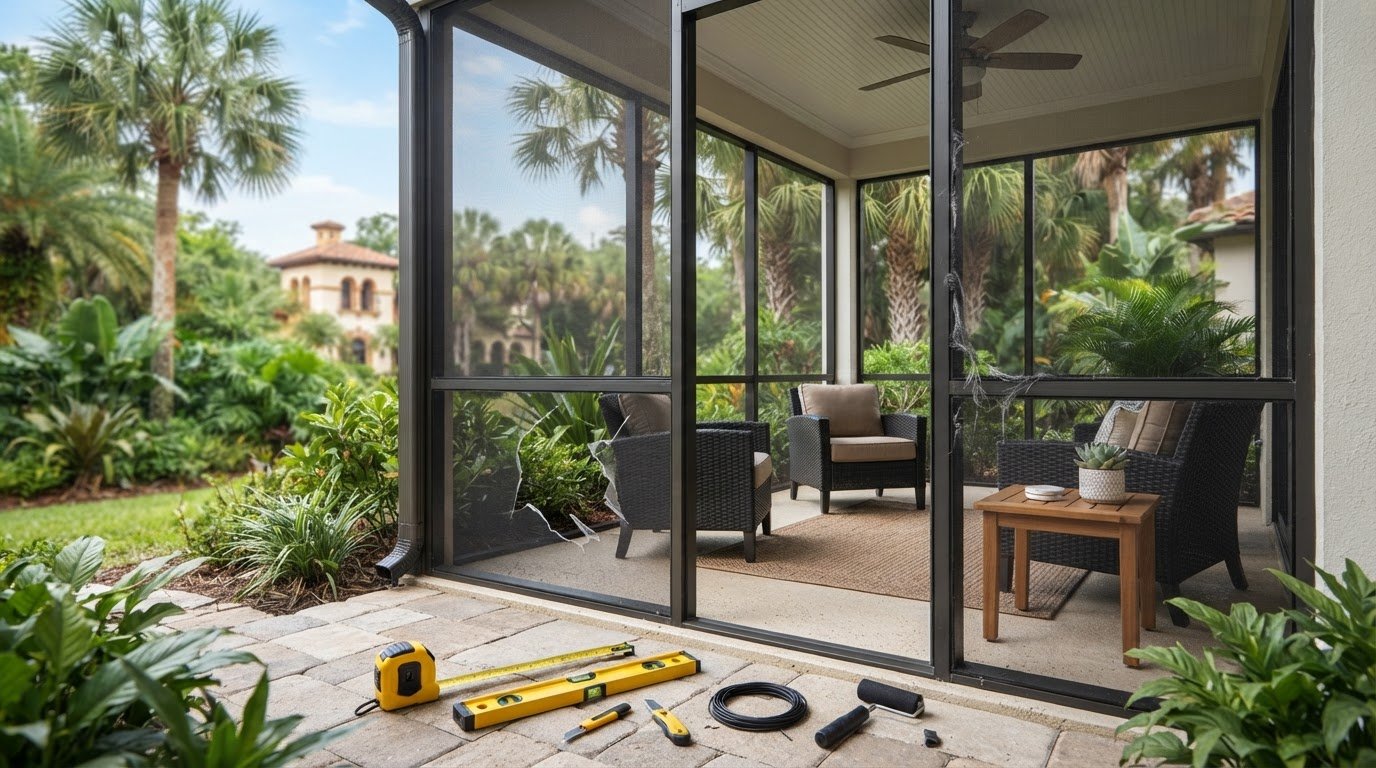
Preparation helps keep access clear and gives the crew room to work around the enclosure. Before a complete rescreen pool cage project begins, focus on the routes leading to the cage, the doors, and the work areas. The enclosure’s height and roof layout may affect how the project is planned, so note access concerns ahead of time.
What to do before the crew arrives
Use this checklist to prepare the space. Follow any project-specific instructions for your enclosure and planned work.
Clear access routes. Move furniture, planters, toys, and other personal items away from paths to the pool cage and work areas.
Make doors accessible. Keep enclosure doors and the nearby space unobstructed so the crew can move through the work area.
Protect children and pets. Arrange for them to stay clear of active work zones while the project is underway.
Share useful observations. Point out sections that are difficult to access and any visible corrosion or loose components you’ve noticed.
Follow project-specific guidance. Use the preparation instructions provided for your enclosure rather than assuming every rescreen has identical needs.
These steps are straightforward. Clearing a patio path or moving a chair away from a door can reduce obstacles in the work area. If an item is difficult to move, identify it in advance so the project team can factor it into the plan.
Why access and enclosure condition matter
Pool cages vary in height, layout, and roof-panel access. A taller enclosure or hard-to-reach sections can shape how the work is approached. Keep routes and work areas open where possible, and mention access restrictions during the project assessment. This helps the crew plan around the actual enclosure.
In Saint Augustine, outdoor enclosures are exposed to sun, humidity, and storms. Before work begins, note visible conditions such as corrosion or loose components. These observations do not determine what work is needed, but they help distinguish screen concerns from separate frame or fastener concerns during the assessment.
If you notice concerns around enclosure fasteners, describe their location separately from damaged mesh. Pool cage Tapcon replacement addresses a different component than screen replacement, so keeping those observations distinct makes the project discussion clearer.
Weather can affect outdoor work conditions, so don’t assume an exact start or finish based on the season. Keep access areas ready and follow the project team’s instructions if conditions require adjustments. North Florida Screen Enclosures provides complete re-screens and enclosure repairs in Saint Augustine. Plan your pool cage rescreen project with a local specialist.
Complete Pool Cage Rescreening in Saint Augustine: Plan Your Next Step
A clear project scope starts with three steps: assess how much screening is affected, separate mesh concerns from questions about the aluminum structure or fasteners, and define which work is needed. A complete rescreen pool cage project may suit an enclosure with widespread screen wear, while isolated damage may call for a more limited repair assessment. Describe the condition accurately rather than deciding from one torn panel alone.
What homeowners can expect from a local rescreening service
North Florida Screen Enclosures provides complete re-screens and screen enclosure repairs in Saint Augustine. A useful project assessment considers the screens, layout, and visible condition together. Panel locations, roof access, and height give context to the work, while concerns about framing or fasteners remain distinct from screen replacement. This helps homeowners understand the difference between renewing the mesh and addressing other enclosure components.
For Saint Augustine homeowners, the project scope should reflect the affected areas and the enclosure’s visible condition, not just a general description of rescreening. If fasteners are a concern, Tapcon replacement is a separate service that can be considered alongside the screen work, rather than assumed to be included in it.
Move from assessment to a defined project scope
Before discussing the project, make a simple record of what you’ve observed. Include the location and number of visibly affected panels, and note whether concerns are on the walls, roof, or around doors. Distinguish screen damage from visible issues with the frame or fasteners. These details give the conversation a practical starting point without treating a visual review as a full enclosure inspection.
Then discuss the enclosure and the scope you have in mind with North Florida Screen Enclosures. Focus on whether the screening work is limited to selected areas or covers the cage, and keep any separate repair needs clear. If you’re unsure how to describe what you see, panel locations and the visible pattern are useful details to share.
Assess screen coverage: Note where panels are damaged, loose, or visibly different from the rest.
Separate the components: Keep screen, aluminum structure, and fasteners as distinct concerns.
Define the scope: Discuss whether the project is a complete rescreen or a screen enclosure repair.
This measured approach turns uncertainty into a focused project discussion. North Florida Screen Enclosures serves Saint Augustine with complete re-screens, enclosure repairs, and Tapcon replacement for fastener concerns. To discuss a complete rescreen for your pool cage, contact North Florida Screen Enclosures.
Take the Next Step Toward a Rescreen Plan
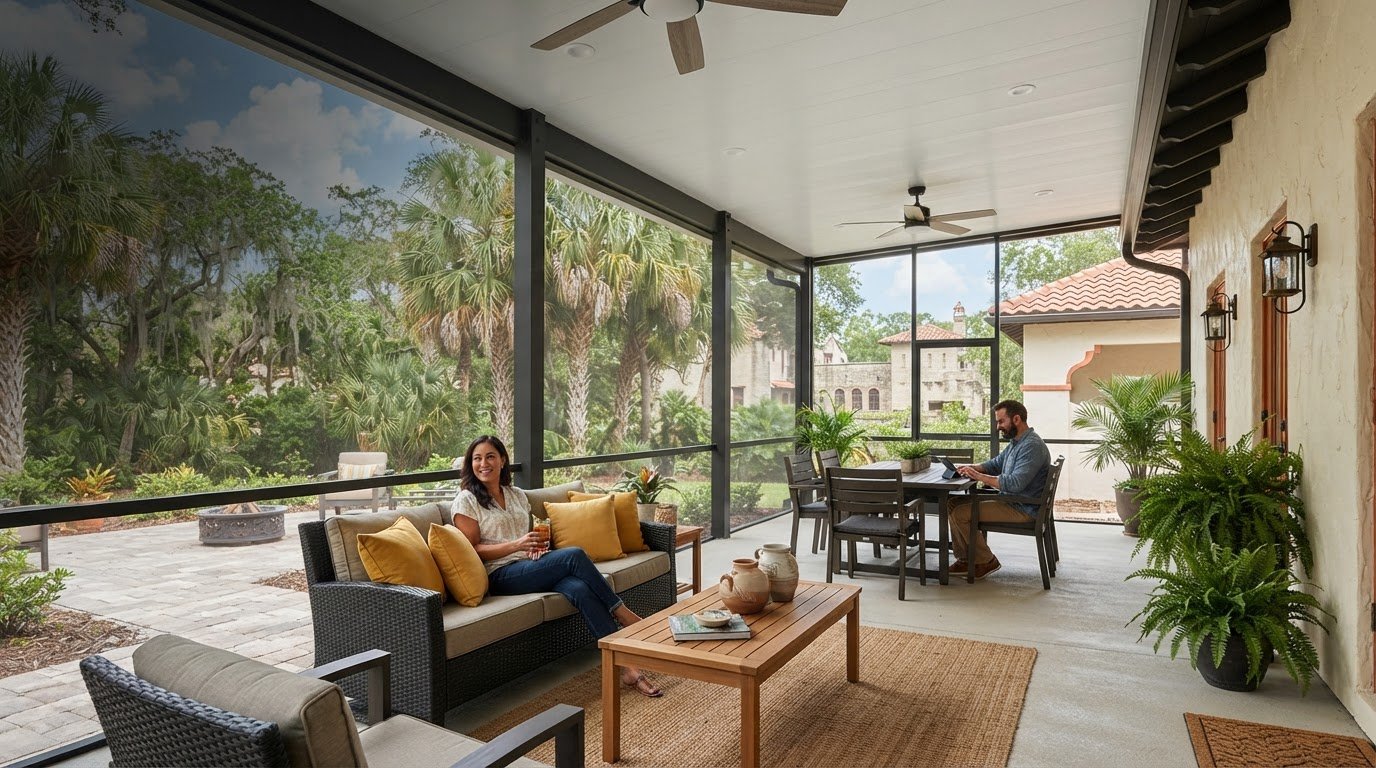
Your pool cage is part of the outdoor space you use every day. As you plan its care, consider how you want that space to function once the work is complete. Keeping that goal in mind can help you connect the condition you’ve observed with the project scope.
For homeowners in Saint Augustine, North Florida Screen Enclosures provides complete re-screens, enclosure repairs, and Tapcon replacement as a separate service for fastener concerns. Bring your observations and questions to the project discussion if a complete rescreen pool cage project may be the right next step.
Discuss a complete pool cage rescreen in Saint Augustine and move forward with a clear plan for your enclosure.
Frequently Asked Questions
How long does a complete pool cage rescreen take?
There isn’t one reliable day-count for every project. A smaller, straightforward cage and a tall enclosure with a complex roof layout require different work and access planning. Weather and separate repairs can also affect scheduling. For a useful estimate, describe the enclosure’s size and layout, note access challenges, and explain any visible damage. The proposed scope, rather than a generic timeline, is the best guide.
Does a complete rescreen include repairs to the aluminum frame?
No. Rescreening focuses on replacing screen; aluminum frame repairs are separate work. If you notice corrosion, a bent section, or a connection that appears loose, point it out during the project discussion rather than assuming new mesh will address it. North Florida Screen Enclosures also provides screen enclosure repairs, so screen and frame concerns can be considered as distinct parts of the enclosure’s overall condition.
Can a pool cage be rescreened after storm damage?
Yes, rescreening may be part of restoring a storm-affected cage, but first consider whether the damage extends beyond torn mesh. From a safe vantage point, note visible changes to doors, framing, or fasteners and share their locations when discussing the work. A complete rescreen pool cage project addresses screening; broader damage may call for a separate repair scope based on the enclosure’s condition.
What should I move before a pool cage rescreen begins?
Move furniture, planters, pool toys, and other belongings away from routes to the enclosure and work areas where practical. For example, clear the patio beside a door if it is part of the access path. Keep children and pets away from active work zones, and follow the project team’s instructions for nearby items. Preparation can vary with the cage layout and the specific work planned.
Will new pool cage screens keep every insect and piece of debris out?
No screen should be expected to block every insect or all debris in every condition. How well the enclosure acts as a barrier depends on the screen’s fit and condition, openings, and access points such as doors. After rescreening, keep doors closed when you want to limit entry, and look for visible gaps during normal use. The practical aim is a maintained screen barrier, not a completely sealed outdoor area.
Can I use the pool while a complete rescreen is underway?
Don’t assume the pool area will remain usable during active work. Crews may need access to different sections, and tools or work areas can make parts of the enclosure unsuitable for use. Before the project starts, discuss how access will be managed and follow any areas identified as restricted. Keep children and pets away from the work zone, and wait for guidance before using spaces affected by the work.
Is a complete pool cage rescreen different from replacing the entire enclosure?
Yes. A complete rescreen replaces the screening across the existing cage; it does not mean the aluminum structure is being replaced. Mesh and frame are separate components with different scopes of work. If the enclosure has damage beyond the screens, replacing mesh alone may not address it. Describe visible concerns about framing or fasteners separately when discussing the project so the intended scope is clear.
Comments