


Screen Enclosure Maintenance: The Ultimate Homeowner’s Checklist for 2026

Could a single rusted screw lead to a total enclosure collapse during a sudden summer storm? For many Saint Augustine homeowners, the structural integrity of their outdoor space is often overlooked until a panel tears or a frame begins to wobble. Proactive screen enclosure maintenance is the only reliable way to safeguard your property against the relentless humidity and salt air of our coastal environment. You likely enjoy the shade and pest protection your patio provides, but you might also feel frustrated by the persistent green mold and algae that seem to return every season.
We understand that your enclosure is a significant investment in your home's value and your family's comfort. This comprehensive 2026 guide offers a clear, expert-backed schedule for cleaning and inspection. You'll learn how to identify when a small fix, such as a Tapcon replacement or a minor screen repair, can prevent a costly structural failure. We walk through the essential steps to keep your mesh tight, your aluminum frames secure, and your outdoor living space looking as pristine as the day it was installed.
Table of Contents
The Essential Screen Enclosure Cleaning Checklist
Effective screen enclosure maintenance begins with a methodical, top-down approach to removing environmental contaminants. In North Florida, our enclosures face a constant barrage of salt air, high humidity, and falling debris from surrounding oaks and palms. You should start by clearing the roof and gutters with a soft-bristled broom. Accumulated leaves and twigs add unnecessary weight to the support beams and can trap moisture against the aluminum, which eventually leads to structural wear. It’s a simple task that prevents the buildup of organic matter before it hardens into a more difficult problem.
Once the roof is clear, rinse the entire structure with a low-pressure garden hose. This step is vital for Saint Augustine homeowners, as it washes away surface salt that causes oxidation on the metal frame. After the initial rinse, apply a mild, eco-friendly detergent solution. This helps break down the green mold and algae that thrive in our humid climate. Use a soft cloth to gently scrub the aluminum beams, focusing on joints and corners where grime tends to accumulate. This manual cleaning prevents the finish from chalking or pitting, keeping the metal looking new for years.
Safe Cleaning Agents for Florida Screens
Choosing the right chemicals is a critical part of screen enclosure maintenance that many homeowners get wrong. You should avoid high-concentration bleach, especially on polyester mesh. While bleach kills mold quickly, it can strip the protective UV coating off the fibers. This leaves the screen brittle and prone to tearing under the Florida sun. Instead, look for specialized 'wet and forget' style cleaners designed for outdoor use. These products are often safer for your landscaping and won't disrupt your pool's chemistry. Always perform a final, thorough rinse to ensure no residue remains to attract more dirt.
Pressure Washing: Pros, Cons, and Warnings
While it's tempting to blast away algae with a pressure washer, high-pressure streams can be destructive. If you choose to use one, keep the setting below 1,500 PSI. Using too much force is the fastest way to "blow out" the screen spline, which is the rubber cord holding the mesh in the frame. Focus the water stream on the sturdy aluminum beams rather than the mesh panels themselves. If the mold is stubborn, put the pressure washer away and use a soft-bristled brush instead. This manual care ensures you don't compromise the tension of the screen or create micro-tears that lead to expensive repairs.
Inspecting Screen Mesh and Spline Integrity
Regular screen enclosure maintenance requires more than just a visual scan from the comfort of your patio. You should walk the entire perimeter of the structure at least once every quarter. Pay close attention to the areas where the mesh meets the aluminum frame. If you notice sagging panels or edges that seem to be pulling away from the tracks, the integrity of that section is already compromised. These gaps don't just let in pests; they create weak points that can lead to larger tears during the next heavy storm.
Performing the "finger test" is a reliable way to check for material degradation. Gently press your finger against the mesh in several spots, especially those receiving direct afternoon sun. If the screen feels brittle or leaves a chalky residue on your skin, the fibers have reached the end of their functional lifespan. You should also examine the spline, which is the rubber gasket that locks the mesh into the frame's channels. Heat causes this material to shrink or crack over time. If the rubber feels hard or has pulled away at the corners, it can no longer provide the grip needed to hold the screen in place under pressure.
Don't forget to check the door hardware and bug sweeps for proper alignment and closure. A door that doesn't latch securely or a sweep that has gaps allows insects to enter and can lead to the frame twisting if the door catches a gust of wind. Maintaining these small components is a key part of total screen enclosure maintenance that ensures your outdoor space remains a true sanctuary.
Identifying UV Damage and Dry Rot
Standard fiberglass screening is particularly vulnerable to the intense Florida sun. Over time, UV rays break down the vinyl coating, leading to "silvering," where the screen takes on a metallic, shiny appearance. This is a clear indicator of dry rot. When this happens, the mesh loses its tensile strength and can tear with even a light gust of wind. Catching these signs early is vital because the pool screen panel replacement cost is significantly lower when you replace individual sections rather than waiting for a total enclosure failure.
The Role of the Spline in Wind Resistance
In North Florida, the spline is your first line of defense against high-wind events. Extreme summer heat causes the aluminum frame to expand and contract, which can cause the spline to "pop" out of its groove. A loose panel acts like a sail, catching the wind and putting immense pressure on the rest of the structure. While simple re-rolling can sometimes fix a minor issue, old or brittle spline usually requires a professional touch to ensure the mesh is tensioned correctly. If you find multiple panels are loose, you should contact a professional repair team to restore the structural integrity of your space.
Structural Integrity: Fasteners, Cables, and Frame Health
While clean mesh and clear gutters improve aesthetics, the true strength of your structure lies in the components you rarely notice. Comprehensive screen enclosure maintenance must include a rigorous inspection of the hardware that anchors the aluminum frame to your foundation. Start at the base. You need to inspect the Tapcons, or floor anchors, for any signs of rust, corrosion, or "popping" heads where the screw has lost its grip on the concrete. In our coastal environment, salt air can penetrate the smallest gaps, eating away at these steel fasteners from the inside out.
Next, move your attention to the structural support cables. These are designed to distribute wind loads across the entire frame. If these cables are loose, the aluminum beams must bear the brunt of the force alone, which can lead to buckling. You should also check for oxidation or pitting on the aluminum beams, particularly near the ground where moisture and pool chemicals tend to settle. Finally, verify the stability of the gusset plates and corner bracing. If any of these plates are bent or the screws are missing, the frame's ability to resist twisting is severely diminished.
The Critical Importance of Tapcon Replacement
Rusted fasteners are the leading cause of enclosure "blow-overs" during Florida storms. When the wind picks up, the screen panels act like sails, pulling upward on the frame. If the Tapcons are corroded, they can simply snap or pull out of the concrete, allowing the entire structure to lift and collapse. It's vital to distinguish between minor surface rust on the screw head and deep structural failure where the fastener has lost its integrity. Seeking a professional pool enclosure repair St. Augustine specialist ensures that your anchors meet current wind-load ratings and provide the necessary peace of mind.
Checking Support Cable Tension
A simple way to check your cables is the "twang" test. Gently pluck the cable like a guitar string; it should feel firm and produce a clear, vibrating sound. If it feels limp or makes a dull thud, it's likely loose. Conversely, over-tightened cables can put excessive stress on the aluminum frame, causing it to warp or pull out of alignment. Inspect the eye-bolts and turnbuckles for salt-air corrosion, as these are the primary failure points for the cable system. Maintaining even tension across all support points is a vital part of proactive screen enclosure maintenance that protects your investment from expensive structural damage.
Seasonal Maintenance for the North Florida Climate
Living in North Florida means your screen enclosure maintenance schedule must align with the specific local weather patterns of our region. Before the Atlantic hurricane season begins in June, you should conduct a full structural audit. This involves checking every fastener and support cable to ensure nothing has loosened over the winter months. After a major storm passes, don't just look for holes in the mesh. You need to inspect the concrete foundation and aluminum joints for micro-cracks that indicate structural stress. These small fractures can compromise the entire cage during the next high-wind event.
Winter brings its own set of challenges, primarily in the form of heavy oak leaves and pine needles. These materials trap moisture and acidic tannins against your roof panels, which can lead to premature wear of the finish. Once spring arrives, the rising humidity triggers rapid mold and algae growth. Addressing this organic buildup early with a gentle detergent treatment prevents stains from becoming permanent. Consistency throughout the year is what separates a durable, long-term investment from a structure that requires frequent, expensive repairs.
Coastal Care: Managing Salt Air Corrosion
Homes in Saint Augustine and surrounding coastal areas face the unique threat of salt air corrosion. If you live within five miles of the ocean, monthly fresh-water rinses are a necessity to preserve your frame. Salt crystals act as both an abrasive and a corrosive agent on aluminum finishes. You can protect the luster of your frame by applying specialized protectants twice a year. Because of the accelerated wear in coastal zones, hardware inspections should happen every 90 days to catch rusted anchors before they compromise the structure's safety.
Hurricane Readiness for Pool Cages
True readiness involves understanding how air pressure affects your enclosure during a storm. Using the 'pull-pin' technique on your screen doors allows them to swing freely, which helps equalize pressure and reduces the lateral load on the frame. In extreme scenarios, removing a single screen panel can actually save the entire structure by providing a path for the wind to blow through rather than pushing against it. It's also vital to ensure your pool enclosure installation meets the current Florida Building Code requirements for wind resistance. If you're concerned about your structure's ability to withstand the next season, contact our team for a professional structural inspection to ensure your family remains safe.
Professional Maintenance vs. DIY: When to Call the Experts
While many homeowners take pride in handling basic household chores, screen enclosure maintenance often reaches a point where professional intervention is a necessity rather than a luxury. The most significant concern is safety. Climbing onto pool cage beams to reach roof panels or gutters without specialized fall-protection equipment is incredibly dangerous. Unlike working on a solid roof, aluminum enclosure beams are narrow and can become slippery with even a small amount of moisture or algae. A professional team uses the correct ladders, walk-boards, and harnesses to ensure the job is finished without risk to life or property.
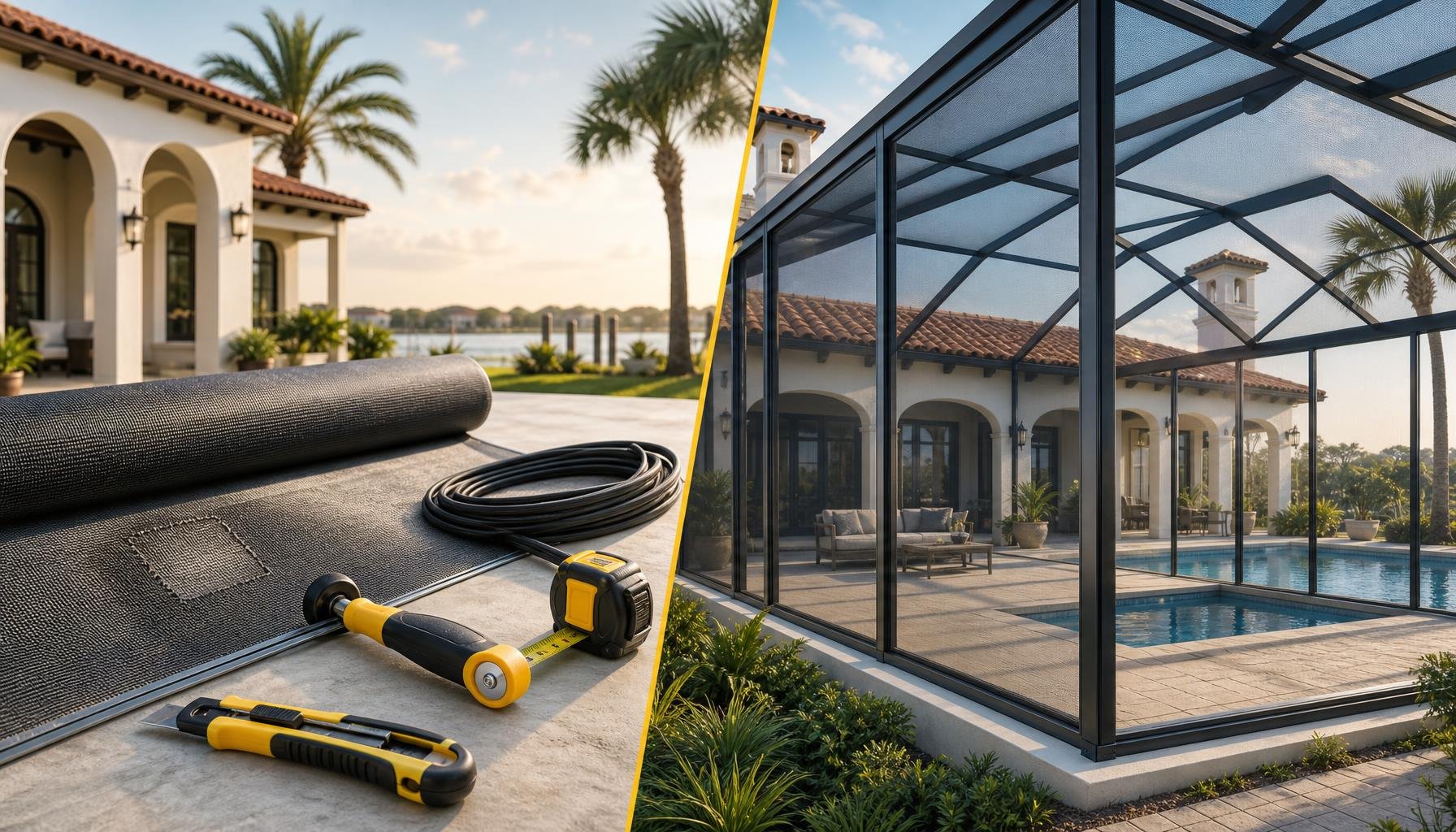
Beyond safety, the technical precision of professional tools cannot be overstated. When a specialist handles your re-screening, they use pneumatic tools and specialized rollers that achieve a level of mesh tension impossible with handheld DIY kits. This tight tension doesn't just look better; it prevents the mesh from flapping in the wind, which significantly reduces wear on the spline and the aluminum channels. Additionally, having a professional audit your structure can provide you with a structural certification. This document is increasingly valuable for home insurance purposes in North Florida, as it proves your cage meets current wind-load requirements.
Partnering with North Florida Screen Enclosures for a structured maintenance plan saves you money over the lifespan of your home. By catching small issues like a single failing Tapcon or a slightly loose cable before they escalate into a full structural collapse, you avoid the high cost of a total replacement. Our team understands the local environment and the specific building codes required to keep your outdoor space standing through the worst of the Atlantic storm season.
Signs You Need a Professional Repair
You should transition from DIY cleaning to professional repair if you identify any of the following critical indicators. If more than 25% of your panels show signs of dry rot or silvering, the structural integrity of the entire mesh system is likely compromised. Finding more than three rusted or missing floor anchors is another red flag that requires immediate attention. Perhaps the most alarming sign is visible leaning or swaying of the enclosure during moderate winds, which suggests that the internal bracing or anchoring system has already failed.
The Long-Term Value of Expert Care
Investing in expert care can extend the life of your enclosure by 10 years or more. Professional re-screening and fastener replacement ensure that your structure remains hurricane-ready, providing peace of mind during the summer months. In a competitive real estate market like Saint Augustine, a well-maintained enclosure also preserves your property value. A pristine, secure outdoor living space is a major selling point, whereas a sagging, rusted cage can become a significant liability during a home inspection.
Securing Your Outdoor Investment for the Years Ahead
Maintaining a safe and pristine outdoor environment in Saint Augustine requires more than just a quick rinse with a hose. As this guide has demonstrated, effective screen enclosure maintenance involves a disciplined approach to cleaning, regular inspections of UV-damaged mesh, and a critical eye on the structural fasteners that anchor your cage to the ground. Small details like failing spline or rusted Tapcons can lead to catastrophic failure during our intense North Florida storm seasons. By staying proactive, you preserve the longevity of your aluminum frame and ensure your family can enjoy the patio without worry.
If your enclosure hasn't been professionally audited recently, don't wait for a high-wind event to test its integrity. Our team of St. Augustine local specialists adheres to the highest hurricane-rated construction standards, providing expert Tapcon replacement and comprehensive structural repairs. You can Schedule a Professional Maintenance Inspection with North Florida Screen Enclosures today to protect your investment. Taking these steps now ensures your enclosure remains a durable, beautiful extension of your home for 2026 and beyond. Enjoy the peace of mind that comes with a structure built to last.
Frequently Asked Questions
How often should I clean my screen enclosure in Florida?
You should perform a deep cleaning at least twice a year to maintain the structural integrity of the aluminum. However, if your home is located within five miles of the Atlantic coast in Saint Augustine, monthly fresh-water rinses are recommended. Regular rinsing prevents salt crystals from accumulating and corroding the metal finish. This consistency is a vital part of screen enclosure maintenance that stops organic growth from taking hold in our humid climate.
Can I use a pressure washer on my pool screen?
You can use a pressure washer, but you must keep the setting below 1,500 PSI to avoid damaging the components. High-pressure streams can easily blow the rubber spline out of its groove or tear through brittle mesh. It's safer to focus the water on the sturdy aluminum beams rather than the screen panels themselves. For the mesh, a gentle garden hose paired with a soft brush is often the more reliable choice.
What is the best way to remove green mold from my enclosure?
The most effective method is applying a mild, eco-friendly detergent or a specialized outdoor cleaner designed to kill algae without damaging polyester fibers. Avoid using high concentrations of bleach, as it can strip the UV-protective coating from your screens. Gently scrub the affected areas with a soft cloth or brush, then perform a thorough rinse with fresh water. This process removes organic stains while protecting the longevity of your investment and surrounding landscaping.
How do I know if my screen enclosure fasteners need to be replaced?
You should inspect your floor anchors, or Tapcons, for any signs of orange rust or "popping" where the screw head has separated from the frame. If the fasteners look corroded or feel loose when touched, they can no longer provide the necessary tension to hold your cage during a storm. Replacing these steel components is a critical aspect of screen enclosure maintenance that prevents the entire structure from lifting or collapsing during high winds.
Is it normal for my pool cage to sway in the wind?
While aluminum enclosures are designed to have a very slight amount of flexibility, visible swaying or leaning during moderate winds is not normal. This movement usually indicates that your support cables have lost tension or your floor anchors have failed. If you notice the frame shifting significantly, it's a sign of structural instability. You should seek a professional inspection to identify which fasteners or braces need immediate reinforcement to ensure your family's safety.
What is the average lifespan of a pool screen in Saint Augustine?
In the harsh coastal environment of Saint Augustine, standard fiberglass mesh typically lasts between seven and ten years. Factors such as direct sun exposure, salt air, and debris accumulation can shorten this lifespan. If you notice the mesh becoming brittle or turning silver, it's likely reaching the end of its functional life. Upgrading to high-strength or polyester-coated screens during a re-screen can often extend this period by several additional years while improving tear resistance.
Does home insurance cover screen enclosure maintenance or repair?
Most standard homeowners insurance policies don't cover routine maintenance or damage caused by age and wear. Coverage for storm-related repairs varies significantly depending on your specific policy and any hurricane-related endorsements you have selected. It's essential to review your documents or speak with your agent to understand your deductibles. Maintaining a record of professional inspections can sometimes help demonstrate that the structure was in good condition prior to a storm-related insurance claim.
Should I remove my screens before a hurricane?
You should generally keep your screens in place, but removing a few select panels can save the aluminum frame during an extreme hurricane. This allows wind to pass through the structure rather than pushing against it like a sail. A more practical first step is using the "pull-pin" feature on your screen doors to let them swing freely. This helps equalize air pressure and reduces the lateral load on the entire enclosure during high-wind events.
Comments