


Screen Enclosure Tapcon Anchor Replacement: Ensuring Structural Integrity in Saint Augustine

Could the small, orange-brown stains at the base of your pool cage be the first warning sign of a total structural collapse? Many Saint Augustine homeowners view rust as a simple aesthetic issue, but those streaks on your pavers often signal that the foundation of your outdoor living space is compromised. Prioritizing a screen enclosure tapcon anchor replacement is not just about restoring the look of your patio; it's a critical step in maintaining the structural integrity of the entire frame against our region's 130 to 150 mph wind zones. When these base fasteners fail, the entire cage loses its ability to resist the intense uplift forces common during Florida's storm season.
We understand the concern that comes with living on the coast, where salt air constantly tests the limits of your home's exterior materials. You deserve to feel confident that your enclosure will stand firm when the weather turns. In this article, you'll learn how to identify the specific stages of fastener corrosion and why the Florida Building Code now mandates the use of high-grade stainless steel. We'll also provide a clear overview of the professional replacement process, helping you protect your investment and your family's safety through durable, high-quality workmanship.
Table of Contents
What are Tapcon Anchors and Why Do They Fail in Florida?
At its core, a screen enclosure is a complex aluminum structure designed to withstand significant environmental pressure. The most critical point of this structure is the base plate, which is secured to your concrete deck using Concrete screw anchors, commonly known as Tapcons. These specialized masonry fasteners are responsible for transferring immense wind loads from the screen walls directly into the foundation. Without a secure connection at the ground level, the enclosure loses its structural stability, turning a protective cage into a liability during high-wind events.
In Saint Augustine, these fasteners face a relentless assault from high humidity and salt air. While standard blue-coated Tapcons are often used during initial construction, they are rarely equipped for long-term exposure to the North Florida coast. Over time, oxidation eats away at the metal, leading to a loss of thread engagement. This degradation often occurs as an "invisible" threat; the screw head may appear intact, but the shank is often rotting from the inside out where it meets the damp concrete. This hidden decay is exactly why a proactive screen enclosure tapcon anchor replacement is essential for maintaining safety.
The Science of Galvanic Corrosion
Galvanic corrosion is a specific chemical reaction that occurs when two dissimilar metals, such as an aluminum frame and a carbon steel screw, come into contact in the presence of an electrolyte. In our coastal environment, moisture and salt spray act as highly effective electrolytes, creating a small electrical current that accelerates the destruction of the metal. As the steel anchor breaks down, it expands and produces the tell-tale orange bleeding stains often seen on pool decks. These rust streaks are more than just an eyesore; they are a visual confirmation that the fastener's structural integrity has vanished.
Environmental Factors in North Florida
Living near the Atlantic means your home is constantly subjected to a corrosive mist that standard hardware cannot withstand. Beyond the salt air, pool chemicals like chlorine and salt-water systems create a localized microclimate that is even more aggressive toward metal components. Galvanic corrosion is the primary cause of anchor failure in aluminum structures. When you consider that a typical enclosure can act like a giant sail during a storm, the need for a professional screen enclosure tapcon anchor replacement becomes clear. Using the correct materials, specifically high-grade stainless steel, is the only way to ensure your outdoor space remains anchored and secure against the elements.
Signs You Need Screen Enclosure Fastener Replacement
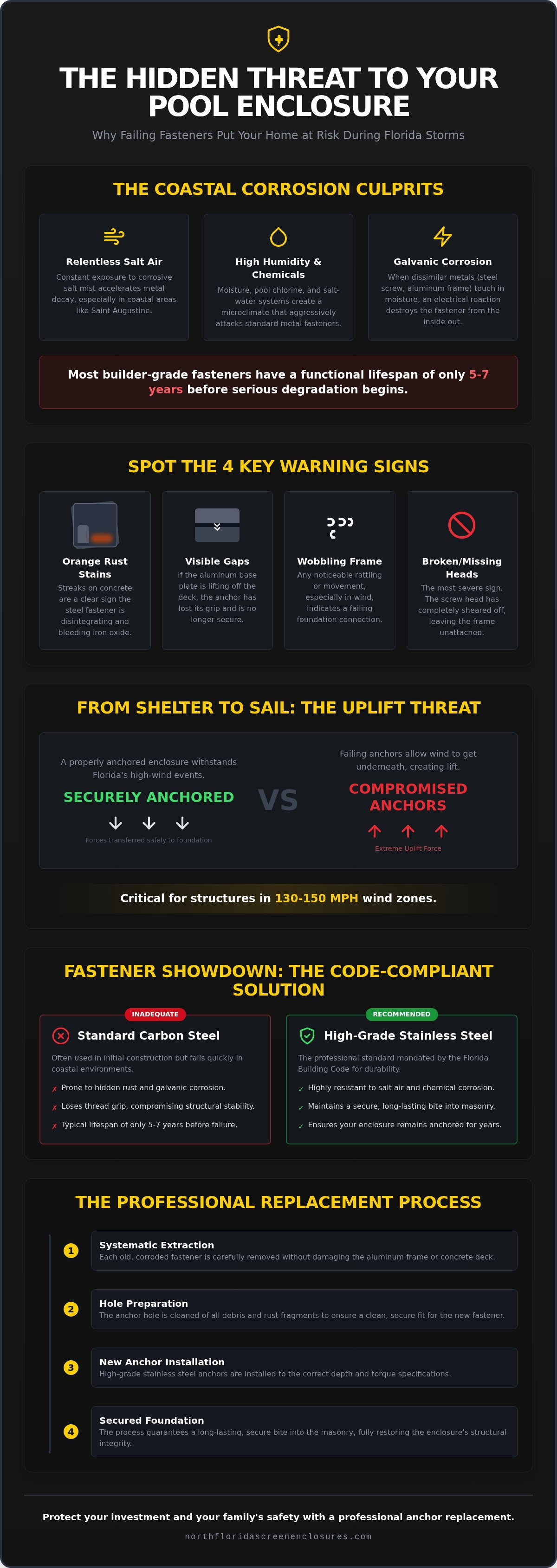
Identifying when a screen enclosure is no longer safe requires a keen eye and a basic understanding of local building wear. Most builder-grade fasteners used in North Florida have a functional lifespan of only five to seven years. After this period, the relentless salt air and high humidity have likely compromised the metal's core. If your enclosure was built over half a decade ago, it's time to evaluate the need for a screen enclosure tapcon anchor replacement to maintain structural safety.
Visual signs are usually the first indicators of trouble. Look for orange or black staining on the concrete deck around the base of the aluminum frame. These streaks are iron oxide leaching from the fastener. Beyond aesthetics, check for visible gaps between the aluminum base plate and the concrete surface. If the plate is no longer flush, the anchor has lost its grip. You can also perform a physical test by gently shaking the vertical posts. A noticeable rattle or movement during moderate winds suggests that the foundation connection is failing. Following established Hurricane preparedness guidelines means addressing these vulnerabilities before a storm arrives.
Identifying Rusted vs. Corroded Fasteners
Knowing the difference between surface rust and structural pitting is vital for your home's safety. Surface rust might look unsightly, but pitting indicates that the screw's core is actually disintegrating. You can try the "Snap Test" on a suspicious fastener. If you attempt to gently tighten the screw and the head immediately breaks off, the shank was already hollowed out by corrosion. In severe cases, you might even find missing heads where the metal has completely disintegrated, leaving the enclosure essentially unattached to the ground.
Assessing the Base Plate Integrity
When fasteners fail, the aluminum base plate often suffers as well. Rusted steel causes "pitting" in the aluminum, which weakens the frame itself. This allows for "walking," where the entire enclosure frame shifts slightly during wind gusts. For homeowners, catching these issues early is a key part of Expert Pool Enclosure Repair in St. Augustine: Restoring Safety and Style. If you notice your frame shifting or see visible holes in the aluminum around the screws, the anchors are no longer doing their job. If you're unsure about the state of your fasteners, a professional inspection from the team at North Florida Screen Enclosures can provide the clarity you need to ensure your outdoor space remains secure.
The Professional Tapcon Replacement Process
Executing a proper screen enclosure tapcon anchor replacement involves much more than simply unscrewing old hardware. It is a technical procedure that requires precision to ensure the new fasteners achieve maximum pull-out strength. If a single anchor is installed incorrectly, the entire base plate can become a weak point during a windstorm. Our team follows a methodical four-step protocol to restore the structural integrity of your Saint Augustine home's enclosure.
Step 1: Systematic Extraction. We use specialized extraction tools to remove compromised fasteners. This is a delicate phase because rusted screws are prone to snapping under torque.
Step 2: Masonry Preparation. Once the old screw is out, we clear the existing hole of concrete dust and oxidized metal. A clean hole is essential for the new threads to achieve a "clean bite" into the masonry.
Step 3: Strategic Re-drilling. If the original masonry hole is "blown out" or oversized due to previous corrosion expansion, we drill new pilot holes. This ensures the new anchor is biting into fresh, solid concrete rather than crumbling debris.
Step 4: Precision Installation. We drive high-grade replacement anchors to the exact depth required by local wind codes, utilizing isolation washers to prevent future metal-to-metal degradation.
The Challenge of Broken Screws
Many DIY attempts at screen enclosure tapcon anchor replacement end prematurely when a rusted screw head snaps off. When this happens, the hardened steel shank remains embedded in the concrete, blocking the hole. Professionals use high-torque extraction bits designed to grip the remaining metal without damaging your expensive pavers or concrete deck. If a shank is truly unmovable, we employ a "side-drill" method. This involves drilling a new pilot hole precisely beside the original to maintain the base plate's alignment while ensuring a secure foundation connection.
Isolation and Protection
To prevent the return of galvanic corrosion, we incorporate advanced isolation techniques. We place nylon or high-density plastic washers between the screw head and the aluminum frame. This small barrier stops the chemical reaction between dissimilar metals that causes premature failure. We also apply protective coatings to the threads before driving them home. Finally, we seal the entry point to prevent water from pooling around the base of the anchor. This comprehensive approach ensures that your new fasteners don't just look better; they stay stronger for a significantly longer period.
Choosing the Right Fasteners: Stainless Steel vs. Ceramic Coated
Selecting materials for your screen enclosure tapcon anchor replacement isn't just about price; it's about matching the hardware to Saint Augustine’s specific environmental demands. Standard builder-grade blue Tapcons are made of carbon steel. While they perform well for interior framing or dry environments, they fail rapidly when exposed to Florida’s exterior humidity and salt spray. For long-term structural security, we focus on stainless steel alloys and specialized protective coatings that can withstand our coastal conditions.
410 stainless steel is a common upgrade because it offers high tensile strength and is magnetic, which allows for a more efficient installation process. However, 410 stainless still contains enough carbon to develop surface rust over time, especially in high-moisture areas. Ceramic or Nylo-Shield coatings provide an alternative by adding a non-conductive barrier. These coatings are specifically designed to resist the chemical reaction with aluminum, effectively slowing the degradation process even in the presence of salt air.
The Pros and Cons of Stainless Steel
For homes situated within five miles of the Atlantic, 316 stainless steel is considered the professional gold standard. This specific grade contains molybdenum, an element that provides superior resistance to chloride-induced pitting and corrosion. While 316 stainless is more expensive, it virtually eliminates future rust staining. There is a technical trade-off to consider; while 304 and 316 grades are incredibly resilient against rust, they are slightly "softer" than carbon steel. This means they require expert handling and precise pilot holes to ensure they don't snap during the drive-in process.
Understanding Wind Load Ratings
Material choice must be paired with the correct fastener dimensions to meet safety standards. The diameter of the anchor significantly impacts the enclosure’s hurricane rating. Upgrading from a 3/16" to a 1/4" diameter fastener provides a much higher shear strength, which is vital for the base plate's stability. Florida building codes also mandate specific anchor depths, typically requiring at least 1.25 to 1.5 inches of embedment into solid concrete to achieve the necessary pull-out resistance. This attention to technical detail is what separates standard repairs from Hurricane Rated Pool Enclosures: Built for the Coast. To ensure your home is protected with the highest quality hardware, reach out to North Florida Screen Enclosures for a structural fastener assessment.
Why Professional Replacement is a Hurricane Season Necessity
The physics of a Florida storm are unforgiving to aluminum structures. During a high-wind event, your pool cage acts as a giant sail, catching every gust and generating thousands of pounds of uplift pressure. If the base fasteners are compromised, the entire cage can be ripped from its foundation. A professional screen enclosure tapcon anchor replacement ensures that this "sail" remains firmly tethered to the concrete. An enclosure is only as strong as the anchors holding it to the ground; when those fail, the structural integrity of the entire system vanishes instantly.
Maintaining these fasteners also carries significant insurance implications. Most homeowners' policies require the owner to maintain the property in a safe condition. If a storm destroys an enclosure with visibly rusted and neglected anchors, you may face claim denials based on a lack of maintenance. Beyond the financial risk, there is the simple peace of mind that comes from knowing your enclosure won't end up in your neighbor's yard or submerged in your pool during a hurricane.
Preparing Your Saint Augustine Home
The ideal time to address these vulnerabilities is during the spring or early summer, well before the peak of hurricane season. Many homeowners choose to bundle a screen enclosure tapcon anchor replacement with a "Complete Re-screen." This combination offers a total structural renewal, addressing both the mesh and the foundation at once. During a service call, North Florida Screen Enclosures evaluates your entire structure, checking for loose gusset plates and frame alignment to ensure the system meets local wind code requirements.
The Long-Term Value of Expert Maintenance
Proactive maintenance prevents the need for far more expensive repairs down the road. When anchors are loose, the aluminum frame is allowed to "rack" or twist, which can lead to bent beams and snapped joints. By keeping the base plates tight, you protect the entire aluminum skeleton from fatigue. Additionally, replacing old fasteners removes those unsightly rust stains that can permanently damage expensive pavers or concrete decks, preserving your home's curb appeal and property value. Don't wait for the next tropical system to test your home's defenses. Schedule a structural anchor inspection with North Florida Screen Enclosures today.
Protecting Your Coastal Investment
Maintaining a screen enclosure in Saint Augustine requires more than just keeping the mesh clean. It demands a commitment to the structural components that face the relentless coastal air every day. As we have discussed, identifying early signs of corrosion like rust staining and plate movement can prevent catastrophic failure during a high-wind event. By choosing superior materials like 316 stainless steel, you effectively reset the clock on your enclosure's lifespan and ensure it meets local hurricane-rated standards.
Investing in a professional screen enclosure tapcon anchor replacement is the most effective way to ensure your patio remains a safe sanctuary year-round. As locally owned specialists in hurricane-rated aluminum construction, we understand the specific challenges of our North Florida environment and provide the diligent craftsmanship your home deserves. Don't wait for the next storm system to reveal the hidden weaknesses in your foundation. Secure your enclosure with professional Tapcon replacement from North Florida Screen Enclosures. We are here to help you protect your investment with high-quality workmanship and the peace of mind you deserve.
Frequently Asked Questions
Can I just spray the rusty screw heads with Rust-Oleum?
Surface treatments like Rust-Oleum only provide a temporary cosmetic mask for a much deeper structural problem. While the spray might hide the orange color, it does nothing to address the galvanic corrosion occurring beneath the aluminum base plate. By the time you see rust on the head, the shank of the screw is often significantly thinned. Relying on paint instead of a professional screen enclosure tapcon anchor replacement leaves your enclosure vulnerable to high winds.
How much does it cost to replace all the Tapcons on a standard pool cage?
The total investment for this service depends on several variables, including the dimensions of your enclosure and the total number of fasteners required. A typical pool cage may have hundreds of foundation anchors that need attention. We recommend a professional assessment to determine the scope of work. Many Saint Augustine homeowners find it most cost-effective to combine this structural update with other maintenance tasks, such as a complete re-screen, to maximize long-term value.
Will replacing my anchors fix the rust stains on my pavers?
Replacing your anchors is the only way to stop the source of the rust, but it won't automatically remove existing stains from your deck. Once the oxidized metal is removed and replaced with stainless steel, the leaching process ends. To restore the look of your pavers or concrete, you may need specialized chemical cleaners or professional pressure washing. Addressing the fasteners first ensures that your cleaning efforts aren't immediately ruined by new rust streaks.
How long do stainless steel Tapcons last in Saint Augustine?
High-grade 316 stainless steel fasteners are engineered to withstand the aggressive salt air of the Saint Augustine coast for many years. While standard carbon steel screws often fail within five to seven years in Florida, these premium alloys offer vastly superior resilience against pitting and oxidation. Environmental factors like proximity to the ocean and pool chemistry still play a role, but choosing the right materials significantly extends the time between necessary structural maintenance cycles.
Do I need to replace every screw, or just the ones that look rusty?
We generally recommend a comprehensive screen enclosure tapcon anchor replacement for the entire base plate rather than a spot repair approach. If a few fasteners show visible rust, it's a strong indicator that the entire batch has been compromised by the same environmental conditions. Replacing every anchor at once ensures uniform structural integrity across the whole frame. This methodical approach provides much greater peace of mind during hurricane season than simply swapping out the most visible failures.
What happens if a Tapcon breaks off during the replacement process?
If a fastener snaps during extraction, our team utilizes specialized high-torque bits to remove the remaining steel shank from the masonry. Leaving a broken screw in the hole prevents the installation of a new anchor, which weakens that section of the frame. In rare cases where a shank cannot be extracted, we employ a side-drill technique to create a new, secure pilot hole. This ensures the aluminum base plate remains properly tensioned against the concrete foundation.
Is anchor replacement covered by my homeowners' insurance?
Homeowners' insurance typically views fastener replacement as a standard maintenance responsibility rather than a covered peril. Insurance companies expect property owners to maintain the structural components of their homes to prevent avoidable damage. In fact, neglecting your anchors can be detrimental to future claims. If a storm destroys your enclosure and the carrier finds evidence of neglected, rusted fasteners, they may argue that the loss was due to poor maintenance rather than wind.
Can anchor replacement be done without removing the screens?
Yes, our technicians can perform a full anchor replacement without disturbing your existing screen mesh. Since the work is focused entirely on the aluminum base plate and the concrete foundation, it's a standalone structural service. However, many of our Saint Augustine clients choose to perform this work alongside a complete re-screen. This allows for a more thorough inspection of the entire aluminum skeleton and ensures every component of the enclosure is refreshed at the same time.


Comments