


The Complete Buying Guide to Pool Screen Enclosures in 2026
- Michael Caruso

- Aug 5
- 12 min read
A pool screen enclosure in Florida is far more than a simple backyard addition; it's a critical structural barrier designed to protect your home's value and your family's comfort. For many homeowners in Saint Augustine, the dream of a relaxing afternoon by the water is often interrupted by the reality of constant debris or the persistent nuisance of no-see-ums. You likely understand that a standard mesh or a flimsy frame won't suffice when the heavy winds of hurricane season begin to pick up. Choosing a high-quality structure means prioritizing long-term resilience over temporary convenience.
This guide will help you evaluate the essential decisions required to create a durable, low-maintenance outdoor space that stands the test of time. You'll discover how to select the ideal mesh for insect protection, understand the functional benefits of different roof styles, and ensure your project meets the strict wind-load requirements of the 8th Edition Florida Building Code. We will preview everything from hurricane-rated engineering to the latest trends in aluminum construction, giving you the confidence to make a professional investment for your home in 2026.
Table of Contents
Why Pool Screen Enclosures are Essential for Saint Augustine Homes
In Saint Augustine, a backyard pool is a sanctuary, yet the local environment presents unique challenges that can quickly turn a private oasis into a maintenance burden. A professionally installed pool screen enclosure acts as the first line of defense against the relentless Florida climate. Beyond the obvious benefit of keeping out larger wildlife, these structures serve a critical role in maintaining swimming pool safety standards by providing a physical barrier that defines the outdoor living area. It's a functional necessity for anyone who wants to enjoy their water without a constant battle against nature.
The most immediate advantage is the dramatic reduction in organic debris. Oak leaves, pine needles, and pollen are constant fixtures in North Florida. Without an enclosure, these materials settle on the water surface and sink to the bottom; they decompose quickly and alter the water chemistry. By blocking this debris at the perimeter, you spend less time skimming and more time enjoying the water. This barrier also provides a seamless transition between your indoor and outdoor spaces, allowing you to leave patio doors open without inviting the local ecosystem inside.
Environmental Protection: Beyond Just Bugs
The specialized mesh used in modern enclosures provides a level of natural pest control that chemical sprays cannot match. Mosquitoes and the notorious coastal no-see-ums can render a patio unusable during the early evening hours. A high-quality enclosure creates a secure perimeter that allows for consistent airflow while excluding these pests. This protection extends to your pool equipment as well. When leaves and twigs are kept out of the water, your filtration system and vacuum don't have to work overtime, which prevents premature wear and tear on expensive pumps.
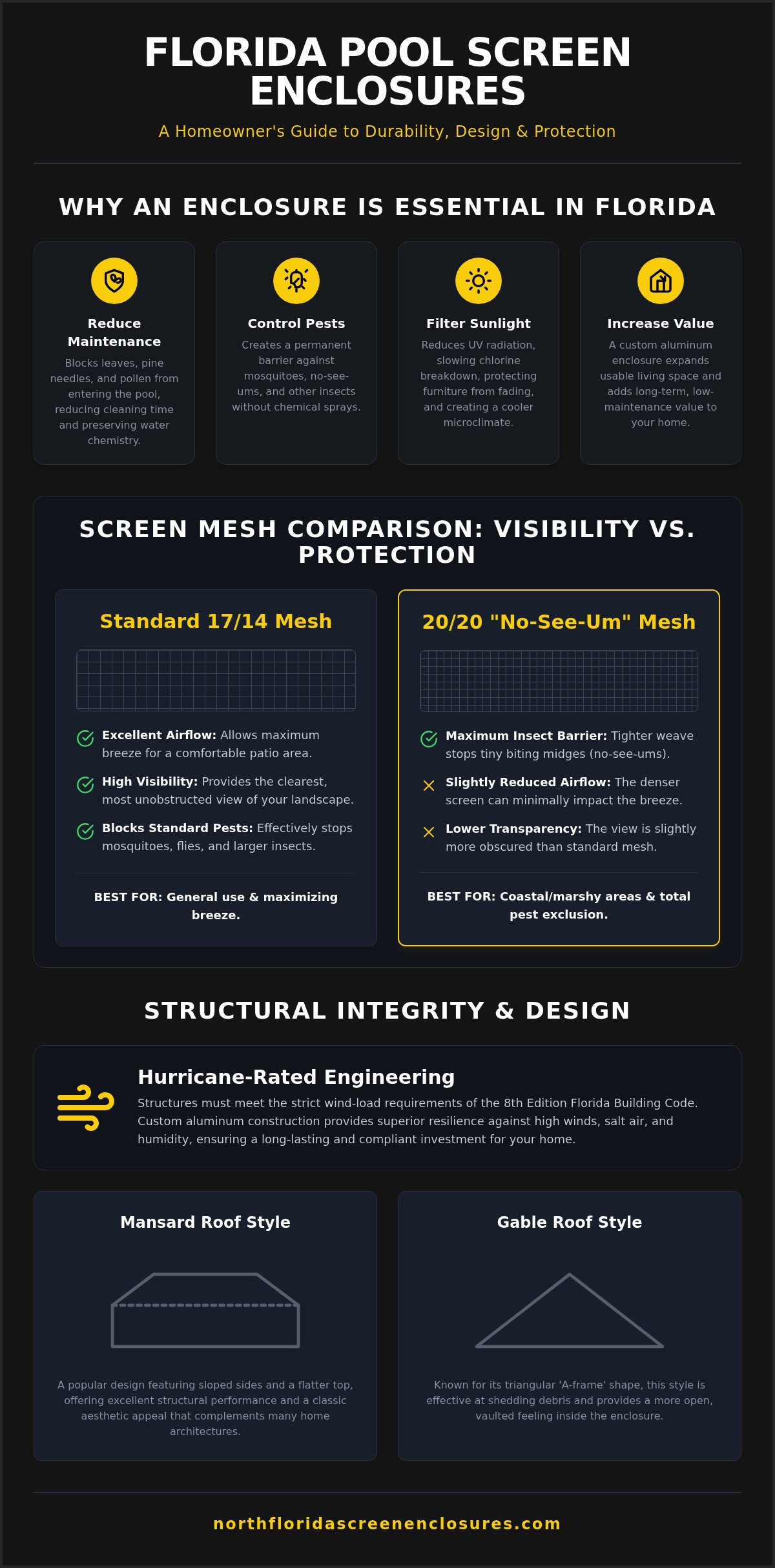
Intense UV radiation in Florida accelerates the breakdown of chlorine, which often forces homeowners to use more chemicals to keep the water sanitary. A screen enclosure filters a portion of this sunlight. This preserves the chemical balance and protects your patio furniture from fading. This filtration also creates a slightly cooler microclimate, making the deck area significantly more comfortable during the peak heat of a Saint Augustine summer.
Property Value and Aesthetic Appeal
Investing in a custom aluminum structure is a strategic move for long-term property value. Unlike wood or temporary kits, aluminum offers superior resilience against the salt air and humidity of the coast. A well-integrated enclosure effectively expands your usable square footage. Homeowners are increasingly looking for ways to modernize their exteriors. Incorporating modern pool enclosure design elements, such as clear-view walls or sleek roof lines, ensures the structure complements the existing architecture. This aesthetic alignment provides a tangible ROI by making the property more attractive to future buyers who prioritize low-maintenance living.
Comparing Screen Mesh Options: 17/14 vs. 20/20 No-See-Um
Selecting the right materials for a pool screen enclosure involves balancing visibility with the specific pests prevalent in your part of Saint Augustine. Mesh count is the primary metric here; it refers to the number of openings per linear inch. A standard 17/14 mesh consists of 17 horizontal and 14 vertical strands. This configuration is the traditional choice for most Florida homes because it offers excellent airflow and minimal visual obstruction. It effectively blocks mosquitoes and larger debris while allowing the breeze to move freely across the pool deck. However, homeowners near the Intracoastal or marshy areas often find that standard mesh is insufficient against smaller intruders.
The 20/20 mesh, frequently called "no-see-um" screen, is a much tighter weave designed to exclude tiny biting midges that can pass through standard openings. While it provides an impenetrable barrier against the smallest insects, the increased density of the threads can slightly reduce the amount of light and air that enters the enclosure. Choosing between these options requires a clear understanding of your backyard's microclimate and how much you value an unobstructed view versus total pest exclusion.
Visibility vs. Protection: Finding the Balance
Modern manufacturing has introduced high-transparency screens that use thinner, stronger yarns to provide the protection of a 20/20 weave without the dark, heavy look of older materials. This allows you to maintain a clear view of the Florida landscape while keeping the interior bug-free. Another specialized option is "Florida Glass," which is a standard screen laminated with a clear plastic coating. It's often used for privacy on the lower sections of the frame or to redirect water runoff from the pool deck. Regardless of the mesh type you choose, the installation must adhere to the Florida Building Code for pools to ensure the enclosure functions as a legal and structural safety barrier.
Durability and Longevity in Coastal Air
The salt air in Saint Augustine is notoriously hard on building materials. Traditional fiberglass mesh tends to lose its flexibility and become brittle after five to seven years of UV exposure. In contrast, vinyl-coated polyester mesh is engineered for resilience. It features a high tensile strength that resists sagging and can withstand the pressure of heavy winds much better than fiberglass. This durability makes it a superior choice for a long-term pool screen enclosure investment. For homeowners with pets, specialized heavy-duty screening is available that is nearly impossible for cats or dogs to claw through. If your current mesh is brittle or tearing, a complete re-screen using these advanced polyester materials can restore the integrity of your outdoor space.
Structural Integrity: Roof Styles and Engineering Standards
While the choice of mesh is vital for pest control, the aluminum frame serves as the structural backbone of any high-quality pool screen enclosure. Aluminum is the gold standard for coastal construction because it provides a high strength-to-weight ratio and natural resistance to the corrosive salt spray prevalent in Saint Augustine. A well-engineered frame does more than just hold the screen in place; it's a complex system designed to manage the immense pressure exerted by high-velocity winds. Utilizing heavy-duty aluminum extrusions ensures that the structure remains rigid and secure over decades of exposure to the Florida sun and humidity.
The geometry of the roof plays a dual role in the enclosure's performance. It determines the interior volume of your outdoor living space and influences how wind flows over the structure. Matching the enclosure's roof style to your home’s existing architecture creates a cohesive look that enhances property value. Whether you prioritize a spacious feel or maximum wind shedding, the engineering must be precise to meet local safety requirements.
Popular Pool Cage Roof Designs
The Mansard roof is the most frequently requested style for modern Florida homes. It features a flat top section with sloped sides that meet the vertical walls, creating an elevated ceiling that makes the pool deck feel much larger. For homeowners who prefer a more traditional aesthetic, Gable and Hip roofs offer peaked designs that mirror standard residential rooflines. Another highly effective option is the Dome roof. Its circular, arched profile is exceptionally efficient at shedding wind and preventing pressure from building up against the frame during a storm. For smaller spaces or specific lean-to attachments, a sloped or shed roof provides a practical and streamlined solution.
Hurricane Readiness and the Role of Tapcons
Structural integrity often depends on the smallest components. The fasteners used to anchor the aluminum tracks to your concrete deck, commonly known as tapcons, are the most critical points of failure. In the Saint Augustine climate, standard steel fasteners can rust over time, which significantly weakens the bond between the enclosure and the foundation. Rusted fasteners are the leading cause of pool cage collapse during hurricane season. For aging structures, professional tapcon replacement is a necessary maintenance step to ensure the frame remains securely anchored to the concrete.
Every new pool enclosure installation in 2026 must adhere to the 8th Edition of the Florida Building Code. This code dictates strict wind-load resistance levels that vary based on your home's proximity to the coast. Engineering certification is not just a permitting formality; it is a guarantee that your outdoor investment is built to survive the specific environmental demands of the North Florida landscape.
The Investment: Factors Influencing Pool Screen Enclosure Costs
The financial commitment required for a new pool screen enclosure depends on several structural and material variables that go beyond the simple footprint of your pool. While total square footage is the primary driver of material costs, the perimeter height and the complexity of the roof line significantly influence the total investment. A taller structure or a complex Mansard roof requires more aluminum and specialized labor than a standard sloped design. Integrating the enclosure with your home’s existing architecture also requires precision engineering to ensure a watertight and structurally sound connection that won't fail during heavy rains.
Foundation work is a critical component of the total solution value that homeowners often overlook. A durable enclosure requires a stable base, which may involve pouring new concrete footers or integrating the structure with custom paver patios. Choosing the right foundation is essential for the long-term stability of the frame. If you're planning a complete backyard renovation, coordinating the hardscaping with the enclosure installation ensures that drainage and structural supports are handled correctly from the start. This integrated approach prevents the frame from shifting or sagging as the ground settles over time.
Customization and Add-ons
Customization allows you to tailor the outdoor space to your specific lifestyle and safety needs. Adding specialized screen doors with heavy-duty hardware improves accessibility and ensures the structure remains a secure barrier. For homeowners seeking more shade and weather protection, integrating Elite Roofing Systems into the design provides a permanent, insulated cover for seating areas within the cage. If your pool deck features multiple levels, installing aluminum balcony railings provides a unified aesthetic while meeting safety requirements for elevated spaces.
Maintenance vs. Replacement Costs
Understanding the difference between maintenance and replacement is vital for protecting your property value. While individual panel repairs are a temporary fix for minor damage, a complete re-screen is often more cost-effective for aging enclosures where the mesh has become brittle. Using premium polyester mesh might require a higher upfront cost, but its resistance to UV damage and salt air provides significant long-term savings. Budgeting for soffit and fascia protection during the process also prevents moisture-related issues that could lead to expensive structural repairs later. For a detailed assessment of your backyard's potential, you can request a professional estimate for your pool screen enclosure.
Partnering with a Saint Augustine Specialist
Completing a high-quality pool screen enclosure project requires more than just raw materials and a basic assembly plan. In Saint Augustine, navigating the specific permitting requirements and coastal zoning regulations demands a contractor with deep local roots. A specialized professional understands the nuances of St. Johns County building departments and ensures that every structural calculation is verified before the first beam is set. This local expertise prevents costly delays and ensures that your outdoor living space is fully compliant with all regional safety standards from day one.
Evaluating the craftsmanship of an installation often comes down to the finer details that many general contractors overlook. You should look for precision in the aluminum miter joints; these are the points where beams meet at an angle. Tight, clean joints are a hallmark of a diligent craftsman and contribute to the overall rigidity of the frame. Similarly, the quality of the spline work, which is the process of securing the mesh into the aluminum tracks, determines how well the screen will hold its tension over time. North Florida Screen Enclosures maintains a commitment to these high standards, ensuring every enclosure is built with structural integrity as the top priority.
The Benefits of a Full-Service Contractor
Choosing a full-service specialist provides a level of continuity that fragmented DIY approaches or big-box retail kits cannot match. A professional team handles the entire lifecycle of the project, from the initial concrete work and foundation stabilization to the final installation of the screen spline. This comprehensive service model ensures that every component is designed to work together. Furthermore, professionals have access to industrial-grade aluminum extrusions and high-performance mesh materials that aren't available in standard hardware stores. This access translates to a more durable finished product and provides a clear point of local accountability for future warranty support or maintenance needs.
Getting Started with Your Project
The timeline for a custom pool screen enclosure typically involves several weeks of planning, permitting, and engineering before the actual on-site construction begins. Preparing your site is a straightforward process that involves clearing the perimeter of the pool deck to allow the crew full access to the work area. Transparency is a core value of the North Florida Screen Enclosures team; we provide detailed, final quotes that break down every aspect of the project. This methodical approach ensures there are no hidden fees or unexpected changes during the construction process. By partnering with a dedicated local expert, you're investing in a seamless experience that prioritizes the long-term protection and aesthetic value of your Saint Augustine home.
Protecting Your Outdoor Investment for the Future
A high-performance pool screen enclosure is a strategic addition that balances daily comfort with structural resilience. Throughout this guide, we have highlighted how the longevity of your sanctuary depends on selecting the correct mesh density and ensuring the aluminum frame adheres to the most recent Florida Building Code standards. A durable structure does more than just block debris; it provides a permanent barrier that withstands the unique environmental demands of the Saint Augustine coast.
Choosing a partner who understands the complex integration of hardscaping and hurricane-rated engineering is the final step in securing your home's value. North Florida Screen Enclosures is a locally owned and operated team of specialists dedicated to precision-built aluminum construction. We take pride in delivering complete solutions, from stable concrete foundations to the final screen spline, ensuring every joint and fastener is built to last. It's time to reclaim your backyard and enjoy the peace of mind that comes with superior workmanship.
Take the next step toward a more comfortable and durable outdoor living space. Get a Professional Quote for Your Saint Augustine Pool Enclosure today. We look forward to helping you create a beautiful, resilient retreat for your family.
Frequently Asked Questions
How long does a pool screen enclosure typically last in Florida?
A professionally installed aluminum pool screen enclosure typically lasts between 20 and 25 years. While the structural frame remains sound for decades, the screen mesh usually requires replacement every 7 to 10 years due to the intense Florida sun and humidity. Regular maintenance, including cleaning the tracks and inspecting the fasteners, can help the entire system reach its maximum expected lifespan.
Can a pool screen enclosure withstand a Category 3 hurricane?
Modern enclosures built to the 8th Edition Florida Building Code are engineered to withstand the specific wind loads of major storms, including Category 3 hurricanes. The structural integrity depends heavily on the quality of the aluminum and the condition of the anchors. Ensuring your cage is properly secured to the concrete foundation is the most critical factor in surviving high-velocity wind events.
What is the difference between 17/14 and 20/20 screen mesh?
The primary difference lies in the density of the weave and the size of the insects they are designed to block. A 17/14 mesh is the industry standard for maximizing airflow and visibility. In contrast, 20/20 mesh features a tighter weave specifically designed to exclude tiny biting midges, often called no-see-ums. While 20/20 provides superior pest protection, it can slightly reduce light and breeze.
How often should I replace the Tapcons in my pool cage?
You should inspect your Tapcons every 3 to 5 years and consider replacement if you notice signs of rust or oxidation. In coastal environments like Saint Augustine, salt air accelerates the corrosion of standard steel fasteners. Upgrading to hurricane-rated, corrosion-resistant fasteners is a vital maintenance step that prevents the frame from loosening or failing during a severe weather event.
Does a pool screen enclosure block out the sun or prevent tanning?
A pool screen enclosure does not block the sun entirely; it typically filters between 10% and 30% of UV rays depending on the mesh density. This filtration provides a layer of protection for your skin and patio furniture without preventing you from enjoying the sunlight. You can still tan inside the enclosure, though it may take slightly longer than it would in direct, unfiltered sun.
How do I clean my pool screen enclosure without damaging the mesh?
Use a soft-bristle brush and a mild solution of water and dish soap to gently scrub the frame and mesh. Avoid using high-pressure power washers, as the concentrated force can tear the screen or loosen the spline that holds it in place. Rinsing with a standard garden hose is usually sufficient to remove salt spray, pollen, and organic debris that accumulates over time.
Is it cheaper to repair or replace my pool screen?
Repairing individual panels is more cost-effective for minor, localized damage caused by pets or debris. However, if the mesh is more than 7 years old and has become brittle or faded, a complete re-screen is the more economical long-term choice. Replacing all the mesh at once ensures uniform tension and prevents the need for frequent, repetitive service calls as other aging panels inevitably fail.
Do I need a permit for a pool screen enclosure in Saint Augustine?
Yes, a building permit is required for all new installations and significant structural repairs in St. Johns County. The permitting process involves submitting engineered drawings that prove the structure meets local wind-load requirements. Working with a local specialist ensures that all paperwork and inspections are handled correctly, which protects you from future legal or insurance complications during a home sale.


Comments