


Best Florida Pavers: 2026 Materials and Durability Guide

Would you believe that a standard dark paver patio can reach temperatures exceeding 150 degrees in the peak of a Florida summer? For many Saint Augustine homeowners, the dream of a beautiful outdoor living space often turns into a high-maintenance struggle against fading colors, rapid mold growth, and shifting sandy soil. Finding the best pavers for Florida climate isn't just about choosing a style; it's about selecting a material with the structural integrity to survive salt air and intense UV exposure without failing after a few seasons.
We understand that your outdoor space is a significant investment that needs to offer both beauty and long-term resilience. This guide will help you identify which materials, from natural travertine to modern porcelain, provide the best thermal performance and durability for our unique environment. You'll learn how to navigate the 9th Edition Florida Building Code updates scheduled for late 2026 and why specific installation techniques are vital for anchoring your hardscaping against coastal winds. We'll examine the latest trends in large-format pavers and warmer color palettes to ensure your new driveway or pool deck stays stylish and functional for decades.
Table of Contents
Why Florida’s Climate Demands Specific Hardscape Materials
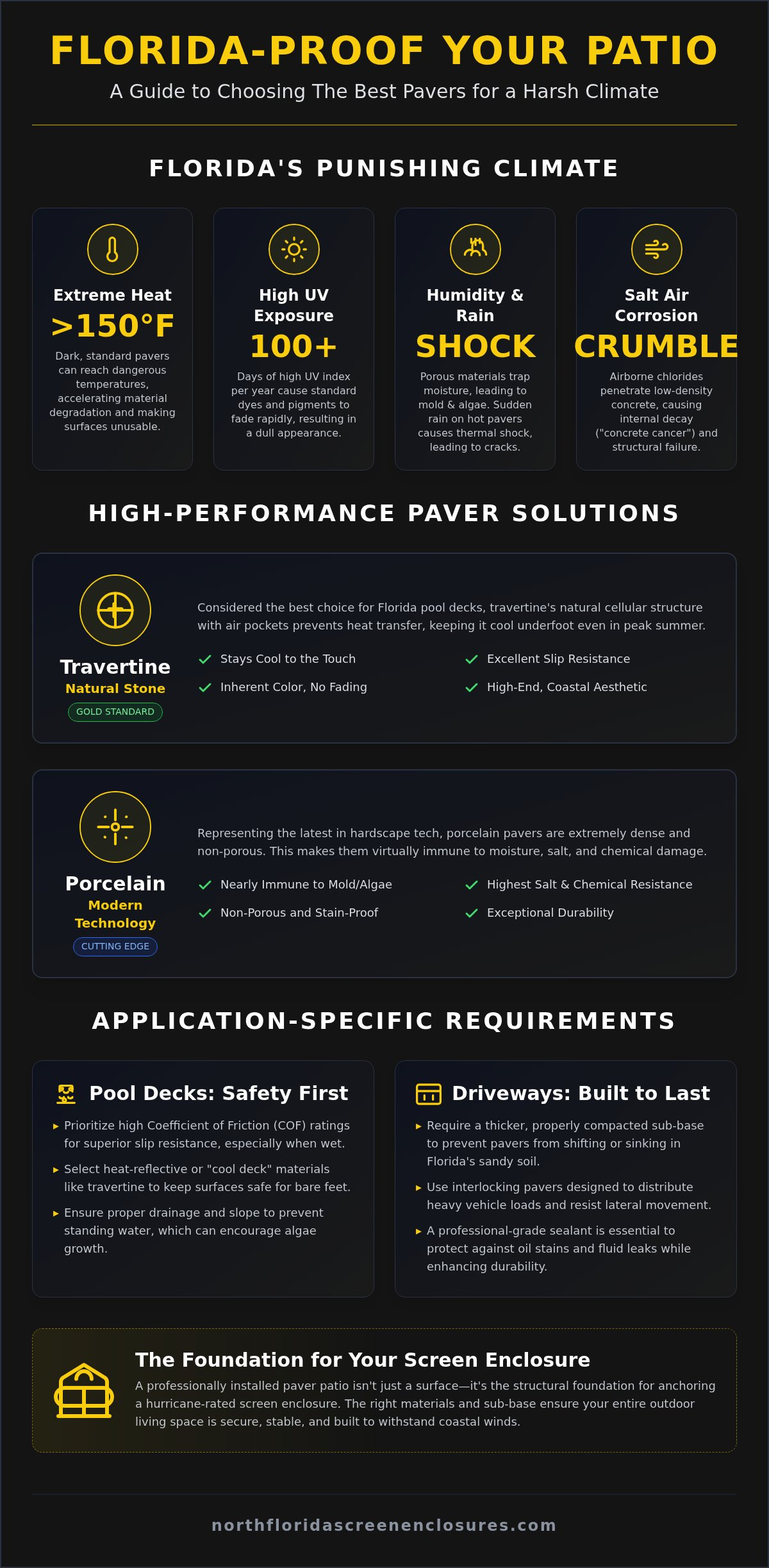
Florida’s environment is uniquely punishing on outdoor surfaces. While homeowners in other states worry about freeze-thaw cycles, we face a relentless combination of high UV exposure, extreme humidity, and corrosive salt air. Standard concrete dyes and pigments often fail under the weight of our 100+ days of high UV index weather, leading to a dull, faded appearance within just a few seasons. Choosing the best pavers for Florida climate requires a shift in perspective; you aren't just selecting a color, you're selecting a material that can survive a chemically aggressive atmosphere.
Beyond the sun, our frequent summer thunderstorms create a cycle of rapid thermal expansion. When your patio transitions from direct sunlight to a torrential downpour in minutes, the materials must be able to expand and contract without cracking. Additionally, managing the resulting water runoff is a major concern for Saint Augustine properties. Many modern installations now utilize permeable paving systems to help manage flash-flood conditions while reducing the pressure on local drainage infrastructure.
The 'Florida Concrete Tax': Heat and Humidity
The "tax" we pay for our beautiful weather is the extreme heat absorbed by our outdoor living spaces. On a typical July afternoon, surface temperatures on dark-colored pavers can easily exceed 150 degrees Fahrenheit. This doesn't just make the area uncomfortable for bare feet; it accelerates the degradation of the paver's binder. Our high humidity levels create a secondary challenge. Porous materials trap moisture deep within their structure, which quickly leads to the growth of mold, mildew, and algae in the stagnant heat. Thermal shock is the rapid physical contraction of a material when a surface heated by direct sunlight is suddenly saturated by a cold afternoon rainstorm. This constant stress can lead to surface spalling and structural weakness over time.
Salt Air Corrosion in Saint Augustine
For those living near the coast, salt air is a silent predator for hardscaping. Airborne chlorides settle on the surface and penetrate the pores of lower-quality concrete products. This results in "concrete cancer," a process where the internal chemistry of the material is compromised, leading to crumbling and loss of structural integrity. Selecting the best pavers for Florida climate in coastal areas means prioritizing high-density materials with low absorption rates. Professional-grade, salt-resistant sealants are also a critical component of the installation process. These sealants act as a barrier, preventing salt from reaching the internal structure and ensuring the longevity of your investment against the corrosive Atlantic breeze.
The Top 4 Best Pavers for Florida Heat and Humidity
Selecting the right material is the difference between an outdoor oasis and a scorching, high-maintenance chore. For homeowners seeking the best pavers for Florida climate, the choice usually narrows down to four high-performance categories. Each offers distinct advantages in thermal regulation, moisture resistance, and structural longevity. Whether you're building a new pool deck or a resilient driveway, understanding these material properties is crucial for long-term satisfaction in Saint Augustine's unique environment.
Travertine and Natural Stone Performance
Travertine is widely considered the gold standard for Florida pool decks because of its unique cellular structure. Unlike manufactured concrete, natural travertine contains tiny pockets of air that restrict the transfer of heat. This allows the stone to remain cool to the touch even when ambient temperatures exceed 90 degrees. It also boasts excellent slip resistance when wet, making it a safe choice for families. Because the color is inherent to the stone itself, it won't fade under the intense UV radiation that typically bleaches dyed concrete products. Shellstone is another excellent natural option for a local aesthetic. It incorporates real crushed shells into a limestone base, providing a sustainable choice that resonates with our coastal environment. Like travertine, it stays remarkably cool and provides a high level of natural traction.
Modern Porcelain and High-Density Concrete
Porcelain pavers represent the cutting edge of hardscape technology for 2026. These are dense, non-porous surfaces that effectively repel moisture, salt, and chemicals. This makes them nearly immune to the mold and mildew growth that plagues standard porous pavers in Saint Augustine's humidity. While natural stone is prized for its organic beauty, porcelain offers a modern, zero-mold maintenance profile that's hard to beat. When planning heavy-traffic areas, high-density concrete pavers are essential. These are engineered to withstand the weight of vehicles without cracking. If you're considering driveway pavers and concrete for your next project, remember that the material's density is vital for durability. For more technical details on water management during installation, consult the UF/IFAS guide on permeable pavement. Choosing the right foundation is the first step toward a durable outdoor space. Our team can help you design a paver patio that serves as the perfect anchor for a future pool enclosure or pergola.
Driveway Pavers and Concrete Resurfacing: A Performance Comparison
When deciding between a full renovation and a surface refresh, the choice hinges on the health of your existing foundation and your long-term goals for the property. Choosing the best pavers for Florida climate ensures a driveway that can handle both the weight of a vehicle and the subtle shifts of our sandy Saint Augustine soil. While a new paver system offers the highest level of durability, professional concrete resurfacing provides a functional alternative for slabs that are structurally sound but aesthetically worn.
Hardscape Durability for North Florida Driveways
Interlocking pavers are categorized as "flexible pavement." Unlike a rigid poured slab, these systems allow for minute movements without cracking. This is particularly important in North Florida, where sandy substrates often shift during heavy rain cycles. For driveway applications, 80mm pavers are the professional standard for durability, providing the necessary thickness to distribute heavy loads across the sub-base. This structural reliability is reinforced by the ICPI report on Florida DOT standards, which confirms the viability of concrete pavers for demanding traffic environments. If a single unit is stained or damaged, it can be replaced individually; however, a crack in a concrete slab typically requires a full-depth patch that rarely blends with the original surface.
The Case for Professional Concrete Resurfacing
If your existing concrete is structurally sound, professional resurfacing offers a viable path to improved performance. Polymer-modified overlays create a dense, protective barrier that shields the underlying slab from the corrosive effects of coastal salt air. These systems can be stamped to achieve a high-end aesthetic without the need for full excavation. While you should consider the concrete patio cost Florida homeowners typically face for new installations, resurfacing allows for the integration of heat-reflective coatings. These coatings utilize thermal pigments to reduce surface temperatures, making the area much more comfortable during the summer months.
Maintenance requirements differ significantly between these two approaches. High-quality pavers require periodic re-sanding and weeding to maintain their interlocking strength and prevent shifting. In contrast, resurfaced concrete requires a high-quality sealant every few years to prevent the overlay from delaminating in our high humidity. Both options represent a significant upgrade in property value, provided the installation accounts for the specific environmental stresses of the region. Selecting the best pavers for Florida climate or a professional-grade overlay ensures your hardscaping serves as a stable, permanent foundation for future structural additions like screen enclosures or pergolas.
Design and Safety: Slip Resistance and Cool-Deck Technology
Aesthetics are only one part of a successful hardscape project. Safety and thermal comfort ultimately define how often you actually use your outdoor space. The best pavers for Florida climate must balance visual appeal with technical performance standards, specifically regarding heat retention and traction. In Saint Augustine, where frequent afternoon showers leave surfaces slick and the midday sun is relentless, choosing materials with the right safety ratings is a practical necessity rather than a luxury.
Managing Surface Heat for Bare Feet
Color choice is the primary factor in determining how much heat your patio absorbs. While dark charcoals and deep browns are popular in northern climates, they are often impractical for Florida pool decks. White, ivory, and light grey remain the essential Florida palette because they reflect a higher percentage of solar radiation. The science behind this involves the Solar Reflectance Index (SRI). High-SRI materials, such as light-colored travertine or specialized heat-reflective pavers, stay significantly cooler than standard concrete. You can further enhance these "cool zones" by integrating structural shade elements like pergolas or elite roofing systems, which provide a permanent break from direct UV exposure. When reviewing pool area hardscaping options, always prioritize the thermal comfort of your family and guests.
Safety Ratings for Wet Surfaces
Slip resistance is measured by the Coefficient of Friction (COF). For pool areas and walkways, you should look for materials that maintain a high COF even when saturated. Natural stone pavers often feature tumbled or sandblasted finishes that provide organic traction. If you prefer the modern look of porcelain, it is vital to select tiles specifically rated for outdoor use with a textured surface to prevent hydroplaning. While a smooth, honed finish looks sleek, it can become dangerously slippery when paired with Florida’s high humidity and rain. Professional sealing is the final step in maintaining this balance. A high-quality, breathable sealer protects the material's color from UV fading while preserving the microscopic texture required for a secure grip. This meticulous approach to material selection ensures your backyard remains a safe environment for all ages.
Ready to upgrade your outdoor living space with a surface that stays cool and safe? Contact our team today to design a custom paver patio tailored to the Saint Augustine environment.
Integrating Hardscaping with Screen Enclosures in Saint Augustine
In Saint Augustine, your choice of hardscaping serves as the foundational anchor for the rest of your outdoor living environment. While previous sections focused on thermal performance and material durability, the structural relationship between your floor and your overhead structures is just as vital. Selecting the best pavers for Florida climate requires considering how those materials will interact with aluminum enclosures during high-wind events. A beautiful patio loses its value if it can't safely support a hurricane-rated screen room or a custom pergola.
Structural Anchoring and Tapcons
A common misconception is that a screen enclosure can be secured directly into standard pavers. For a pool enclosure installation to meet Florida building codes, the aluminum frame must be anchored into a reinforced concrete footer located beneath the paver surface. This "hurricane tie-down" factor is critical; without a proper footer, high-velocity winds can create enough uplift to pull pavers right out of the sand bed. We prioritize the use of stainless steel Tapcons to prevent the corrosion often caused by our salty coastal air. Additionally, professional leveling is required to prevent gaps at the base rail. Ensuring a tight seal between the pavers and the screen structure prevents "bug splashes" and keeps local pests from entering your living area.
Total Outdoor Living Synergy
Achieving a cohesive backyard design involves coordinating your hardscape pitch with your drainage needs. When we install elite roofing systems, we ensure the water runoff from the solid roof doesn't pool on your new patio. This requires a precise calculation of the paver slope to direct water away from the home’s foundation. The best pavers for Florida climate are those that complement other aluminum features, such as balcony railings or pergolas, creating a seamless transition from your indoor space to the pool deck. If you plan to add an enclosure in the future, it's highly efficient to pre-install the necessary concrete footers during the initial paver phase. Working with an integrated hardscape contractor in North Florida ensures that your pavers, concrete work, and aluminum structures are engineered to work together as a single, resilient system.
Building a Resilient Foundation for Your Outdoor Lifestyle
Selecting the best pavers for Florida climate involves a careful balance between aesthetic preference and environmental necessity. High-performance materials like travertine and porcelain offer the thermal regulation and moisture resistance required to withstand Saint Augustine's intense heat and humidity without failing. However, the longevity of your investment depends heavily on the structural integration of the installation. Ensuring that your hardscaping is properly anchored with reinforced footers and stainless steel fasteners is the only way to protect your patio and future screen enclosures from coastal winds and shifting sandy soil.
As locally owned Saint Augustine specialists, we take pride in creating custom designs that account for North Florida’s unique coastal environment. Our expertise in hurricane-rated aluminum and integrated hardscaping ensures your outdoor space remains a durable sanctuary for decades. We're committed to providing the technical precision and reliable craftsmanship your home deserves. Schedule Your Free Saint Augustine Hardscape Consultation Today and let us help you build a foundation that lasts. Your dream outdoor living space is within reach, and we're here to ensure it's built to endure.
Frequently Asked Questions
What is the coolest paver material for a pool deck in Florida?
Travertine is the most effective natural stone for heat management in our region. Its unique cellular structure prevents the stone from absorbing the sun's energy, keeping the surface significantly cooler than manufactured concrete. This makes it an ideal choice when selecting the best pavers for Florida climate pool decks. Homeowners often find that light-colored travertine remains comfortable for bare feet even during the peak afternoon heat of a Saint Augustine summer.
Do pavers increase home value in Saint Augustine?
High-quality hardscaping consistently increases property value in Saint Augustine by improving curb appeal and functional living space. A professional paver installation provides a durable foundation for future structural additions like screen enclosures or pergolas. Because pavers offer superior drainage and resilience against coastal weather compared to standard poured concrete, they're viewed as a long-term investment that protects the home's structural integrity and aesthetic appeal while attracting potential buyers.
How often do I need to seal my Florida pavers?
Most Florida pavers require professional sealing every two to three years to maintain their color and structural integrity. Our intense UV exposure and high humidity can quickly degrade the binders in concrete pavers. Regular sealing prevents salt air penetration and inhibits the growth of mold and algae in the joints. For homes located directly on the coast, we often recommend a more frequent maintenance schedule to combat the corrosive effects of Atlantic salt spray.
Can I install a screen enclosure directly on top of pavers?
You can't safely install a screen enclosure directly on top of pavers without a reinforced concrete footer underneath. Florida building codes require structural aluminum to be anchored into a solid foundation to resist hurricane-force winds. We typically install a concrete footer beneath the paver perimeter, allowing the enclosure to be secured with stainless steel Tapcons. This ensures the structure remains stable and prevents pavers from lifting or shifting during high-wind events.
Are porcelain pavers too slippery for Florida pool areas?
Porcelain pavers aren't inherently slippery if you select products with the correct texture and slip-resistance ratings. For pool areas, we recommend porcelain with a high Coefficient of Friction (COF) to ensure safety when the surface is wet. Unlike indoor tiles, outdoor-grade porcelain features a textured finish that provides excellent grip. These non-porous materials are also resistant to mold, which helps maintain a slip-resistant surface over time by preventing organic buildup.
Should I choose pavers or stamped concrete for my driveway?
Interlocking pavers are generally superior to stamped concrete for Florida driveways because they handle soil shifting without cracking. Saint Augustine’s sandy soil often settles, causing rigid concrete slabs to fracture over time. Pavers are flexible and can be individually replaced if damage occurs from tree roots or stains. While stamped concrete might have a lower initial cost, the long-term durability and repairability of a high-density paver system offer better value for heavy-traffic areas.
How do I prevent weeds from growing between my pavers?
The most effective way to prevent weeds is through the use of polymeric sand and consistent sealing. Polymeric sand contains a binding agent that hardens when activated by water, creating a dense barrier that seeds can't penetrate. Regular maintenance, including reapplying this sand and a high-quality sealer, keeps the joints tight. This process also prevents the sand from washing away during heavy summer rainstorms, which is vital for maintaining the interlocking strength of the system.
What is the best color for pavers to avoid fading in the sun?
Light, neutral tones like ivory, tan, and light grey are the most effective colors for avoiding UV fading and heat absorption. These shades reflect solar radiation rather than absorbing it, which preserves the pigment and keeps the surface cool. When choosing the best pavers for Florida climate, avoid dark charcoals or deep reds. These colors tend to fade more noticeably and can reach uncomfortable temperatures exceeding 150 degrees in direct sunlight.


Comments