


Rescreening Pool Enclosure Florida: The 2026 Homeowner’s Guide

A single loose fastener or a brittle section of mesh can be the difference between a pool cage that stands firm and one that collapses during a Florida tropical storm. Many homeowners view rescreening pool enclosure Florida projects as simple cosmetic updates, but in 2026, it's clear that this maintenance is actually a vital structural health check. You've likely noticed those small tears letting in relentless insects or that stubborn algae growth that makes your outdoor space feel neglected. It's frustrating to invest in a beautiful backyard only to feel like you're losing the battle against the elements and local pests.
We understand that your pool enclosure is more than just a frame; it's the primary barrier protecting your family's leisure time and your home's value. This guide will help you master the essentials of cage restoration, from selecting hurricane-ready mesh to identifying critical hardware failures before they lead to a total frame collapse. We'll cover the latest 8th Edition Florida Building Code requirements and explain why replacing rusted Tapcons is just as important as the screen itself. By the end of this article, you'll have a clear roadmap to achieving a bug-free, hurricane-ready outdoor space that provides structural peace of mind for the next decade.
Table of Contents
Identifying the Signs Your Florida Pool Enclosure Needs Rescreening
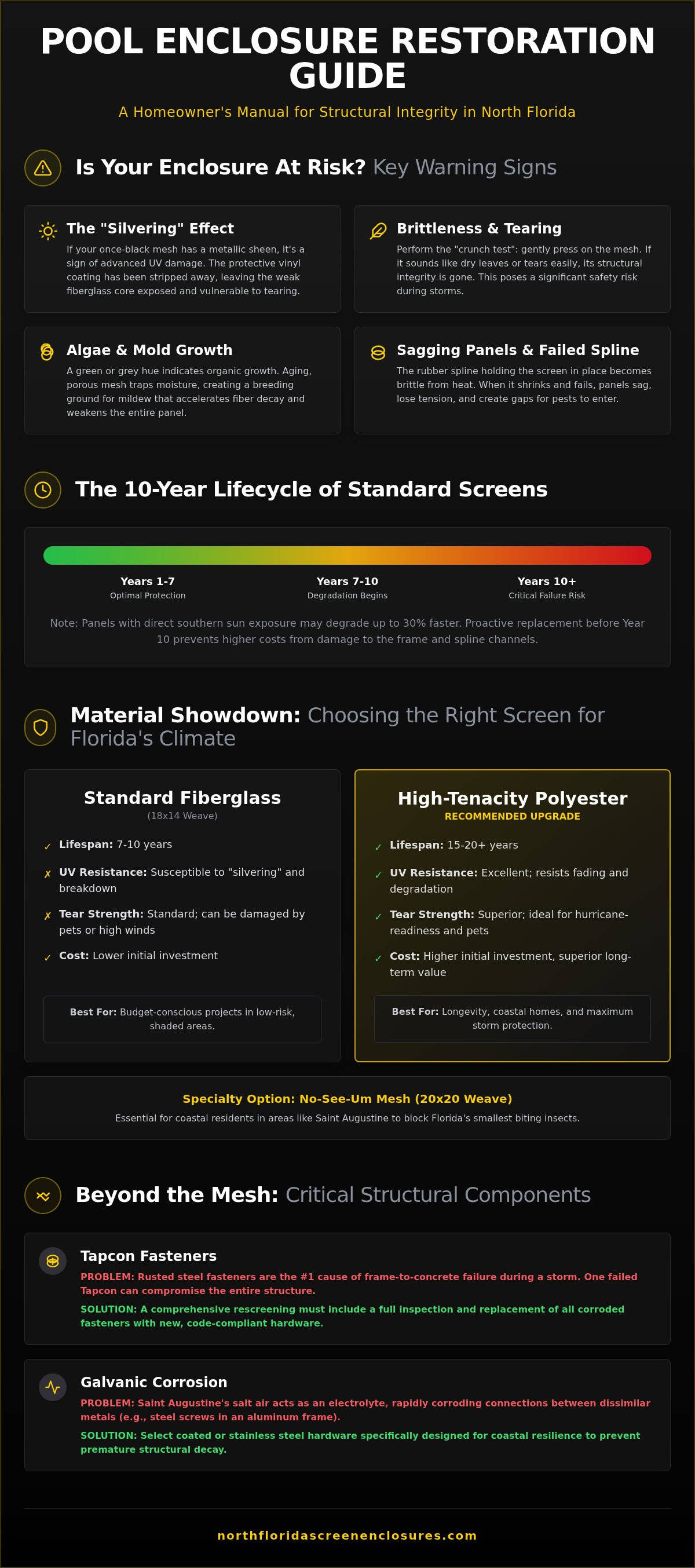
Most homeowners don't realize their pool cage is failing until a panel completely detaches during a summer squall. Visual cues often appear years before a total failure occurs. If your once-black mesh now has a metallic, silver sheen, UV rays have stripped away its protective vinyl coating. This "silvering" leaves the fiberglass core exposed, making it vulnerable to the intense Saint Augustine sun. Once the coating is gone, the mesh loses its ability to filter light and resist tearing, eventually leading to a brittle texture that fails under minimal pressure.
You can verify the health of your screened porch or pool enclosure with a simple "crunch" test. Press a finger gently against the mesh in a high-sun area. If it sounds like dry leaves or tears with minimal force, the structural integrity is gone. You should also inspect the spline, which is the rubber cord locking the mesh into the aluminum track. Florida’s heat causes this rubber to dry out and shrink over time. When the spline fails, panels sag and create gaps that invite pests inside, signaling that a professional rescreening pool enclosure Florida project is necessary.
Aging screens also become increasingly porous as they degrade. This texture allows algae and mold to take root, turning your enclosure a dull green or grey. This organic growth isn't just an aesthetic problem; it traps moisture against the aluminum and further weakens the screen fibers. Regular cleaning can only do so much once the mesh has become a breeding ground for Florida mildew, as the spores often live deep within the failing fibers of the screen itself.
The 10-Year Lifecycle of Florida Screens
Standard fiberglass mesh typically lasts between 7 and 10 years in our local climate. While an enclosure shaded by large oaks might reach the decade mark, panels with direct southern exposure often degrade much faster. High humidity in Saint Augustine accelerates the breakdown of the adhesives used in many lower-grade meshes. We consistently find that homeowners who wait longer than ten years face higher repair costs. This is often because the old spline becomes "baked" into the aluminum tracks, which makes the extraction process much more labor-intensive during a rescreening pool enclosure Florida service.
Safety Risks of Brittle Enclosure Mesh
Brittle mesh is a significant liability during hurricane season. When a screen loses its flexibility, it can no longer "give" under wind pressure. This creates a sail effect that puts immense stress on the aluminum frame and the Tapcons anchoring it to your concrete deck. Timely rescreening prevents the messy "blowouts" common during afternoon thunderstorms. As the weave of the mesh widens due to degradation, it also fails to block Florida’s smallest pests, such as No-See-Ums, effectively ending the bug-free environment you expect from your outdoor living space.
Choosing the Right Screen Material for the North Florida Climate
Selecting the right material for a rescreening pool enclosure Florida project is no longer just about keeping out mosquitoes. In 2026, homeowners must account for increased UV intensity and the structural demands of our coastal environment. While the industry has long relied on fiberglass mesh, advancements in material science have introduced high-performance alternatives that offer significantly better long term value. Choosing the wrong material can lead to premature failure, requiring another full replacement in just a few years.
Fiberglass mesh with an 18x14 weave remains the baseline option. It provides adequate airflow and basic insect protection, but it remains susceptible to the "silvering" effect that occurs when UV rays strip away the vinyl coating. For many residents, high tenacity polyester has become the preferred choice. This material is made from a synthetic polymer that resists UV degradation and physical tearing far more effectively than glass fibers. Beyond comfort, your screen serves a legal purpose. According to Florida's Residential Swimming Pool Safety Act, your enclosure acts as a vital safety barrier. Ensuring the mesh remains intact is a matter of both compliance and family protection.
Specialty needs require specific weaves. For coastal residents in Saint Augustine, No-See-Um mesh with a 20x20 weave is often essential. These tiny biting gnats pass through standard mesh easily, but the tighter weave keeps them out. If you have active pets, pet-resistant screens use a heavy duty vinyl coated polyester that is significantly stronger than standard mesh, preventing claws from creating easy entry points for pests.
Polyester vs. Fiberglass: The Durability Debate
The primary difference between these materials is their service life under the Florida sun. A standard fiberglass screen typically lasts 5 to 7 years before it starts to crunch or tear. In contrast, 2026 grade polyester often maintains its integrity for 10 years or more. Polyester mesh is the superior choice for high-wind coastal areas. It features a much higher tear strength and a UV resistant coating that prevents the core from breaking down prematurely, ensuring your investment lasts through multiple storm seasons.
Solar and Privacy Screen Options
Solar mesh is an increasingly popular choice during a rescreening pool enclosure Florida. It can block a significant portion of UV rays, which keeps your pool deck cooler and prevents sun induced depletion of pool chemicals. If your backyard lacks seclusion, "Florida Glass" offers a vinyl laminated privacy solution. This material blocks the view entirely while preventing water and debris from entering the enclosure. Choosing the right density depends on whether you prioritize a cross breeze or total seclusion. If you are unsure which material fits your layout, you can consult with a trusted local screen specialist to evaluate your specific wind load and privacy needs.
Hardware and Structural Integrity: Beyond the Mesh
A pool enclosure is only as strong as its weakest fastener. While new mesh provides a visible improvement, the aluminum frame relies on a series of critical hardware components to remain standing during high-wind events. When planning a rescreening pool enclosure Florida project, it's essential to look beyond the screen and inspect the structural connectors. Neglecting these small parts can lead to catastrophic failure even if the mesh is brand new. The frame must act as a single, cohesive unit to distribute wind loads effectively.
In Saint Augustine, the coastal environment introduces the constant threat of galvanic corrosion. This occurs when dissimilar metals, like an aluminum frame and a standard steel screw, react in the presence of salt air. This chemical reaction eats away at the fasteners, often leaving them brittle and prone to snapping. Because this technical work requires precision and specialized materials, homeowners should seek professional advice on hiring a contractor who understands the specific demands of North Florida construction and uses the correct hardware for our saline atmosphere.
Tapcon Replacement: The Anchor of Your Safety
Tapcons are the specialized bolts that anchor your aluminum cage directly into the concrete pool deck. You can often spot failing anchors by looking for "bleeding" fasteners that leave orange rust stains on your pavers or concrete. These stains are a clear sign that the bolt's core is degrading. We use high-grade stainless steel or advanced ceramic-coated Tapcons for 2026 restorations because they offer superior resistance to salt air. If these bolts are allowed to rust through, they can shear off entirely during a storm, leaving your entire enclosure unsecured and at risk of lifting or shifting.
Cable Tension and Frame Alignment
Support cables are the hidden stabilizers of your pool cage. These stainless steel lines run diagonally through the frame to prevent the aluminum from twisting or leaning under pressure. Over time, these cables can become frayed or lose tension, which compromises the "square" alignment of the structure. If you notice a door that no longer latches correctly or a frame that seems to tilt, it’s likely a cable issue. For more information on restoring the structural health of your cage, you can read about Expert Pool Enclosure Repair in St. Augustine.
Finally, don't overlook the door hardware. Rescreening is the most efficient time to replace worn hinges and hydraulic closers. These components ensure your enclosure remains a self-closing, self-latching barrier that meets local safety codes. Replacing them during the rescreening process is a practical way to ensure your outdoor space remains both functional and secure for the next decade. This comprehensive approach to hardware ensures your investment is protected against more than just insects.
The Rescreening Process: What Homeowners Should Expect
A professional rescreening pool enclosure Florida service is a methodical operation that transforms your outdoor space while protecting your property. It begins with thorough site preparation. Homeowners should clear the pool deck of furniture, potted plants, and decor to provide a safe work zone for the crew. We take care to protect your landscaping from debris, as the removal of old, brittle mesh can create a significant amount of waste that must be managed properly to keep your yard clean.
The next phase involves the careful extraction of the old spline and mesh. Our technicians use specialized tools to pull the rubber gaskets without damaging the aluminum tracks. Once the frame is bare, we pressure wash the tracks. This step is vital because it removes accumulated dirt, pollen, and algae that would otherwise prevent the new spline from seating correctly. A clean track ensures a more secure fit and prevents the mesh from slipping out of the channel under wind pressure.
Achieving "drum-tight" tension is where professional skill is most visible. Technicians roll the new mesh into the tracks using a spline roller, carefully balancing the pull across large spans to prevent sagging or puckering at the corners. This precision ensures the enclosure looks clean and maintains its structural integrity against the elements.
Key Cost Factors in a Full Rescreen
Several variables influence the investment required for a complete restoration. While square footage is a primary metric, the geometry of the cage often plays a larger role in the final scope. A "Mansard" roof, which features a flat top and four sloped sides, requires more safety equipment and labor than a simple "Gable" or A-frame roof. High-pitch designs and multi-story enclosures also increase the complexity of the work. Additionally, access challenges like tight property lines or dense landscaping around the perimeter can affect the labor hours needed to reach every panel safely.
Timeline for Completion
For a standard two-story pool cage, a full rescreen typically takes between 2 and 3 days to complete. The first day focuses on removal and cleaning, while the subsequent days are dedicated to installation and hardware replacement. Weather is the most significant variable in our schedule. High winds or heavy rain can make working on top of a cage dangerous, and extreme humidity can occasionally impact how the spline sets. Every project concludes with a final inspection where we verify the tension of every panel and ensure all doors and fasteners meet our standards. If you are ready to restore your outdoor living area, you can request a professional evaluation from our Saint Augustine team to receive a detailed project scope.
Why Choose North Florida Screen Enclosures for Your St. Augustine Home
North Florida Screen Enclosures stands as a dedicated specialist within the Saint Augustine community. We've built our reputation on a grounded understanding of the unique environmental challenges that homeowners face along the coast. When you schedule a rescreening pool enclosure Florida with our team, you're engaging professionals who treat your outdoor space as a critical structural asset. We don't believe in quick fixes or low-grade materials that fail after a single season of salt air exposure. Our commitment is to provide a durable, high-quality solution that protects your investment for years to come.
We prioritize structural integrity in every project we undertake. Our team selects materials specifically engineered to withstand coastal corrosion and intense UV radiation. This includes high-tension polyester mesh and corrosion-resistant fasteners that outperform standard industry offerings. We understand that a screen is only as good as the frame that supports it; therefore, we take a comprehensive view of every enclosure. Our specialists don't just roll in new mesh; they meticulously inspect every corner and connection to ensure your cage is prepared for the next decade of Florida weather.
Our Local Saint Augustine Expertise
Navigating the specific wind load requirements for St. Johns County is a core part of our service. As a locally owned and operated business, we ensure that every rescreening pool enclosure Florida project adheres to the latest 8th Edition Florida Building Code standards. Our deep experience in pool enclosure installation informs every repair we perform. We know exactly where frames tend to weaken and how to reinforce them effectively. This specialized knowledge allows us to offer steady, professional communication and reliable results that distant, corporate contractors often cannot match.
The Value of Professional Maintenance
A professional rescreen is the ideal time to address the hidden components of your cage. We include Tapcon and cable inspections as a standard part of our full rescreening process. This "Diligent Craftsman" approach ensures that your fasteners are secure and your support cables are under proper tension to prevent frame twisting. We take pride in the precision of our work, from the "drum-tight" finish of the mesh to the alignment of your doors. This level of care provides the structural peace of mind you deserve. Ready to restore your view? Contact us for a professional rescreening estimate to get started on your enclosure’s restoration.
Secure Your Outdoor Sanctuary for the Next Decade
A successful restoration involves much more than just stretching new mesh over an old frame. It requires a diligent assessment of your enclosure’s anchor points and the selection of materials engineered for the specific salt air environment of Saint Augustine. By prioritizing high tenacity polyester and specialized, corrosion resistant hardware, you ensure that your outdoor space remains a safe, bug free retreat through every storm season. Investing in a professional rescreening pool enclosure Florida service is the most effective way to protect your home’s value and your family’s comfort.
As a locally owned Saint Augustine contractor, we provide expert hurricane ready maintenance that addresses the structural health of your entire cage. We specialize in salt air resistant hardware and precision installation to ensure your enclosure withstands the unique coastal wind loads of our region. Get Your Free Saint Augustine Rescreening Estimate today and let our team of specialists ensure your pool cage is built to last. Your backyard should be a place of relaxation and peace of mind; we’re here to help you reclaim that environment with confidence.
Frequently Asked Questions
How much does it cost to rescreen a pool enclosure in Florida?
Total costs are determined by the square footage of the mesh, the height of the cage, and the specific material you select. Factors such as multi-story access and the complexity of the roof design, like a Mansard or Gable style, also influence the labor required. A local Saint Augustine expert will evaluate your frame's condition and provide a quote that includes the necessary structural hardware to ensure long-term value for your investment.
Is it better to repair one panel or rescreen the whole enclosure?
If your screen is over seven years old or showing signs of "silvering," a full rescreen is usually the most cost-effective choice. While individual panel repairs fix immediate holes, they don't address the overall degradation of the aging mesh. Replacing the entire enclosure ensures uniform tension across the frame and allows for a comprehensive inspection of the hardware and support cables, which prevents future structural failures.
How long does a pool screen rescreening last in Florida?
The lifespan of your screen depends largely on the material chosen for the intense Florida climate. Standard fiberglass mesh typically lasts between 7 and 10 years before it becomes brittle and prone to tearing. High-performance polyester mesh is designed for greater longevity and can often maintain its structural integrity for 15 years or more. Coastal environmental factors in Saint Augustine, such as salt air, can accelerate this timeline for lower-quality materials.
What is the best type of screen for a pool enclosure in 2026?
High-tenacity polyester is currently the gold standard for durability and UV resistance in North Florida. It offers superior tear strength compared to traditional fiberglass, which is essential for hurricane resilience and pet protection. For homeowners in Saint Augustine who struggle with small biting gnats, a 20x20 "No-See-Um" weave is often the best choice to maintain a comfortable, bug-free environment while still allowing for adequate airflow.
Can I rescreen my pool cage myself?
While DIY kits are available, professional installation is recommended for large or multi-story enclosures. Achieving the correct "drum-tight" tension across massive spans requires specialized tools and experience that most homeowners don't possess. Improperly installed screens can sag or pull out of the tracks during a storm. Professionals also have the safety equipment necessary to work at heights and can identify critical hardware failures that a homeowner might easily miss.
Does rescreening include replacing the rusted screws (Tapcons)?
A comprehensive rescreening pool enclosure Florida service should always include a hardware inspection to ensure the frame remains secure. At North Florida Screen Enclosures, we evaluate the condition of your Tapcons and support cables as part of our process. Replacing rusted or "bleeding" fasteners with high-grade stainless steel or ceramic-coated anchors is vital for maintaining the connection between your aluminum frame and the concrete pool deck during high winds.
Will rescreening my pool cage help during a hurricane?
Yes, fresh mesh and secure hardware are critical components of your home's storm defense. Brittle, aging screens act like sails and put immense pressure on the aluminum frame, which can lead to a collapse. New mesh with proper tension allows wind to pass through more effectively, while new Tapcons ensure the structure remains anchored. This proactive maintenance is a key part of hurricane-ready property management for homeowners throughout Saint Augustine.
How long does the rescreening process take for a standard pool?
Most rescreening pool enclosure Florida projects for a standard-sized cage take between two and three days to complete. The first day involves removing the old mesh and cleaning the aluminum tracks to ensure a secure fit for the new spline. The following days are spent installing the new panels and performing any necessary hardware replacements. Weather conditions like high winds or heavy rain can occasionally shift this timeline to ensure the safety of the crew.


Comments